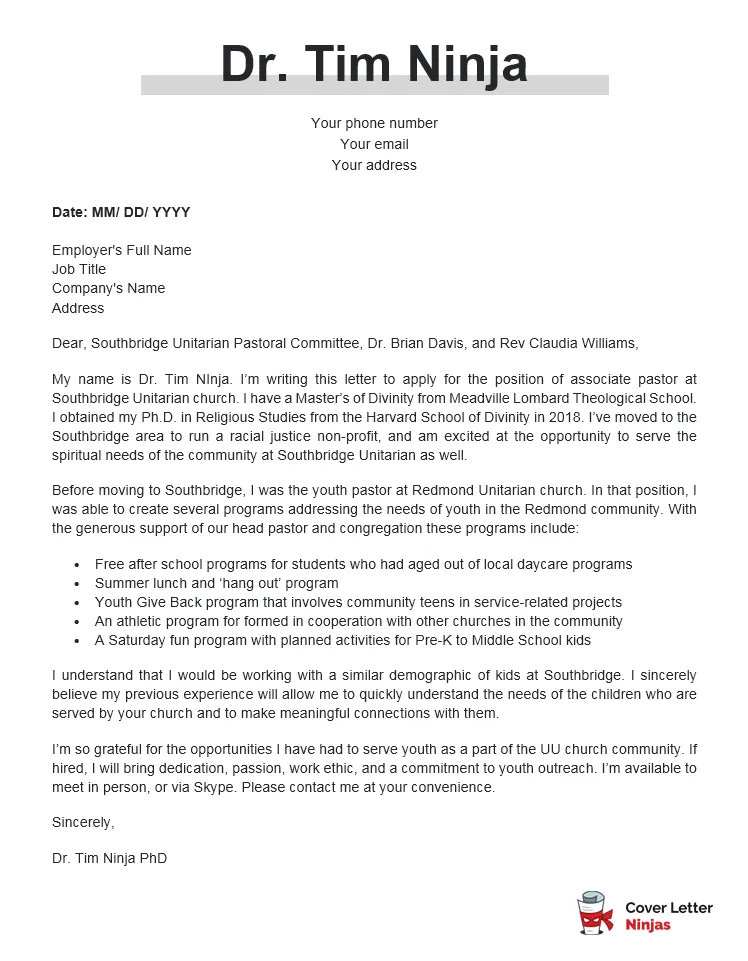
Why You Need a Strong Youth Pastor Cover Letter
In the competitive landscape of ministry jobs, a well-crafted youth pastor cover letter is your first opportunity to make a lasting impression. It’s more than just a formality; it’s a critical tool to introduce yourself, showcase your skills, and demonstrate your passion for youth ministry. Without a compelling cover letter, your resume might be overlooked, and your application could end up in the ‘rejected’ pile. This letter gives you a platform to articulate your unique qualifications, connect with the church’s values, and make a case for why you are the ideal candidate to lead their youth program. A strong cover letter can significantly increase your chances of securing an interview and ultimately landing the job.
Understand the Role of a Youth Pastor
Before crafting your cover letter, it’s essential to understand the scope of a youth pastor’s role. This understanding will help you tailor your letter to the specific needs and expectations of the church you are applying to, demonstrating your preparedness and alignment with their mission. Youth pastors play a pivotal role in the spiritual development of young people and the overall growth of the church. They provide guidance, mentorship, and a safe space for youth to explore their faith and navigate life’s challenges.
Key Responsibilities of a Youth Pastor

The responsibilities of a youth pastor are diverse and multifaceted, involving direct engagement with youth and the church. They include planning and leading youth programs, such as weekly meetings, Bible studies, and special events. Youth pastors also build relationships with young people, providing pastoral care, counseling, and discipleship. Furthermore, they collaborate with parents, volunteers, and church leadership to create a supportive and nurturing environment for the youth. They also often participate in outreach activities to connect with the community and attract new members. Being aware of these responsibilities is crucial.
Skills and Qualities Needed
Successful youth pastors possess a unique blend of skills and qualities. Essential skills include strong communication, leadership, and organizational abilities. They must be able to effectively communicate with youth, parents, and church staff. They must be able to lead and mentor young people. Additionally, they need to be organized in planning events and managing their time. Qualities like empathy, patience, and a genuine love for young people are equally important. Adaptability, creativity, and a strong faith are also essential for thriving in this dynamic ministry role.
Essential Components of a Cover Letter
A compelling youth pastor cover letter is structured to clearly and effectively communicate your qualifications and passion. A well-organized cover letter ensures that your key strengths and experiences are highlighted, making a strong case for why you are the best fit for the position. Each component plays a vital role in conveying your message to the hiring committee. You need to pay attention to the structure.
Header and Contact Information

Your header should include your full name, address, phone number, and professional email address. It should be positioned at the top of the letter. Make sure that the contact information is accurate and up-to-date, allowing the church to easily reach you. Also include the date and the hiring manager’s name and title if known, along with the church’s address. This demonstrates attention to detail and professionalism.
Addressing the Hiring Manager
Always address the cover letter to a specific person whenever possible. Research the church’s website or LinkedIn to find the name of the hiring manager or the pastor in charge of youth ministry. Addressing the letter to a specific person demonstrates that you have taken the time to research the church and its leadership. If you are unable to find a specific name, use a professional salutation, such as ‘Dear Hiring Committee’ or ‘Dear Pastor’. Avoid generic greetings like ‘To Whom It May Concern’.
Writing the Opening Paragraph
The opening paragraph is your first chance to grab the hiring manager’s attention. Start with a strong hook by stating the position you’re applying for and where you found the job posting. Then, briefly mention your key qualifications and a compelling reason why you are interested in the position and the church. Express enthusiasm and show your understanding of the church’s mission. This initial paragraph sets the tone for the rest of your letter, so make it concise, engaging, and impactful.
Highlighting Your Qualifications and Experience

The body of your cover letter is where you showcase your qualifications and experience, providing detailed evidence of your skills and suitability for the role. This section should highlight your key strengths and provide specific examples of your accomplishments. Use this opportunity to demonstrate how your previous experiences align with the church’s needs and expectations. It’s where you bring your resume to life and demonstrate that you’re the perfect fit.
Showcasing Relevant Experience
Provide specific examples of your experience that relate to the youth pastor role. Mention previous roles in youth ministry, volunteer work, or other relevant experiences. For each experience, describe your responsibilities and the outcomes you achieved. Quantify your achievements whenever possible. For instance, did you increase youth participation in a program? Did you implement a successful new initiative? These details demonstrate your effectiveness and impact.
Demonstrating Passion for Youth Ministry
Express your genuine passion for youth ministry by sharing your personal experiences and motivations. Describe why you are drawn to working with young people and what you find most rewarding about it. Share stories or anecdotes that illustrate your dedication and commitment to guiding and supporting youth. Your passion should shine through your words, creating a strong connection with the hiring manager and the church’s values.
Mentioning Specific Achievements

Focus on specific achievements to show the impact you’ve made in previous roles. Use action verbs to describe your accomplishments and quantify your results. Examples of achievements could include leading successful mission trips, developing innovative curriculum, or increasing attendance at youth group events. Also mention any awards or recognition you have received for your work. Such details demonstrate your competency and your ability to deliver results.
Expressing Your Understanding of the Church’s Values
Demonstrate that you have researched the church and understand its values, mission, and vision. Align your experiences and skills with the church’s specific goals. Mention any connections you have to the church, such as previous involvement or familiarity with its programs and ministries. Tailor your letter to reflect the church’s specific culture and demonstrate that you are committed to contributing to its community. This shows that you are prepared for the position.
Writing the Closing Paragraph
In the closing paragraph, summarize your key qualifications and restate your enthusiasm for the position. Thank the hiring manager for their time and consideration. Express your eagerness to learn more about the opportunity and reiterate your commitment to the church’s mission. Keep it concise and focused on reinforcing your suitability for the role.
Call to Action

End your cover letter with a clear call to action. Request an interview and provide your contact information. Express your willingness to discuss your qualifications further and share how you can contribute to the church. Make it easy for the hiring manager to take the next step. This direct approach demonstrates confidence and initiative.
Proofreading and Formatting
Proofreading and formatting are vital to creating a professional cover letter that makes a good impression. Ensure your letter is polished and well-presented. A letter riddled with errors or poor formatting can undermine your qualifications. The goal is to demonstrate your attention to detail and your professionalism.
Formatting Guidelines
Use a professional font, such as Times New Roman, Arial, or Calibri, in a readable size (11 or 12 points). Maintain consistent formatting throughout the document, including spacing and margins. Keep your letter to one page, if possible. Use clear and concise language, with short paragraphs and bullet points to improve readability. Pay attention to the overall appearance of your letter and make sure it’s visually appealing.
Proofreading Tips

Proofread your cover letter multiple times to catch any grammatical errors, spelling mistakes, or typos. Read your letter aloud to identify awkward phrasing or unclear sentences. Ask a friend or mentor to review your letter for feedback. Use spell-check and grammar-check tools, but don’t rely on them entirely. A fresh pair of eyes can often catch errors you might have missed. Make sure you check the name and address of the church.
Common Mistakes to Avoid
Several common mistakes can detract from the effectiveness of your youth pastor cover letter. By avoiding these pitfalls, you can make a more positive impression and increase your chances of being selected for an interview. Being aware of what to avoid is critical.
Using Generic Language
Avoid using generic or cliché phrases that do not reflect your unique qualifications and experiences. Tailor your language to the specific position and church you are applying to. Show your individuality and your understanding of the church’s mission. Use specific examples and quantifiable achievements. Generic language makes your letter seem impersonal and less impactful.
Focusing Solely on Yourself

While it’s important to highlight your skills and experiences, avoid making your cover letter all about you. Focus on how your skills and experiences can benefit the church and its youth ministry. Emphasize your understanding of the church’s needs and how you can contribute to their goals. Demonstrate that you understand the needs of the organization. Your cover letter should focus on solving the church’s needs.
Failing to Tailor the Letter
Do not use a generic cover letter for every application. Tailor each letter to the specific church and position. Customize your letter to reflect your understanding of the church’s mission, values, and the specific requirements of the job. Research the church and mention specific details that resonate with the hiring committee. Tailoring your letter demonstrates your interest and shows that you have taken the time to learn about the church.
Conclusion
A well-crafted youth pastor cover letter is a powerful tool in your job search. By understanding the role, highlighting your qualifications, and avoiding common mistakes, you can create a compelling letter that sets you apart from other candidates. Focus on showcasing your passion, experience, and commitment to youth ministry, and you will increase your chances of landing an interview and securing the job. Remember, a strong cover letter is your first step toward making a positive impact on the lives of young people and the church community. Good luck!