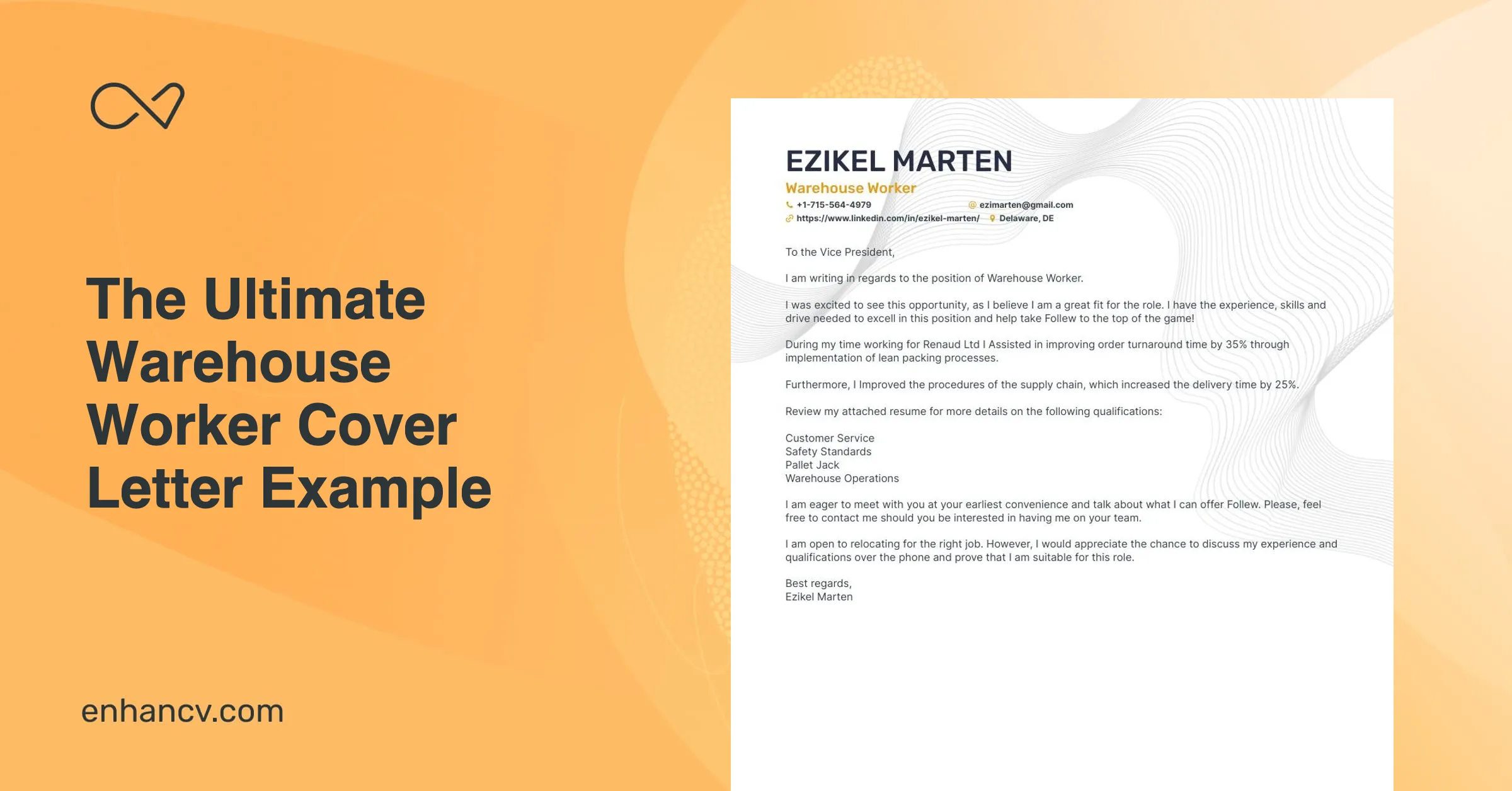
What is a Warehouse Cover Letter
A warehouse cover letter is a crucial document that accompanies your resume when applying for a warehouse position. It serves as your introduction to a potential employer, providing an opportunity to showcase your skills, experience, and enthusiasm for the role. Unlike a resume, which presents a summary of your qualifications, a cover letter allows you to elaborate on your achievements and explain why you are the ideal candidate for the job. Writing a compelling warehouse cover letter can significantly increase your chances of getting an interview and ultimately landing the job. It’s your chance to make a strong first impression and differentiate yourself from other applicants. The key is to tailor your letter to each specific job and highlight the most relevant aspects of your background. A well-crafted cover letter demonstrates your attention to detail, communication skills, and genuine interest in the position.
Why is a Warehouse Cover Letter Important
A warehouse cover letter is far more than just a formality; it’s a vital tool in your job search arsenal. It provides context to your resume, allowing you to explain how your skills and experience align with the specific requirements of the warehouse position. Hiring managers often use cover letters to assess your communication skills, attention to detail, and understanding of the role. It also gives you the space to showcase your personality and demonstrate your enthusiasm for the opportunity. Without a cover letter, you may miss the chance to highlight key achievements or address any potential gaps in your employment history. Additionally, a well-written cover letter can set you apart from other candidates, especially in a competitive job market. It is an opportunity to make a positive first impression and leave a lasting impact on the hiring manager, leading to a higher likelihood of being invited for an interview. In essence, it personalizes your application and increases your chances of securing the job.
Key Elements of a Powerful Warehouse Cover Letter

Creating a powerful warehouse cover letter requires careful attention to detail and strategic planning. The goal is to present yourself as the best candidate for the job, showcasing your skills and experience in a clear and concise manner. A well-structured cover letter includes several key elements that work together to create a compelling narrative. Ensuring these elements are present and well-executed will significantly improve your chances of success.
Header and Contact Information
The header is the first thing a hiring manager sees, so it’s crucial to make it professional and easy to read. This section includes both your contact information and the hiring manager’s details, setting the stage for a formal and professional application.
Applicant’s Contact Information
At the top of your cover letter, include your full name, address, phone number, and professional email address. Make sure your email address is professional; avoid using nicknames or unprofessional language. The goal is to make it easy for the employer to contact you. Ensuring this information is accurate and up-to-date is essential, as it’s the primary way the hiring manager will reach out to you for an interview or additional information. Double-check everything to avoid any errors that could lead to missed opportunities.
Hiring Manager’s Contact Information

If possible, address the cover letter to a specific person, such as the hiring manager or the warehouse supervisor. Researching the company and finding the correct contact person demonstrates initiative and attention to detail. Include the hiring manager’s name, title, company name, and address. If you can’t find a specific name, you can use a general greeting like ‘Dear Hiring Manager.’ Addressing the letter to a specific person shows you’ve taken the time to research and personalize your application, which can make a positive impression.
Professional Salutation
Start your cover letter with a professional salutation, such as ‘Dear Mr./Ms./Mx. [Last Name]’ if you know the hiring manager’s name. If you don’t know the name, ‘Dear Hiring Manager’ is a suitable alternative. Avoid casual greetings like ‘Hi’ or ‘Hello,’ as they may not convey the level of professionalism expected in a job application. The salutation sets the tone for the rest of your letter, so it’s important to start on the right foot.
Opening Paragraph
The opening paragraph is your chance to grab the hiring manager’s attention and state your purpose for writing. Clearly state the position you’re applying for and where you found the job posting. This immediately provides context and demonstrates your understanding of the role. You should also include a brief, enthusiastic statement about why you’re interested in the position and the company. This shows your passion and sets the stage for the rest of the letter.
Expressing Enthusiasm and Purpose

In your opening paragraph, clearly express your enthusiasm for the position and the company. Show that you’ve done your research and are genuinely interested in the opportunity. Briefly mention what excites you about the role and why you believe you’re a good fit. For example, you could mention your admiration for the company’s values or the specific challenges of the role that appeal to you. A genuine expression of interest can make a positive impression and encourage the hiring manager to read further.
Highlighting Relevant Skills and Experience
The body of your cover letter is where you showcase your skills and experience, demonstrating how they align with the job requirements. This is your chance to provide concrete examples of your achievements and explain why you’re the ideal candidate. Tailor your content to the specific needs of the role, highlighting the skills and experiences that are most relevant to the job description.
Warehouse Skills
When listing your warehouse skills, be specific and provide examples. Instead of simply stating that you have experience with inventory management, describe how you have successfully managed inventory in the past. Did you implement a new system that improved efficiency? Did you reduce errors or improve accuracy? Quantify your achievements whenever possible to demonstrate the impact of your skills. Be sure to include the skills most relevant to the job description. For example, if the job requires forklift operation, be sure to highlight your certifications and experience with forklifts.
Inventory Management

Showcase your inventory management skills by detailing your experience with inventory control systems, cycle counting, and stock rotation. Mention any experience you have with reducing inventory discrepancies or improving inventory accuracy. If you’ve used specific software, such as SAP or Oracle, be sure to mention it. Providing specific examples of how you’ve managed inventory in past roles will make your application more compelling. For instance, you could say, ‘In my previous role, I implemented a new inventory tracking system that reduced discrepancies by 15% within the first quarter.’
Order Fulfillment
Describe your experience with order fulfillment, including picking, packing, and shipping. Highlight your ability to accurately and efficiently fulfill orders. Mention any experience you have with using warehouse management systems (WMS) or other order processing software. Showcase your ability to meet deadlines and maintain high levels of accuracy. Emphasize your understanding of the entire order fulfillment process. You could explain, ‘I have experience with all aspects of order fulfillment, from picking and packing to shipping and tracking, ensuring all orders are processed accurately and efficiently.’
Shipping and Receiving
Highlight your experience with shipping and receiving procedures, including loading and unloading trucks, verifying shipments, and managing paperwork. Mention any experience you have with handling hazardous materials or operating material handling equipment. Detail your experience with the different shipping methods, such as FedEx or UPS. Focus on your ability to maintain organized records and ensure accurate shipping and receiving processes. For example, you could state, ‘I have extensive experience in shipping and receiving, including verifying shipments, managing paperwork, and ensuring all items are handled and delivered securely.’
Experience and Achievements

Use your cover letter to highlight your relevant experience and achievements. Don’t just list your responsibilities; focus on your accomplishments and the impact you’ve made in previous roles. Provide concrete examples of how you’ve used your skills to improve efficiency, reduce costs, or enhance productivity. Whenever possible, quantify your achievements to demonstrate your value to the company.
Quantifiable Accomplishments
Quantify your achievements whenever possible. Use numbers to demonstrate the impact of your work. Instead of saying ‘Improved warehouse efficiency,’ say ‘Increased warehouse efficiency by 15% by streamlining the picking process.’ Providing specific numbers and metrics makes your achievements more impactful and easier for the hiring manager to understand. Using quantifiable results gives the hiring manager a clearer picture of your past performance and the value you can bring to their company. This includes details about how you’ve reduced costs, improved productivity, or enhanced safety.
Use Action Verbs
Use action verbs to describe your skills and accomplishments. Action verbs make your cover letter more dynamic and engaging. Start your bullet points with strong action verbs like ‘managed,’ ‘implemented,’ ‘coordinated,’ ‘reduced,’ ‘increased,’ and ‘achieved.’ These verbs help to convey a sense of accomplishment and demonstrate your proactive approach to your work. Choosing strong verbs will create a more compelling application. Instead of saying ‘responsible for inventory,’ you could say ‘Managed inventory levels to ensure optimal stock and minimize waste.’
Body Paragraphs

The body paragraphs should delve deeper into your skills and experience, providing specific examples to support your claims. Each paragraph should focus on a particular skill or achievement, demonstrating how it aligns with the job requirements. Use clear and concise language, avoiding jargon or overly complex sentences. Tailor your paragraphs to the specific job description, highlighting the skills and experiences that are most relevant to the position. The goal is to convince the hiring manager that you have the skills and experience needed to succeed in the role.
Showcasing Your Value
In your body paragraphs, focus on showcasing your value to the company. Explain how your skills and experience can benefit the organization. Discuss your ability to solve problems, improve processes, or contribute to a positive work environment. Demonstrate your understanding of the company’s needs and how you can meet them. Make sure to align your skills with the job requirements by referring to the job description. This proves you have read the job description and allows you to prove your understanding and skills can meet the requirements.
Addressing the Job Requirements
Carefully review the job description and address each of the required skills and qualifications in your cover letter. Provide specific examples of how you’ve demonstrated these skills in the past. If the job description emphasizes specific software, certifications, or experience, be sure to highlight your relevant qualifications. By directly addressing the job requirements, you demonstrate that you understand the role and are a good fit for the position. Provide examples of how your skills have led to success in previous roles.
Closing Paragraph
The closing paragraph is your final opportunity to make a positive impression and encourage the hiring manager to contact you. End your letter with a statement of interest, gratitude, and a call to action.
Expressing Interest and Gratitude
Express your continued interest in the position and thank the hiring manager for their time and consideration. Reiterate your enthusiasm for the opportunity and your belief that you’re a good fit for the role. Show your gratitude by thanking them for their time and consideration in reviewing your application. A sincere expression of interest and gratitude leaves a lasting impression and shows you are truly interested in the position. It is an opportunity to reiterate your enthusiasm for the role.
Call to Action
Include a clear call to action, such as inviting the hiring manager to contact you for an interview. Provide your phone number and email address again for easy reference. Make it easy for the hiring manager to take the next step by explicitly stating what you want them to do. A call to action is a simple statement that encourages the hiring manager to take the next step and contact you. This could be as simple as saying, ‘I am available for an interview at your earliest convenience. You can reach me at [phone number] or [email address].’
Formal Closing
End your cover letter with a professional closing, such as ‘Sincerely’ or ‘Best regards.’ Avoid casual closings like ‘Thanks’ or ‘See you soon.’ Following a formal closing, type your full name and leave space for your signature if you are printing a hard copy. Ensuring your cover letter has a professional closing and signature will leave a lasting impression.