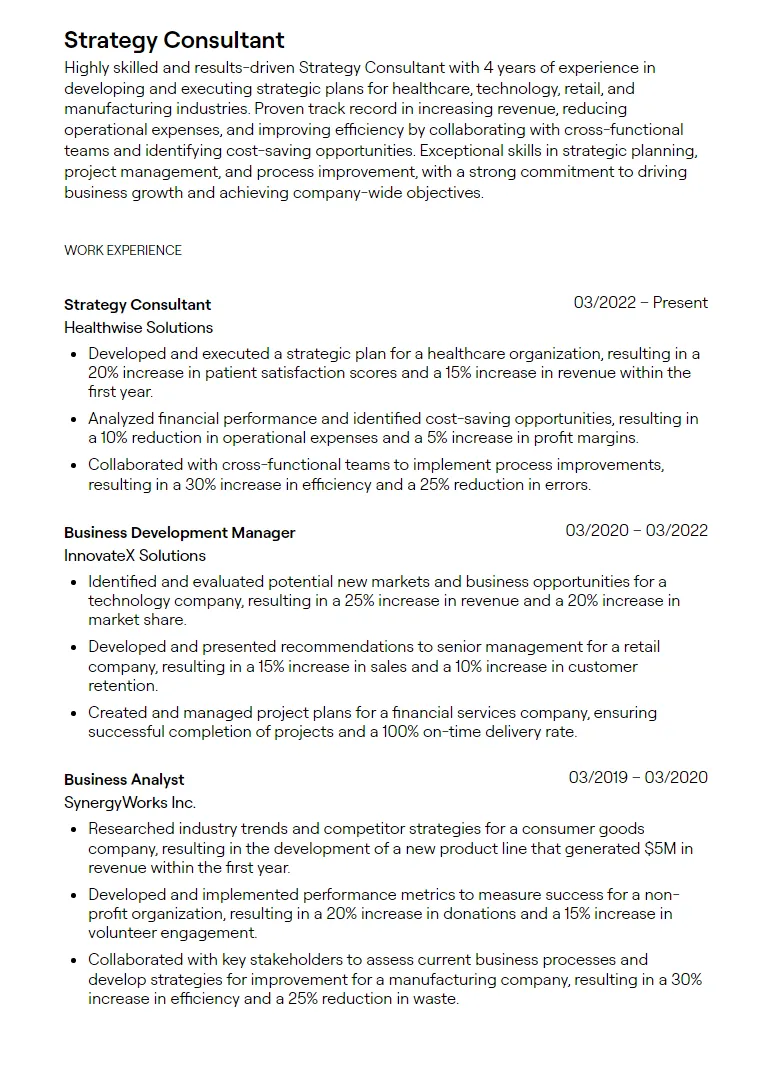
Crafting a Standout Strategy Consulting Cover Letter
In the competitive world of strategy consulting, a well-crafted cover letter is your first opportunity to make a lasting impression. It’s your chance to showcase your unique skills, experiences, and personality beyond what’s listed in your resume. A compelling cover letter not only highlights your qualifications but also demonstrates your genuine interest in the specific firm and role. This guide will provide you with the essential elements and strategies to create a cover letter that captures attention and significantly increases your chances of landing an interview. Let’s dive into the key components that can transform your application from ordinary to extraordinary and significantly increase your chances of landing your dream job.
Understanding the Importance of a Cover Letter
Many candidates underestimate the significance of a cover letter. However, in strategy consulting, where the ability to communicate persuasively and succinctly is paramount, a cover letter serves as a critical assessment tool. It reveals your writing proficiency, your understanding of the consulting landscape, and your ability to tailor your message to a specific audience. It is also an excellent opportunity to show the recruiters how well you can sell yourself and why you are the best candidate for the role. This is the starting point.
Why a Strong Cover Letter Matters

A strong cover letter can be the deciding factor in whether your application gets noticed. It allows you to contextualize your resume, connecting your past experiences to the requirements of the role. It shows your proactive approach in applying for this job, rather than simply sending your CV for every open role. It gives you a space to connect the dots on your CV and guide the recruiter to specific experiences and skills which makes you the perfect match. It helps you to express your unique value proposition and communicate your passion for the field. It allows you to highlight how your skills align with the role and can set you apart from other applicants, and make you seem like a perfect fit.
Cover Letter vs Resume
Your resume provides a snapshot of your qualifications and experiences. The cover letter offers a narrative, elaborating on those experiences and explaining why you’re the ideal candidate. It is a space to put forward a compelling narrative to create a story to showcase why you want this role. Unlike a resume, which is more of a factual document, the cover letter allows you to express your personality and connect with the reader on a more personal level. It’s where you show, not just tell, why you’re the perfect fit for the firm and the role, making it essential in a field where communication and interpersonal skills are valued.
Key Elements for a Winning Cover Letter
A winning cover letter must be well-structured, engaging, and tailored to the specific role and company. By focusing on these crucial elements, you’ll significantly boost your chances of making a positive impression and progressing to the interview stage. Ensuring you include all of these components is critical, as they each fulfill a specific purpose in presenting your qualifications effectively and persuasively.
Formatting and Structure

Effective formatting is crucial for readability. Use a professional font like Times New Roman or Arial, with a font size of 11 or 12 points. Maintain consistent margins (typically one inch on all sides) and use single-spacing within paragraphs with a double space between paragraphs. Breaking the text into logical paragraphs with clear headings and subheadings helps the reader navigate the information easily. A well-formatted document demonstrates professionalism and attention to detail, making your cover letter more appealing to the hiring manager.
Header and Contact Information
Start with your contact information in the header, including your name, phone number, email address, and LinkedIn profile URL. Below your contact information, include the date and the recipient’s details (name, title, and company address). Always address the letter to a specific person whenever possible—this shows that you have done your research and are genuinely interested. If you can’t find a specific name, use a professional title like “Hiring Manager.”
The Salutation
Use a formal salutation such as “Dear Mr./Ms. [Last Name]” if you know the recipient’s name. If you are unsure of the name, a professional alternative is “Dear Hiring Manager” or “Dear [Company Name] Recruitment Team.” Avoid generic greetings like “To Whom It May Concern” which can make your letter feel impersonal. Always ensure you spell the recipient’s name and title correctly to demonstrate your attention to detail and respect.
Opening Paragraph Your Hook

The opening paragraph is your hook. It should immediately capture the reader’s attention and state the purpose of your letter. Begin with a strong statement that highlights your interest in the role and the company. Briefly mention your most relevant skills or experiences and how they align with the job requirements. Consider mentioning a recent accomplishment or something that demonstrates your understanding of the consulting field and the company’s work. Be concise and enthusiastic to make the reader want to learn more.
Highlighting Relevant Skills and Experience
The body of your cover letter should showcase your relevant skills and experiences. Align your qualifications with the specific requirements of the job description, providing examples of how you’ve demonstrated those skills in the past. Focus on results-driven achievements, using the STAR method (Situation, Task, Action, Result) to describe your accomplishments. Quantify your achievements whenever possible to provide concrete evidence of your capabilities. Tailor your examples to the role, focusing on experiences related to problem-solving, data analysis, teamwork, and communication.
Quantifiable Achievements
Quantifying your achievements is vital in demonstrating your impact. Instead of saying “Improved team efficiency,” say “Increased team efficiency by 15% through implementation of a new project management system.” Use numbers and data to show your accomplishments, such as the amount of money saved, the number of projects completed, or the percentage of growth achieved. This concrete evidence makes your claims more credible and shows your ability to deliver tangible results, which is highly valued in consulting.
Tailoring Your Cover Letter

Avoid using a generic cover letter. Tailor each cover letter to the specific company and role. Research the company’s values, culture, and recent projects. Refer to the job description and identify the key skills and experiences they are looking for. Customize your letter to directly address these requirements, demonstrating that you understand their needs and are a good fit. Personalizing your cover letter shows that you have invested time and effort in the application, greatly increasing your chances of success.
Demonstrating Company Research and Interest
Show that you have researched the company and understand their work and their culture. Mention specific projects, clients, or values that resonate with you and explain why you are interested in the firm. Demonstrating this level of engagement showcases your genuine interest and allows you to express your enthusiasm. Mention how your personal and professional goals align with their work and values, and also showcase why you are excited about the opportunity, thereby making you stand out as a suitable candidate.
The Closing Paragraph Call to Action
End your cover letter with a clear call to action. Reiterate your interest in the role and thank the reader for their time and consideration. Express your eagerness for an interview and provide your contact information again. Make it easy for the reader to take the next step. For example, you could say, “I am eager to discuss how my skills and experience can contribute to [Company Name]’s continued success. Thank you for your time, and I look forward to the opportunity to speak with you soon. I can be reached at [phone number] or [email address].”
Proofreading and Editing

Always proofread your cover letter carefully for any grammatical errors, typos, and formatting inconsistencies. A polished and error-free cover letter demonstrates professionalism and attention to detail, two essential qualities in consulting. Ask a friend or mentor to review your letter as well. A fresh pair of eyes can often catch errors that you might miss. Ensure your writing is clear, concise, and easy to understand. Editing is crucial for making a positive impression.
Common Mistakes to Avoid
Avoiding common mistakes is as important as including key elements. These errors can quickly lead to your application being rejected. By being aware of these pitfalls and proactively avoiding them, you can significantly increase your chances of making a positive impression on the hiring manager. This section provides essential guidance on how to sidestep these mistakes and write an effective cover letter.
Generic Cover Letters
Using a generic cover letter is a significant mistake. Tailor each letter to the specific company and role. Generic letters show a lack of interest and effort and are often quickly discarded. Research the company and the specific requirements of the job, and customize your letter to address them. Show that you understand the company’s needs and have the skills and experience to meet them. This personalized approach demonstrates your genuine interest and increases your chances of getting noticed.
Typos and Grammatical Errors

Typos and grammatical errors undermine your credibility and make you appear unprofessional. Proofread your cover letter carefully, and have someone else review it as well. Errors can distract the reader and create a negative impression, especially in a field where precision and attention to detail are highly valued. Always check for spelling, grammar, and punctuation errors before submitting your application. A well-written, error-free cover letter reflects your commitment to excellence.
Lack of Enthusiasm
A lack of enthusiasm can make your cover letter feel flat and uninspired. Convey your interest in the role and the company. Express your excitement about the opportunity and your passion for consulting. Use enthusiastic language and tone. Demonstrate your understanding of the company’s values and goals, and explain why you are a good fit. Enthusiasm demonstrates your interest and makes your application stand out.
Formatting Errors
Formatting errors, such as inconsistent fonts, margins, or spacing, can make your cover letter difficult to read and project a lack of attention to detail. Adhere to the standard formatting guidelines. Maintain consistent margins, use a professional font like Times New Roman or Arial, and use clear and concise formatting throughout the document. Ensure that your cover letter is visually appealing and easy to read to make a good impression on the reader.
Tailoring Your Cover Letter
Tailoring your cover letter is essential for increasing your chances of success. Demonstrating that you have invested time and effort in the application process shows your genuine interest and commitment. By personalizing your letter to the specific role and company, you can significantly enhance your impact and distinguish yourself from other applicants. This guide helps you to craft a cover letter which gets the recruiter’s attention.
Researching the Target Company
Thoroughly research the company before writing your cover letter. Understand their mission, values, recent projects, and clients. Visit their website, read their annual reports, and follow their social media accounts. This research will help you tailor your letter to the company’s specific needs and demonstrate your interest. When you demonstrate a genuine understanding of the company, you can show that you are a good match for their team.
Identifying Key Contacts
Whenever possible, address your cover letter to a specific person, such as the hiring manager or a recruiter. This shows that you have done your research and are interested in the company. If you cannot find a specific name, use a professional salutation such as “Dear Hiring Manager” or “Dear [Company Name] Recruitment Team.” Personalizing your letter demonstrates your initiative and makes your application more appealing.
Aligning Skills with Job Requirements
Carefully review the job description and identify the key skills and experiences that the company is looking for. Highlight your relevant skills and experiences in your cover letter, providing specific examples of how you have demonstrated these skills in the past. Tailor your examples to match the requirements of the role, showing how you can contribute to the company’s success. Always focus on results and provide quantifiable achievements whenever possible.
Showcasing Your Personality
Your cover letter is an opportunity to showcase your personality and express your enthusiasm. Let your personality shine through your writing style. Use an enthusiastic and engaging tone and include anecdotes that highlight your experiences and demonstrate your skills. Show your genuine interest in the role and the company. A personalized and engaging cover letter is more likely to capture the reader’s attention and make a lasting impression.