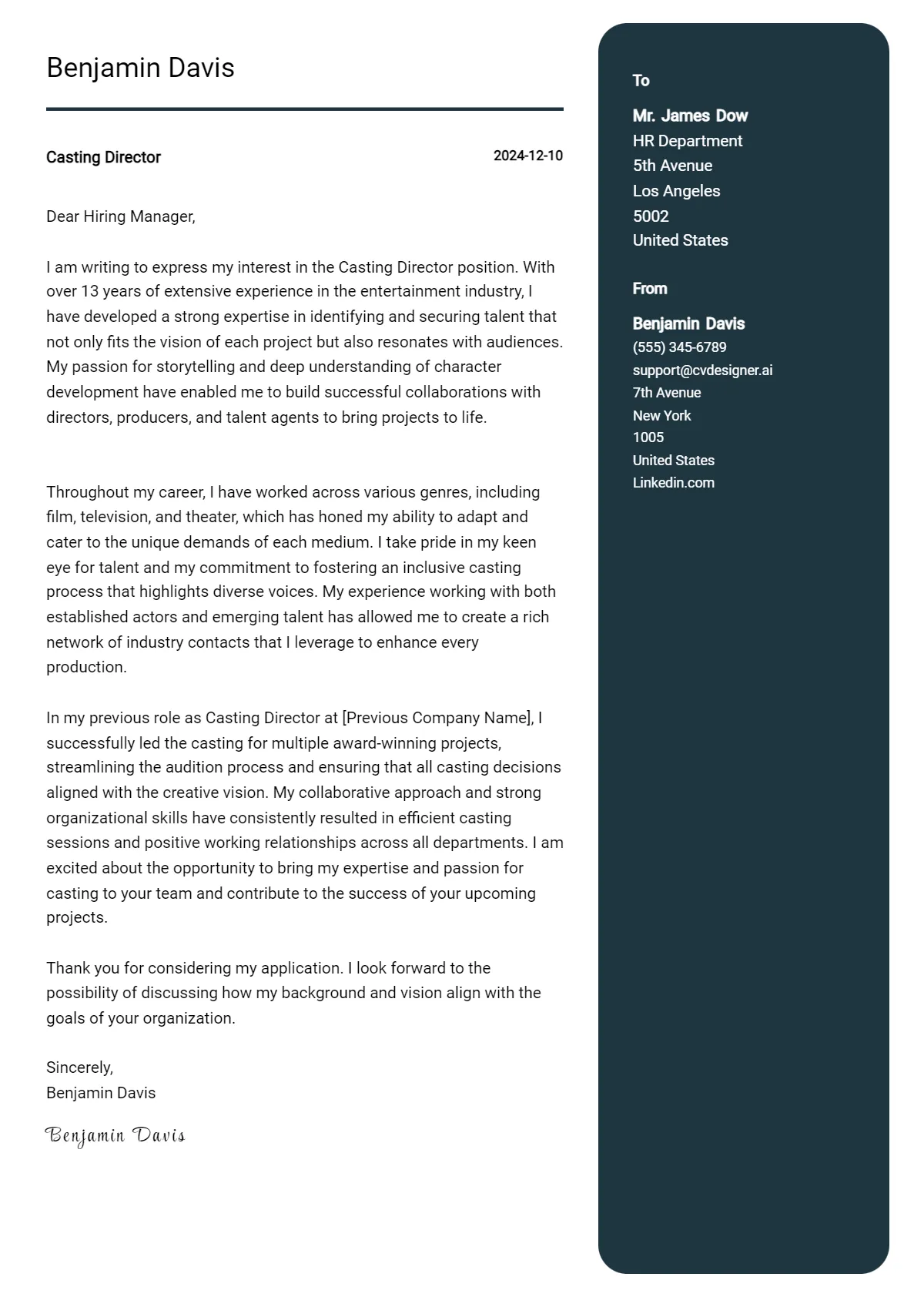
What is a Screenwriter Cover Letter?
A screenwriter cover letter is more than just a formality; it’s your first introduction to potential employers, agents, or producers. It serves as a personal pitch, a snapshot of your skills, experience, and passion for screenwriting. Unlike a resume, which is a factual document, the cover letter gives you the chance to inject your personality and storytelling abilities. It’s where you can demonstrate why you’re the perfect fit for a particular project or opportunity. Think of it as a mini-script, designed to grab attention and leave a lasting impression. A well-crafted cover letter can be the key that unlocks the door to your screenwriting career, setting you apart from other applicants and showcasing your unique perspective and writing style. This document should reflect your understanding of the industry.
Why a Screenwriter Cover Letter Is Important
In the competitive world of screenwriting, a cover letter is your chance to make a strong first impression. It allows you to provide context to your resume, explaining why your specific skills and experiences align with the job or project requirements. It’s an opportunity to express your enthusiasm and genuine interest, which can be particularly compelling in a field driven by passion. A well-written cover letter shows that you’ve done your research, understand the requirements of the position, and are capable of communicating effectively. This attention to detail can be crucial. Furthermore, a cover letter can help you address any gaps in your resume or explain career transitions, providing a narrative that allows the reader to understand your professional journey better. This document allows you to showcase your storytelling ability and to stand out.
Key Elements of a Successful Screenwriter Cover Letter

Several elements are critical for a successful cover letter. First and foremost, the letter should be tailored to the specific opportunity. Avoid using a generic template. Research the company, the project, or the individual you’re addressing. Mention specific details that demonstrate your understanding and interest. Second, highlight your relevant skills and experience. Focus on screenwriting achievements, such as produced scripts, awards, or successful contest entries. Quantify your achievements whenever possible. Third, showcase your unique voice and style. Let your personality shine through. Use language that is engaging and authentic. Finally, always proofread your cover letter meticulously. Typos and grammatical errors can undermine your credibility and attention to detail. Ensure your letter is well-formatted, easy to read, and professional.
Highlighting Your Screenwriting Experience
When highlighting your screenwriting experience, focus on what makes you stand out. If you have previous screenwriting experience, emphasize the projects you’ve worked on, the genres you excel in, and the collaborators you’ve worked with. Provide brief summaries of your scripts, focusing on their strengths and achievements. If you have limited professional experience, highlight any relevant experience, such as writing courses, workshops, or personal projects. Mention any awards, accolades, or positive feedback you’ve received for your work. Quantify your achievements whenever possible, such as the number of scripts written, the number of competitions entered, or the positive audience reception of your work. Furthermore, mention any feedback from professionals in the industry, emphasizing how you are a good fit for the role.
Showcasing Your Unique Voice and Style
Your unique voice is what distinguishes you from other writers. Use your cover letter to demonstrate your style and creativity. Start by explaining what makes your perspective unique. Describe your writing process and what inspires you. Show, don’t just tell. Use specific examples from your scripts to illustrate your strengths. Include compelling details that demonstrate your ability to create memorable characters and engaging narratives. Let your passion for screenwriting shine through, and let your voice be heard through your writing. This can include a unique approach to character development, dialogue, or world-building. Remember that your voice is your brand, so use your cover letter to express your unique perspective and style.
Tailoring Your Cover Letter to the Specific Opportunity

One of the most important secrets to success is tailoring your cover letter to each specific opportunity. Generic cover letters rarely make a good impression. Always research the project, the company, or the individual you are addressing. Identify the specific requirements and expectations outlined in the job description or call for submissions. Then, explain how your skills, experience, and interests align with those requirements. Mention specific details about the project, such as the genre, the target audience, or the tone, and explain why you’re a good fit. Customization shows that you’ve taken the time and effort to understand the opportunity and that you genuinely want to be involved. This attention to detail will make a strong impression.
Proofreading and Polishing Your Screenwriter Cover Letter
Proofreading is critical to ensure your cover letter is free of errors. Grammatical errors, typos, and poor formatting can undermine your credibility and distract the reader from your message. Always proofread your cover letter carefully before sending it. Use a grammar checker and spell-checker, but don’t rely on them entirely. Read your letter out loud to catch any awkward phrasing or mistakes that your eyes might miss. Ask a friend or colleague to proofread your letter. A fresh pair of eyes can often catch errors you’ve overlooked. Finally, ensure your formatting is consistent and professional. Use a clean, readable font, and appropriate margins and spacing. A polished cover letter will show the reader that you take pride in your work and pay attention to detail.
Dos and Don’ts of a Screenwriter Cover Letter
To succeed in writing a cover letter, you must know what to do and what not to do. First, DO tailor your cover letter to the specific opportunity. DO highlight your relevant skills and experience. DO showcase your unique voice and style. DO proofread your letter carefully before sending it. DO provide a call to action. DON’T use generic templates. DON’T make it too long. DON’T include irrelevant information. DON’T be overly casual or unprofessional. DON’T forget to follow up. By following these dos and don’ts, you can improve your chances of getting noticed and landing your dream job.