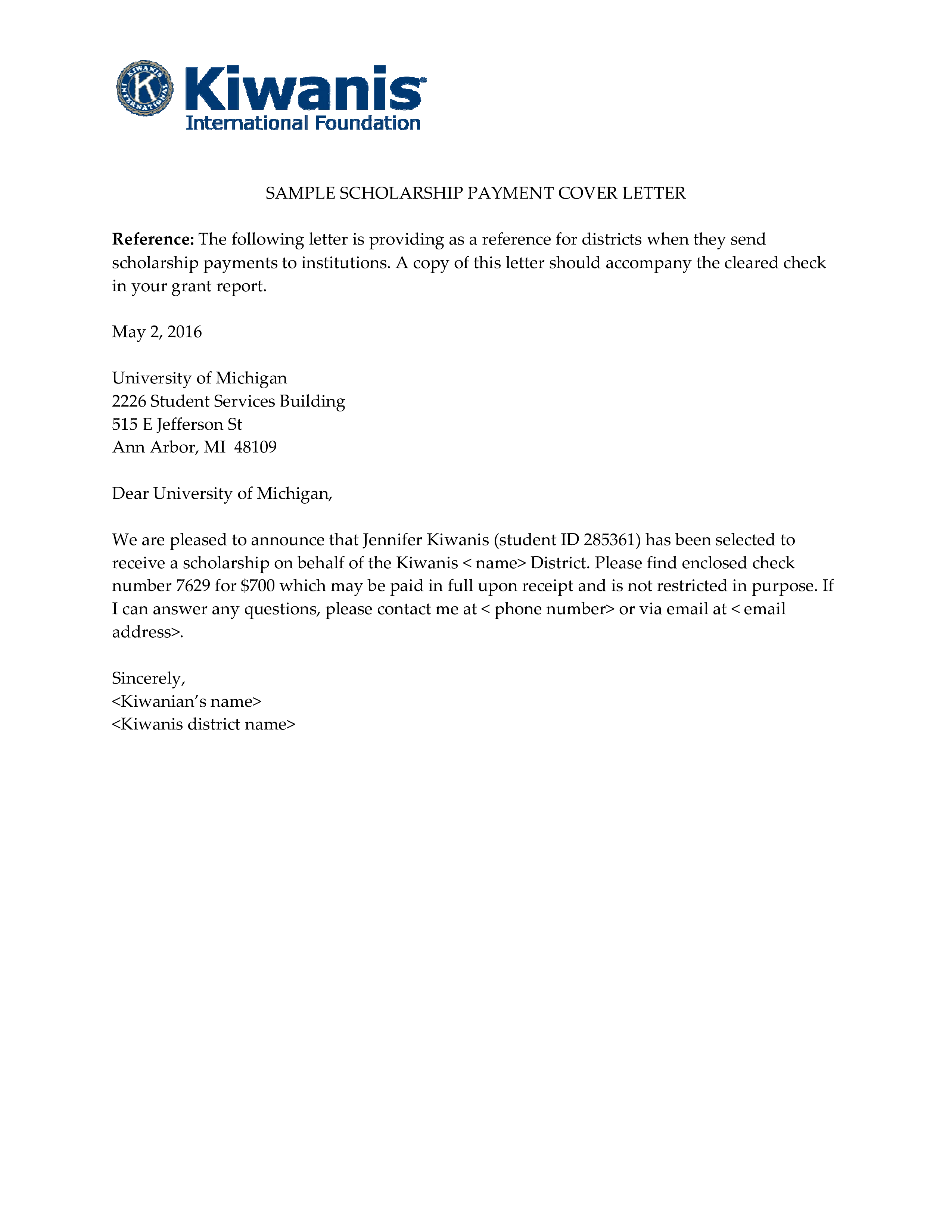
Understanding the Scholarship Cover Letter
A scholarship cover letter is a crucial document that accompanies your scholarship application. It serves as your introduction to the scholarship committee, providing an opportunity to showcase your personality, qualifications, and aspirations. Unlike a resume, which presents factual information, a cover letter allows you to tell your story and explain why you are the ideal candidate for the scholarship. It’s your chance to make a compelling case for why the committee should invest in your future. A well-crafted cover letter can significantly increase your chances of being selected for the scholarship, making it an essential component of your application.
What is a Scholarship Cover Letter?
The scholarship cover letter is a personalized document that complements your scholarship application. It’s more than just a formality; it’s your opportunity to connect with the scholarship committee on a personal level. It should highlight your achievements, demonstrate your financial need (if applicable), and express your educational and career goals. The cover letter allows you to expand on the information provided in your application, giving the committee a deeper understanding of who you are and what you hope to achieve. It allows the committee to assess not just your grades, but your character, motivations, and potential.
Why is a Cover Letter Important?

A well-written cover letter provides a chance to express your personality and passion for your field of study. It allows you to differentiate yourself from other applicants by highlighting your unique experiences and qualities. It can bridge any gaps in your application, explain extenuating circumstances, or clarify any inconsistencies. The cover letter also demonstrates your communication skills and attention to detail, both of which are highly valued by scholarship committees. In essence, it is your opportunity to leave a lasting positive impression on the committee and to increase the likelihood of your application being successful. Showing that you took the time to craft a personalized and thoughtful letter already shows your commitment.
Key Components of a Scholarship Cover Letter
Header Information
The header should include your full name, address, phone number, and email address. This ensures that the scholarship committee can easily contact you. It’s a professional touch that sets the tone for the rest of your letter. Always ensure your contact information is up-to-date and easily accessible. This initial section provides a clean and organized start to your cover letter. This is the first piece of information, and you want to make sure your contact information is correct to make sure you’re easy to reach.
Applicant’s Contact Information

Your full name, address, phone number, and email address should be clearly displayed at the top left of the cover letter.
Date
Include the date you are submitting your application, typically placed below your contact information.
Scholarship Provider’s Contact Information
Include the scholarship provider’s name, and address, typically placed below the date.
Greeting

Address the scholarship committee with a formal greeting, such as “Dear Scholarship Committee” or “Dear [Name of Contact Person, if known].” Avoid generic greetings like “To Whom It May Concern.” Researching the scholarship provider to find out who to address the letter to is a great idea.
Body Paragraph 1: Expressing Your Interest
The first paragraph should clearly state the purpose of your letter: to apply for the scholarship. It should immediately grab the reader’s attention and provide a concise overview of your interest. Make sure the purpose is clear and that the readers know you are applying for a specific scholarship. Show your enthusiasm and mention why you are interested in this particular scholarship. This sets the stage for the rest of your letter and makes a positive first impression. Mentioning the scholarship by name and stating your intention clearly and concisely is crucial.
Mentioning the Scholarship
Clearly state the name of the scholarship you are applying for.
Stating Your Purpose

Briefly explain why you are writing the cover letter, which is to apply for the scholarship.
Body Paragraph 2: Highlighting Qualifications
This paragraph should showcase your qualifications and achievements relevant to the scholarship. Focus on the skills and experiences that align with the scholarship’s criteria. This is your chance to highlight your academic accomplishments, extracurricular activities, and leadership roles. Providing specific examples and quantifiable achievements will make your application more compelling and memorable. Keep the focus on what makes you a strong candidate. This paragraph needs to provide specific and quantifiable achievements.
Academic Achievements
Mention your GPA, relevant coursework, academic awards, and any other academic achievements.
Extracurricular Activities

Describe your involvement in clubs, organizations, and other extracurricular activities, highlighting any leadership roles or significant contributions.
Leadership Roles
Discuss any leadership positions you’ve held and the responsibilities and achievements associated with those roles.
Body Paragraph 3: Demonstrating Financial Need (If Applicable)
If the scholarship considers financial need, use this paragraph to explain your situation. Be honest and transparent about your financial circumstances, providing specific details and avoiding unnecessary emotional language. This paragraph requires a careful balance of providing context, while not getting too emotionally involved. Explain how the scholarship will help you achieve your educational goals. Showing how the scholarship will enable you to focus on your studies will impress the committee.
Explanation of Need

Provide a clear and concise explanation of your financial situation and why you require assistance.
Impact of the Scholarship
Explain how the scholarship will help you to achieve your educational goals and reduce financial burdens.
Body Paragraph 4: Showcasing Your Goals
Conclude with a paragraph that outlines your educational and career aspirations. Describe your long-term goals and how the scholarship will help you achieve them. Show the scholarship committee your vision for the future and how their investment will contribute to your success. Demonstrate how your goals align with the scholarship’s mission and values. Make sure that your goals are aligned with the purpose of the scholarship.
Educational Aspirations
Discuss your academic goals, such as earning a degree, conducting research, or pursuing advanced studies.
Career Objectives
Describe your career goals and how the scholarship will support your professional development.
Concluding the Letter
In the concluding paragraph, express your gratitude to the scholarship committee for their consideration. Reiterate your interest in the scholarship and include a call to action. Keep the tone professional and appreciative, ending on a positive note. A strong conclusion reiterates your enthusiasm and leaves a lasting impression.
Expressing Gratitude
Thank the scholarship committee for their time and consideration.
Call to Action
Reiterate your interest in the scholarship and state that you look forward to hearing from them.
Proper Closing and Signature
Use a professional closing such as “Sincerely,” or “Yours faithfully,” followed by your handwritten signature (if submitting a physical copy) and your typed name. Ensure that the signature is clear and legible.
Formatting Your Scholarship Cover Letter
Proper formatting enhances the readability and professionalism of your cover letter. Pay attention to the font, margins, spacing, and overall layout to create a polished document. It is essential to make sure that the formatting is neat, clean and easy to read. Consistency is key, so that your cover letter looks professional and well-organized. A well-formatted letter shows you care about the details.
Font and Font Size
Use a standard, easy-to-read font such as Times New Roman, Arial, or Calibri. Keep the font size between 11 and 12 points. Consistency is key, so choose one font and stick to it throughout the document.
Margins and Spacing
Set margins to 1 inch on all sides. Use single-spacing for the body of the letter and double-spacing between paragraphs. This layout makes the letter easy to read and visually appealing.
Proofreading and Editing
Proofread your cover letter multiple times for any grammatical errors, typos, or spelling mistakes. Ask a friend, family member, or career advisor to review your letter as well. A polished letter reflects your attention to detail and professionalism.
Common Mistakes to Avoid
Avoiding common mistakes can significantly improve the quality and effectiveness of your scholarship cover letter. Be aware of these pitfalls to ensure your application stands out for the right reasons. Taking the time to avoid these mistakes will result in a much better chance of getting the scholarship.
Generic Letter
Do not use a generic cover letter template. Tailor each letter to the specific scholarship and the requirements of the application. A generic letter shows a lack of effort and may lead to your application being disregarded. Make sure you customize your letter to fit the scholarship you’re applying for.
Typos and Grammatical Errors
Always proofread your cover letter to eliminate any typos or grammatical errors. Errors can undermine your credibility and professionalism. Use spell-check and grammar-check tools, but also carefully read through the letter yourself.
Lack of Personalization
Avoid using a generic letter or simply restating your resume. Personalize the letter by sharing your experiences, goals, and how the scholarship aligns with your aspirations. Let your personality shine through.
Sample Cover Letter
To help you understand the structure and content of a scholarship cover letter, here’s a sample. This sample provides a basic framework, so make sure to customize it to your own needs and experiences.
Contact information
Your Name Your Address Your Phone Number Your Email Address
Body
Dear Scholarship Committee,
I am writing to express my keen interest in the [Scholarship Name] offered by [Organization Name]. Having been a student of [Major] at [University Name] for [Time], I am deeply committed to pursuing [educational/career goals], and I am confident that this scholarship will be an invaluable resource in achieving these goals.
Throughout my academic journey, I have consistently strived for excellence, as demonstrated by my GPA of [GPA] and my involvement in [Extracurricular Activities]. For instance, as the [Position] of the [Club], I organized [Event/Project], which [achieved a specific result]. Furthermore, my participation in [Another Activity] allowed me to develop crucial skills in [relevant skills]. I am also looking forward to the skills I’ll learn through the scholarship.
I am aware that the [Scholarship Name] also looks at financial need and would like to mention that my family is dealing with [family’s situation], which makes paying for my education difficult. This scholarship would significantly alleviate the financial burden and enable me to focus more fully on my studies and community service commitments. Your generosity can help me pursue my goals.
My long-term goal is to [career objective]. I am confident that the [Scholarship Name] will not only provide me with financial support but will also inspire me to continue my pursuit of excellence in my chosen field.
Thank you for considering my application. I am looking forward to hearing from you soon.
Closing
Sincerely, [Your Signature] [Your Typed Name]