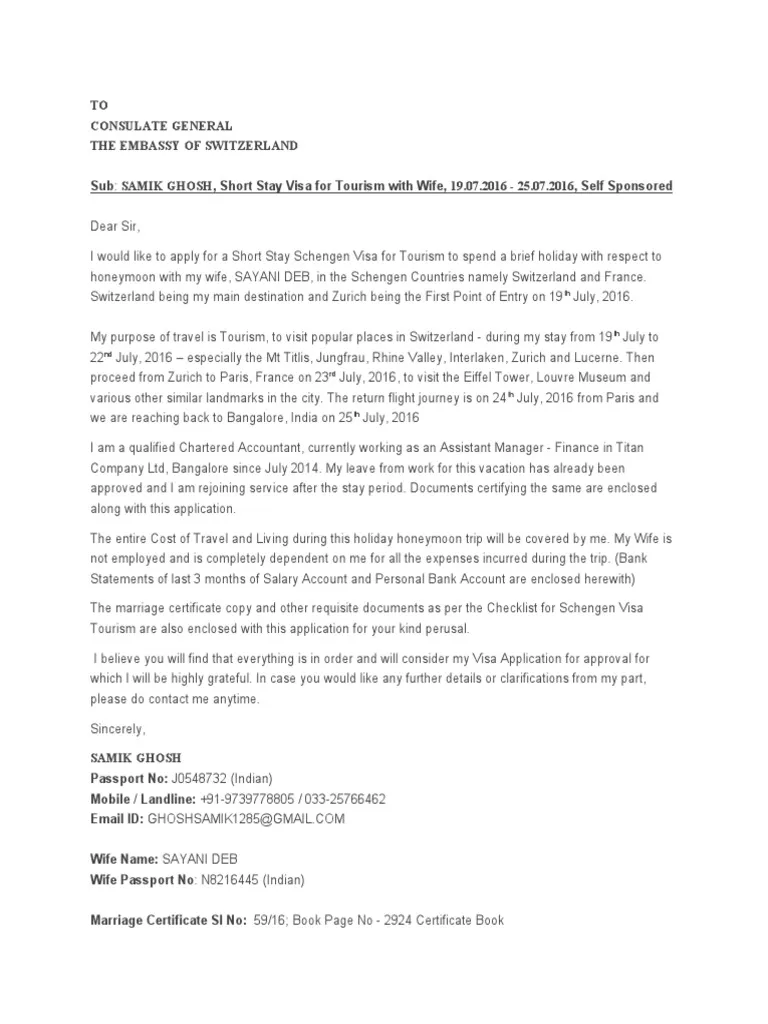
What is a Schengen Visa Cover Letter?
A Schengen visa cover letter is a personalized document submitted alongside your Schengen visa application. It serves as a formal introduction of yourself to the consulate or embassy, providing essential information about your trip and its purpose. It is an opportunity to present your travel plans and convince the visa officer of your genuine intentions to visit the Schengen area and return to your home country before the visa expires. The cover letter is a crucial part of your application. It’s not a simple formality; it’s your chance to shape the narrative of your trip and provide context to the supporting documents you provide.
Why is a Cover Letter Important for Schengen Visa?
A well-crafted cover letter significantly increases your chances of visa approval. It allows you to clearly articulate the purpose of your trip, the itinerary, and your ties to your home country, thereby demonstrating your intention to return after the visa period. The cover letter is where you can explain any unusual circumstances that might not be immediately clear from the standard application form. It adds a personal touch to your application, allowing the visa officer to understand your motivations and assess your credibility. A good cover letter can clarify any ambiguities or inconsistencies in your application, potentially preventing delays or rejection. Remember, the visa officer reviews hundreds of applications, and a compelling cover letter can help yours stand out.
Who Needs a Schengen Cover Letter?

Almost everyone applying for a Schengen visa requires a cover letter. This includes individuals traveling for tourism, business, study, or family visits. Some countries may have specific requirements or templates, so it’s essential to check the guidelines of the embassy or consulate of the Schengen country you plan to visit. Regardless of the purpose of your travel, the cover letter gives you an opportunity to present a clear and concise overview of your trip. Always verify the latest requirements on the official embassy website as they can change. If you’re traveling for multiple purposes, make sure your cover letter clearly explains each aspect of your trip.
Requirements of a Schengen Cover Letter
A Schengen cover letter must contain specific details to be effective. These details should be accurate, well-organized, and easy to understand. The goal is to provide a complete picture of your trip. It’s best to write the letter in the language of the consulate or embassy where you are applying or in English. The cover letter is not a rigid document but should be tailored to your specific situation. Ensure you provide all the necessary information to support your application. It should be considered a key part of your visa application package.
Personal Details
Start by clearly stating your full name, date of birth, and passport number. Include your address and contact information (phone number and email address) for easy communication. Mention your nationality and any other relevant details, such as your current occupation or student status. Ensure this section is accurate. Double-check the information against your passport and other identification documents. It sets the foundation for the rest of your letter, and any inaccuracies here could raise concerns.
Purpose of the Trip

Clearly state the main reason for your visit to the Schengen area. Whether it’s tourism, business, study, or visiting family, be specific and honest. Give details about the planned activities during your visit. If you’re visiting for tourism, mention the cities and attractions you plan to see. If it’s for business, explain the meetings, conferences, or other professional activities you will be attending. Your cover letter should convince the visa officer that your visit aligns with the type of visa you’re applying for. Any inconsistencies between your stated purpose and your supporting documents could result in visa rejection.
Travel Itinerary
Provide a detailed travel itinerary including entry and exit dates, the specific countries you will be visiting, and the duration of your stay in each country. List all planned travel dates and provide the addresses of your accommodation (hotels, hostels, etc.). Include your mode of transport, such as flights, trains, or buses, along with booking details. Your itinerary should be easy to follow and match the other documents you are submitting, such as flight tickets or hotel reservations. Consider using a table format for clarity and providing a day-by-day overview of your trip. (See Schengen Visa itinerary image).
Financial Information
Confirm that you have sufficient funds to cover all travel expenses. State the amount of money you have available and how you will finance your trip. Include the source of your funds (e.g., personal savings, salary, sponsorship). If someone is sponsoring your trip, provide their details and a letter of sponsorship. Include bank statements, pay slips, or any other financial documents to support your claims. (See Schengen Visa Financial Proof image). Your financial details must align with the rest of your application, showing the visa officer that you are able to support yourself throughout your stay.
Accommodation Details

Provide details about your accommodation arrangements, including hotel names, addresses, and booking confirmations. If you are staying with friends or family, include their names, addresses, and a letter of invitation. The accommodation details must match your travel itinerary and should reflect the length of your stay. Ensure that your accommodation is appropriate for the purpose of your trip. Attach proof of accommodation (e.g., hotel confirmations, rental agreements, or a letter from your host).
Supporting Documents
Mention all the supporting documents you are including with your application. This may include your passport, flight tickets, hotel reservations, bank statements, and a letter of invitation. Make sure you provide the complete list of your application. List the documents, making it easy for the visa officer to cross-reference them. Clearly reference all documents in your cover letter, making it easier for the visa officer to review your application. This helps the visa officer quickly verify the information provided in your cover letter and supporting documents.
Format and Structure of the Cover Letter
A well-structured cover letter is essential for a clear and professional presentation. Use a formal tone and avoid slang or informal language. Start with your personal details, including your full name, address, and contact information. The next section is the purpose of your visit. Then, provide details of your itinerary and accommodation. Clearly explain how you intend to finance your trip. Conclude by thanking the visa officer for their time and consideration. It is critical to format your cover letter correctly so that it’s easy to read and understand. Use clear headings and subheadings to organize your information. (See Schengen Visa example).
Formatting your Cover Letter

Use a professional font, such as Times New Roman or Arial, with a font size between 11 and 12 points. Keep your letter concise, aiming for no more than one page, and ensure the margins are standard (1 inch). Use bullet points or numbered lists where appropriate to organize your information and make it easy to read. Proofread your letter carefully for any grammatical errors, spelling mistakes, or typos. The formatting of your cover letter conveys a professional image and shows attention to detail. Proper formatting can help to impress the visa officer and increase your chances of visa approval.
Common Mistakes to Avoid
There are several common mistakes that applicants make when writing a Schengen cover letter. Understanding these mistakes will help you create a more effective document. Always double-check your application to ensure the highest possibility of visa approval. Avoiding these errors will make your application stronger and improve your chances of visa approval.
Lack of Clarity
One of the most common mistakes is providing vague or unclear information. Your cover letter should be precise and easy to understand. Always provide specific details about your trip, including the purpose, itinerary, and financial arrangements. Ambiguity can lead to confusion and may raise concerns about the credibility of your application. Ensure your letter is as clear and comprehensive as possible, leaving no room for misinterpretation.
Inaccurate Information

Another common error is providing false or misleading information. Always ensure that the details in your cover letter are accurate and match the supporting documents you provide. Any discrepancies can lead to rejection. Double-check all dates, names, and financial figures. Be honest and straightforward in your statements. Inaccurate information can undermine the credibility of your entire application.
Poor Formatting
A poorly formatted cover letter can negatively impact your application. Use a professional font and maintain a neat and organized layout. Avoid grammatical errors, spelling mistakes, and typos. Your cover letter must be easy to read and should convey professionalism. Always proofread your letter carefully before submitting it. (See Schengen Visa cover letter mistakes image)
Proofreading and Editing
Before submitting your cover letter, carefully proofread and edit it. Check for any grammatical errors, spelling mistakes, and typos. Verify that all the information provided is accurate and consistent with your supporting documents. Ask a friend or family member to review your letter for clarity and accuracy. Proofreading is a critical step in creating a professional and credible cover letter. Ensure all information is consistent and accurate.
Finalizing and Submitting Your Cover Letter

Once you’ve completed your cover letter and are satisfied with the content and format, it’s time to finalize and submit it with your visa application. Print the cover letter and sign it, as this adds a personal touch and confirms its authenticity. Attach the cover letter to your visa application along with the supporting documents. Submit all documents to the appropriate embassy or consulate, following their specific guidelines. Carefully review the submission instructions and double-check that you have included all required documents. (See Schengen Visa Application Form image). A well-prepared and accurate cover letter, along with all other required documents, will significantly increase your chances of visa approval.
In conclusion, a well-written Schengen visa cover letter is an essential component of your visa application. By following these guidelines, you can create a compelling cover letter that increases your chances of a successful visa outcome. Ensure your letter is clear, accurate, and professionally presented. Good luck with your application, and enjoy your trip to the Schengen area!