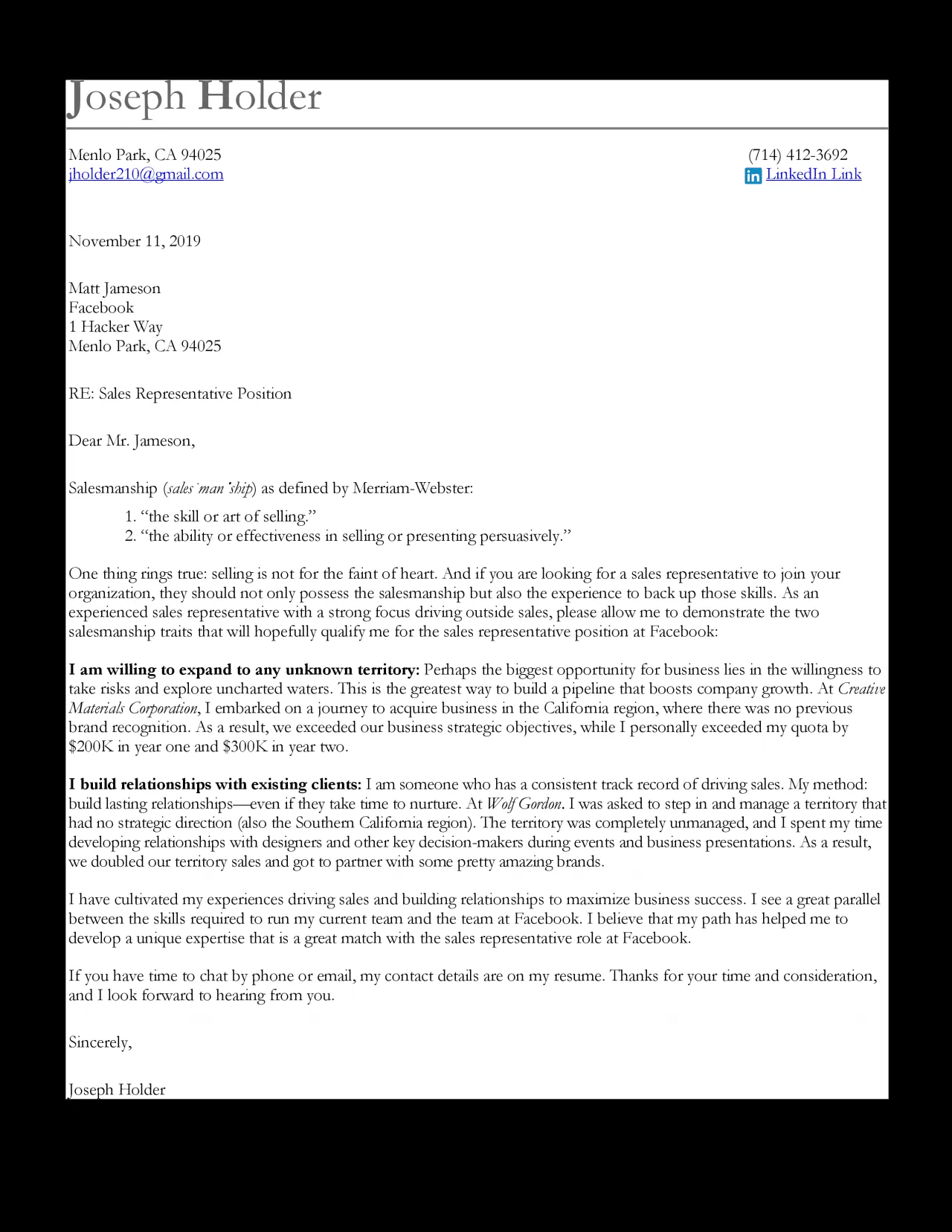
What is a Sales Cover Letter
A sales cover letter is your first opportunity to make a strong impression on a potential employer. It’s a crucial document that accompanies your resume and provides a personalized introduction, highlighting your relevant skills, experiences, and achievements in a way that grabs the hiring manager’s attention. Unlike a resume, which is a factual summary, a cover letter allows you to demonstrate your personality, enthusiasm, and understanding of the specific sales role and the company you are applying to. It serves as a persuasive tool, convincing the employer that you are the ideal candidate for the position.
The Purpose of a Sales Cover Letter
The primary purpose of a sales cover letter is to showcase how your skills and experiences align with the specific requirements of the sales position. It’s a chance to explain why you’re interested in the company, what you can bring to the table, and how your expertise can contribute to their success. A well-written sales cover letter demonstrates your communication skills, attention to detail, and ability to persuade. It’s your chance to go beyond the basic information in your resume and tell a compelling story about why you are the perfect fit. This document is not just about listing your qualifications; it’s about selling yourself and your ability to drive sales and revenue.
Key Components of a Sales Cover Letter

Header and Contact Information
Start your sales cover letter with a professional header. Include your full name, address, phone number, and email address. It should match the contact information on your resume. Also, include the date and the hiring manager’s name (if you know it) and their title, and the company’s name and address. Using the hiring manager’s name, when possible, demonstrates that you’ve taken the time to research the company and personalize your application, which is important if you want to impress the employer.
Personalized Greeting
Address the hiring manager by name, using ‘Dear Mr./Ms./Mx. [Last Name]’ if you know who it is. If you don’t know the hiring manager’s name, use a professional greeting, such as ‘Dear Hiring Manager’ or ‘Dear [Company Name] Hiring Team.’ Avoid generic greetings like ‘To Whom It May Concern’ as they don’t make a good first impression. Personalizing the greeting demonstrates that you’ve taken the time to research the company and the specific job opening, and this level of personalization is a sign of your commitment and genuine interest in the position.
Opening Paragraph

Your opening paragraph should immediately capture the reader’s attention. State the position you’re applying for and where you saw the job posting. Then, briefly mention your most relevant skills and experience, highlighting your enthusiasm for the role and the company. Keep it concise and to the point, setting the tone for the rest of your cover letter. Make sure that you also highlight your understanding of their business. The goal is to make the employer want to read more and learn more about you.
Highlighting Achievements and Skills
This is where you sell yourself. Elaborate on your key skills and achievements, providing specific examples that demonstrate your capabilities. Use the job description as a guide, highlighting the skills and experiences that align with the employer’s requirements. Quantify your accomplishments whenever possible to showcase your impact and add credibility to your claims. This section should be all about your sales skills and sales achievements to make a good impression on the potential employer. Showcasing your success and your drive to succeed is important to get hired.
Quantifiable Results
Use numbers to illustrate your achievements. For example, instead of saying ‘Increased sales,’ say ‘Increased sales by 20% in one year.’ Use metrics like revenue generated, targets exceeded, or customer acquisition rates. Quantifiable results provide concrete evidence of your success and make your achievements more compelling and impressive. Quantifiable results are a must-have for the potential employer, showing what you can achieve in the company.
Relevant Skills

List specific sales skills relevant to the job description. Include skills such as lead generation, negotiation, closing deals, CRM software proficiency, and customer relationship management. Provide examples of how you’ve used these skills in previous roles to achieve success. Match the language used in the job description to show that you understand what the employer is looking for. Make sure to show all of your sales-related skills so you can get hired for the job.
Demonstrating Understanding of the Role
Show the employer that you understand the role and the company’s needs. Briefly discuss how your skills and experience align with the specific requirements of the position and how you can contribute to the company’s goals. Research the company and the industry to tailor your cover letter and demonstrate your genuine interest. Use this section to show your understanding of the role, so the employer knows you know what you are doing. Your understanding of the role will increase your chances of getting hired.
Closing Paragraph and Call to Action
Summarize your key qualifications and reiterate your interest in the position. Include a strong call to action, such as ‘I am eager to discuss how my skills and experience can contribute to your team’s success. I look forward to the opportunity to speak with you soon.’ Provide your contact information again, and thank the hiring manager for their time and consideration. The closing paragraph should be about your drive to succeed.
Formatting and Design Tips

Choosing the Right Font and Size
Choose a professional and readable font, such as Times New Roman, Arial, or Calibri. Use a font size between 10 and 12 points for the body text. Ensure your cover letter is easy on the eyes and doesn’t strain the reader. Keep the layout clean and simple to enhance readability. The professional look is essential to a potential employer. If the cover letter doesn’t have a professional look, the chance of getting the job will decrease.
Using White Space Effectively
Use white space to separate sections and paragraphs. This improves readability and makes your cover letter more visually appealing. Avoid large blocks of text; keep paragraphs concise. Use bullet points or numbered lists to highlight key achievements and skills. The white space makes the letter more readable, and bullet points can help to easily locate the key skills and achievements of the potential employee.
Proofreading and Editing

Proofread your cover letter meticulously for any typos, grammatical errors, or spelling mistakes. Ask someone else to review it as well, as a fresh pair of eyes can often catch errors you might miss. Ensure the tone is professional, and the language is clear and concise. A well-written and error-free cover letter demonstrates attention to detail and professionalism. Make sure there are no errors since errors can affect your chance of getting the job.
Sales Cover Letter Examples
Example 1 Focusing on Sales Targets
In this example, the applicant highlights their ability to exceed sales targets. ‘In my previous role at XYZ Company, I consistently exceeded sales targets by an average of 15% each quarter. I achieved this by implementing a new lead generation strategy that increased qualified leads by 25%.’ This clearly demonstrates their ability to drive sales growth and achieve results. They also highlight that they want to implement the same lead generation strategy to boost the company’s sales.
Example 2 Highlighting Customer Relationship Skills

This example focuses on building and maintaining customer relationships. ‘I have a proven track record of building and maintaining strong customer relationships, resulting in a 90% customer retention rate. I implemented a customer satisfaction program that improved customer loyalty and generated repeat business.’ This example shows the ability to build a loyal customer base.
Example 3 Emphasizing Industry Knowledge
This example emphasizes industry knowledge. ‘With over five years of experience in the SaaS industry, I possess a deep understanding of market trends, customer needs, and competitive landscape. I have successfully closed deals with key accounts, contributing to a 30% increase in revenue.’ This highlights their specialized knowledge and its impact on performance. It helps the employer know that the potential employee has a deep understanding of the SaaS industry and can contribute to the company’s revenue. This example helps show how much knowledge the applicant has.
Best Practices for Sales Cover Letters
Tailoring the Cover Letter to Each Job

Customize each cover letter to the specific job and company you are applying to. Review the job description carefully and highlight the skills and experiences that align with the requirements. Demonstrate your understanding of the company’s mission, values, and target market. Generic cover letters are easily spotted and are often discarded. Tailoring the cover letter is important if you want the potential employer to hire you.
Researching the Company
Conduct thorough research on the company to demonstrate your interest and knowledge. Visit their website, read news articles, and check their social media presence. Use the information to tailor your cover letter and show that you understand their business and values. This helps you stand out from other applicants. Researching the company is a key step when applying for a job.
Adding a Portfolio or Links
If applicable, include a link to your online portfolio or relevant samples of your work. This provides tangible evidence of your skills and achievements. Include links to your LinkedIn profile or any other professional online presence. Make sure the links are working before sending the letter, so the potential employer can view the portfolio and the link to your LinkedIn profile.
Common Mistakes to Avoid
Generic Cover Letters
Avoid sending the same cover letter to multiple companies. Customize each letter to the specific job and company you are applying to. Generic cover letters lack the personalization and detail needed to impress the hiring manager. Show the potential employer that you have put time and effort to create a cover letter based on their business.
Typos and Grammatical Errors
Carelessly written cover letters with typos and grammatical errors create a poor first impression. Proofread your cover letter meticulously and ask someone else to review it. Errors suggest a lack of attention to detail and professionalism. This is a major turn-off for a potential employer, since it makes them think you didn’t put the time and effort needed to prepare the letter. Proofreading the cover letter is an important step.
Focusing Solely on Yourself
While highlighting your skills and achievements is important, focus on how you can contribute to the company’s success and how your skills can benefit them. Do not make the cover letter all about yourself. Demonstrate how your abilities align with the company’s goals and requirements. You want the company to know what you can do for them and not just talk about yourself.
The Importance of a Follow-Up
Following up on your application shows your interest and initiative. Send a brief email or make a phone call a week or two after submitting your cover letter and resume. Inquire about the status of your application and reiterate your interest in the position. This demonstrates your enthusiasm and commitment to the job opportunity. A simple follow-up email can leave a good impression on the employer.