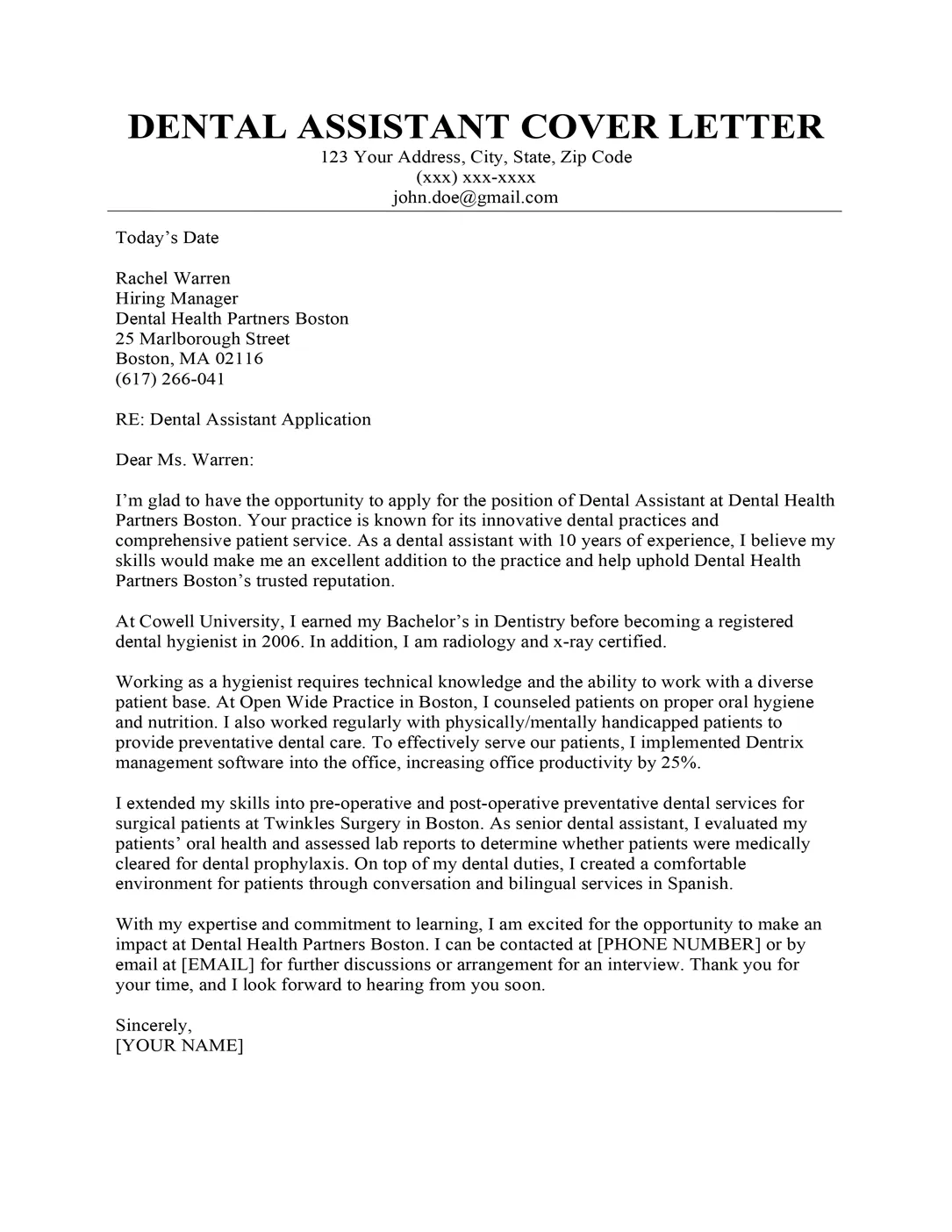
Understanding the Importance of a Dental Assistant Cover Letter
A well-crafted resume cover letter dental assistant is your first impression on a potential employer, and it’s your chance to shine beyond your resume. Think of it as your personal introduction, setting the stage for a more in-depth look at your qualifications. The cover letter helps you connect your skills, experiences, and passion to the specific requirements of the job, making you stand out from other applicants. It showcases your personality and communication skills, which are critical in a patient-centered field like dentistry. The cover letter is an opportunity to express why you’re the perfect fit for the dental practice and the role of a dental assistant, going beyond a simple list of skills and responsibilities.
Highlighting Your Skills and Experience
Your cover letter should highlight the skills and experiences that make you a strong dental assistant candidate. Start by identifying the key skills mentioned in the job description. These could include patient care, assisting with dental procedures, taking X-rays, sterilization, and administrative tasks. Give specific examples of how you’ve used these skills successfully in previous roles or during training. For example, if the job requires experience with digital X-rays, describe your proficiency and the number of X-rays you’ve taken. Quantify your achievements whenever possible, such as the number of patients you’ve assisted per day or any specific training or certifications you hold. This makes your application more credible and helps the hiring manager visualize your ability to perform the job effectively.
Tailoring Your Cover Letter to the Job

Generic cover letters rarely impress. Tailoring your resume cover letter dental assistant to each specific job is crucial. This shows that you’ve taken the time to understand the practice’s needs and are genuinely interested in the position. A customized cover letter demonstrates your attention to detail, a highly valued quality in dentistry. By addressing the unique requirements of each job, you significantly increase your chances of landing an interview, as it demonstrates your commitment and professionalism. Always review the job description carefully and customize the language to match the company’s tone.
Researching the Dental Practice
Before writing your cover letter, research the dental practice. Look at their website, read online reviews, and check their social media presence. Understanding their values, patient care philosophy, and the services they offer will help you tailor your letter to their specific needs. Mentioning something specific about the practice, like their commitment to using the latest technology or their community involvement, shows that you’ve done your homework and are genuinely interested in the opportunity. This demonstrates your proactive approach and ability to align with the practice’s goals. Researching the practice also enables you to address your cover letter to the correct person, increasing the chances of it being read and considered.
Addressing the Specific Job Requirements
Carefully analyze the job description and identify the key requirements. These may include specific skills, experience, and personality traits. In your cover letter, address each of these requirements directly, providing examples of how you meet them. For instance, if the job requires experience with electronic health records (EHR) systems, mention the specific systems you’ve used and your level of proficiency. If the job emphasizes patient communication skills, provide an example of a situation where you successfully handled a difficult patient interaction. Tailoring your responses to the exact requirements of the job makes it easier for the hiring manager to see that you’re a good fit.
Showcasing Your Passion for Dentistry

Your cover letter is the perfect place to express your passion for dentistry. Share what excites you about the field and why you are drawn to a career as a dental assistant. Do you enjoy working with patients? Are you fascinated by dental procedures? Do you have a strong desire to help people achieve healthy smiles? Let your enthusiasm shine through. Personalize your application to reflect your genuine interest in the field and how your career goals align with the practice’s mission. Be genuine and authentic, highlighting why you’re passionate about providing excellent patient care and contributing to a positive dental experience.
Formatting and Structure of Your Cover Letter
A well-formatted cover letter is essential. It demonstrates professionalism and makes your letter easy to read. Use a clean, professional font such as Arial or Times New Roman. Keep your letter concise, ideally within one page. Use clear, concise language and avoid jargon. The structure should include an introduction, a few body paragraphs highlighting your skills and experiences, and a concise conclusion expressing your interest and availability for an interview. Ensure there are proper margins and spacing to avoid a cluttered appearance. Proper formatting is a sign of attention to detail, a critical trait in dental assisting, which demonstrates respect for the hiring manager’s time.
Contact Information
Start your cover letter with your contact information. Include your full name, phone number, email address, and possibly your LinkedIn profile URL. Make sure your email address sounds professional. Ensure that the contact information is current and that your voicemail is set up and ready to receive messages. Correct contact details make it easy for employers to reach you. It demonstrates your attention to detail and commitment to the application process. Double-check all the details to avoid any errors, as missing or incorrect information can be a serious deterrent.
Professional Salutations

Address your cover letter to a specific person if possible. Research the name of the hiring manager or the practice owner. If you cannot find a name, use a professional salutation like “Dear Hiring Manager” or “Dear Dr. [Last Name]”. Avoid generic greetings like “To Whom It May Concern” as they sound impersonal. A personalized greeting demonstrates initiative and respect. The salutation sets the tone for your entire letter, so make sure it’s appropriate and respectful.
Concise and Engaging Body Paragraphs
The body of your cover letter should be clear, concise, and engaging. Each paragraph should focus on a specific aspect of your qualifications. Use action verbs to describe your skills and experiences. Provide concrete examples of your accomplishments, quantifying them whenever possible. Break up long paragraphs into shorter ones to improve readability. Highlight your achievements, skills, and any relevant experience that aligns with the job description. The goal is to provide compelling evidence that you possess the skills and qualities the employer is seeking. Ensure your writing is easy to understand and conveys your message effectively.
Polished Closing
End your cover letter with a strong closing statement. Reiterate your interest in the position and express your enthusiasm for the opportunity. Include a call to action, such as inviting the employer to contact you for an interview. Thank the hiring manager for their time and consideration. Make sure your closing is professional and leaves a positive impression. It’s your last chance to make an impression, so ensure it is clear, confident, and demonstrates your eagerness to move forward in the hiring process.
Proofreading and Editing Your Cover Letter

Before submitting your cover letter, carefully proofread and edit it. Errors can create a negative impression, suggesting a lack of attention to detail. Check for grammar, spelling, and punctuation errors. Make sure the language is clear, concise, and professional. Read the letter out loud to catch any awkward phrasing or sentence structures. Consider asking a friend or mentor to review your cover letter for feedback. A fresh pair of eyes can often catch mistakes that you might miss. Thorough proofreading is a non-negotiable step in the application process.
Finalizing and Submitting Your Cover Letter
Once you’ve proofread and edited your cover letter, finalize it for submission. Make sure the file format is appropriate (e.g., PDF) to ensure that your formatting is preserved. Double-check the recipient’s name and address, if submitting a hard copy. Send the cover letter and resume together, either as attachments in an email or according to the instructions provided in the job posting. Always follow the specific instructions in the job description to avoid missing any important steps. After submitting, consider sending a polite follow-up email after a week or two to express your continued interest and confirm receipt of your application. This shows your initiative and helps keep your application top of mind.