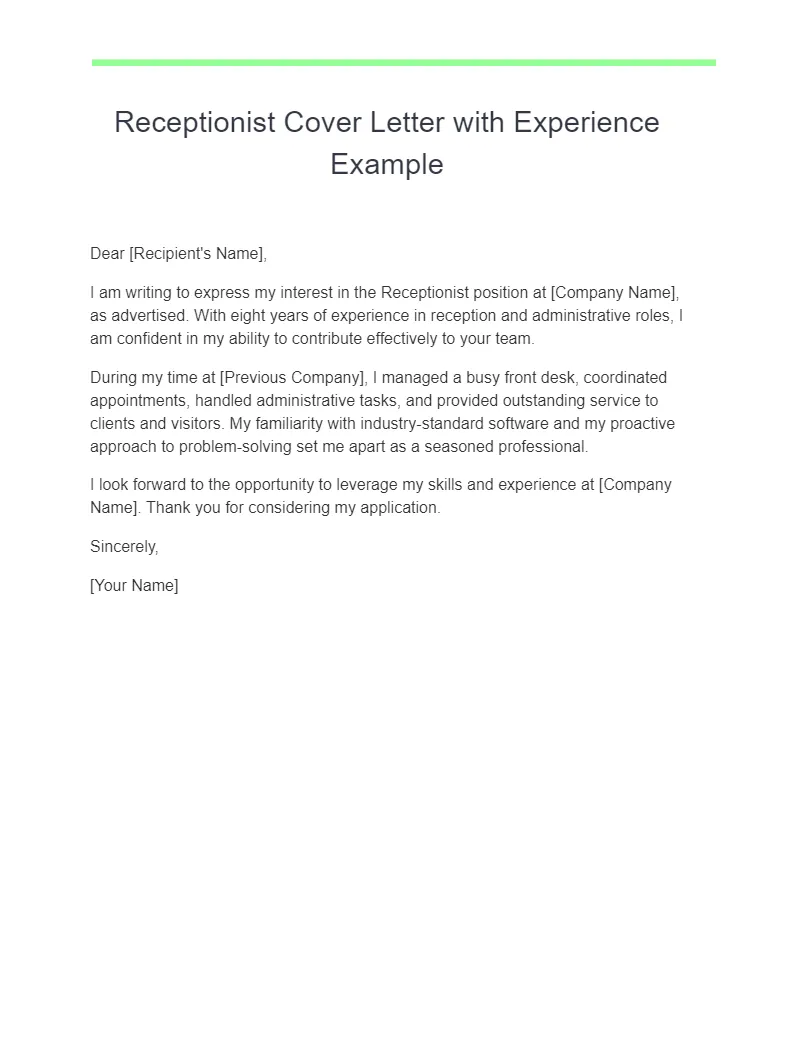
Understanding the Receptionist Role
The receptionist role is often the first point of contact for any company, making a strong first impression critical. Receptionists are the gatekeepers, managing the flow of information, people, and communications. They are responsible for a multitude of tasks that keep an office running smoothly. This position requires a diverse skillset encompassing communication, organization, and technical proficiency. While previous experience can be beneficial, a well-crafted cover letter is the first step in demonstrating your suitability for the job. This guide will help you write a compelling cover letter, even if you have no prior experience, and greatly improve your chances of landing your dream role.
Key Responsibilities of a Receptionist
A receptionist’s responsibilities extend beyond answering phones and greeting guests. Understanding the core duties is crucial for tailoring your cover letter. These can include managing phone calls, scheduling appointments, sorting and distributing mail, and providing administrative support. Receptionists also maintain office security, manage visitor access, and may handle basic bookkeeping tasks. Familiarizing yourself with these responsibilities will enable you to highlight the skills and experiences most relevant to the job description. Make sure to tailor your cover letter to match the specific requirements of the position you are applying for to show the hiring manager that you understand what the job entails.
Essential Skills for Receptionists

Even without direct receptionist experience, you likely possess transferable skills essential for success in this role. These skills form the foundation of your cover letter. Strong communication skills are paramount, as is the ability to multitask, prioritize, and remain organized. Proficiency with office software, such as Microsoft Office, and a professional demeanor are also critical. Highlighting these transferable skills, along with your enthusiasm and willingness to learn, can significantly increase your chances of getting hired. Take the time to identify your key skills and how they align with the job’s requirements.
Communication Skills
Excellent communication skills, both written and verbal, are the cornerstone of a receptionist’s role. You will be interacting with people from various backgrounds daily, so the ability to communicate clearly, concisely, and professionally is essential. Your cover letter should reflect these abilities. Demonstrate your proficiency in active listening, clear speaking, and email etiquette. If you have experience in customer service, sales, or any role involving frequent communication, highlight it. Provide specific examples of how you’ve effectively communicated with others, resolved conflicts, or conveyed information. Using strong, active verbs will bring these skills to life for the hiring manager.
Organizational Abilities
Receptionists often juggle multiple tasks simultaneously, requiring strong organizational skills. The ability to manage schedules, handle paperwork, and prioritize tasks effectively is critical. In your cover letter, showcase any organizational skills you possess, even if they were developed in non-work settings. Examples include managing personal schedules, organizing events, or handling projects at school or in volunteer roles. Detail how you’ve used organizational tools, such as calendars, spreadsheets, or project management software. Highlight your ability to stay organized, meet deadlines, and handle a fast-paced environment. If you are detailed and can handle a complex schedule you can show the hiring manager these skills on your cover letter.
Technical Proficiency

Receptionists need to be comfortable with various office technologies. This includes proficiency in computer software, such as Microsoft Office (Word, Excel, Outlook), and experience with phone systems, printers, and other office equipment. While specific experience may be limited, you can demonstrate your technical aptitude by highlighting any relevant computer skills, typing speed, or experience using similar software. Be specific about the software you’re familiar with and how you’ve used it. If you are a quick learner you can also mention your ability to quickly adapt to new software or technologies. Even if you don’t have extensive technical experience, showcasing your willingness to learn and adapt is valuable.
Crafting Your Cover Letter
The cover letter is your chance to make a great first impression and demonstrate why you’re the right fit for the role. Every aspect of the letter, from the format to the content, must be polished and professional. Take your time and tailor the letter to each job application. Don’t send a generic cover letter. Instead, customize it to showcase your unique skills and experiences and highlight your enthusiasm for the specific role and company. This level of personalization will show that you’ve invested time and effort into your application, setting you apart from the competition. A well-written cover letter gives you the opportunity to explain how your skills and experiences align with the job’s requirements.
Header and Contact Information
Start your cover letter with a professional header. Include your full name, contact information (phone number and email address), and the date. If you know the hiring manager’s name, address the letter to them specifically. If not, use a general greeting like “Dear Hiring Manager.” The header should be clean, organized, and easy to read. Make sure the email address is professional. Double-check that all the information is accurate. A well-formatted header demonstrates your attention to detail, which is an important trait for a receptionist. Be certain that your phone number and email are accurate, so the hiring manager can contact you.
Opening Paragraph

The opening paragraph should immediately grab the reader’s attention. State the position you are applying for and how you learned about it. Express your enthusiasm for the role and the company. A strong opening paragraph sets the tone for the rest of the letter and encourages the hiring manager to read on. Keep the opening concise and to the point, while also being engaging and enthusiastic. If someone referred you, include their name in the opening. Briefly explain what makes you interested in the company and why you believe you are a good fit for the role. This shows that you have a true interest in the position.
Highlighting Transferable Skills
This is where you showcase your skills and experiences, even if you don’t have direct receptionist experience. Focus on the skills that align with the job description. These can include communication, organizational skills, customer service, and computer proficiency. Provide specific examples of how you’ve demonstrated these skills in previous roles, volunteer work, or academic settings. Quantify your achievements whenever possible. Instead of simply saying you’re organized, provide an example of how you’ve successfully managed multiple tasks or projects. Use strong action verbs to describe your accomplishments, and tailor your examples to match the job’s specific requirements.
Showcasing Enthusiasm and Personality
Let your personality shine through in your cover letter. While remaining professional, convey your enthusiasm for the role and the company. This can be achieved by expressing genuine interest in the company’s mission, values, or products. Mention specific aspects of the company that appeal to you. Show that you’ve researched the company and understand its culture. Personalize your letter to reflect your unique qualities. You don’t need to be a carbon copy of someone else. Being authentic and showing your personality will help the hiring manager see you as a real person. Your personality can set you apart from other applicants.
Demonstrating Your Research

Research the company before writing your cover letter. This shows that you’re genuinely interested in the position and the organization. Visit the company’s website, read their mission statement, and learn about their products, services, and culture. In your cover letter, mention something specific that attracted you to the company, demonstrating that you’ve done your homework. Tailor your letter to reflect the company’s values and the requirements of the job. Researching the company will also help you tailor your cover letter to address the hiring manager’s needs. This will greatly increase your chances of being invited to an interview.
Closing the Cover Letter
In the closing paragraph, reiterate your interest in the position and thank the hiring manager for their time and consideration. Include a call to action, such as expressing your availability for an interview and providing your contact information. Keep the closing concise and professional. Avoid clichés. Instead, write a statement that reflects your enthusiasm and highlights your key skills. A strong closing paragraph leaves the reader with a positive impression and encourages them to take the next step. This is your final chance to make a good impression.
Proofreading and Formatting
Proofreading is crucial. Before submitting your cover letter, carefully review it for any grammatical errors, typos, and inconsistencies. Read the letter aloud to catch any awkward phrasing or sentence structure. Ensure your cover letter is well-formatted, easy to read, and visually appealing. Use a professional font, such as Arial or Times New Roman, and maintain consistent margins and spacing. Ask a friend or family member to proofread the letter for a second opinion. A polished, error-free cover letter shows your attention to detail and professionalism, significantly increasing your chances of getting an interview. This is one of the easiest things to do to improve your chances of a callback.
Writing a great cover letter can be challenging. However, by focusing on your transferable skills, showcasing your enthusiasm, and demonstrating that you’ve researched the company, you can write a compelling letter that increases your chances of landing an interview. Remember to proofread and format your cover letter carefully. With a well-crafted cover letter, you can successfully highlight your strengths and secure your first receptionist role.