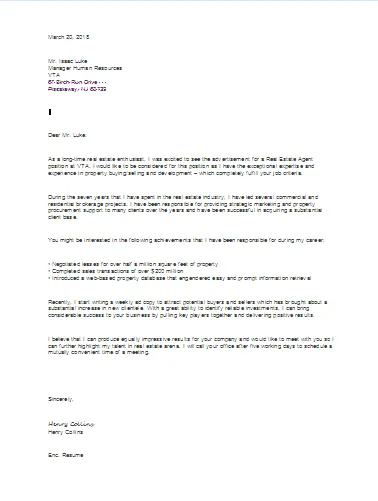
Why You Need a Stellar Real Estate Cover Letter
In the competitive world of real estate, a well-crafted cover letter is your first opportunity to make a lasting impression. It’s more than just a formality; it’s your chance to showcase your personality, skills, and passion for the industry. A stellar cover letter can set you apart from other applicants, highlight your unique qualifications, and increase your chances of landing an interview. Without a strong cover letter, your resume might get lost in the shuffle. A cover letter lets you explain why you’re the perfect fit for the specific role, demonstrating your understanding of the company’s values and goals. It’s your chance to tell your story and convince the hiring manager that you’re the right person for the job. Consider it your personal introduction, setting the stage for a successful career in real estate.
Understanding the Purpose of a Cover Letter
The primary purpose of a cover letter is to introduce yourself and your qualifications to a potential employer. It serves as a companion to your resume, providing additional context and depth to your application. Unlike your resume, which provides a snapshot of your work history, a cover letter allows you to express your personality, articulate your career goals, and explain why you’re particularly interested in the specific role and company. It gives you the opportunity to connect with the hiring manager on a more personal level, demonstrating your genuine interest and enthusiasm. Furthermore, a cover letter demonstrates your communication skills, an essential trait in real estate. By crafting a thoughtful and well-written cover letter, you can show that you have taken the time to understand the role and the company, setting you apart from candidates who submit generic applications. A cover letter is a strategic tool to advocate for yourself and secure an interview.
The Key Components of a Winning Cover Letter

A winning real estate cover letter is a carefully constructed document, incorporating several key elements that work together to make a compelling case for your candidacy. Each section plays a crucial role in conveying your skills, experience, and enthusiasm. This section should detail those essential parts to ensure your cover letter is as effective as possible. By following a clear structure and including all these key components, you’ll create a cover letter that grabs attention and significantly increases your chances of getting hired in the competitive real estate market.
Contact Information and Header
Start with your contact information at the top of the letter, including your name, phone number, email address, and LinkedIn profile (optional). This ensures the hiring manager can easily reach you. The header should be professional and clear, using a standard font and formatting. This section sets the tone for the entire letter and provides a quick reference for the reader. Make sure the information is accurate and up-to-date. Always proofread this section carefully, as any errors here can be detrimental to your application. Ensuring your contact information is correct is the first step toward a successful application process.
The Greeting and Addressing the Hiring Manager
Address the hiring manager by name whenever possible. Research the company to find out who will be reviewing your application. If you cannot find a specific name, use a professional greeting such as “Dear Hiring Manager.” Avoid generic greetings such as “To Whom It May Concern.” Personalizing your greeting shows that you have taken the time to research the company and the position, which makes a great first impression. A personalized greeting makes your letter feel less generic and demonstrates your attention to detail. It shows initiative and respect for the hiring process, setting a positive tone for the rest of the letter. This small step can significantly impact the hiring manager’s perception of your application.
Crafting a Compelling Opening Paragraph

Your opening paragraph is your chance to grab the reader’s attention immediately. Clearly state the position you are applying for and briefly explain why you are interested in the role and the company. Mention where you found the job posting. This demonstrates your ability to follow instructions. Consider starting with a brief statement about what excites you about real estate or the specific company. If you have a strong connection to the area or a relevant experience, mention it here. Avoid clichés or generic statements. Make sure your opening sets the tone for the rest of your letter, highlighting your personality and enthusiasm. Aim to pique the hiring manager’s interest immediately. A well-crafted opening will encourage them to continue reading.
Highlighting Your Relevant Skills and Experience
The body of your cover letter should detail your skills and experience, directly relevant to the job description. Mention specific achievements and quantify them whenever possible. For example, instead of saying “I increased sales,” say “I increased sales by 15% in six months.” Use keywords from the job description to show that you understand the requirements. Provide examples of how you have used your skills in previous roles. Tailor your skills and experience to align with the specific requirements of the position. Focus on the most relevant aspects of your background to demonstrate your value to the company. This section is critical to demonstrating how you meet the job requirements and can contribute to the company’s success. This is where you showcase why you are the perfect candidate.
Showcasing Your Achievements and Results
Don’t just list your responsibilities; showcase your achievements. Use the STAR method (Situation, Task, Action, Result) to structure your examples. Briefly describe the situation, the task you were given, the actions you took, and the results you achieved. Focus on accomplishments that demonstrate your ability to succeed in the real estate industry. Quantify your achievements whenever possible. For example, “Successfully closed 20 deals in my first year.” Highlighting your successes shows your potential to contribute significantly to the company. This is your chance to stand out and demonstrate your capabilities. Show the hiring manager what you can bring to the table. Providing concrete examples of your achievements makes your application more compelling and memorable. It provides tangible evidence of your skills.
Demonstrating Your Knowledge of the Real Estate Market

Show your understanding of the local real estate market and industry trends. Mention any relevant certifications, licenses, or education. If you have a good understanding of market analysis, property valuation, or negotiation strategies, highlight these. Mention any software or tools you are proficient with. Demonstrate your commitment to staying informed about the industry. This shows that you are prepared for the job and have a passion for real estate. Demonstrating market knowledge helps you stand out from other candidates. Mention any relevant market trends or insights you have. Show that you are not just looking for a job but are genuinely interested in the field. Tailor your knowledge to the specific market and the role requirements to demonstrate your preparedness.
Expressing Your Enthusiasm and Interest
Convey your genuine enthusiasm for the role and the company. Explain why you are interested in working for this specific real estate company. Mention their values, mission, or any specific aspects that appeal to you. Show that you’ve researched the company and understand their goals. Use passionate and engaging language throughout your letter. Expressing your enthusiasm will help the hiring manager envision you in the role and see that you’re a good fit for the company culture. This demonstrates your genuine interest. Passion can often be the differentiating factor. Be authentic and let your excitement for the role shine through in your writing. Showing your interest and enthusiasm can greatly increase your chances of securing an interview.
Creating a Strong Closing and Call to Action
In your closing paragraph, reiterate your interest in the position and thank the hiring manager for their time and consideration. Include a call to action, such as “I look forward to discussing my qualifications further in an interview.” State your availability for an interview and how they can reach you. Keep the tone professional and enthusiastic. A clear call to action encourages the hiring manager to take the next step. End with a professional closing such as “Sincerely” or “Respectfully.” The closing is the final impression you leave on the hiring manager. Make it memorable and leave them wanting to learn more about you. This ensures they know how to contact you.
Proofreading and Editing Your Cover Letter

Before submitting your cover letter, proofread it meticulously. Check for any grammatical errors, spelling mistakes, and punctuation errors. Ask someone else to review your letter as well. They might catch errors that you missed. Make sure the formatting is consistent and easy to read. Ensure that your contact information is accurate. A polished and error-free cover letter demonstrates professionalism and attention to detail. Proofreading is a crucial step to ensure your cover letter reflects your best self. Errors can undermine your credibility and make it appear that you lack attention to detail. Thoroughly proofread your letter to make sure it is error-free. A perfect cover letter significantly increases your chances of getting hired.
Formatting Your Cover Letter for Readability
Format your cover letter for easy readability. Use a professional font such as Times New Roman, Arial, or Calibri. Maintain a consistent font size (11 or 12 points). Use single spacing within paragraphs and double spacing between paragraphs. Use clear headings and subheadings to break up the text. Keep the letter to one page. Use bullet points for lists to make information easy to scan. Make sure your margins are appropriate (1 inch on all sides). A well-formatted letter is easier to read and makes a positive impression. Following these formatting guidelines makes your cover letter more accessible. A clean and well-organized layout demonstrates that you respect the reader’s time and attention. Ensure your document is easy to read.
Tailoring Your Cover Letter to Each Job
Avoid using a generic cover letter for multiple job applications. Customize your cover letter for each specific role and company. Research the company and tailor your letter to their values, mission, and requirements. Highlight the skills and experiences most relevant to the job description. Mention the company by name and demonstrate that you understand their business. Show that you have taken the time to tailor your application to their needs. A customized cover letter demonstrates your interest and enthusiasm. Make it clear why you are interested in THIS specific role and why you’re a good fit for THIS company. This personalization will make your application stand out from those who submit generic applications.
What to Avoid in Your Real Estate Cover Letter

Several common mistakes can hurt your chances of getting hired. By knowing what to avoid, you can ensure your cover letter makes a positive impression. Avoid making these missteps to give your application the best chance of success. Be sure to stay clear of these pitfalls to strengthen your application and boost your chances in the real estate field.
Common Mistakes to Steer Clear Of
Avoid clichés and generic phrases that don’t reflect your individuality. Do not use jargon that might not be familiar to the reader. Refrain from negative language or criticizing previous employers. Avoid exaggerating or misrepresenting your qualifications. Don’t include irrelevant information that doesn’t pertain to the job. Refrain from typos, grammatical errors, or spelling mistakes. Avoid sending a cover letter that is too long. Never send a cover letter without tailoring it to the specific role. Steering clear of these common mistakes will make your cover letter far more effective. Make sure your letter is unique and professional. Avoiding these mistakes will keep your application from being overlooked. This allows you to create a better impression.
The Importance of a Professional Tone
Maintain a professional tone throughout your cover letter. Use formal language and avoid slang or casual expressions. Be respectful and courteous in your writing. Proofread carefully to ensure you are using the correct terminology and that your tone is appropriate for the industry. Avoid being overly familiar or informal. Ensure that your language reflects your professionalism and attention to detail. The way you write reflects how you will interact with clients and colleagues. Maintaining a professional tone shows that you take your career seriously. Ensure your tone is appropriate for the industry. A professional tone demonstrates respect. This will help make a good impression on the hiring manager.
Following Up After Submitting Your Cover Letter

After submitting your cover letter, it’s appropriate to follow up, but do so strategically. Send a polite email a week or two after the application deadline, inquiring about the status of your application. Thank the hiring manager again for their time and consideration. Reference the specific role and company. Keep your message brief and professional. This shows that you are proactive and genuinely interested in the position. Following up politely demonstrates your interest. Be polite and concise in your follow-up. A well-timed follow-up can help you stand out from other applicants. It can also give you an opportunity to reiterate your interest and qualifications.
Conclusion
Crafting an effective real estate cover letter is crucial to making a positive impression and securing a job interview. By following these guidelines and avoiding common mistakes, you can create a cover letter that highlights your skills, experience, and passion for the industry. Remember to tailor your letter to each specific job, proofread carefully, and maintain a professional tone. With a well-written cover letter, you will be well on your way to starting a successful career in real estate. Take your time and tailor your letter for each specific application to increase your chances of success in the competitive real estate market. Good luck, and happy job hunting!