What is a Psychology Cover Letter?
A psychology cover letter is a crucial document that accompanies your resume when applying for psychology-related positions. It serves as your first introduction to a potential employer, providing a concise overview of your qualifications, skills, and experience. Unlike a resume, which lists your accomplishments, a cover letter allows you to elaborate on specific experiences and connect them directly to the requirements of the job. This personalized approach helps you stand out from other applicants and demonstrate your genuine interest in the role and the organization. Writing a compelling cover letter is essential for making a positive first impression and increasing your chances of securing an interview.
Purpose of a Psychology Cover Letter
The primary purpose of a psychology cover letter is to persuade the hiring manager to review your resume and consider you for an interview. It’s not just about reiterating what’s on your resume; it’s about telling a story that highlights your suitability for the specific position. The cover letter allows you to showcase your personality, passion for psychology, and how your unique skill set aligns with the job requirements. By tailoring your cover letter to each application, you demonstrate that you’ve taken the time to understand the organization and the specific role. This level of detail is a key component of success in a competitive job market. Furthermore, it can also reveal your communication skills and attention to detail, both of which are critical in the field of psychology.
Key Components of a Psychology Cover Letter

A well-structured psychology cover letter typically includes several key components. Each section serves a specific purpose in conveying your qualifications and interest. Understanding these components and how they fit together is vital to creating a compelling application that captures the attention of the hiring manager. The key parts include the header, the body (with an introduction, skills section, organization connection, and call to action), and the closing. Ensuring you address each of these areas will make your cover letter a highly effective tool in your job search.
Header Section
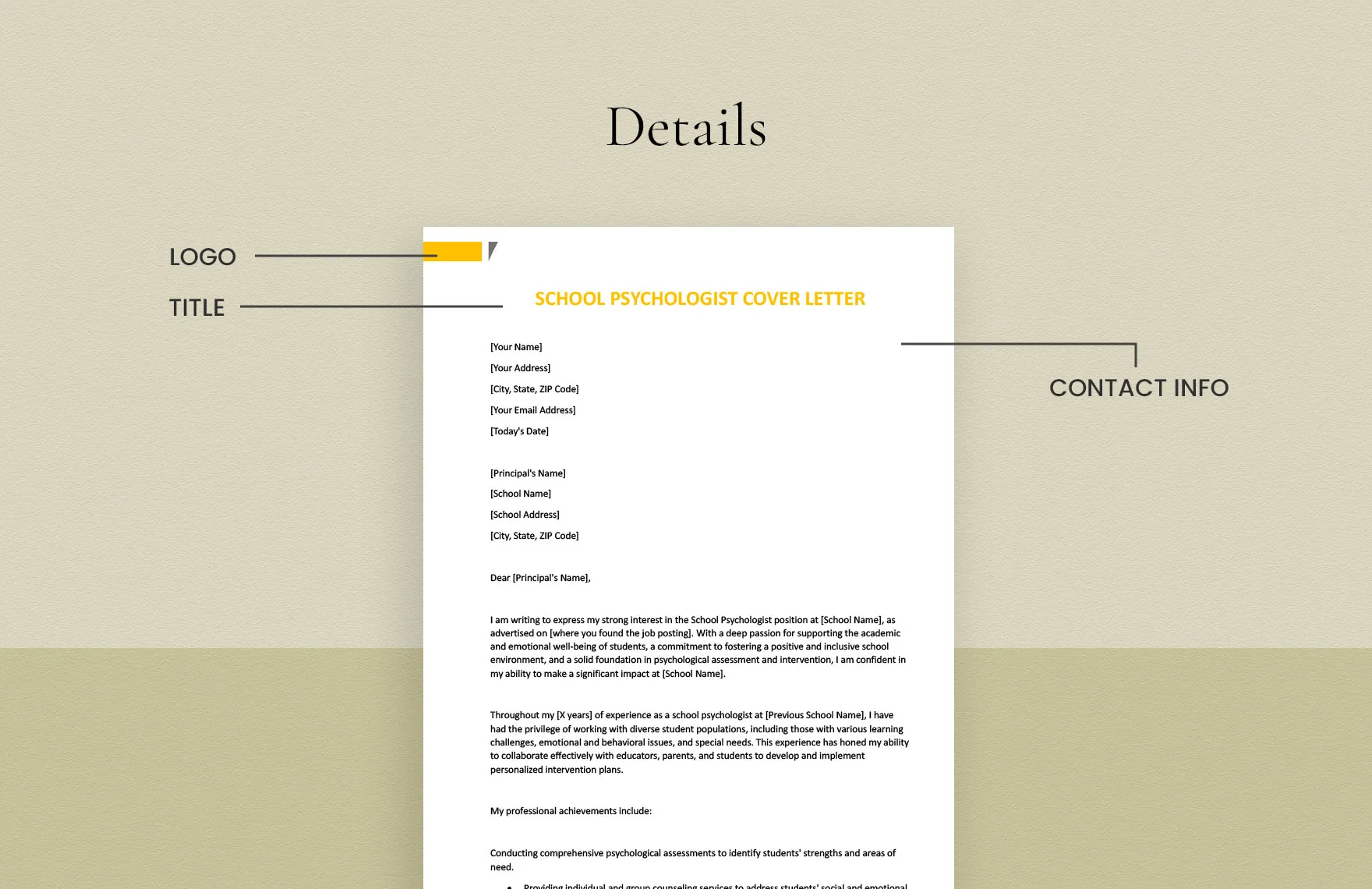
The header of your psychology cover letter should be professional and include your contact information and the date. It sets the tone for the rest of the document. Make sure that your information is up-to-date and easy to read. This ensures that the recipient knows how to contact you if they wish to proceed with your application. The header should be clear and organized, reflecting your attention to detail and professionalism. Be sure to include your full name, address, phone number, and email address in a clean and readable format.
Applicant Contact Information
This section includes your full name, address, phone number, and email address. Ensure all the information is accurate and up-to-date. Consider using a professional-sounding email address. This is the first impression of your contact details.
Date of Application

Include the date you are sending the cover letter. This helps the employer track the application’s timeliness. Place the date below your contact information.
Recipient Contact Information
If possible, address the letter to a specific person (e.g., the hiring manager). This personal touch shows that you’ve done your research. If the name of the hiring manager is unavailable, use a professional greeting such as ‘Dear Hiring Manager’.
Greeting
Use a professional greeting. If you know the recipient’s name, use ‘Dear Mr./Ms./Dr. [Last Name]’. If not, use ‘Dear Hiring Manager’ or a similar professional salutation.
Body Section

The body of your cover letter is where you showcase your qualifications, experiences, and why you are a good fit for the position. This section needs to be tailored to the specific job you are applying for. Use the body to tell a story, illustrating how your skills and experiences align with the job’s requirements. The tone should be professional and enthusiastic, demonstrating your genuine interest in the role and the organization. This section is usually broken down into several paragraphs to make the content easy to digest.
First Paragraph The Hook
Start with a strong opening that grabs the reader’s attention. Mention the specific position you are applying for and how you found the opportunity. Show your enthusiasm for the role and briefly state why you’re a strong candidate. The goal is to immediately engage the reader and make them want to continue reading. You might also mention a key skill or accomplishment that immediately connects with the job requirements.
Second Paragraph Showcasing Skills
Highlight relevant skills and experiences from your resume. Choose the skills that are most relevant to the job description. Use specific examples to demonstrate how you’ve used these skills in the past. This is where you can show your qualifications by connecting your skills and experiences to the requirements outlined in the job posting. Quantify your achievements whenever possible to provide tangible evidence of your abilities.
Highlighting Relevant Skills

Identify the key skills the employer is looking for and clearly state how you possess those skills. Give examples of how you have used these skills in past roles or experiences. Focus on both hard and soft skills. This will help you stand out as a well-rounded candidate.
Quantifying Achievements
Whenever possible, use numbers and data to illustrate your achievements. For example, instead of saying ‘Improved patient outcomes,’ say ‘Improved patient outcomes by 15%’. This provides concrete evidence of your accomplishments and shows the value you can bring to the role. Quantifying your achievements demonstrates a results-oriented approach.
Third Paragraph Why This Position
Explain why you are interested in this specific position and organization. Show that you’ve researched the company and understand its mission, values, and goals. Highlight how your values align with the company’s. This demonstrates your genuine interest and commitment. Clearly articulate why you are a good fit for this particular opportunity.
Demonstrating Knowledge of the Organization

Show that you have researched the company and understand their mission, values, and goals. Mention specific programs or initiatives that resonate with you. This demonstrates your interest and shows that you have taken the time to learn about the organization.
Connecting Skills to the Role
Clearly articulate how your skills and experiences align with the requirements of the role. Use the job description as a guide and address each of the key requirements. This helps the employer see how you can contribute to their team.
Fourth Paragraph Call to Action
End your letter with a clear call to action. State your enthusiasm for the opportunity and your willingness to discuss your qualifications further. Thank the hiring manager for their time and consideration. Express your availability for an interview.
Expressing Enthusiasm and Availability

Reiterate your enthusiasm for the position and express your willingness to discuss your qualifications in an interview. Clearly state your availability for an interview. This encourages the hiring manager to take the next step.
Closing
The closing of your cover letter should be professional and courteous. It reinforces your interest and thanks the reader for their time. This provides a final touch that leaves a positive impression. Be sure to use a professional closing and include your signature.
Complimentary Closing
Use a professional and polite closing, such as ‘Sincerely’, ‘Best regards’, or ‘Thank you’. Choose a closing that is appropriate for the tone of your letter and the relationship you have with the recipient.
Typed Name and Signature

Type your full name below your closing. If submitting a hard copy, include your handwritten signature above your typed name. This final step provides a professional touch to your cover letter.
Formatting Your Psychology Cover Letter
Proper formatting is essential for making your cover letter easy to read and visually appealing. The format is just as crucial as the content because it reflects your attention to detail and professionalism. A well-formatted letter ensures that your message is communicated clearly and effectively. Consider the elements of font, margins, and proofreading to ensure your cover letter meets the necessary professional standards.
Choosing the Right Font
Select a professional and easy-to-read font, such as Times New Roman, Arial, or Calibri. Keep the font size between 10 and 12 points. Use consistent formatting throughout the document to maintain a polished look. Avoid using fonts that are overly stylized or difficult to read.
Maintaining Proper Margins
Use standard 1-inch margins on all sides of your cover letter. This ensures that the text is well-balanced and easy to read. Proper margins also prevent the text from appearing cramped or cluttered. Correct margin use creates a professional and clean appearance.
Proofreading and Editing
Carefully proofread and edit your cover letter for any grammatical errors, spelling mistakes, or typos. Ensure your sentences are clear, concise, and easy to understand. Have a friend or career advisor review your letter. A well-proofread cover letter demonstrates your attention to detail and professionalism. Errors can significantly impact the perception of your candidacy.
Psychology Cover Letter Samples
Reviewing samples of cover letters can provide you with valuable insights and guidance. Different types of psychology positions require unique approaches. Understanding these nuances can help you adapt your cover letter to the specific needs of each application. Analyze how successful candidates have highlighted their skills, experiences, and motivations in different scenarios. Using these examples, you can ensure that your cover letter is targeted, compelling, and optimized to make a great first impression. Be sure to tailor the sample to your own experiences and the specific job requirements.
Sample Cover Letter Clinical Psychologist
A cover letter for a clinical psychologist position should highlight experience with assessment, diagnosis, and treatment of mental disorders. It should demonstrate an understanding of therapeutic approaches, ethical considerations, and patient care. The letter should showcase your experience in a clinical setting, your ability to build rapport with patients, and your skills in conducting therapy sessions. Also, include details about any specializations or certifications you possess.
Sample Cover Letter Psychology Intern
A cover letter for a psychology intern position should showcase your academic achievements, relevant coursework, and any clinical or research experience. It should demonstrate your passion for psychology and your desire to learn and grow in the field. This is an opportunity to highlight your skills, enthusiasm, and any relevant experiences. Emphasize your understanding of the internship’s goals and how your skills and experience can contribute to the program.
Sample Cover Letter Research Psychologist
A cover letter for a research psychologist position should emphasize your research experience, including your ability to design and conduct studies, analyze data, and write research reports. It should highlight your familiarity with research methodologies and statistical analysis. The letter should demonstrate your skills in project management, collaboration, and communication. Show your expertise and enthusiasm for psychological research.
Tips for a Winning Psychology Cover Letter
To create a winning psychology cover letter, follow these key tips. Customization is key; tailor your letter to each specific job. Emphasize your skills and accomplishments. Use action verbs to show initiative and results. Be professional and enthusiastic throughout the letter. By using these techniques, you can make your cover letter stand out and increase your chances of success. Remember, your cover letter is your first introduction, make it count.