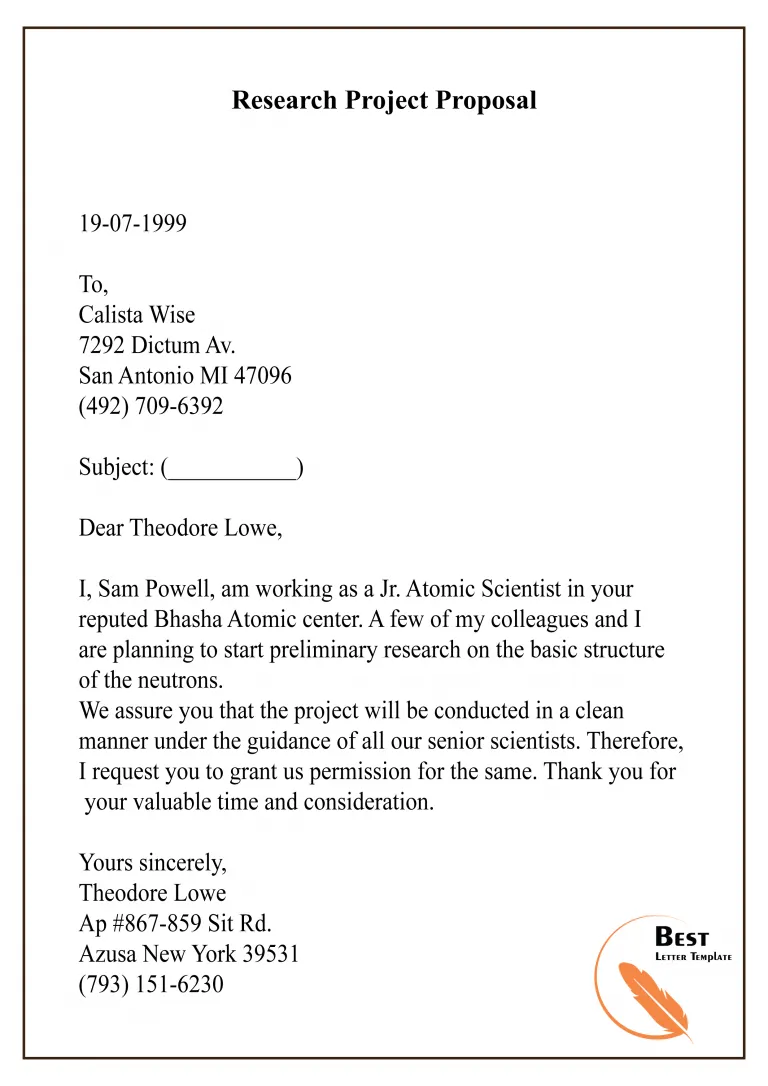
Understanding the Importance of a Cover Letter
A well-crafted cover letter is far more than just a formality when submitting a project proposal. It serves as your initial introduction, setting the tone and making the first impression on the recipient. This crucial document can significantly influence whether your proposal is read and considered. It’s your opportunity to grab attention, demonstrate your understanding of the project, and showcase your unique value proposition. The cover letter is the bridge between your proposal and the reader, a vital tool in navigating the complex world of project submissions.
What is a Project Proposal Cover Letter
A project proposal cover letter is a concise document that accompanies your project proposal. Its primary objective is to introduce your proposal to the recipient, summarizing the project’s key aspects, and expressing your enthusiasm for the opportunity. It’s designed to highlight the main benefits of your proposal, emphasizing how it aligns with the recipient’s needs and objectives. It acts as a roadmap for the reader, guiding them through your comprehensive proposal and making a compelling case for why they should invest their time and resources in your project. It’s a communication tool, a marketing tool, and a sales tool all rolled into one.
Why is a Cover Letter Necessary

In the competitive landscape of project proposals, a cover letter provides a personalized touch that elevates your submission above the rest. It provides context, explains the intent behind the proposal, and demonstrates your understanding of the recipient’s needs. It’s a chance to establish a connection, build rapport, and showcase your professionalism. A well-written cover letter increases the likelihood of your proposal being read and considered favorably. A cover letter sets the stage for a successful outcome by creating a positive initial impression and making it easy for the recipient to understand the value your project offers.
Key Elements of a Compelling Cover Letter
A compelling cover letter is meticulously crafted, incorporating several key elements. These components work harmoniously to present a convincing case for your project.
Your Contact Information
Start with your contact details—name, title, company, address, phone number, and email. This ensures the recipient can easily reach you.
Recipient’s Details

Address the letter to the appropriate person or department. Proper addressing shows you’ve done your research.
Subject Line
Include a clear and concise subject line stating the purpose of the letter and project name.
Professional Salutation
Use a professional salutation like “Dear Mr./Ms./Dr. [Last Name]” or “Dear [Department/Team].”
Opening Paragraph

Make a strong first impression by stating your purpose immediately. Briefly introduce yourself and your company and mention the project proposal.
Clearly State the Purpose
Clearly state the purpose of the letter and the attached proposal, explaining what you’re proposing and why.
Highlight Key Strengths
Briefly showcase your relevant experience, expertise, and qualifications that make you the ideal candidate for the project.
Emphasize Relevance

Highlight how your project addresses the recipient’s needs, challenges, or goals.
Briefly Summarize the Proposal
Offer a brief overview of the proposal’s main points or benefits.
Call to Action
Clearly state what you want the recipient to do next, such as review the proposal and contact you for further discussion.
Express Enthusiasm

Show your genuine interest and excitement about the project.
Offer Contact Information
Reiterate your contact details to make it easy for the recipient to get in touch.
Closing and Signature
Use a professional closing, such as “Sincerely” or “Best regards,” followed by your signature and typed name.
Formatting and Design Tips

The appearance of your cover letter matters. Clean formatting and design enhance readability and professionalism.
Font Selection and Readability
Choose a professional and easy-to-read font, such as Times New Roman, Arial, or Calibri, with a font size between 11 and 12 points. Ensure the text is legible and does not strain the reader’s eyes.
White Space and Layout
Use adequate white space around paragraphs and between sections. A well-spaced layout improves readability and prevents the letter from appearing cluttered. Use left alignment and avoid justified text for better visual appeal.
Proofreading and Editing
Proofread the cover letter meticulously for any grammatical errors, typos, or inconsistencies. A polished and error-free document demonstrates your attention to detail and professionalism.
Common Mistakes to Avoid
Avoiding common pitfalls is crucial for making a positive impression.
Generic Content
Avoid using generic, one-size-fits-all content. Tailor your cover letter to each project and recipient. Personalized content demonstrates that you’ve invested time and effort, showing a genuine interest in the opportunity.
Typos and Grammatical Errors
Typos and grammatical errors are a major turn-off. Proofread meticulously and use grammar-checking tools to ensure your letter is error-free.
Ignoring Instructions
Always adhere to the specific guidelines or instructions provided by the recipient. Ignoring these instructions can lead to immediate rejection of your proposal.
Examples of Effective Cover Letters
Studying examples can provide valuable insight into different approaches and styles.
Example 1 [Brief and Direct]
This example is best for straightforward projects where clarity and conciseness are key. It gets straight to the point, stating the project and its key benefits promptly, and includes a strong call to action. The tone is formal and professional, suitable for business settings.
Example 2 [Highlighting Achievements]
This template is ideal for projects where you want to emphasize your past accomplishments and demonstrate your proven track record. It focuses on quantifiable results, highlighting how your expertise translates into tangible value. Tailor this to projects where your experience is a significant asset.
Example 3 [Focus on Benefits]
The goal of this example is to show the benefits to the company. This approach is well-suited for demonstrating how your project aligns with the client’s goals and how your solutions will improve their business. By highlighting the advantages, you can effectively establish your value.
Tailoring the Cover Letter to Your Project
Each project proposal requires a customized cover letter to maximize its impact.
Researching the Recipient
Research the recipient’s role, company, and any recent news or projects. Personalizing your letter shows that you value them and have a genuine interest.
Customizing Content
Adapt your content to reflect the specific requirements and objectives of the project. Address the recipient’s needs directly, showing you’ve considered their perspective.
Focusing on Benefits
Emphasize the benefits of your project and how they align with the recipient’s goals. Highlight how your solutions offer value and a return on investment.
Tools and Resources
Utilizing the right tools can streamline the writing process and improve the quality of your cover letter.
Template Websites
Template websites offer a variety of cover letter templates. Use them as a starting point, but always customize them to fit your project.
Online Grammar Checkers
Use online grammar checkers to eliminate errors. These tools can identify spelling, grammatical, and punctuation mistakes.
Project Proposal Cover Letter Template - Final Thoughts
A well-crafted project proposal cover letter is an essential tool for submitting your project proposals. By following these guidelines and adapting them to your specific projects, you increase your chances of making a strong impression and securing the desired outcome. Take your time, personalize your approach, and always proofread carefully. Doing so will allow you to provide a professional introduction that increases the chance of success.