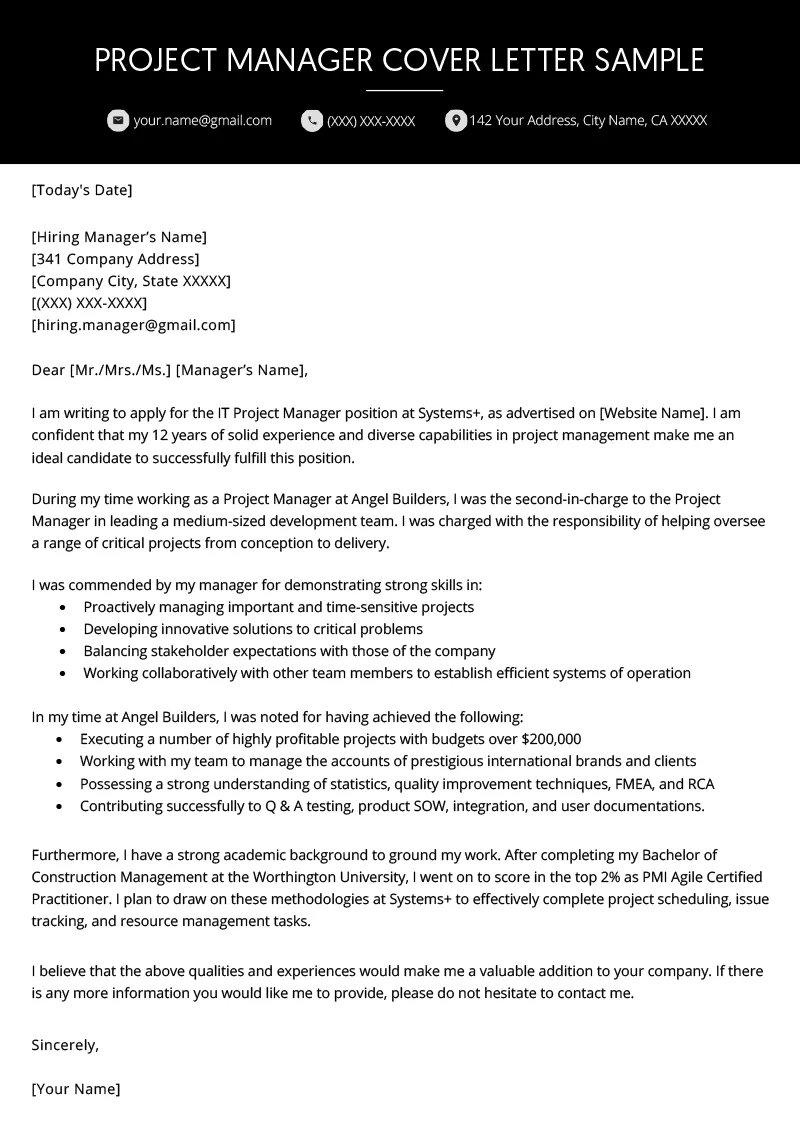
Understanding the Importance of a Project Manager Cover Letter
A project manager cover letter is more than just a formality it’s your first chance to make a strong impression on a potential employer. In a competitive job market, a well-crafted cover letter can be the deciding factor in whether your application gets noticed. It provides an opportunity to showcase your personality, communication skills, and enthusiasm for the role, going beyond the information presented in your resume. A compelling cover letter allows you to explain why you are the perfect fit for the specific project management position, highlighting your unique skills and experiences that align with the company’s needs. This is also the time to personalize your application and demonstrate your genuine interest in the organization and the opportunity.
Key Components of a Project Manager Cover Letter
A well-structured cover letter follows a clear format and includes essential components that create a professional presentation. Each section serves a specific purpose in highlighting your qualifications and personality, so attention to detail is paramount. A poorly formatted or incomplete cover letter can create a negative impact. The following are the basic sections you must include to create an attractive cover letter that leaves a lasting impression and makes you stand out.
Your Contact Information

At the top of your cover letter, include your full name, phone number, email address, and optionally, your LinkedIn profile URL. This information makes it easy for the hiring manager to contact you. Ensure your contact information is accurate and up-to-date.
Date
Include the date you are submitting your cover letter. This helps to document when you applied for the position and adds a touch of formality to your document.
Recipient’s Details
Address the cover letter to the hiring manager or the specific person listed in the job description. If you are unable to find a specific name, you can use a professional title like “Hiring Manager.” This shows you have taken the time to find information about the company and shows your interest in the role.
Professional Greeting

Use a formal greeting like “Dear Mr./Ms./Mx. [Last Name]” or “Dear Hiring Manager.” Avoid informal greetings like “Hello” or “Hi.” A proper greeting sets a professional tone from the outset.
Crafting a Compelling Opening
The opening paragraph of your cover letter is crucial for capturing the reader’s attention. It should immediately state the position you are applying for and how you learned about the opportunity. Briefly mention your most relevant qualification or achievement to grab their interest. Highlight your enthusiasm for the role and the company, demonstrating your interest in them from the beginning.
Highlighting Your Project Management Skills
In the body paragraphs, focus on your project management skills. Showcase your expertise in areas such as project planning, execution, risk management, and stakeholder communication. Provide specific examples of how you have successfully managed projects, emphasizing your ability to deliver projects on time and within budget. Tailor these examples to the requirements outlined in the job description, ensuring your skills align with what the company is seeking.
Showcasing Relevant Experience

Describe your relevant work experience, focusing on projects that align with the job description. Highlight your role in each project and the key responsibilities you held. Explain how you utilized project management methodologies, tools, and techniques. Provide enough detail to demonstrate your experience and make you stand out from the crowd.
Quantifying Achievements
Whenever possible, quantify your achievements with specific numbers and metrics. For instance, mention the percentage of cost savings achieved, the number of projects completed successfully, or the improvement in efficiency you brought about. Use data to illustrate your impact and provide concrete evidence of your project management abilities. Your achievements should make it apparent you are the right fit for the company.
Demonstrating Your Soft Skills
In addition to technical skills, showcase your soft skills, such as leadership, communication, problem-solving, and teamwork. Provide examples of how you have used these skills in past projects. Demonstrating these skills shows you can work with others in the workplace and can think on your feet.
Closing Your Cover Letter Effectively

The closing paragraph is your opportunity to express your interest in the position and next steps. It also provides the opportunity for your professional tone.
Expressing Enthusiasm and Availability
Reiterate your enthusiasm for the role and the company. Express your availability for an interview and your willingness to discuss your qualifications further. This demonstrates your eagerness to join the team and move forward in the hiring process.
Thanking the Recipient
Thank the hiring manager for their time and consideration. Express your appreciation for the opportunity to apply and express your interest in the role. A simple thank you shows professionalism and respect.
Formal Closing

Use a formal closing such as “Sincerely” or “Best regards,” followed by your full name. Ensure your closing is professional and appropriate for the tone of your cover letter. Maintain a consistent tone throughout the entire document.
Proofreading and Formatting Your Cover Letter
Before submitting your cover letter, it is essential to proofread and format it carefully. This ensures your letter is polished and professional. Always strive to improve your presentation.
Formatting Best Practices
Use a professional font like Times New Roman, Arial, or Calibri, with a font size between 10 and 12 points. Ensure your letter is well-formatted with consistent spacing, clear paragraphs, and appropriate margins. Keep your cover letter concise, ideally within one page. Also, use bullet points to highlight your key skills and accomplishments.
Proofreading for Errors

Thoroughly proofread your cover letter for any spelling, grammar, and punctuation errors. Have a friend or colleague review it as a second pair of eyes can catch mistakes you may have missed. Errors can undermine your professionalism and make a negative impression on the hiring manager. Make sure your cover letter is the best representation of you.
Tailoring Your Cover Letter
Customizing your cover letter to each job application is crucial for success. This personalized approach demonstrates to the hiring manager that you have taken the time to understand the company’s needs and requirements. Also, it demonstrates your interest in the role and the organization.
Researching the Company and Role
Before writing your cover letter, research the company and the specific role you are applying for. Understand the company’s mission, values, and current projects. Review the job description thoroughly, identifying the key skills, experience, and qualifications the company is seeking. This research will enable you to tailor your cover letter to the specific requirements of the role.
Matching Your Skills to the Job Description
Carefully align your skills and experience with the requirements outlined in the job description. Use the job description as a guide to highlight the most relevant information from your background. Provide specific examples of how your skills match the company’s needs. Customize your cover letter by using similar keywords and phrases from the job description.
Cover Letter Examples and Templates
Utilize cover letter templates and examples to help you write a compelling cover letter. These resources provide a framework for structuring your letter and highlighting your qualifications. Customize these templates with your information. Use these examples as inspiration. Ensure your cover letter is tailored to the specific role and company. However, ensure you do not copy someone else’s work.