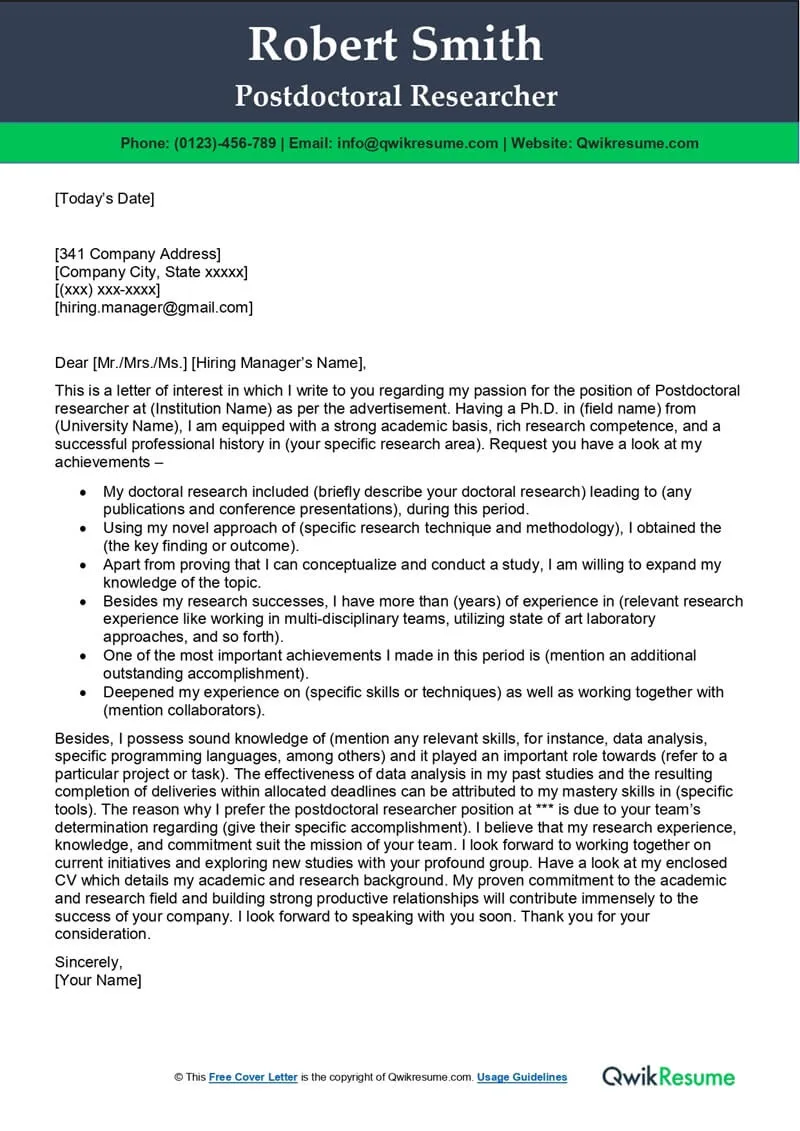
Crafting a Compelling Postdoc Cover Letter
A postdoctoral cover letter is more than just a formality; it’s your first introduction to a potential mentor and research group. It’s your opportunity to showcase your skills, experience, and passion for research in a way that a CV alone cannot. A well-crafted cover letter can significantly increase your chances of securing a coveted postdoc position. This guide will provide secrets to writing a cover letter that grabs attention and leaves a lasting impression, demonstrating why you are the ideal candidate. The goal is to articulate your research trajectory, aligning your aspirations with the lab’s objectives and showcasing your suitability for the role.
Understanding the Purpose of a Postdoc Cover Letter
The primary purpose of a postdoc cover letter is to persuade the hiring committee that you possess the necessary skills, experience, and enthusiasm for the position. It serves as a narrative, linking your past accomplishments with the future research opportunities. Think of it as a marketing document, highlighting your key strengths and differentiating you from other applicants. It allows you to elaborate on your research interests, explain your motivations for applying, and express how your skills align with the specific research being conducted. It also provides a platform to showcase your personality and communication skills, which are crucial for a successful postdoc experience.
Highlighting Your Research Experience

Your research experience is the cornerstone of your postdoc application. This section should provide a concise yet detailed overview of your research background. Begin by summarizing your doctoral research, emphasizing the problem you addressed, the methods you employed, and the significant findings. Focus on the skills you developed during your PhD, such as experimental design, data analysis, and scientific writing. Show the relevance of your research to the target lab’s ongoing projects and highlight any specific techniques or expertise that would benefit the team. Use action verbs to describe your contributions and avoid technical jargon that the reader may not understand.
Quantifying Your Achievements
Don’t just list your achievements; quantify them. Use numbers and data to illustrate the impact of your work. For instance, instead of saying “I conducted several experiments,” say “I conducted over 50 experiments, resulting in a 20% improvement in efficiency.” If you have published papers, mention the number of publications, their impact factors, and the journals in which they were published. If you’ve presented at conferences, specify the number of presentations and the significance of the conferences. Quantifiable achievements provide concrete evidence of your abilities and make your cover letter more persuasive. This data provides an objective measure of your success.
Tailoring Your Letter to the Specific Position
Generic cover letters are easily spotted and often discarded. Tailor each cover letter to the specific postdoc position and research group you are applying to. Research the lab’s ongoing projects, read their publications, and understand their research goals. Demonstrate that you have a genuine interest in their work and that you have carefully considered how your skills and experience align with their needs. Personalize the letter by addressing it to the principal investigator (PI) by name. Mention specific research areas or techniques used in the lab that align with your expertise. By demonstrating a deep understanding of the position and the research group, you show your enthusiasm and increase your chances of being selected.
Analyzing the Job Description

Carefully analyze the job description for the postdoc position. Identify the key skills, qualifications, and experiences that the hiring committee is looking for. Use these keywords and phrases throughout your cover letter to demonstrate that you meet the requirements. Highlight your relevant experiences and skills, providing specific examples to support your claims. If the job description mentions specific software, techniques, or equipment, make sure to mention your proficiency with them. This targeted approach shows that you have taken the time to understand the position and are a good fit for the role. This is where the connection between your abilities and the required skill set is explicitly shown.
Matching Skills and Requirements
The goal of the cover letter is to show the skills required by the potential employer are the same you have, making the fit easier. Once the requirements are clear, take inventory of your skill and education. It is important not to inflate your abilities and not to oversell them either. Be truthful and show how your unique background can bring added value.
Showcasing Your Publications and Presentations
Your publications and presentations are crucial evidence of your research productivity and impact. In your cover letter, briefly mention your most significant publications and presentations, including the journal or conference name and the dates. If you have any publications that are highly relevant to the postdoc position, highlight them specifically. Emphasize the impact of your publications, such as the number of citations or the influence they have had on the field. If you have any preprints or publications that are under review, mention them as well. Listing these achievements demonstrates your ability to communicate your research effectively and contribute to the scientific community.
Formatting and Structure of Your Postdoc Cover Letter

The format and structure of your cover letter are just as important as the content. Use a clear and concise format that is easy to read and understand. Divide your letter into distinct sections, such as an introduction, research experience, skills, and closing. Use a professional font, such as Times New Roman or Arial, and maintain consistent formatting throughout. Keep the letter to one page, if possible, and use proper spacing and margins. Proofread your cover letter carefully for any typos or grammatical errors. The format of your cover letter is the first impression you make, so make it count. A well-structured letter makes you look organized and prepared.
Contact Information and Date
Start your cover letter with your contact information, including your name, address, phone number, and email address. Include the date below your contact information. Ensure that your contact information is accurate and up-to-date. Consider using a professional-sounding email address. Including the date shows that you are organized and professional and allows the reader to know when the letter was written.
Salutation and Introduction
Address the letter to the principal investigator (PI) or the hiring committee by name. If you don’t know the name, you can use a general salutation like “Dear Hiring Committee.” In the introduction, state the position you are applying for and briefly mention where you saw the advertisement. Then, introduce yourself and provide a brief overview of your research interests and experience. The introduction should capture the reader’s attention and encourage them to continue reading. Show how you can quickly align with the lab’s goals.
Body Paragraphs Highlighting Skills

The body paragraphs are where you provide detailed information about your research experience, skills, and qualifications. Use separate paragraphs to address different aspects of your background, such as your doctoral research, publications, and specific skills. Provide concrete examples to demonstrate your abilities. Focus on the skills and experiences that are most relevant to the position. Avoid simply restating your CV; instead, elaborate on your accomplishments and provide context for your experiences. Be specific about the techniques you have mastered, the projects you have worked on, and the results you have achieved. Show that you are a skilled and accomplished researcher.
Closing and Call to Action
In the closing, reiterate your interest in the position and thank the reader for their time and consideration. State your availability for an interview and express your enthusiasm for the opportunity to contribute to the research group. Include a call to action, such as suggesting that you would be happy to provide additional information or discuss your qualifications further. End with a professional closing, such as “Sincerely” or “Best regards,” followed by your name and signature.
Common Mistakes to Avoid in Your Postdoc Cover Letter
Several common mistakes can significantly weaken your postdoc cover letter and decrease your chances of success. Understanding and avoiding these mistakes is crucial for making a positive impression and demonstrating your professionalism. Careful attention to detail and a thorough review of your letter can help you avoid these pitfalls and create a compelling document that showcases your strengths.
Generic Language and Lack of Personalization

One of the most common mistakes is using generic language and failing to personalize the cover letter. A generic letter is often seen as a sign of a lack of interest or a ‘copy-and-paste’ approach, which can be detrimental to your application. Avoid using vague phrases or overly general statements that could apply to any candidate. Instead, tailor the letter to the specific position and research group by referencing their publications, research interests, and specific needs. Show that you have taken the time to research the lab and that you understand their goals. This demonstrates your enthusiasm and increases your chances of success.
Typos and Grammatical Errors
Typos and grammatical errors can undermine your credibility and make you appear unprofessional. A cover letter is a reflection of your attention to detail and your ability to communicate effectively. Ensure that your cover letter is free of any errors by proofreading it carefully. Use spell-check and grammar-check tools, but also have a colleague or mentor review your letter. Pay attention to sentence structure, punctuation, and capitalization. A polished and error-free cover letter shows that you take your application seriously and pay attention to detail. Avoid making mistakes that could cost you the position.
Ignoring the Specific Requirements
Failing to address the specific requirements of the postdoc position is a significant mistake. Review the job description carefully and identify the skills, experiences, and qualifications that the hiring committee is looking for. Tailor your cover letter to highlight your relevant experiences and skills and provide examples to support your claims. Do not assume that the hiring committee will automatically know how your skills align with the position. Explicitly state how your abilities match the requirements. By directly addressing the specific requirements, you show that you are a good fit for the role and that you have taken the time to understand the position.
Providing a Strong Call to Action and Next Steps

Concluding your cover letter with a strong call to action is critical for moving your application forward. Express your enthusiasm for the opportunity and thank the reader for their time and consideration. State your availability for an interview and express your willingness to provide additional information or references. Make it easy for the hiring committee to take the next step by providing clear instructions. This ensures that they know how to proceed with your application. A strong call to action can increase your chances of getting an interview and ultimately landing the postdoc position. Demonstrate your eagerness and professionalism and take the next step toward your career goals.