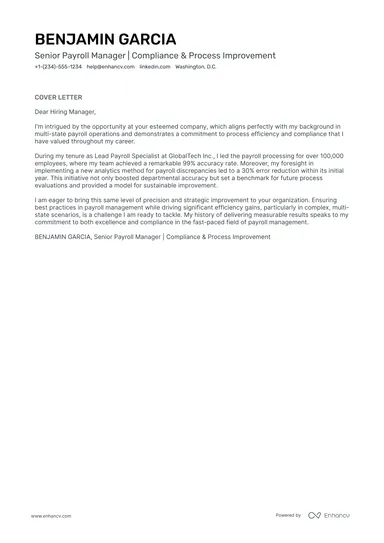
What is a Payroll Cover Letter?
A payroll cover letter is a crucial document that accompanies your resume when applying for payroll positions. It serves as your introduction to the hiring manager, offering a concise overview of your skills, experience, and why you are the ideal candidate for the job. Unlike a resume, which provides a factual account of your professional history, a cover letter allows you to express your personality, enthusiasm, and specific qualifications in a more engaging manner. A well-crafted payroll cover letter can significantly increase your chances of securing an interview and ultimately landing the job.
Why You Need a Payroll Cover Letter
In the competitive job market, a payroll cover letter is essential. It provides you with the opportunity to differentiate yourself from other applicants by highlighting your unique qualifications and demonstrating your genuine interest in the position and the company. It also allows you to elaborate on specific experiences or skills that may not be fully captured in your resume. By writing a tailored cover letter, you showcase your understanding of the role and the company’s needs, increasing your chances of making a positive impression and getting noticed by the hiring manager. A strong cover letter indicates professionalism and attention to detail, which are vital qualities for a payroll specialist.
Key Components of a Payroll Cover Letter
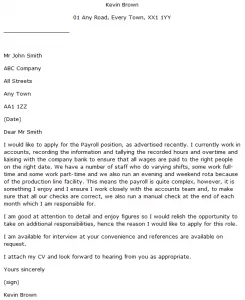
A well-structured payroll cover letter consists of several key components that work together to present a compelling case for your candidacy. Each section serves a specific purpose, contributing to the overall impact of the letter. Understanding these components will help you create a cover letter that is both informative and persuasive, increasing your chances of getting an interview. These components ensure that your cover letter is comprehensive and effectively conveys your qualifications to the hiring manager.
Your Contact Information
At the top of your cover letter, include your full name, address, phone number, and professional email address. This information ensures the hiring manager can easily reach you. Make sure your email address is professional and free of any unprofessional nicknames.
Date and Recipient Information
Below your contact information, include the date and the recipient’s details. If possible, address the letter to the hiring manager by name. This shows that you have taken the time to research the company and are genuinely interested in the position. This personal touch can significantly improve your cover letter.
Professional Salutation

Start your letter with a professional salutation, such as “Dear Mr./Ms. [Last Name]” or “Dear Hiring Manager.” Avoid using informal greetings like “To Whom It May Concern.” If you don’t know the hiring manager’s name, using “Dear Hiring Manager” is acceptable.
Opening Paragraph
The opening paragraph is your chance to grab the reader’s attention. Clearly state the position you are applying for and how you learned about the opportunity. Briefly mention your key qualifications and express your enthusiasm for the role and the company. This is your opportunity to make a strong first impression.
Highlighting Your Payroll Experience
In the body of your cover letter, highlight your relevant experience and skills. Focus on how your past roles have prepared you for this position. Mention specific responsibilities, achievements, and the payroll software you have experience with. Show how your skills align with the job requirements and what you can bring to the company. Your experience is the cornerstone of your cover letter, so ensure you present it effectively.
Quantify Your Achievements

Whenever possible, quantify your achievements using numbers and data. Instead of saying “Managed payroll for a large company,” say “Managed payroll for over 500 employees, ensuring accuracy and timely processing.” This demonstrates your impact and provides concrete evidence of your abilities. Quantifying your accomplishments makes your cover letter more persuasive and helps you stand out.
Showcase Relevant Skills
Identify the key skills required for the payroll position and demonstrate how you possess them. This might include knowledge of payroll software (e.g., ADP, Paychex), understanding of payroll regulations, attention to detail, and strong communication skills. Provide examples of how you’ve used these skills in previous roles. Aligning your skills with the job description shows the hiring manager that you are a great fit for the role. Refer to image payroll-experience-skills.webp.
Addressing the Employer’s Needs
Tailor your cover letter to address the specific needs and requirements of the employer. Review the job description carefully and highlight how your skills and experience match their requirements. Show that you understand the company’s values and objectives and how you can contribute to their success. Demonstrating that you understand their needs makes you a more attractive candidate.
Tailoring Your Letter

Avoid sending a generic cover letter. Customize each letter to the specific job and company you are applying to. Research the company, understand its culture, and personalize your letter to show genuine interest. This level of detail demonstrates that you are serious about the position and have taken the time to understand their needs. Make sure your cover letter is tailored to each specific job.
Closing Paragraph
In your closing paragraph, reiterate your interest in the position and express your enthusiasm for the opportunity. Briefly summarize why you are a good fit for the role. Thank the hiring manager for their time and consideration.
Call to Action
Include a clear call to action, such as “I look forward to the opportunity to discuss my qualifications further in an interview.” This shows that you are eager to move forward in the hiring process and are proactive in seeking the position. A call to action encourages the hiring manager to take the next step.
Formal Closing and Signature

End your letter with a professional closing, such as “Sincerely,” or “Best regards.” Leave space for your handwritten signature, followed by your typed name. If you’re submitting your cover letter electronically, you can simply type your name. This completes your cover letter with a touch of professionalism.
Proofreading and Editing
Before submitting your cover letter, carefully proofread and edit it for any errors in grammar, spelling, and punctuation. Ensure the language is clear, concise, and free of typos. Ask a friend or colleague to review your letter for a fresh perspective. A polished cover letter reflects your attention to detail, an essential quality for payroll professionals.
Mistakes to Avoid
Avoiding common mistakes can greatly enhance the impact of your payroll cover letter. By being aware of these pitfalls, you can create a more effective and professional document. These errors can undermine your application, so it’s essential to address them to increase your chances of landing the job. Knowing these common errors will help you build a more successful cover letter.
Common Payroll Cover Letter Mistakes

Avoid generic cover letters that are not tailored to the specific job or company. Do not make grammatical errors or typos. Avoid providing irrelevant information or going over the one-page limit. Do not use a negative tone or make excuses. Avoid exaggerating or falsifying your experience and skills. Generic letters, errors, and irrelevant information can quickly lead to your application being rejected. These mistakes will negatively impact your application.
Formatting and Style
The formatting and style of your payroll cover letter contribute to its overall professionalism and readability. A well-formatted letter is easy to read and makes a positive impression on the hiring manager. Using the right formatting guidelines is crucial.
Using the Right Tone
Maintain a professional and enthusiastic tone throughout your cover letter. Use formal language and avoid slang or colloquialisms. Show genuine interest in the position and the company. Your tone should reflect your professionalism and excitement about the opportunity. A positive tone will make the reader more interested in you.
Tips for Experienced Professionals
If you have extensive experience in payroll, there are several strategies you can use to make your cover letter even more impactful. Highlighting your expertise effectively is crucial in setting you apart from other candidates. Make your cover letter count by showcasing your skills and experience. These are some tips for experienced professionals to use on their cover letter.
Emphasizing Your Expertise
Emphasize your years of experience and depth of knowledge in payroll. Highlight specialized skills such as multi-state payroll, international payroll, or experience with specific payroll software. Showcase leadership roles, such as managing payroll teams or implementing new payroll systems. Use your expertise to stand out. Consider image payroll-professional-advice.webp.
Providing Specific Examples
Provide detailed examples of your accomplishments and how you have improved payroll processes in previous roles. Quantify your achievements whenever possible, such as by reducing errors, improving efficiency, or saving the company money. Provide specific examples, not just general statements, to validate your claims. Examples show your capabilities and make your cover letter more compelling. Consider image payroll-experience-skills.webp
Cover Letter Templates and Examples
Utilizing cover letter templates and examples can be a great starting point for crafting your own payroll cover letter. These resources can provide you with a structure and guidance, helping you ensure that your letter covers all the necessary components. They offer helpful examples to help you start writing. Image payroll-cover-letter-templates.webp
Where to Find Templates
You can find cover letter templates on various websites, including job search platforms, career websites, and Microsoft Word. Look for templates specifically designed for payroll positions. Choose templates that align with your experience level and the specific job requirements. Finding the correct templates will help you build a strong cover letter. Consider image payroll-cover-letter-templates.webp
Analyzing Payroll Cover Letter Examples
Reviewing examples of successful payroll cover letters can provide valuable insights into how to structure your own letter. Pay attention to the language used, the tone, and how the candidate highlights their skills and experience. Identify elements that resonate with you and incorporate those strategies into your letter. Studying successful examples will increase your chances of getting hired. Consider image payroll-cover-letter-review.webp