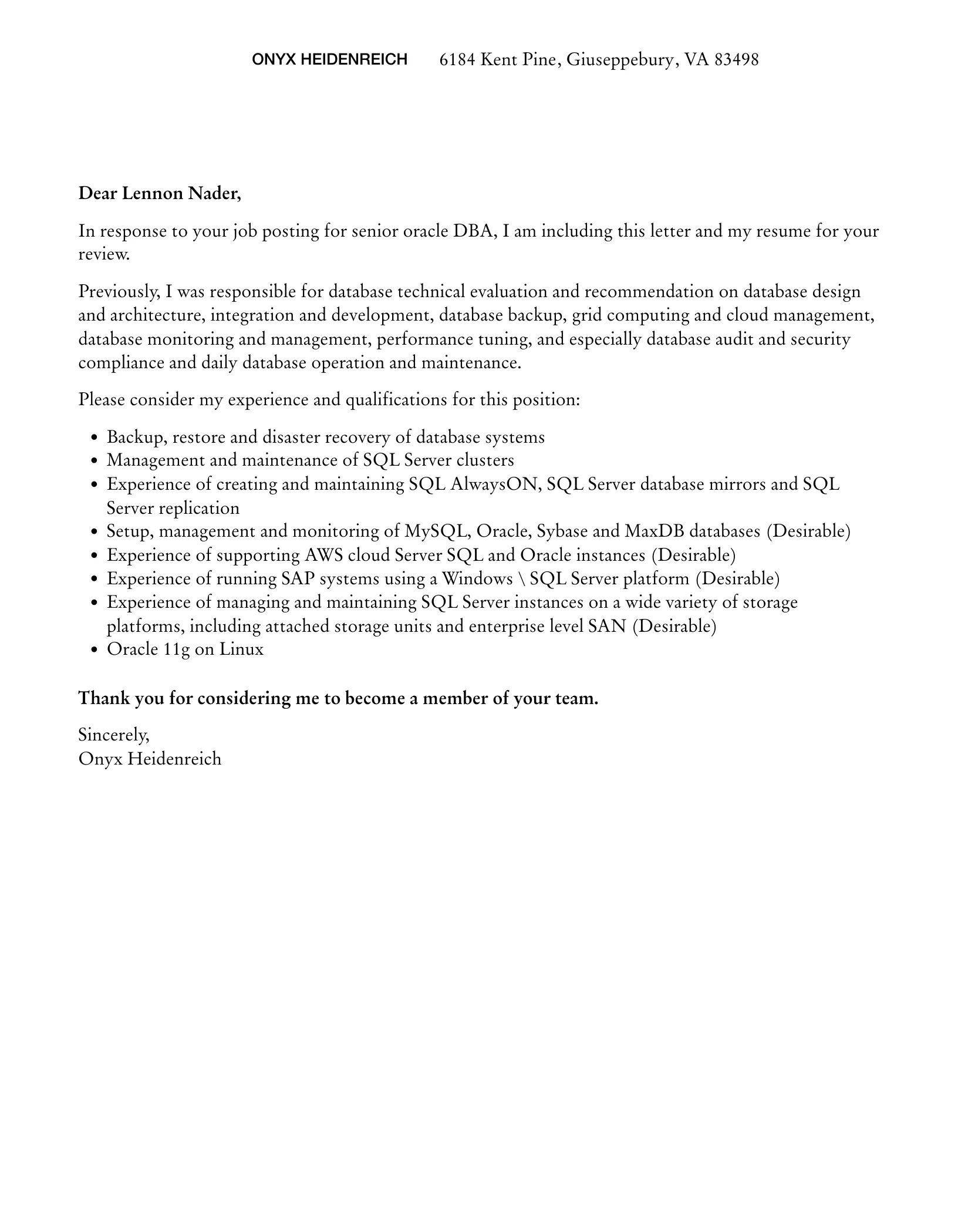
Crafting Your Oracle DBA Cover Letter
A well-crafted Oracle DBA cover letter is your first impression, and it’s critical in securing your desired role. It’s not just a formality; it’s a chance to demonstrate your understanding of the position, highlight your relevant experience, and showcase your personality. Think of it as a concise sales pitch, designed to convince the hiring manager that you are the perfect fit for the company and the Oracle DBA role. Therefore, the goal is to create a document that is informative, engaging, and tailored to the specific job requirements, ultimately increasing your chances of getting an interview.
Understanding the Role of an Oracle DBA
Before you begin writing, it is vital to understand the scope of an Oracle DBA’s responsibilities. Oracle Database Administrators are the guardians of an organization’s data, ensuring its availability, security, and integrity. This involves database design, implementation, maintenance, and troubleshooting. A solid understanding of these key responsibilities will allow you to customize your cover letter, highlighting the skills and experiences most relevant to the specific role you are applying for. Knowing the day-to-day demands of the job is the first step to writing a cover letter that resonates with a potential employer.
Key Responsibilities of an Oracle DBA

Oracle DBAs have a broad range of responsibilities. These include database installation, configuration, and upgrades. They are tasked with monitoring database performance, implementing backup and recovery strategies, and ensuring data security. Furthermore, DBAs are often responsible for capacity planning, user management, and performance tuning. Showing your knowledge of these responsibilities in your cover letter shows you understand the job and what is required of you. You can impress employers by explaining how your skills align with these key areas of the job.
Highlighting Relevant Skills and Experience
Your cover letter should serve as a bridge between your skills and the requirements listed in the job description. Carefully review the job posting and identify the core skills and experiences the employer is seeking. Make sure your cover letter mirrors those needs by explicitly referencing those keywords and providing context through real-world examples. When highlighting your skills, provide specific examples of how you’ve used those skills to solve problems, improve performance, or contribute to your previous employer’s objectives. This approach will quickly show the hiring manager that you are a strong candidate.
Technical Skills to Showcase
Technical skills are essential. Be sure to emphasize your proficiency in database administration tasks. Mention your experience with database design, data modeling, and SQL, PL/SQL or any related scripting languages. Highlight any experience with database security, including user authentication and authorization. Other key technologies to consider include, Oracle Cloud Infrastructure (OCI) and tools such as Oracle Enterprise Manager (OEM). Mention your experience with different operating systems like Linux or Windows, as it often ties into database administration.
Database Administration

Database administration is the core of your role. Emphasize your experience in database setup, configuration, and ongoing maintenance. Mention your experience with database backups, recovery procedures, and performance monitoring tools. Highlight your knowledge of database security protocols, including user management, access controls, and auditing. Use specific examples of your database administration experience to showcase your capabilities. Quantify your achievements with metrics like the number of databases managed or uptime improvements. The more you can show, the better.
Performance Tuning and Optimization
Performance tuning is a critical skill for Oracle DBAs. Demonstrate your ability to identify and resolve performance bottlenecks. Show your experience with query optimization, index management, and database resource allocation. Share examples of how you have improved database performance through tuning efforts. Use clear metrics like improved query response times or reduced CPU utilization to quantify your achievements. Employers want to see how you have improved performance in the past, in this case, numbers speak louder than words.
Problem Solving and Troubleshooting
Troubleshooting database issues is a common part of the Oracle DBA role. Highlight your problem-solving skills and your ability to diagnose and resolve database errors. Mention your experience using diagnostic tools, reviewing log files, and implementing solutions. Share specific examples of challenging problems you’ve solved and the steps you took to find a solution. Emphasize your ability to work under pressure, investigate complex issues, and deliver timely solutions. Providing real examples of your problem-solving prowess demonstrates your ability to perform when faced with challenges.
Communication and Teamwork

Effective communication and teamwork are vital in database administration. Showcase your ability to communicate technical information clearly and concisely to both technical and non-technical audiences. Mention your experience collaborating with developers, system administrators, and other stakeholders. Share examples of successful projects where you have worked as part of a team. Highlight your ability to work under pressure, meet deadlines, and deliver results. Your communication skills are just as crucial as your technical ones, so showcase them.
Tailoring Your Cover Letter
Personalize your cover letter to match the specific job and company. Demonstrate that you understand the organization’s needs. This is key to convincing the hiring manager that you are the right fit. Avoid using a generic template. Tailor your letter for each application by referencing specific requirements. Research the company’s values and goals and align your skills and experience accordingly. This attention to detail shows genuine interest and increases your chances of standing out from the crowd. Customize the content to show that you have taken the time to understand the role and are genuinely interested.
Researching the Company and the Role
Before writing, research the company’s mission, values, and recent projects. Examine the job description in detail to understand the specific skills and experiences they are looking for. Identify any keywords or phrases that align with your background. Show that you understand the company’s needs and can contribute to their goals. Your research will help you customize your cover letter to make it relevant to the role and the company, and set you apart from other applicants. Take the time to understand what the company does, and what it’s looking for.
Customizing for Specific Job Requirements

Use the job description as a guide to customize your cover letter. Focus on the key skills and experiences the employer is seeking. Emphasize your relevant qualifications and achievements. Provide specific examples that demonstrate your abilities. Use the same keywords and phrases that appear in the job description. This targeted approach will show the hiring manager that you are a good match. Align your skills, experience, and accomplishments with the job requirements. Make your cover letter a direct reflection of the needs of the role.
Formatting and Structure
Your cover letter’s formatting and structure are just as important as its content. Presenting your qualifications clearly and professionally enhances your overall impression. Use a professional font, such as Arial or Times New Roman, and maintain consistent formatting throughout the document. Use clear headings and subheadings to organize your content logically. Keep the letter concise, ideally no more than one page, to keep the reader engaged. Proofread your cover letter for any errors.
The Importance of a Strong Opening
Your opening paragraph sets the tone for your cover letter. Start with a concise and impactful introduction. State the position you are applying for and how you found the job. Briefly mention your key qualifications or the most relevant experience. Avoid generic openings. Instead, aim to capture the reader’s attention right away. Express your enthusiasm for the opportunity and explain why you are interested in the company. A strong opening creates a positive first impression and encourages the hiring manager to continue reading.
Writing a Compelling Body

The body of your cover letter is where you expand on your qualifications and experience. Highlight your most relevant skills and achievements. Provide specific examples that demonstrate your capabilities. Tailor your content to match the job requirements. Quantify your accomplishments whenever possible. Show, don’t just tell, the hiring manager what you can do. Use action verbs to describe your experience and responsibilities. Show a logical flow to make your letter easy to read and understand. Use the job description as a guide.
Showcasing Achievements with Numbers
Use numbers to quantify your achievements. Instead of stating you improved database performance, specify by how much. Provide metrics such as percentage improvements in query response times, reduction in downtime, or the number of databases managed. This approach adds credibility and makes your accomplishments more impactful. Use numbers to illustrate your impact on past employers. Numbers prove your contributions and demonstrate the tangible value you bring to a team. Quantifiable metrics stand out and provide a clear understanding of your contributions.
Creating a Powerful Closing
Your closing paragraph should reiterate your interest in the position. Thank the hiring manager for their time and consideration. Reiterate your qualifications and your desire for an interview. Clearly state how you can contribute to the company’s success. Include a call to action, such as your availability for an interview. Ensure a professional and polite tone. Finish with a confident statement that leaves the reader with a strong, positive impression. Conclude by expressing enthusiasm and anticipation of the next step in the hiring process.
Proofreading and Editing

Proofreading and editing are crucial steps in the cover letter writing process. Mistakes can undermine your application. Carefully review your cover letter for any errors in grammar, spelling, and punctuation. Read your letter aloud to identify any awkward phrasing. Check for clarity, conciseness, and a professional tone. It may be beneficial to have another person review your cover letter, as a second pair of eyes often catches mistakes that you may miss. Always have a final look before submitting your application to catch errors.
Reviewing for Clarity and Accuracy
Ensure your cover letter is clear, concise, and easy to understand. Eliminate jargon or technical terms that the reader might not understand. Use simple, direct language. Check that your statements are accurate and factually correct. Verify the company’s name, job title, and other details. Double-check any dates, locations, and other information to ensure accuracy. Clarity is crucial. Proofread for accuracy, as errors can indicate a lack of attention to detail.
Ensuring Professional Presentation
Your cover letter’s presentation reflects your professionalism. Use a clean, easy-to-read font and consistent formatting. Ensure proper margins and spacing. Avoid using distracting colors or elaborate designs. Proofread your letter carefully and ensure there are no typos or grammatical errors. Save your cover letter in a professional format, such as PDF. Make sure the document looks polished and professional. This will make a positive impression on the hiring manager. A well-presented cover letter shows you care about the details.
Common Mistakes to Avoid
Avoid common cover letter mistakes to make a positive impression. These errors can hurt your application, so be vigilant when writing. A well-written cover letter should avoid generic language, focus on the employer’s needs, and be free of any errors. Avoid these common errors by carefully crafting your cover letter with a keen eye for detail.
Generic Cover Letters
Avoid using a generic cover letter template. Always tailor your cover letter to each specific job. Demonstrate that you understand the company and the role you are applying for. Referencing the job description will help show you are the right fit. Generic templates can be easily spotted by hiring managers and often lead to rejection. Tailor your cover letter to showcase your understanding of the specific needs of the company.
Focusing on Yourself Instead of the Employer
Your cover letter should highlight how your skills and experience can benefit the employer. Focus on the value you can bring to the company. Avoid spending too much time talking about yourself. Tailor your letter to the company’s needs and goals. Focus on your ability to solve problems, contribute to projects, and improve performance. Demonstrate how you can help the company achieve its objectives. Ensure your letter focuses on what you can bring to the employer.
Typos and Grammatical Errors
Typos and grammatical errors can damage your credibility. Proofread your cover letter multiple times. Check for any spelling, punctuation, and grammatical errors. Have someone else review your letter. Avoid submitting a letter with errors. Ensure your cover letter is professional, clear, and error-free. Errors can create a negative impression, so give the impression of attention to detail.
Final Tips for Success
Follow these final tips to increase your chances of success. Tailor your cover letter to each job application and show genuine interest. Use clear, concise language. Highlight your key qualifications. Focus on how you can contribute to the company. Be confident and enthusiastic. Follow up after submitting your application to show continued interest.
Submitting Your Cover Letter
When submitting your cover letter, follow the instructions provided in the job posting. Save your cover letter in a professional format, such as PDF. Use a clear and professional subject line. Attach your cover letter and resume in the required format. Double-check all details before submitting your application. Make sure you have included everything that is required. Ensure the file name and format are professional. Always submit the letter according to the directions provided by the employer.
Following Up After Submission
Follow up after submitting your application to show your continued interest. Send a brief email to the hiring manager to confirm receipt of your application. Express your enthusiasm for the role and the company. Reiterate your interest in an interview. Be polite and professional in your communication. Thank the hiring manager for their time. Follow up politely and show that you are eager for the opportunity. You will show that you are proactive. This can increase your chances of success.