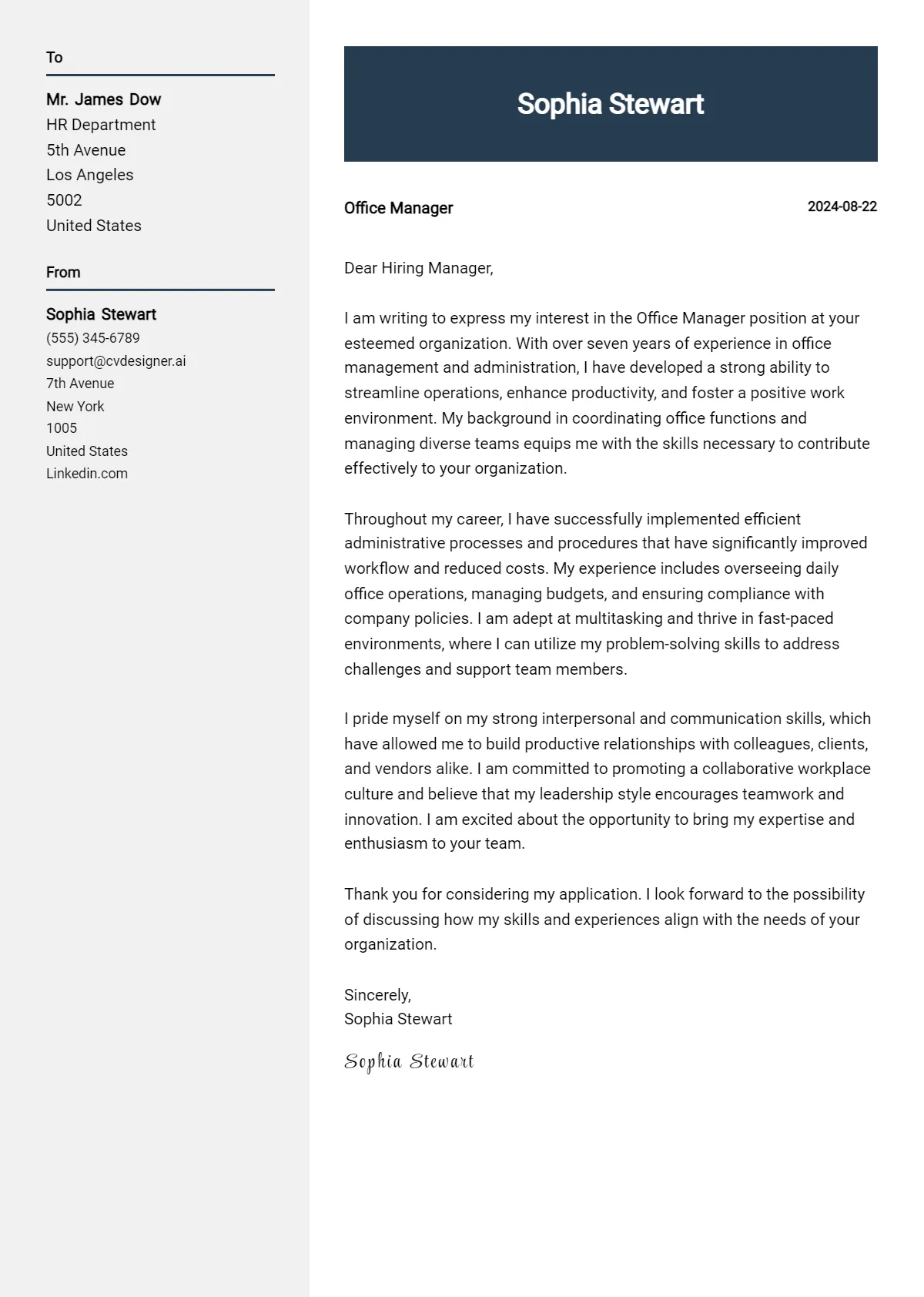
Why a Strong Office Cover Letter Matters
In the competitive landscape of job applications, a well-crafted office cover letter is your first impression. It’s more than just a formality; it’s your opportunity to showcase your personality, skills, and enthusiasm for the role. A strong cover letter significantly increases your chances of getting noticed by a hiring manager, demonstrating your genuine interest in the position and the company. It allows you to elaborate on your resume, providing context and highlighting specific achievements that align with the job requirements. By effectively communicating your value proposition, you set yourself apart from other applicants and make a compelling case for why you are the ideal candidate. Remember, in the world of office jobs, attention to detail and clear communication are crucial, and your cover letter is a testament to these skills. A good cover letter is essential for getting your foot in the door.
Key Components of a Winning Office Cover Letter
To create a winning office cover letter, you must incorporate several key components that work together to highlight your qualifications. These elements include proper formatting, a clear and concise writing style, and a focus on the employer’s needs. Addressing each of these components thoughtfully ensures that your letter captures the hiring manager’s attention from the start. The key to success is a well-structured layout and clear language that allows your most impressive qualifications to stand out. A great cover letter should also show your personality, not just list your skills and experience. The perfect cover letter is more than just a document; it is a marketing tool. Using these strategies will greatly improve the effectiveness of your application.
Contact Information

Begin your cover letter with your contact information. This typically includes your full name, address, phone number, and email address. Ensure this information is accurate and up-to-date, as it’s how potential employers will reach you. Proper contact information ensures that the recruiter can easily get in touch with you for an interview or additional inquiries.
Applicant’s Name and Address
At the top, left-hand side, clearly write your full name and current address. This immediately identifies you as the applicant and provides the employer with your physical location. This is an important first step in establishing your professional identity.
Date
Directly below your address, include the date you are submitting the cover letter. This is a standard practice and helps with record-keeping. It confirms when the letter was created and sent.
Recipient’s Information

Include the recipient’s name, title, and company address. Addressing the cover letter to a specific person, rather than a generic title like “Hiring Manager,” significantly increases your chances of capturing their attention. If possible, research the hiring manager’s name and title to add a personal touch and show that you have done your research on the company.
Professional Greeting
Start with a professional greeting, such as “Dear Mr./Ms./Mx. [Last Name].” If you’re unsure of the recipient’s name, you can use “Dear Hiring Manager,” though addressing a specific person is always preferred. A professional greeting sets the tone for the rest of your letter and shows respect for the recipient.
Opening Paragraph
Your opening paragraph should immediately grab the reader’s attention. State the position you’re applying for and how you found the job posting. Briefly mention why you’re excited about the opportunity and what makes you a strong candidate. The opening paragraph is your chance to make a strong first impression, so make sure it’s clear, concise, and enthusiastic. Consider including a compelling hook, such as a notable achievement or a statement of your career goals.
Highlighting Your Relevant Skills and Experience

The body of your cover letter is where you showcase your relevant skills and experience. This is your opportunity to provide specific examples of how you’ve succeeded in the past and how those skills will benefit the company. Focus on the skills and experiences most relevant to the job description, tailoring your letter to meet the employer’s needs. Use action verbs to describe your accomplishments, and quantify your achievements whenever possible. This section should highlight the most important aspects of your professional background.
Showcasing Your Office Skills
Emphasize the office skills you possess that are most valuable to the role. This might include proficiency in Microsoft Office Suite (Word, Excel, PowerPoint, Outlook), data entry, phone etiquette, and organization. Provide specific examples of how you’ve used these skills to improve efficiency, solve problems, or support a team. Mention any relevant software or systems you are familiar with, like CRM software or project management tools. Demonstrating that you already have these essential office skills significantly increases your appeal.
Examples of Office Skills
- Proficiency in Microsoft Office Suite (Word, Excel, PowerPoint, Outlook)
- Excellent communication skills (written and verbal)
- Strong organizational and time-management abilities
- Data entry and accuracy
- Phone etiquette and customer service skills
- Experience with office equipment (printers, scanners, copiers)
- Ability to manage calendars and schedules
Demonstrating Your Soft Skills

Soft skills are equally important in an office setting. Showcase your interpersonal skills, such as communication, teamwork, problem-solving, and adaptability. Provide examples of how you have used these skills to successfully collaborate with colleagues, resolve conflicts, or adapt to changing priorities. Highlighting these skills shows that you can work effectively in a team and are a valuable asset to any workplace. Remember that soft skills often determine the success of interactions between colleagues and clients alike.
Highlighting Your Achievements
Focus on your achievements rather than simply listing your responsibilities. Provide specific examples of how you’ve made a positive impact in previous roles. This might include improving efficiency, increasing sales, reducing costs, or streamlining processes. Use the STAR method (Situation, Task, Action, Result) to structure your examples. Showing concrete achievements helps the employer understand what you can bring to their company.
Quantifying Your Accomplishments
Whenever possible, quantify your accomplishments. Instead of saying, “Improved customer service,” say, “Improved customer satisfaction scores by 15%.” Numbers and data provide concrete evidence of your skills and make your achievements more impactful. Quantifiable results allow the employer to better understand the scope of your successes and the value you can bring to the organization. Quantifying your accomplishments helps you stand out by offering tangible proof of your capabilities.
Expressing Your Enthusiasm

Show your enthusiasm for the position and the company. Explain why you are interested in the role and what you hope to achieve. Demonstrating your passion for the opportunity shows that you are motivated and eager to contribute. Share what excites you about the company’s mission, values, or products. This can make a strong positive impression on the hiring manager.
Tailoring Your Cover Letter to the Job
Customizing your cover letter for each job is essential. Generic cover letters are easily spotted and often discarded. Instead, carefully review the job description and tailor your letter to match the specific requirements and keywords. This shows the employer that you have taken the time to understand their needs and are genuinely interested in the position. Customization helps you make your case more compelling, as you specifically address how your skills and experience align with the company’s requirements. Each application should be unique.
Researching the Company
Before writing your cover letter, research the company. Visit their website, read about their mission, values, and recent news. Understanding the company’s culture and goals allows you to tailor your letter to show how you can contribute to their success. This research will also help you identify the hiring manager and address your letter correctly. Demonstrating your knowledge of the company shows your genuine interest.
Matching Your Skills to the Job Description

Carefully review the job description and identify the key skills and requirements. Highlight the skills and experiences you possess that match these requirements. Use the same keywords and phrases from the job description in your cover letter, but do so naturally. Providing direct evidence of how your skills align with the role makes your application immediately more relevant and competitive.
Writing a Compelling Closing Paragraph
Your closing paragraph should reiterate your interest in the position and the company. Thank the recipient for their time and consideration, and state your desire for an interview. Make it clear that you are eager to discuss your qualifications further. This is the final chance to leave a positive impression. A well-written closing paragraph can significantly increase your chances of getting a call for an interview.
Thanking the Recipient
Express your gratitude for the recipient’s time and consideration. This simple act of courtesy shows respect and professionalism. A genuine thank you leaves a positive lasting impression and demonstrates your appreciation.
Reiterating Your Interest
Reiterate your strong interest in the position and the company. Briefly mention why you’re particularly excited about the opportunity. Restating your interest reinforces your enthusiasm and shows that you are committed to the role and the company’s success.
Proofreading and Formatting Your Cover Letter
Before submitting your cover letter, proofread it carefully for any errors in grammar, spelling, or punctuation. Typos and grammatical mistakes can create a negative impression and undermine your credibility. Ensure that your cover letter is well-formatted, with clear headings, consistent spacing, and an easy-to-read font. Proper formatting ensures that the letter is professional and easy to read.
Common Mistakes to Avoid
Avoiding common mistakes is crucial for making a positive impression. These include poor grammar and spelling errors, generic cover letters, ignoring the job description, and submitting your application without proper proofreading. Paying close attention to these details shows attention to detail and professionalism. Avoid these pitfalls to set yourself apart from other applicants.
Poor Grammar and Spelling Errors
Grammar and spelling errors can immediately disqualify your application. Always proofread your cover letter carefully, and consider having a friend or family member review it as well. Ensure all sentences are clear and well-structured, and that all words are correctly spelled. A polished cover letter demonstrates professionalism and attention to detail.
Generic Cover Letters
Avoid using a generic cover letter that could be sent to any company. Customize your cover letter for each job application, highlighting how your skills and experience match the specific requirements. Generic cover letters show a lack of genuine interest and can give the impression that you did not take the time to understand the role or the company. Always tailor your cover letter to the job.
Ignoring the Job Description
Failing to address the specific requirements outlined in the job description is a significant mistake. Your cover letter should directly address how your skills and experience align with the job’s needs. Ignoring the job description makes it seem like you haven’t carefully considered the position. Demonstrate that you have what the employer is seeking by highlighting relevant skills.
Submitting Without Proofreading
Submitting your cover letter without proofreading is a critical error. Take the time to proofread your letter carefully, checking for spelling, grammar, and punctuation errors. Proofreading ensures that your cover letter reflects your attention to detail. A well-proofread letter is a sign of professionalism and increases your chances of getting noticed.