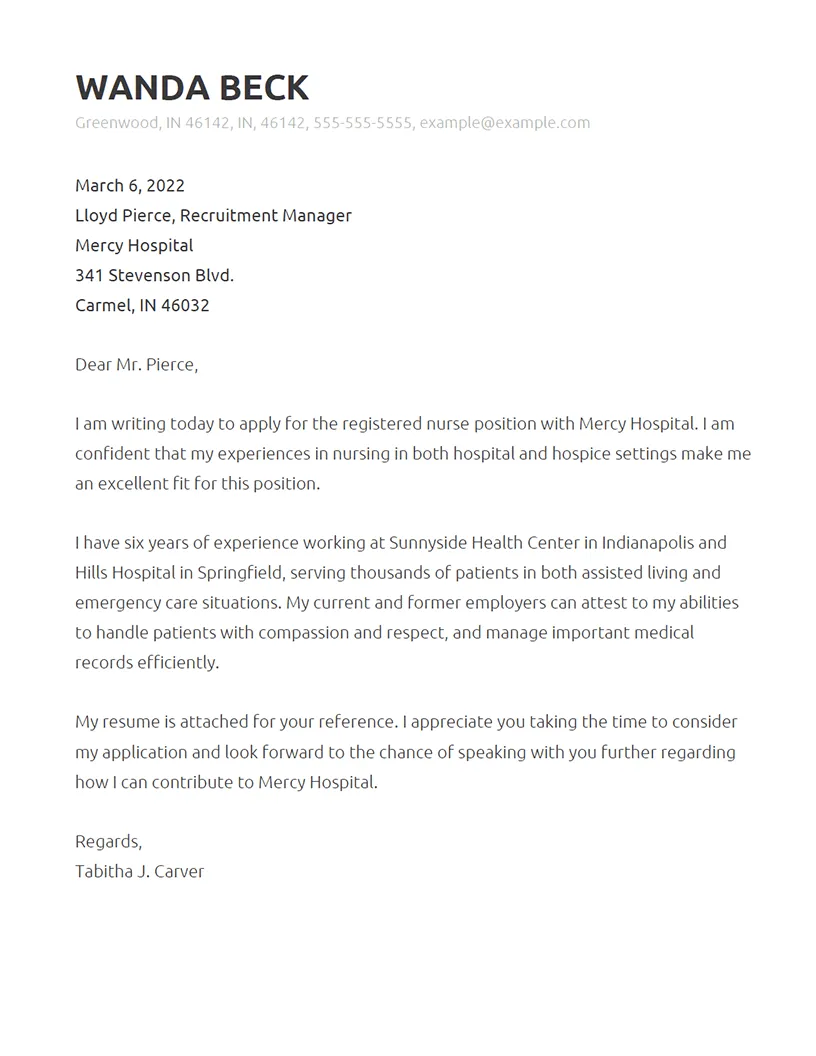
Understanding the Importance of a Nursing Cover Letter
In the competitive world of nursing, a well-crafted cover letter is your first opportunity to make a positive impression on potential employers. It’s more than just a formality; it’s a crucial tool that can significantly increase your chances of landing an interview. Your nursing resume cover letter provides a space to highlight your relevant skills, experience, and passion for the field, setting you apart from other applicants. This document allows you to showcase your personality, enthusiasm, and unique qualifications in a way that a resume alone cannot. By investing time and effort into crafting a compelling cover letter, you’re investing in your future career success, demonstrating your commitment to excellence and attention to detail, qualities highly valued in nursing. A strong cover letter will grab the reader’s attention, and makes the reader want to read your resume.
Why a Cover Letter Matters for Nurses
A cover letter matters for nurses because it provides a platform to tell your story beyond the facts listed in your resume. It’s your chance to explain why you’re the perfect fit for a specific role and why you’re genuinely interested in the opportunity. The cover letter shows your personality, your passion for nursing, and your understanding of the healthcare organization’s mission. It is also an opportunity to address any gaps in your resume or any special circumstances that the employer should be aware of. In short, the cover letter humanizes your application, making you a more relatable and memorable candidate. Employers often look for candidates who demonstrate initiative and are willing to put in the extra effort, and a well-written cover letter demonstrates exactly that.
Showcasing Your Skills and Experience in a Nursing Cover Letter

Your nursing cover letter is where you highlight the skills and experience that make you an outstanding candidate. Start by identifying the key requirements listed in the job description. Then, review your nursing experience and choose the most relevant examples. For each skill or experience, provide a concise explanation of how you utilized it in past roles. Quantify your achievements whenever possible. Instead of simply stating that you provided patient care, mention how you improved patient outcomes or streamlined processes. This strategy proves that you have the specific skills to excel in the role and will provide immediate value to the employer. Furthermore, emphasize transferable skills such as communication, teamwork, and critical thinking, which are essential in the nursing field.
Highlighting Relevant Nursing Skills
When highlighting your skills, focus on those most relevant to the position. Nursing roles require various skills, from clinical expertise to soft skills such as empathy and communication. Examples of clinical skills include wound care, medication administration, and patient assessment. Soft skills include the ability to communicate effectively with patients, families, and colleagues, as well as the ability to work under pressure and make critical decisions. Adapt your skills to match the job requirements and avoid listing irrelevant skills. Use action verbs to describe how you applied these skills in the past, emphasizing your proficiency and achievements. Always provide specific examples that support your claims and clearly demonstrate that you possess the necessary skills to succeed in the role.
Quantifying Achievements in Your Cover Letter
Quantifying your achievements is key to making your cover letter stand out. Instead of general statements, use numbers and data to demonstrate your impact. For instance, instead of saying you improved patient satisfaction, state that you “increased patient satisfaction scores by 15% within six months through implementing a new communication strategy.” Providing this level of detail validates your claims and demonstrates your ability to drive positive change. Quantifiable achievements make your cover letter much more compelling and memorable. They give employers a concrete understanding of your capabilities and give them confidence in your ability to deliver results. Use metrics to quantify things like the number of patients you cared for, the reduction in medication errors, or improvements in patient outcomes, which can powerfully showcase your value as a nurse.
Tailoring Your Cover Letter to the Specific Nursing Role

One of the most significant secrets to writing a great nursing cover letter is tailoring it to each job you apply for. Generic cover letters are easily recognizable and often discarded. Take the time to review each job description thoroughly. Identify the key requirements and qualifications the employer is seeking. Then, adjust your cover letter to address these specific needs. Mentioning the name of the hiring manager or nurse manager can show your extra effort. Use keywords from the job description to ensure your application gets past applicant tracking systems (ATS) and is reviewed by a human. Demonstrate that you understand the role and the healthcare facility’s mission. Emphasizing your specific skills and experience will show the recruiter that you are the perfect fit for that particular position and hospital. This customization strategy sets you apart from other applicants and dramatically increases your chances of being noticed.
Researching the Healthcare Facility
Before you write your cover letter, research the healthcare facility you’re applying to. Understanding the organization’s mission, values, and recent achievements will help you customize your letter effectively. Visit the facility’s website, read recent press releases, and explore social media channels. This research helps you understand the facility’s culture, patient care philosophy, and any special initiatives they are involved in. Then, integrate this information into your cover letter. For example, if the facility emphasizes patient-centered care, highlight your experience in delivering compassionate care. If they are known for cutting-edge technology, mention your proficiency with relevant equipment. This shows the employer that you are genuinely interested in the role and are a good cultural fit, which enhances your application and shows that you care about the position.
Customizing Your Cover Letter
Once you have researched the healthcare facility, customize your cover letter by directly referencing the institution’s values and mission in your letter. Specifically, demonstrate how your values align with theirs, and explain how you plan to contribute to their goals. Address your letter to the hiring manager by name if possible; this personal touch shows that you’ve done your research. Highlight skills and experiences that directly align with the specific needs outlined in the job description. Show how your qualifications and experience are precisely what they are looking for. Tailoring your cover letter shows that you are genuinely invested in the opportunity and sets you apart from generic applicants. This personalization shows you care about their specific organization and increases the chances of your application being considered.
Formatting Your Nursing Cover Letter for Impact

The format of your nursing cover letter plays a significant role in making a strong first impression. Use a professional and easy-to-read font like Times New Roman or Arial with a font size between 10 and 12 points. Start with your contact information at the top, including your name, phone number, email address, and professional online profiles. Follow this with the date, the hiring manager’s name (if known), their title, and the facility’s address. Keep the letter concise, aiming for one page or less, and use clear and concise language. Break up large blocks of text with short paragraphs and bullet points to improve readability. Be sure to proofread the entire document thoroughly for any typos or grammatical errors. A well-formatted cover letter is a reflection of your professionalism and attention to detail.
Using a Professional Tone
Maintaining a professional tone is critical when writing a nursing cover letter. Use formal language and avoid slang, contractions, and overly casual expressions. While it’s good to show enthusiasm, ensure your writing is polished and respectful. Avoid using personal anecdotes or sharing unrelated information. Your goal is to convince the employer of your professional skills and commitment to nursing. Choose a tone that aligns with the healthcare facility’s culture and the specific role you are applying for. Proofread your letter carefully to ensure there are no grammatical errors or typos that could undermine your professionalism. A professional tone demonstrates your respect for the opportunity and your ability to communicate effectively in a healthcare environment.
Cover Letter Structure
A well-structured cover letter makes it easy for the reader to quickly understand your key qualifications. Follow a standard structure with an introduction, body paragraphs, and a conclusion. In the introduction, state the position you’re applying for and where you found the job posting. Highlight your enthusiasm for the role and mention a key skill or experience that makes you a strong candidate. The body paragraphs are the heart of your letter. Use these paragraphs to showcase your skills, experience, and achievements. Support your claims with specific examples and quantify your accomplishments whenever possible. In the conclusion, reiterate your interest in the role and the healthcare facility, express your gratitude for the reader’s time, and include a call to action, such as requesting an interview. This structured format makes your letter professional and easier for hiring managers to assess your qualifications.
Effective Opening Paragraphs

Your opening paragraph is your chance to capture the reader’s attention and make a strong first impression. Start by clearly stating the position you are applying for and where you found the job posting. Then, immediately highlight your enthusiasm and key qualifications. This will grab the reader’s attention immediately. Briefly mention your most relevant experience or a significant accomplishment that aligns with the job requirements. Tailor the opening to the specific job and healthcare facility. Avoid generic phrases and clichés. Instead, aim for a concise and compelling statement that grabs attention and showcases your value. A well-crafted opening paragraph encourages the reader to continue reading and is an immediate and excellent showcase of your suitability for the position.
Crafting a Strong Body Paragraph
The body paragraphs are where you provide the details and demonstrate your capabilities. Focus on showcasing your relevant skills and experience, providing specific examples to support your claims. Use the STAR method (Situation, Task, Action, Result) to structure your responses effectively. Describe the situation you were in, the tasks you were assigned, the actions you took, and the results of your actions. Quantify your achievements whenever possible, using numbers to illustrate your impact. Each paragraph should focus on a specific skill or experience, making it easy for the reader to follow your story and understand your value. Tailor your body paragraphs to the job description, highlighting the skills and experience that directly align with the employer’s requirements. By using these methods, you’ll craft body paragraphs that demonstrate your abilities effectively.
Writing a Compelling Closing
Your closing paragraph should leave a lasting impression. Reiterate your enthusiasm for the role and the healthcare facility. Express your gratitude for the reader’s time and consideration. Include a clear call to action, such as requesting an interview. Restate your contact information for easy access. Keep it concise and focused, reinforcing your key qualifications. Avoid adding new information or introducing any uncertainty. Make sure your closing reflects your professionalism and genuine interest in the opportunity. A compelling closing leaves the reader with a positive impression and motivates them to take the next step and contact you.
Keywords to Use in Your Nursing Cover Letter

Keywords play a crucial role in making your cover letter effective, especially with the use of applicant tracking systems (ATS). These systems scan cover letters for specific keywords that match the job description. Carefully review the job posting and identify the key skills, qualifications, and terms the employer uses. Integrate these keywords naturally throughout your cover letter. Use them in your opening paragraph, body paragraphs, and closing. Keywords can relate to technical skills, certifications, or specific nursing practices. Using these keywords helps your cover letter pass the ATS filters and ensures it gets seen by a human reader. Remember to use keywords genuinely, avoiding keyword stuffing, which can make your letter seem unnatural. The strategic use of keywords demonstrates your knowledge of the role and shows the employer you are well-matched.
Including Action Verbs
Action verbs make your cover letter more dynamic and compelling. Start each bullet point or sentence with strong action verbs to describe your accomplishments and responsibilities. Examples include “managed,” “implemented,” “coordinated,” “assessed,” “developed,” and “improved.” Using action verbs gives your cover letter more power and helps you convey a sense of your competence and impact. Vary your verb choices to keep your writing engaging and interesting. Avoid overusing the same verbs; instead, use a thesaurus to find synonyms that better describe your actions. Action verbs bring your experiences to life and show the reader what you achieved in your previous roles. By using action verbs, you can strengthen your cover letter and emphasize your skills and experience.
Common Mistakes to Avoid in a Nursing Cover Letter
Avoid these common mistakes to ensure your cover letter makes a positive impact. Generic cover letters that are not tailored to the specific job and facility are easily discarded. Typos, grammatical errors, and poor formatting can undermine your credibility. Avoid clichés and overly casual language. Do not include irrelevant information or personal details that don’t relate to your professional qualifications. Do not provide lengthy explanations. Keep your cover letter concise and focused. Avoid negative statements or complaints about past employers or roles. It’s also important to not include salary expectations unless specifically requested. Finally, always proofread your cover letter to ensure it is error-free and reflects your attention to detail.
Typos and Grammatical Errors

Typos and grammatical errors can make your cover letter appear unprofessional and indicate a lack of attention to detail. Always proofread your letter carefully. Use spell-check and grammar-check tools, but don’t rely on them entirely. Read your cover letter aloud, as this can help you identify errors. Ask a friend, colleague, or career counselor to review your letter before you submit it. Catching these errors can prevent your application from being rejected and demonstrates your professionalism.
Generic Cover Letters
Submitting a generic cover letter is one of the most common mistakes. Employers can easily identify these letters because they are not tailored to the specific job or facility. They often use broad statements and lack specific examples that demonstrate your qualifications. Tailor your cover letter to each job posting, highlighting how your skills and experience align with the requirements. Show that you understand the role and the healthcare facility’s mission. This customization will make your cover letter stand out. Personalize the letter by addressing the hiring manager by name (if known) and mentioning specific aspects of the role that you are interested in. Doing so will make your cover letter more compelling.
Following Up After Submitting Your Cover Letter
Following up after submitting your cover letter can show your continued interest in the position. Send a brief email or make a phone call to the hiring manager approximately one week after submitting your application. Express your continued interest in the role and reiterate your key qualifications. Thank the hiring manager for their time and consideration. Ask if they require any additional information. This follow-up demonstrates your enthusiasm and initiative. However, be respectful of their time and avoid being overly persistent. Keep your follow-up concise and professional. A well-timed follow-up can help you stand out and potentially move your application to the next stage.