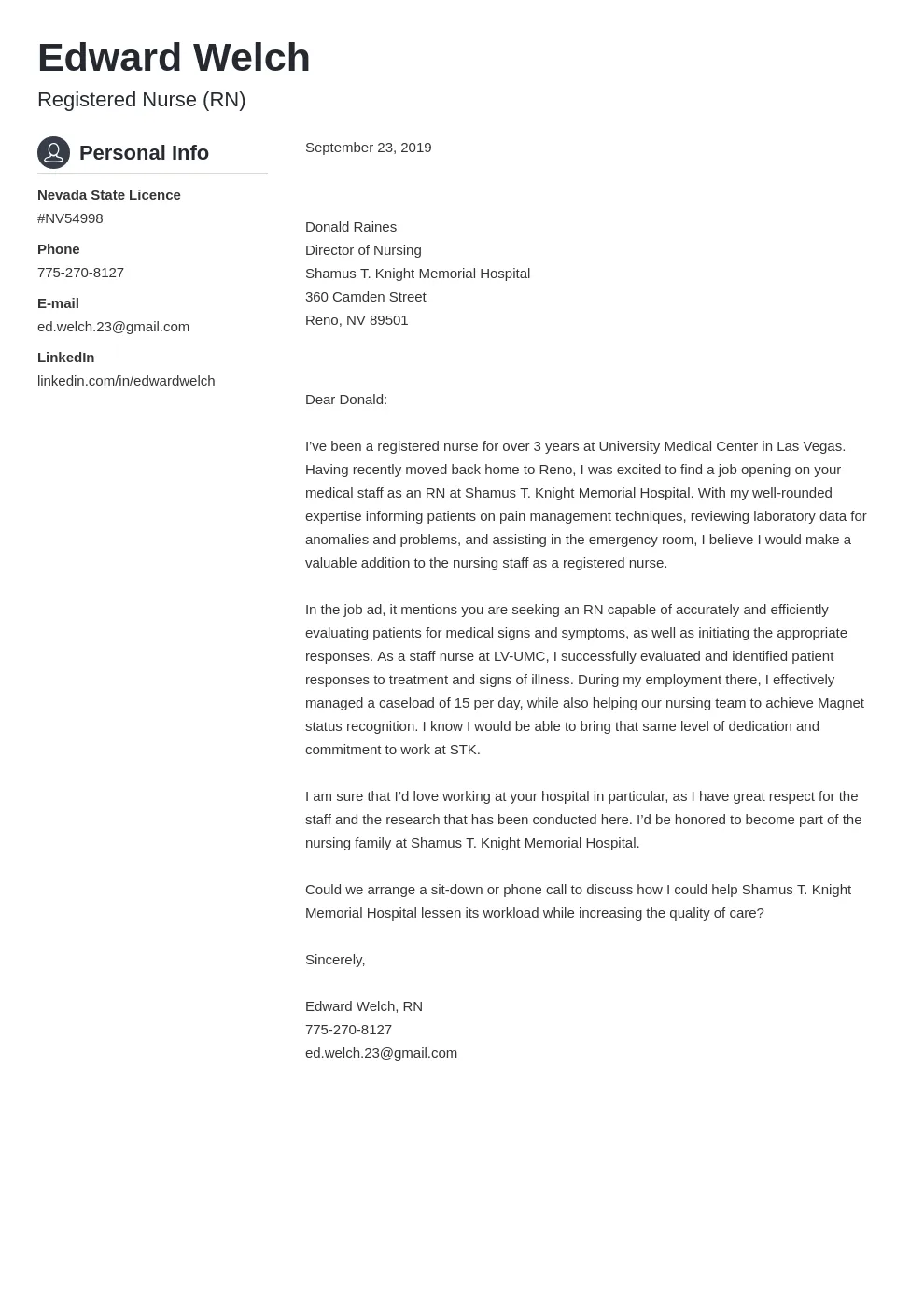
Understanding the Importance of a Nursing Cover Letter
In the competitive field of nursing, a well-crafted cover letter is your first and often most crucial introduction to a potential employer. It’s more than just a formality; it’s your opportunity to make a strong first impression, showcase your personality, and highlight why you’re the ideal candidate for the position. While your resume provides a detailed account of your skills and experience, the cover letter allows you to tell your story, connecting your qualifications to the specific needs of the job and the values of the healthcare facility. This is where you demonstrate your passion for nursing and your understanding of what the role entails. A compelling cover letter can significantly increase your chances of landing an interview, setting you apart from other applicants who might have similar qualifications on paper. Think of it as your personal marketing tool, designed to persuade the hiring manager that you’re the right fit.
Why a Cover Letter is Crucial
A cover letter serves several vital purposes in the job application process. Firstly, it personalizes your application. Unlike a generic resume, a cover letter allows you to address the hiring manager directly and express your genuine interest in the specific role and the organization. Secondly, it provides context to your qualifications. You can elaborate on your skills and experiences, explaining how they align with the requirements of the job. This is particularly important for nurses, as clinical skills and patient care experience are often complex and require nuanced explanations. Thirdly, a cover letter demonstrates your communication skills, which are essential in nursing. Clear, concise, and professional writing shows your ability to communicate effectively with patients, colleagues, and other healthcare professionals. Finally, a cover letter gives you the opportunity to showcase your personality and enthusiasm for nursing, qualities that can’t always be conveyed through a resume alone. This makes you a memorable candidate.
What to Include in Your Nursing Cover Letter

A strong nursing cover letter should be well-structured and contain specific information to make a compelling case for your candidacy. The content should flow logically, making it easy for the hiring manager to understand your key qualifications and your suitability for the role. Each element should be carefully crafted to support your overall narrative and demonstrate your value as a nurse. The goal is to convince the employer that you are not only qualified but also genuinely interested in the position and the organization.
Your Contact Information and Date
At the top of your cover letter, include your full name, address, phone number, and email address. Ensure that your email address is professional. Include the date below your contact information. This section provides the necessary details for the employer to contact you. Ensuring that this information is accurate and easily accessible is essential for a smooth application process. This simple step is critical; otherwise, all the efforts will be useless.
Address the Hiring Manager
Whenever possible, address the cover letter to a specific person, such as the hiring manager or the nurse manager. This shows that you’ve taken the time to research the organization and are genuinely interested in the role. If you can’t find a specific name, use a professional salutation like ‘Dear Hiring Manager’ or ‘Dear Nurse Manager’. Avoid generic greetings, such as ‘To Whom It May Concern,’ which can make your letter seem impersonal and less engaging. Use online resources, LinkedIn, or a quick call to the hospital to find the hiring manager’s name. Addressing the letter to the right person shows initiative and attention to detail.
Opening Paragraph

The opening paragraph is your chance to grab the reader’s attention. Start by stating the position you are applying for and where you saw the job posting. Immediately express your enthusiasm for the role and the organization. Briefly mention why you are interested in this particular position and what makes you a strong candidate. Highlight a key skill or experience that aligns with the job requirements. This should be a concise and compelling introduction that sets the tone for the rest of your letter. Try to make it sound personal, not just a general introduction.
Highlighting Your Qualifications and Experience
The body of your cover letter is where you showcase your qualifications and experience. Discuss your relevant nursing experience, skills, and certifications. Tailor your examples to match the specific requirements listed in the job description. For instance, if the job requires experience with electronic health records, be sure to mention your proficiency with relevant systems. Provide specific examples of your accomplishments and how you’ve contributed to positive patient outcomes in past roles. This section is your opportunity to show why you are an ideal fit for the position.
Quantify Your Achievements
Whenever possible, quantify your achievements with data and statistics. Instead of saying you ‘improved patient satisfaction,’ state that you ‘increased patient satisfaction scores by 15% within six months.’ Quantifiable results demonstrate the tangible impact of your work and give the hiring manager a clear understanding of your capabilities. Use numbers to show how you’ve made a difference in previous roles. Using specific metrics adds credibility to your claims and makes your application more compelling. Think about how you can use numbers to highlight your skills and experience.
Showcasing Your Skills and Qualities

Emphasize the skills and qualities that make you a successful nurse. This includes clinical skills, such as administering medications and providing patient care, as well as soft skills, such as communication, empathy, and teamwork. Provide examples of how you’ve demonstrated these skills in previous roles. For example, describe how you resolved a conflict with a patient or a colleague or how you effectively communicated complex medical information. Highlight your ability to work under pressure, manage time effectively, and collaborate with a multidisciplinary team. Showcase your patient care abilities and mention any special certifications.
Closing Paragraph and Call to Action
In your closing paragraph, reiterate your interest in the position and thank the hiring manager for their time and consideration. Reiterate your enthusiasm for the role and your belief that your skills align with the job. Include a call to action, such as ‘I am eager to discuss my qualifications further in an interview’ or ‘I look forward to hearing from you soon.’ Provide your contact information again and express your availability for an interview. End on a positive and professional note. You can also mention the best way to reach you.
Formatting Your Nursing Cover Letter
The appearance of your cover letter is just as important as its content. Properly formatting your letter ensures it is easy to read and presents a professional image. Poor formatting can make even the most qualified candidates appear careless or unprofessional. Adhering to formatting guidelines will help you to make a great impression.
Choose the Right Font and Font Size

Select a professional, easy-to-read font, such as Times New Roman, Arial, or Calibri. Keep the font size between 10 and 12 points. Avoid using overly stylized fonts, as they can be difficult to read. Proper font choices ensure that your letter is accessible and looks professional. Maintaining consistency in your font choices improves readability and demonstrates attention to detail.
Keep the Letter Concise
Aim for a cover letter that is no more than one page long. Hiring managers are busy and may not have time to read lengthy letters. Keep your paragraphs concise and to the point, focusing on the most important information. Use clear and straightforward language. Excessive length can dilute your message and reduce the impact of your qualifications. A concise letter demonstrates respect for the reader’s time and keeps the focus on your key strengths.
Proofread and Edit Carefully
Proofread your cover letter multiple times for any typos, grammatical errors, or formatting inconsistencies. Errors can undermine your credibility and make you appear careless. Use spell check and grammar check tools, but also read the letter aloud to catch any mistakes. Ask a friend or colleague to proofread your letter as well. Having a fresh pair of eyes can help you identify errors that you may have missed. Pay close attention to details.
Tailoring Your Cover Letter for Each Job

Generic cover letters rarely impress hiring managers. To increase your chances of success, customize your cover letter for each job you apply for. This involves researching the organization, understanding the specific requirements of the role, and aligning your skills and experiences accordingly. This shows your genuine interest and attention to detail. Tailoring your cover letter demonstrates that you’ve taken the time to understand the job requirements and how your skills and experiences align with them.
Research the Hospital or Clinic
Before you write your cover letter, research the healthcare facility where you are applying. Visit the organization’s website, read about their mission, values, and the services they provide. This information will help you tailor your letter to align with their specific needs and demonstrate your understanding of their culture. Identify any initiatives or programs that resonate with your values and mention them in your letter. Mention the hospital or clinic’s values to show you are a good fit and interested in the organization.
Match Your Skills to the Job Description
Carefully review the job description and identify the key skills and qualifications the employer is seeking. Then, highlight your relevant skills and experiences, providing specific examples of how you’ve demonstrated those skills in the past. Use keywords from the job description in your letter, but make sure your writing flows naturally and is not overly repetitive. Customize each letter to match the specific role. By matching your skills with the job description, you demonstrate that you are a strong fit.
Common Mistakes to Avoid

Avoiding common mistakes is essential for creating an effective cover letter. Many applicants make mistakes that can hinder their chances of getting an interview. Identifying these errors and taking steps to prevent them will significantly improve your application.
Generic Letters
Avoid sending generic cover letters that could apply to any job. Customize each letter to reflect the specific requirements of the position and the organization. Generic letters demonstrate a lack of interest and often fail to impress hiring managers. Take the time to tailor your letter to each job you apply for, showing that you are genuinely interested in the role.
Typos and Grammatical Errors
Typos and grammatical errors can significantly damage your credibility and make you appear careless. Always proofread your cover letter carefully before submitting it. Use spell check and grammar check tools, and consider asking a friend or colleague to review your letter as well. Paying attention to detail in your cover letter shows that you are detail-oriented, which is crucial in nursing.
Not Highlighting Relevant Skills

Make sure you highlight your relevant skills and experience in your cover letter. Identify the key requirements of the job and discuss how your skills and experiences align with them. Focus on the aspects of your background that are most relevant to the position. Do not include information that is not related to the job or your experience. This is the main goal of the cover letter.