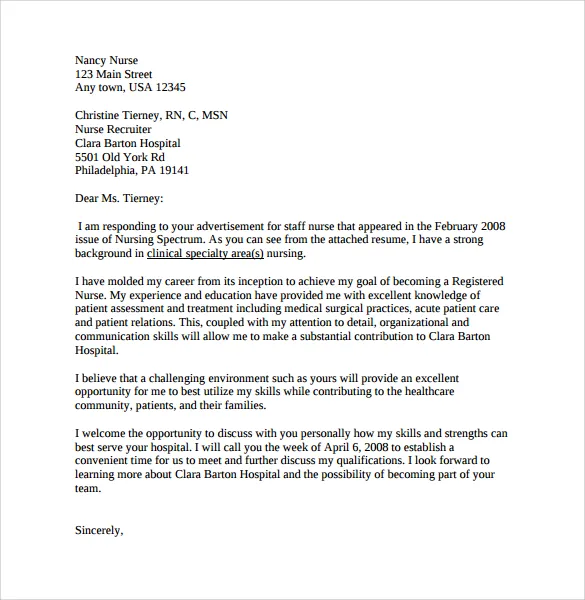
Understanding the Importance of a Nursing Cover Letter
A nursing cover letter is more than just a formality; it’s your first impression on potential employers. It’s a crucial tool in the job application process, offering you the opportunity to showcase your unique qualifications, skills, and enthusiasm for the nursing profession. Unlike your resume, which provides a concise overview of your experience, your cover letter allows you to elaborate on your accomplishments, explain why you’re the perfect fit for the role, and demonstrate your personality. Recruiters often use cover letters to assess a candidate’s communication skills, attention to detail, and genuine interest in the position and the healthcare organization. A well-crafted cover letter can significantly increase your chances of securing an interview, setting the stage for a successful application and helping you stand out from other candidates in a competitive job market.
Highlighting Your Nursing Skills and Experience
Your cover letter is the ideal place to emphasize your nursing skills and experience, demonstrating your competency and suitability for the position. Begin by identifying the key skills and experiences that align with the job requirements outlined in the job description. Whether it’s patient assessment, medication administration, wound care, or critical thinking, make sure to explicitly mention them. Quantify your accomplishments whenever possible; for instance, ‘Managed a 20-bed unit, consistently achieving a patient satisfaction score of 95%.’ Highlight any specialized certifications or training you possess, such as certifications in advanced cardiac life support (ACLS) or pediatric advanced life support (PALS). Furthermore, providing examples of how you have applied these skills in past roles can make your cover letter even more persuasive. This provides the reader with a clear picture of your expertise and qualifications and showcases how you can contribute to the healthcare team.
Demonstrating Your Passion for Nursing

Expressing your passion for nursing is vital to capturing the attention of recruiters and demonstrating your commitment to the field. Your cover letter is a perfect platform to convey your enthusiasm and motivation. Share why you were drawn to nursing and what aspects of the profession excite you the most. This could be your dedication to patient care, your desire to make a positive impact on people’s lives, or your interest in the ever-evolving medical field. Moreover, describing your experience in nursing and your personal philosophy of care further strengthens your application. If possible, mention any specific experiences or interactions with patients that have shaped your values and influenced your career goals. By adding personal anecdotes or thoughts on patient advocacy, you can make a compelling statement about your dedication to the profession.
Tailoring Your Cover Letter to the Job Description
Customizing your nursing cover letter for each job application is essential to making a strong impression on hiring managers. It shows that you’ve taken the time to understand the specific needs and requirements of the position and the healthcare organization. Start by carefully reading the job description and identifying the key skills, qualifications, and experiences the employer is seeking. Then, tailor your cover letter to address these requirements directly. Highlight how your skills and experiences match what the employer is looking for. If the job description emphasizes teamwork, provide examples of how you have successfully collaborated with colleagues in past roles. If they are seeking experience with a particular patient population or medical technology, include specific details about your relevant experience. By showing a clear alignment between your qualifications and the employer’s needs, you greatly increase your chances of getting an interview. It helps convince the hiring manager that you are the right fit for their team and will seamlessly integrate into their work environment.
Key Elements of a Compelling Nursing Cover Letter
A compelling nursing cover letter includes specific key elements that make it stand out from the competition. Begin with a professional header that includes your contact information, the date, and the recipient’s details. Next, the opening paragraph should grab the reader’s attention, stating your interest in the position and briefly highlighting why you are the ideal candidate. In the body paragraphs, focus on showcasing your relevant skills, experiences, and accomplishments, using specific examples to support your claims. Be sure to mention any relevant certifications or specializations and tailor your letter to the job description. Finally, in the closing paragraph, reiterate your enthusiasm, express gratitude for the opportunity, and state your availability for an interview. Ensure that your cover letter is well-organized, concise, and free of grammatical errors or typos, as attention to detail is crucial in healthcare. Maintain a professional tone throughout, reflecting your commitment to quality patient care and your ability to communicate effectively.
Structuring Your Nursing Cover Letter for Maximum Impact

A well-structured nursing cover letter is essential to ensure your message is clear, concise, and impactful. Start with a professional greeting and a concise introduction that states the position you are applying for and how you found the opportunity. The body of your letter should be divided into well-defined paragraphs, each focusing on different aspects of your qualifications. Begin each paragraph with a topic sentence, followed by supporting details and examples. Use keywords from the job description to demonstrate that you have read and understood the requirements. Use concise language and avoid jargon, focusing on the qualities that make you the right fit for the role. In the closing paragraph, summarize your key strengths, express your interest in an interview, and thank the reader for their time and consideration. Proofread your letter carefully to ensure that the structure is logical, easy to follow, and reflects your attention to detail.
Addressing Common Mistakes in Nursing Cover Letters
Avoiding common mistakes in your nursing cover letter is crucial for making a positive impression on recruiters. One of the most common errors is failing to tailor your cover letter to the specific job and organization. Generic cover letters often come across as impersonal and do not demonstrate genuine interest. Another frequent mistake is simply restating your resume without providing additional information or context. Your cover letter should expand on your experiences, providing detailed examples and highlighting your achievements. Spelling and grammatical errors can also be a significant setback. Be sure to carefully proofread your letter before submitting it. Including irrelevant information, using an unprofessional tone, and focusing too much on your needs rather than the employer’s are also pitfalls to avoid. The key is to showcase your qualifications and explain how you can meet the employer’s needs and contribute to their team. Focusing on what you can do for them is always more effective than talking about yourself.
Showcasing Achievements and Quantifiable Results
Highlighting your accomplishments and providing quantifiable results in your nursing cover letter can make a significant impact on hiring managers. Instead of simply listing your responsibilities, focus on your achievements and the positive outcomes you have contributed to in your past roles. Quantify your accomplishments whenever possible. For example, instead of writing ‘Improved patient outcomes’, write ‘Reduced patient readmission rates by 15% through enhanced care coordination.’ Use action verbs to describe your contributions and demonstrate your skills. For instance, use terms like ‘managed,’ ‘implemented,’ ‘coordinated,’ or ’trained’ to showcase your initiative and leadership abilities. Moreover, provide specific examples of how you have applied your skills to address challenges and improve patient care. Demonstrating the tangible results of your efforts can set you apart from other candidates and show employers the value you can bring to their team. Remember, facts and figures make a stronger impact than general statements.
Closing Your Nursing Cover Letter Effectively

A strong closing is important to leave a positive final impression and increase your chances of getting an interview. Reiterate your interest in the position and the healthcare organization, demonstrating your genuine enthusiasm. Summarize your key qualifications and briefly mention why you are the best fit for the role. Express gratitude to the hiring manager for their time and consideration. Make sure to clearly state your availability for an interview and include your contact information again. Proofread your closing carefully to ensure it is professional, concise, and free from errors. Consider including a call to action, such as ‘I look forward to the opportunity to discuss my qualifications further’ to encourage a response. By ending your cover letter with a confident and positive tone, you create a lasting impression and encourage the recruiter to reach out to you for the next step.