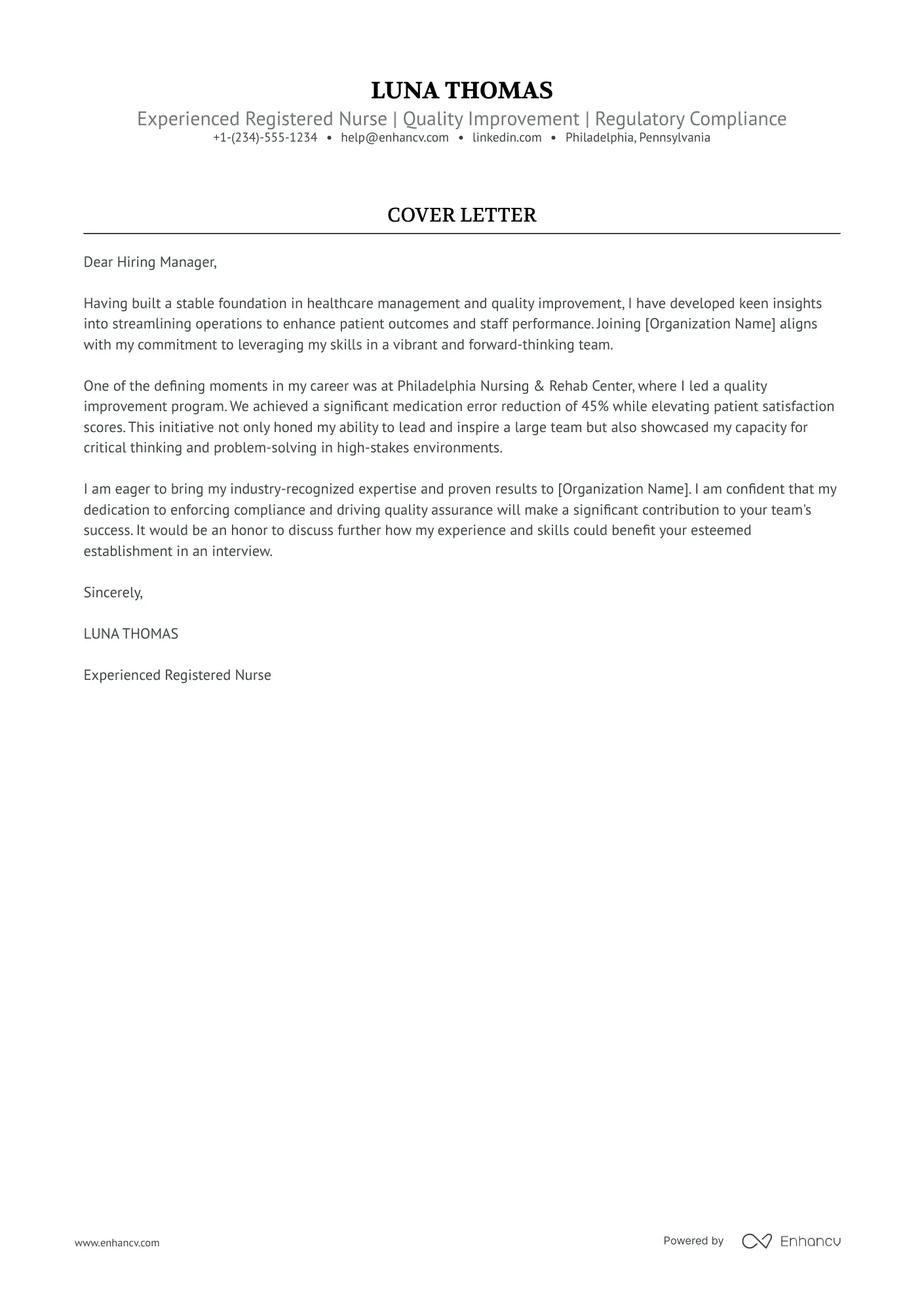
Key Elements of a Nurse Manager Cover Letter
A well-crafted cover letter is your first opportunity to make a positive impression and showcase why you are the ideal candidate for a Nurse Manager position. It serves as an introduction, complementing your resume by providing context, demonstrating your personality, and highlighting your relevant experience and skills. A strong cover letter should not simply reiterate your resume; instead, it should expand on your qualifications, demonstrating your understanding of the role and your enthusiasm for the opportunity. A cover letter, therefore, is a crucial tool in your job application arsenal.
Header Section
The header section of your cover letter is essential for providing contact information and ensuring the hiring manager knows how to reach you. Accuracy and professionalism are key here, as this is the first thing the reader sees.
Your Contact Information

At the top left of your cover letter, include your full name, phone number, and professional email address. Ensure your email address is professional; avoid using nicknames or informal language. This allows the hiring manager to quickly find your contact details.
Date
Below your contact information, place the date you are sending the cover letter. This helps the recipient know when the letter was written.
Recipient’s Information
On the left side, below the date, include the recipient’s name, title, and the name and address of the healthcare facility. If possible, address the letter to the hiring manager or the specific person in charge of recruitment. Researching the specific name adds a personalized touch, showing you have taken the time to learn about the organization.
Opening Paragraph

The opening paragraph is your chance to grab the reader’s attention and express your enthusiasm for the position. It should be concise, engaging, and immediately communicate why you are writing.
Express Your Interest and Mention the Position
Start by clearly stating the position you are applying for – Nurse Manager. Immediately express your interest in the role and briefly mention where you found the job posting. This establishes context and shows your proactive approach. For instance, you might say, ‘I am writing to express my enthusiastic interest in the Nurse Manager position advertised on [Platform]’. This sets a positive tone from the start.
Highlight Your Key Skills and Experience
The body of your cover letter should highlight your key skills and experience, aligning them with the requirements of the Nurse Manager role. This is where you provide detailed examples of your accomplishments and showcase your ability to lead, manage, and improve healthcare outcomes. Be specific, providing quantifiable results whenever possible.
Leadership and Management Skills

Demonstrate your leadership abilities by providing examples of how you have motivated teams, fostered a positive work environment, and successfully managed nursing staff. Mention any experience you have in strategic planning, budgeting, and resource allocation. Highlight your ability to make critical decisions and solve complex problems. Provide concrete examples of how you improved team performance or implemented successful initiatives.
Clinical Expertise
As a Nurse Manager, your clinical expertise is crucial. Mention your experience in specific nursing specialties, if applicable, and highlight any certifications or advanced training. Provide examples of how you have used your clinical knowledge to improve patient care and outcomes, such as implementing evidence-based practices or participating in quality improvement initiatives. This demonstrates that you are not only a manager but also a skilled nurse.
Communication and Interpersonal Abilities
Nurse Managers need excellent communication and interpersonal skills. Showcase your ability to communicate effectively with nurses, physicians, patients, and other stakeholders. Provide examples of how you have resolved conflicts, facilitated team meetings, and built strong relationships within healthcare settings. Highlight any experience in training and mentoring nursing staff, emphasizing your ability to guide and support others.
Quantifiable Achievements

Use quantifiable achievements to demonstrate your impact. Instead of saying ‘Improved patient satisfaction’, state ‘Increased patient satisfaction scores by 15% within one year by implementing a new patient feedback system’. Include metrics related to budget management, staff retention, and patient outcomes. This provides concrete evidence of your capabilities and shows the value you can bring to the role.
Closing Paragraph
The closing paragraph of your cover letter should reiterate your interest in the position, express gratitude, and provide contact information. It is your last opportunity to leave a positive impression.
Call to Action
Clearly state your interest in an interview and your availability. For example, you could say, ‘I am eager to discuss my qualifications further and am available for an interview at your earliest convenience’. This shows enthusiasm and a willingness to move forward in the application process.
Express Gratitude and Offer Contact Information

Thank the hiring manager for their time and consideration. Reiterate your contact information, including your phone number and email address. This makes it easy for the recipient to contact you. A professional closing, such as ‘Sincerely’ or ‘Best regards,’ followed by your name, completes the letter.
Formatting and Style
Proper formatting and a professional style are crucial for a polished cover letter. Ensure that your letter is easy to read, well-organized, and free of errors. This attention to detail reflects positively on your professionalism and ability to communicate effectively.
Font and Readability
Choose a professional font such as Times New Roman, Arial, or Calibri. Use a font size between 11 and 12 points for readability. Maintain consistent formatting throughout the letter, including spacing, margins, and bullet points. Ensure the letter is well-structured, with clear headings and paragraphs, making it easy for the reader to follow.
Length and Tone

Keep your cover letter concise and to the point, ideally one page long. The tone should be professional and enthusiastic, reflecting your genuine interest in the role and the organization. Avoid using overly casual or informal language. Use active voice and positive language to highlight your achievements and skills. The tone should match the culture of the healthcare facility you are applying to, reflecting your awareness and respect for their values.
Proofreading and Editing
Before submitting your cover letter, carefully proofread it for any grammatical errors, spelling mistakes, or typos. Ask a colleague or friend to review your letter as a second set of eyes can often catch errors you may have missed. Ensure that your cover letter is free of inconsistencies and that the information presented is accurate and up-to-date. A well-proofread cover letter demonstrates your attention to detail and professionalism.
Additional Tips
In addition to the essential elements, here are some additional tips to enhance your cover letter and make it stand out. These tips will help you tailor your letter to each job application and maximize your chances of success.
Tailoring Your Letter

Customize your cover letter for each job application. Research the healthcare facility and the specific Nurse Manager position. Tailor your letter to match the requirements and values of the organization. Highlight the skills and experiences that are most relevant to the job description. This shows the hiring manager that you have taken the time to understand their needs and are genuinely interested in the role.
Using Keywords
Incorporate keywords from the job description into your cover letter. Review the job posting and identify the key skills and qualifications the employer is seeking. Naturally integrate these keywords into your letter to ensure your application passes through applicant tracking systems (ATS) and catches the hiring manager’s attention. However, avoid keyword stuffing; ensure that the language flows naturally and that the keywords are used in context.
Following Up
If you haven’t heard back within a reasonable timeframe, follow up with the hiring manager. Send a polite email expressing your continued interest in the position. Reiterate your qualifications and thank them for their time. This shows your persistence and commitment. Following up can also help you stay top-of-mind and may increase your chances of getting an interview. For example, one week after the application deadline, send a brief email expressing your interest and asking for an update on the hiring process.
By following these guidelines, you can create a compelling Nurse Manager cover letter that effectively showcases your skills, experience, and enthusiasm for the role, increasing your chances of landing an interview and ultimately securing your desired position. Remember to tailor your letter to each job application and always proofread for accuracy and professionalism. Good luck with your job search!