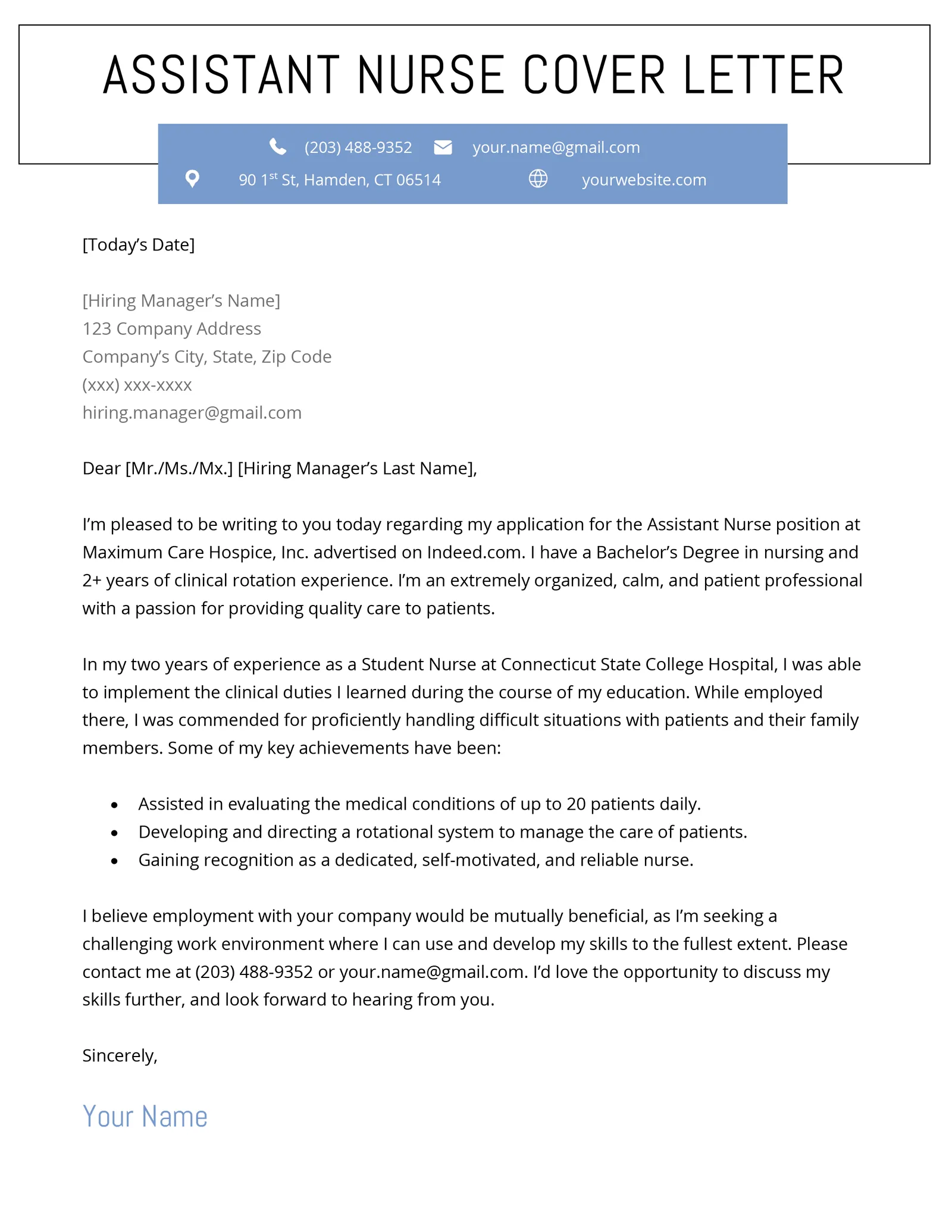
Crafting Your Nurse Cover Letter
A well-crafted cover letter is your first introduction to a potential employer, and for new graduate nurses, it’s a crucial tool in showcasing your potential and securing your dream job. Unlike experienced nurses, your cover letter needs to highlight your education, clinical experiences, and eagerness to learn. This guide will provide you with the necessary steps to craft a compelling cover letter that captures the attention of hiring managers and sets you apart from other applicants. The goal is to present yourself as a capable and enthusiastic candidate, ready to contribute to their healthcare team. It’s about demonstrating your understanding of the nursing profession and your commitment to providing excellent patient care.
Key Components of a New Nurse Cover Letter
A strong cover letter comprises several key elements. Each section serves a specific purpose in telling your story and making a positive impression. Accuracy and attention to detail are essential, as errors can undermine your credibility. Ensure that all information is accurate, up-to-date, and relevant to the position. Customize each cover letter to reflect the specific requirements and expectations of the job and the healthcare facility. Generic cover letters are easily identified and often discarded. Instead, show that you’ve done your research, understand their mission, and how you can contribute.
Your Contact Information

At the very top of your cover letter, clearly display your contact information. This ensures that the hiring manager can easily reach you. Include your full name, address, phone number, and professional email address. Make sure your email address sounds professional, avoiding nicknames or casual language. Ensure your voicemail is set up with a professional greeting.
The Date
Below your contact information, include the date the cover letter is written. This helps in tracking the application and gives context to when you applied.
Employer Information
Address your letter to the hiring manager or the specific person mentioned in the job posting. If a name isn’t provided, research the facility’s website or call the HR department to find out the appropriate contact person. If you can’t find a name, use a professional salutation like ‘Dear Hiring Manager’.
The Salutation

Begin your cover letter with a professional salutation. ‘Dear Mr./Ms./Mx. [Last Name]’ is preferred when you know the hiring manager’s name. When the name is not available, use ‘Dear Hiring Manager’ or ‘Dear [Department Name] Hiring Team’.
Making a Strong First Impression
The opening paragraph is critical. It’s your chance to immediately grab the reader’s attention. Start by stating the position you’re applying for and where you saw the advertisement. Briefly mention why you’re interested in the role and what makes you a good fit. This is also a great opportunity to highlight your enthusiasm for nursing and the specific healthcare facility. A compelling opening paragraph shows that you’ve put thought and effort into your application, setting a positive tone for the rest of the letter. Show your passion for nursing by highlighting your career goals.
Highlighting Your Nursing Education
Since you are a new graduate, your educational background is a significant selling point. Detail your nursing degree, the name of the institution, and the date of your graduation. Mention any honors, scholarships, or academic achievements. If you have a high GPA, consider including it. Emphasize any relevant coursework or specializations that align with the job requirements. Also, highlight any academic projects or research that demonstrates your analytical and critical thinking skills.
Emphasizing Clinical Experience

While you may lack extensive work experience, your clinical rotations are invaluable. Describe the settings and the patient populations you’ve worked with. Focus on the skills and competencies you developed, such as patient assessment, medication administration, and care planning. Quantify your achievements whenever possible, such as the number of patients you cared for or the specific tasks you performed. Mention any positive feedback you received from clinical instructors or preceptors. Use action verbs to describe your responsibilities and accomplishments.
Showcasing Relevant Skills
Identify the skills mentioned in the job description and show how you possess them. These can include clinical skills (e.g., wound care, IV insertion), soft skills (e.g., communication, teamwork), and technical skills (e.g., EMR systems). Provide specific examples of how you’ve used these skills in clinical settings. This section demonstrates that you understand the requirements of the role and have the capabilities to succeed. Tailor this section to align with the specific needs of the employer. Research the facility’s values and mission, and highlight skills that align with them.
Demonstrating Passion and Enthusiasm
Express your passion for nursing and your enthusiasm for the opportunity. Explain why you are interested in this particular role or facility. Share your career goals and how the position aligns with them. Demonstrate your commitment to patient care and your desire to make a positive impact. Show that you’ve researched the facility and understand its mission and values. A genuine expression of passion will resonate with the hiring manager and make you a more memorable candidate. Highlight any volunteer experiences or extracurricular activities related to nursing.
Tailoring Your Cover Letter to the Job

Always tailor your cover letter to the specific job and the organization. Read the job description carefully and identify the key requirements and qualifications. Use the same keywords and phrases that the employer uses to demonstrate that you meet their needs. Research the facility’s mission, values, and patient population. Address how your skills and experiences align with their specific needs. Generic cover letters are easy to spot and often result in immediate rejection. Customize each cover letter for each job.
Formatting Your Nurse Cover Letter
The format of your cover letter is as important as the content. Use a professional font such as Times New Roman, Arial, or Calibri in a readable size (11 or 12 points). Use single spacing within paragraphs and double spacing between paragraphs. Ensure your letter is well-organized with clear headings and subheadings. Use a standard business letter format with left alignment. Proofread your cover letter multiple times to check for any grammatical errors or typos. Use bullet points to list skills or experiences to make your letter easier to read.
Proofreading and Editing
Before submitting your cover letter, carefully proofread it for any errors in grammar, spelling, and punctuation. Ask a friend, family member, or career counselor to review your letter for clarity and accuracy. Errors create a negative impression and suggest a lack of attention to detail. Read the letter aloud to catch any awkward phrasing or inconsistencies. Ensure that your contact information is correct. The final step in the process is to ensure that your cover letter is polished and professional.
Closing Your Cover Letter

In the closing paragraph, reiterate your interest in the position and express your enthusiasm for the opportunity. Briefly summarize why you are a strong fit for the role. Thank the hiring manager for their time and consideration. Conclude with a call to action, such as ‘I look forward to hearing from you soon’ or ‘I am eager to discuss my qualifications further in an interview’.
Expressing Gratitude
Always express gratitude for the hiring manager’s time and consideration. A simple ‘Thank you for your time’ demonstrates your appreciation and professionalism.
Providing Contact Information Again
Reiterate your contact information in the closing paragraph. This ensures the hiring manager has easy access to it when they are ready to contact you.
The Complimentary Close and Signature

Use a professional closing such as ‘Sincerely’, ‘Best regards’, or ‘Yours faithfully’. Leave space for your signature, then type your full name below the closing. If submitting electronically, type your name and consider including your electronic signature as an image.
Follow-Up Strategies
After submitting your cover letter and resume, it is important to follow up. This demonstrates your continued interest in the position and gives you a chance to reiterate your enthusiasm. However, be mindful of the timing and frequency of your follow-up.
When to Follow Up
Typically, you should wait one to two weeks after submitting your application before following up. This timeframe allows the hiring manager enough time to review applications. If the job posting indicates a specific timeline for applications or interviews, follow that guidance. However, if you haven’t heard back within two weeks, it’s acceptable to follow up.
How to Follow Up
Follow up with a brief email or phone call. In your message, reference the position you applied for and briefly reiterate your interest and qualifications. Express your appreciation for the hiring manager’s time and consideration. Keep your follow-up concise and professional. If you haven’t heard back after the initial follow-up, it’s acceptable to follow up once more, a week or two later. However, avoid excessive follow-up, as it can appear intrusive.
Common Mistakes to Avoid
Avoid these common mistakes to make your cover letter stand out for the right reasons. Addressing them can significantly improve your chances of securing an interview.
Overlooking the Basics
Failing to include essential information, such as your contact details, can prevent the hiring manager from reaching you. Not proofreading your cover letter can lead to errors and a negative impression. Ensure that you always include all required information and double-check everything before submitting it. Ignoring the instructions in the job description is another common mistake.
Generic Language
Using generic, vague language that doesn’t highlight your specific skills and experiences is another common mistake. Generic cover letters don’t show why you’re the best fit for the job. Avoid using phrases that can apply to anyone. Tailor your cover letter to each specific job application, emphasizing your unique qualifications. Show that you’ve taken the time to understand the role and the organization.
Typos and Grammatical Errors
Typos and grammatical errors can undermine your credibility and suggest a lack of attention to detail. Proofread your cover letter carefully, and ask someone else to review it. Use spell-check, but don’t rely on it entirely, as it won’t catch all errors. Ensure your writing is clear, concise, and professional.