What is a New Grad Nurse Cover Letter (And Why Is It Important)
A new grad nurse cover letter is your first impression. It’s a formal introduction, showcasing your qualifications and enthusiasm for a nursing position. Unlike your resume, a cover letter allows you to connect with the hiring manager on a more personal level. It provides context to your experiences, highlighting why you’re the perfect fit. In a competitive job market, a well-crafted cover letter is essential. It demonstrates your communication skills and attention to detail, setting you apart from other applicants. Ignoring this step means missing the chance to express what makes you unique, potentially leading to your application being overlooked. This first contact should convince the hiring manager to want to know you better and read your resume.
Key Components of a Standout Cover Letter
A standout cover letter has several key components. It’s not just a formality; it’s a strategic document designed to highlight your strengths. The structure should follow a logical flow, making it easy to read and digest. Each section plays a crucial role in painting a comprehensive picture of your candidacy. Failing to include these key components weakens your application, making it harder to grab the hiring manager’s attention. By integrating these elements, your letter will go from a generic document to a tailored statement that resonates with the reader, increasing your chances of securing an interview.
Contact Information, Essential for Your Letter

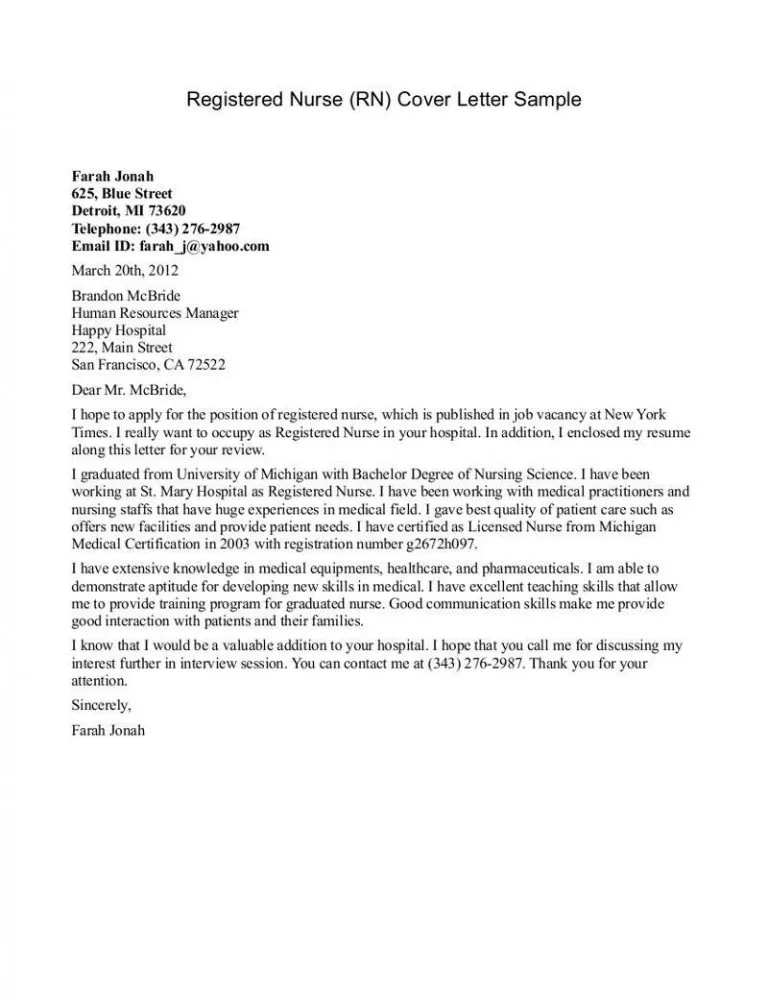
At the top of your cover letter, include your contact information. This typically includes your full name, phone number, email address, and LinkedIn profile URL (if you have one). It’s also essential to include the date and the hiring manager’s name, title, and the hospital’s address. This ensures they know how to reach you if they want to schedule an interview. This information is more than just a formality; it’s a fundamental part of making sure the hiring manager knows how to contact you. If you forget any of this, you are losing an opportunity.
The Salutation
Start your cover letter with a professional salutation. ‘Dear Mr./Ms./Mx. [Last Name]’ is generally appropriate. If you don’t know the hiring manager’s name, use ‘Dear Hiring Manager.’ Avoid generic salutations like ‘To Whom It May Concern,’ which can appear impersonal. A well-chosen salutation immediately indicates you’ve done your research and value the opportunity. Your salutation should be specific. It’s a way to show you’ve taken the time to know who you are addressing. In doing so, the reader will immediately be more impressed.
Writing a Compelling Introduction
Your introduction sets the tone for the entire letter. State the position you’re applying for and where you found the job posting. Briefly introduce yourself, highlighting your enthusiasm for the role. Briefly mention key qualifications or experiences that align with the job requirements. A strong introduction immediately captures the hiring manager’s attention. A weak introduction risks being overlooked. The first paragraph is your chance to stand out, so make it count. This is your chance to make the hiring manager want to read more about you. The more captivating your introduction, the better your chances.
Highlighting Your Education and Credentials

In this section, provide details about your nursing education. Mention the name of your nursing school, the degree earned (e.g., BSN), and any honors or awards received. Include your GPA if it’s impressive or if the job description specifies. Mention any relevant certifications, such as BLS, ACLS, or others. These details validate your qualifications. Omitting them may leave the impression that you don’t meet the basic requirements. This information solidifies your professional credibility. A simple list can get the attention of the reader by showing you possess the proper education needed for the role.
Emphasizing Clinical Experience
Detail your clinical experiences, including the hospitals or clinical settings where you’ve completed rotations. Describe your roles, responsibilities, and the types of patients you’ve worked with. Highlight any specialized areas you’ve experience in, such as ICU, ER, or pediatrics. Focus on experiences directly relevant to the job requirements. This demonstrates practical application of your skills. Lack of information on this could make the hiring manager question your qualifications. If this is weak, it could lessen your chances. The more details you provide about your clinical experience, the better the hiring manager understands how you’ll perform on the job.
Showcasing Skills and Abilities
Showcase your nursing skills and abilities. Mention clinical skills, such as medication administration, wound care, and patient assessment. Highlight soft skills, such as communication, teamwork, and problem-solving. Use action verbs to describe your abilities (e.g., ‘managed,’ ‘assessed,’ ‘collaborated’). Your skills are the foundation of your professional capabilities. Ignoring this crucial information can decrease your prospects. A clear list can enhance your application’s impact. Try to include the skills that the job posting emphasizes to ensure you are a great fit.
Quantifying Achievements

Whenever possible, quantify your achievements. For example, instead of saying, ‘Assisted in patient care,’ say, ‘Assisted in the care of 20+ patients daily.’ Use numbers to demonstrate the impact of your actions and the outcomes you’ve achieved. Specific examples and data add credibility. Failing to quantify your achievements can make your accomplishments seem vague. If you are able to use statistics, the better. This shows a level of detail that makes your application stand out.
Demonstrating Enthusiasm and Fit
Express your enthusiasm for the nursing position and the hospital. Show that you’ve researched the hospital’s mission, values, or recent achievements. Explain why you are drawn to this particular role and hospital. This demonstrates your genuine interest and commitment. A lack of enthusiasm can leave the impression that you’re not truly invested in the opportunity. Showing that you care will set you apart. Research the hospital, so you know what to highlight. Demonstrate that you want to work there.
Expressing Your Interest in the Position and the Hospital
Connect your skills and experiences to the specific requirements outlined in the job description. Explain how your qualifications align with the hospital’s needs. Mention any specific aspects of the role or hospital that excite you. Tailor your letter to the particular job. If your letter is generic, it won’t stand out. The goal is to convince them you are a great fit. Make it specific to the job posting. A generic cover letter is unlikely to impress anyone.
The Closing

Conclude your cover letter with a strong closing statement. Thank the hiring manager for their time and consideration. Reiterate your interest in the position and mention your availability for an interview. Include a call to action, such as ‘I look forward to hearing from you’ or ‘I am eager to discuss my qualifications further.’ A powerful closing leaves a lasting positive impression. A weak closing diminishes your impact. Your closing should be concise and professional. Make it memorable and restate your interest.
Proofreading and Formatting
Thoroughly proofread your cover letter for any grammatical errors, typos, or formatting inconsistencies. Use a professional font, such as Times New Roman, Arial, or Calibri. Maintain a clear and easy-to-read format with appropriate spacing and margins. Ensure your letter is well-organized and visually appealing. Proofreading is essential. Errors can damage your credibility. A neat, well-formatted letter reflects your professionalism. Have someone else review your letter for mistakes. Make sure you take this part seriously to present your best self.
Using the Right Tone
Use a professional and confident tone throughout your cover letter. Avoid overly casual language, slang, or jargon. Be enthusiastic but avoid being overly familiar or informal. Your tone should reflect your personality. Being too casual is not a good look. Adjust the tone to be professional. The tone of your cover letter should reflect a balance of confidence and respect. This will give the reader a great first impression.
Avoid Common Mistakes

Be sure to avoid common mistakes in your cover letter. Don’t use generic templates or copy-and-paste large sections. Don’t exaggerate your qualifications or be dishonest. Don’t ramble or include irrelevant information. Avoid a negative tone or complaining about past experiences. A poorly crafted cover letter diminishes your chances. Avoiding these mistakes significantly increases your chances. Always make sure your writing is honest, concise, and relevant.
The Importance of Customization
Tailor each cover letter to the specific job you’re applying for. Don’t use the same letter for every application. Research the hospital and role. Highlight the skills and experiences most relevant to the job requirements. Customize your letter to show that you understand the role and the hospital’s needs. A generic letter is less likely to impress. Make sure that each letter is tailored to the specific job. You will stand out more if you personalize it. If it is personalized, it shows that you care about the job.
Tailoring Your Cover Letter to the Job Description
Carefully review the job description and identify the key requirements. Highlight the skills and experiences that align with these requirements. Use keywords and phrases from the job description in your cover letter. Demonstrate how your qualifications match the employer’s needs. This proves you’re a good fit. If your skills and experience don’t match, it could diminish your prospects. Make sure your cover letter includes keywords. Highlighting keywords ensures your application is relevant. This is a key part of making a strong impression.
Keywords and Phrases

Incorporate relevant keywords and phrases from the job description into your cover letter. Use industry-specific terms and phrases to demonstrate your understanding of the nursing field. Keywords can help your application pass through applicant tracking systems. Make sure to use keywords. If you leave them out, your application might be filtered out. By using keywords, it will get noticed by the correct parties. Keywords are an important part of getting your application noticed. Make sure you use them.
Formatting your Cover Letter
Use a professional font, such as Times New Roman, Arial, or Calibri. Keep the font size between 10 and 12 points. Maintain a clear and easy-to-read format with appropriate spacing and margins. Use bolding or italics sparingly to emphasize key information. Ensure your letter is well-organized. Proper formatting makes your letter visually appealing. Poor formatting makes your letter difficult to read. By taking the time to format it well, you are showing respect to the hiring manager. Proper formatting will ensure your letter is easy to read and understand.