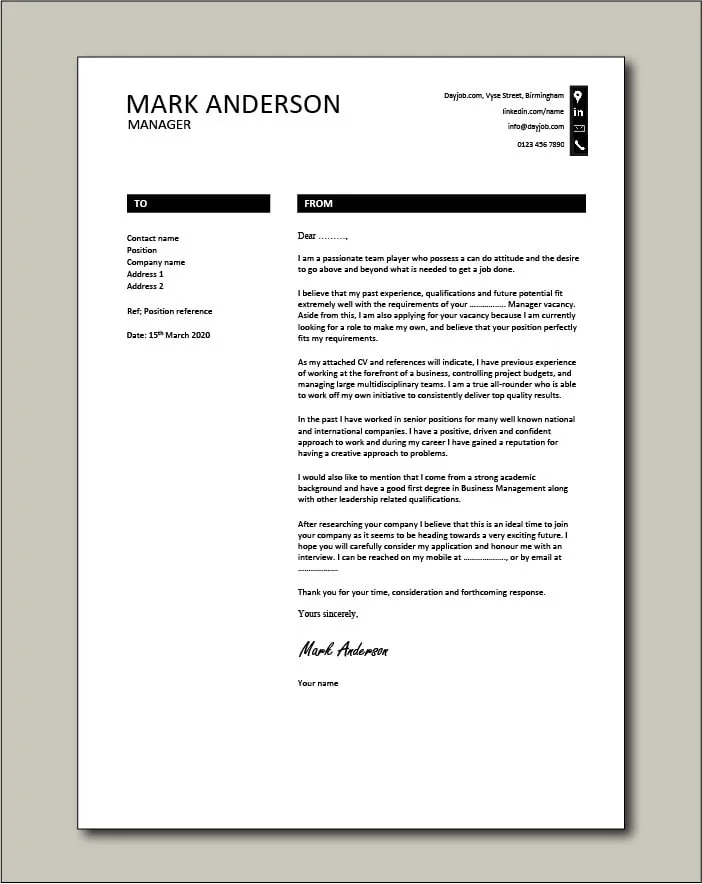
The Power of a Manager Cover Letter
In the competitive landscape of job applications, a well-crafted manager cover letter can be your most powerful tool. More than just a formality, it serves as your first impression, allowing you to present yourself to potential employers and showcase your unique skills, experiences, and enthusiasm. A compelling cover letter can significantly increase your chances of securing an interview, setting the stage for a successful career transition. By effectively communicating your qualifications and passion, you distinguish yourself from the competition and capture the attention of hiring managers. This is your opportunity to make a lasting positive impact and create a desire for them to know more about you.
Why a Cover Letter Matters
While your resume presents a snapshot of your professional history, the cover letter provides you with the space to tell your story. It provides a platform to elaborate on your qualifications, align your skills with the specific job requirements, and communicate your genuine interest in the company and role. It allows you to provide context for your achievements and helps the hiring manager understand your career goals and motivations. A well-written cover letter showcases that you’ve invested the time to understand the position and are not just sending a generic application. It demonstrates your seriousness about the opportunity and willingness to go above and beyond. A strong cover letter reveals your personality and communication abilities, traits crucial for a managerial role.
Highlighting Your Skills and Experience

Your manager cover letter is the perfect space to highlight the skills and experience that make you an exceptional candidate. It’s insufficient to merely list your past roles; you must illustrate how your expertise aligns with the job’s demands. Carefully analyze the job description, identifying the key skills and requirements, and then provide concrete examples of how you’ve used those skills successfully in previous positions. Use action verbs to describe your accomplishments, and always focus on the impact you made. This approach assists the hiring manager in visualizing your potential contributions to their team. When presenting your experience, keep it focused and relevant, highlighting the aspects directly related to the managerial position you’re seeking.
Understanding the Job Description
Thoroughly understanding the job description is a fundamental aspect of creating a successful cover letter. Take the time to carefully examine the requirements, responsibilities, and desired qualifications. Identify the core competencies that the employer seeks. These include not only technical skills but also soft skills like leadership, communication, and problem-solving. Pay close attention to the language used in the job description, as it frequently hints at the company culture and values. By tailoring your cover letter to match these elements, you demonstrate your attention to detail and genuine interest in the role. Referencing specific aspects of the job description in your letter shows that you’ve done your homework and aren’t sending a generic application.
Tailoring Your Letter
Generic cover letters are easily identified and frequently discarded. To truly stand out, personalize your letter for each specific job application. This requires more than just changing the company name; it involves tailoring your content to the unique demands and requirements of the role. Research the company and understand their values and mission. Use this information to demonstrate how your skills and experiences align with their needs. Mentioning specific projects or initiatives that resonate with the company can have a significant impact. Tailoring your letter shows that you are genuinely interested in the position and have invested the time and effort to present yourself as the ideal candidate.
Structuring Your Manager Cover Letter

A well-structured cover letter is essential for effectively conveying your message. A clear and organized layout makes it easier for the hiring manager to quickly grasp your qualifications and enthusiasm. The standard structure typically includes a header with your contact information, a formal opening, a body highlighting your skills and experience, and a concise closing. Each section should serve a specific purpose, guiding the reader through your qualifications in a logical manner. The overall structure should be professional, concise, and tailored to the particular job you’re applying for. A well-structured letter ensures that you are perceived as a professional, organized, and competent candidate, all valuable qualities for a managerial position.
Header and Contact Information
Begin your cover letter with a professional header. Include your full name, address, phone number, and email address. Ensure your email address is professional and suitable for business correspondence. If you are applying online, consider including a link to your LinkedIn profile or professional website. This information should be clearly displayed at the top of the letter, facilitating easy contact from the hiring manager. Make sure the information is accurate and up-to-date. The header sets the tone for your entire application, so it’s important to present a polished and professional image from the start.
The Opening Paragraph
Your opening paragraph is often your first and only opportunity to grab the hiring manager’s attention. Start with a strong, concise statement that clearly identifies the position you’re applying for and how you found the opportunity. If you were referred by someone, mention it. Show enthusiasm for the role and the company but avoid generic phrases. Briefly mention a key accomplishment or skill that immediately piques the reader’s interest. The goal is to create an immediate positive impact and encourage the hiring manager to read further. Make sure to tailor your opening to each specific job, demonstrating genuine interest.
Showcase Your Achievements

The body of your cover letter should be dedicated to showcasing your achievements. Instead of just listing your responsibilities, focus on the results you’ve achieved in previous roles. Use the STAR method (Situation, Task, Action, Result) to provide specific examples of your accomplishments. Describe the situation, the task you were assigned, the actions you took, and the positive results that followed. Quantify your achievements whenever possible, using numbers to demonstrate the impact of your work. This approach provides concrete evidence of your capabilities and makes your application more compelling. Demonstrating past successes is significantly more persuasive than simply stating your skills.
Quantifying Your Accomplishments
Quantifying your achievements is a powerful method for making your cover letter stand out. Utilize numbers and data to illustrate the impact of your work. Instead of saying you “improved customer satisfaction,” state that you “increased customer satisfaction scores by 15% within six months.” Instead of stating you “managed a team,” mention the size of the team, their performance metrics, and any specific achievements. This provides concrete evidence of your capabilities and makes your claims more credible. Quantifiable achievements demonstrate your ability to produce results and add value, making you a more attractive candidate. This method is highly effective for showcasing your managerial skills and successes.
Addressing Key Requirements
Address the key requirements outlined in the job description carefully in your cover letter. Highlight how your skills, experience, and qualifications align with the specific needs of the role. Use the job description as a guide and be sure to address each essential requirement. Provide specific examples of how you’ve demonstrated these skills in the past. This demonstrates your understanding of the position and your ability to fulfill the requirements. Tailoring your letter to meet the needs of the employer significantly increases your chances of landing an interview. Addressing the key requirements shows that you are the right candidate for the job.
The Closing Paragraph

Conclude your cover letter with a strong and professional closing. Reiterate your interest in the position and your enthusiasm for the opportunity. Thank the hiring manager for their time and consideration. Include a call to action, such as expressing your eagerness to discuss your qualifications further in an interview. Keep it concise and professional, avoiding overly formal or cliché phrases. A well-written closing paragraph leaves a lasting positive impression and encourages the hiring manager to move forward with your application. It should reflect your professionalism and leave the reader with confidence in your abilities.
Proofreading and Formatting
Proofreading and formatting are essential steps in creating a professional cover letter. A well-formatted letter is easy to read and conveys your attention to detail. Proofreading ensures your letter is free from errors in grammar, spelling, and punctuation. These errors can undermine your credibility and create a negative impression. Take the time to review your letter carefully, ideally multiple times, and consider having a trusted colleague or friend proofread it as well. Ensure your formatting is consistent throughout the document, including font, spacing, and alignment. The small details matter, and a polished cover letter shows that you take pride in your work and are serious about the opportunity.
Common Mistakes to Avoid
Avoid the common mistakes that can damage your chances of getting hired. Refrain from typos, grammatical errors, and vague language. Do not use generic cover letters or reuse the same letter for every job. Avoid overly formal or informal language, and make sure to tailor your letter to each specific job. Don’t write a cover letter that simply restates your resume; instead, use the cover letter to provide context, explain your interest, and highlight your achievements. Avoid negativity or complaining about previous employers. Finally, don’t exceed the recommended length; keep your cover letter concise and focused. These mistakes undermine your credibility and diminish your chances of securing an interview.
Formatting Best Practices

Follow formatting best practices to create a professional-looking cover letter. Use a clear and readable font such as Arial, Calibri, or Times New Roman. Maintain consistent formatting throughout your letter, including font size, spacing, and alignment. Use a professional letterhead, and keep your letter concise, avoiding lengthy paragraphs; aim for one page in length. Use bullet points or numbered lists to make your achievements and skills easily scannable. Proofread carefully for any formatting inconsistencies. Proper formatting enhances readability and demonstrates your attention to detail, a crucial aspect for a managerial position.
Final Review and Submission
Before submitting your cover letter, conduct a final review. Check for any remaining errors in grammar, spelling, and punctuation. Ensure your contact information is accurate and up-to-date. Review your letter for clarity, conciseness, and relevance to the job description. Verify your formatting is consistent and professional. Consider having a trusted friend or colleague review your letter for a fresh perspective. Once you are satisfied, save the cover letter as a PDF to preserve its formatting. Submit your cover letter with your resume, following the application instructions carefully. A final review catches any missed mistakes, ensuring you present yourself in the best possible light, thus increasing your chances of getting an interview and landing the managerial role.