Crafting a Compelling Management Cover Letter
A well-crafted cover letter is your first opportunity to make a strong impression and secure an interview for a management position. It serves as a crucial introduction, providing a snapshot of your skills, experience, and personality. It’s a chance to demonstrate your understanding of the role and the company. This guide provides actionable strategies for crafting a standout cover letter that effectively showcases your qualifications and increases your chances of getting hired. The goal is to make the hiring manager eager to learn more about you and invite you for an interview, setting the stage for your success in the application process. Remember, this letter is more than just a formality; it is a marketing document selling your capabilities.
Research the Company and Position
Before you even begin to write, thorough research is essential. Start by deeply investigating the company’s mission, values, culture, and recent achievements. Understanding their strategic goals will allow you to tailor your letter to their specific needs and demonstrate that you are a well-informed and thoughtful candidate. Next, carefully review the job description, paying close attention to the required skills, experiences, and responsibilities. Identify the key requirements and align your qualifications accordingly. This targeted approach shows that you not only understand the position but also that you have the specific skills to excel in the role. This preparation is key to showcasing your genuine interest and the value you bring to the organization.
Highlight Relevant Management Skills

Your cover letter should serve as a showcase of your key management skills. This is where you make a compelling case, demonstrating how your expertise aligns with the job’s requirements. Focus on the skills that are most relevant to the position, providing specific examples of how you’ve utilized them in previous roles. This could include skills in team leadership, project management, strategic planning, or any other abilities that are critical to the role. Using concrete examples and quantifiable results makes your claims more persuasive. Describe situations where you successfully used these skills to solve problems, improve processes, or achieve organizational goals. The goal is to show, not just tell, the hiring manager that you possess the essential skills to excel in the management position.
Leadership and Team Management
Leadership is a cornerstone of any successful management role. Highlight your ability to lead teams, motivate employees, and foster a positive work environment. Share specific examples of how you’ve developed high-performing teams. Mention situations where you successfully guided teams through challenging projects or difficult times. Describe how you’ve inspired and motivated others to achieve their goals. Good leadership extends to conflict resolution, creating a cohesive work environment and ensuring everyone understands their roles and responsibilities. By providing concrete examples, you demonstrate your capacity to lead and manage teams effectively, a critical skill for any management role.
Project Management and Organization
Effective project management and organizational skills are essential. Provide examples of how you’ve successfully managed projects from start to finish, ensuring they were completed on time and within budget. Highlight your organizational skills, such as planning, prioritizing, and multitasking. Describe specific tools or methodologies you have used, like project management software or agile methodologies. Show how you’ve created streamlined processes and maintained order within complex projects. If you have experience managing multiple projects concurrently, showcase your ability to keep everything on track. By demonstrating these skills, you prove that you can handle the day-to-day responsibilities and drive projects to completion.
Communication and Interpersonal Abilities

Strong communication and interpersonal skills are crucial in any management position. Emphasize your ability to communicate effectively with team members, stakeholders, and upper management. Give examples of how you’ve used clear and concise communication to convey information and drive projects forward. Explain your experience in active listening, conflict resolution, and building relationships. Describe how you’ve managed communication across different departments or with external partners. Highlight any successful presentations or negotiations you’ve conducted. Your communication and interpersonal skills are essential for fostering collaboration, ensuring that everyone is informed and aligned. By clearly presenting your communication capabilities, you show your readiness to connect with and motivate others.
Quantify Your Achievements
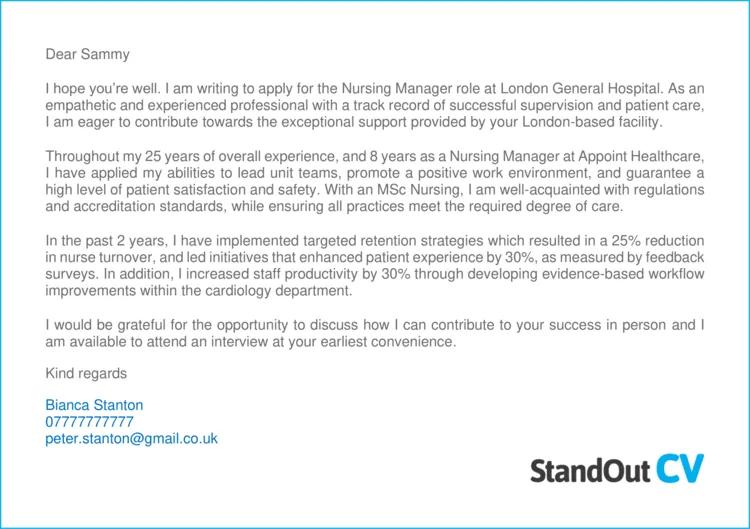
To make your cover letter more impactful, quantify your achievements whenever possible. Instead of saying you improved efficiency, state by how much – for example, “Increased team efficiency by 15% through process improvements.” Using numbers, percentages, and specific figures will make your accomplishments more credible and memorable. Provide concrete evidence of your successes. For instance, if you implemented a new strategy, mention how it led to a measurable increase in sales or customer satisfaction. If you managed a budget, provide details on how you successfully managed resources. Quantifiable data highlights the tangible benefits of your contributions, making your application more compelling. This approach shows that you not only achieved goals but also have a clear understanding of results.
Use Action Verbs and Strong Language
Choose action verbs to describe your accomplishments and responsibilities. Words like ’led’, ‘managed’, ‘implemented’, ‘achieved’, and ‘developed’ will make your cover letter more dynamic and engaging. Avoid using passive voice; instead, use active voice to highlight your role in the success. For example, instead of writing “The project was managed by me,” write “I managed the project.” In addition to using action verbs, use strong, descriptive language that showcases your skills and experience. This can significantly improve the impact of your letter. Make it clear, concise, and persuasive, demonstrating that you are a highly motivated and capable candidate. This careful use of language keeps the hiring manager engaged and reinforces your qualifications.
Tailor the Cover Letter to the Job Description

Customize your cover letter for each job application. A generic letter will not impress hiring managers. Instead, tailor your cover letter to the specific requirements of the position and the company. Carefully review the job description and address the key requirements and qualifications that the employer is seeking. Highlight relevant skills and experiences, and provide specific examples that demonstrate how you meet these requirements. This customized approach shows the hiring manager that you have taken the time to understand their needs. It also demonstrates your genuine interest in the position. By personalizing your cover letter, you increase your chances of capturing the hiring manager’s attention. This personalization sets you apart from other candidates.
Address the Hiring Manager by Name
When possible, address the hiring manager by name. This simple step adds a personal touch and shows that you’ve done your homework. Researching the hiring manager’s name and using it in the greeting makes your letter stand out. If you are unable to find the hiring manager’s name, use a professional greeting like “Dear Hiring Manager.” Avoid generic greetings such as “To Whom It May Concern” or “Dear Sir/Madam,” as they make your letter feel less personal. Taking the extra step to personalize your greeting makes a favorable first impression. It demonstrates that you have taken the time to understand who will be reading your cover letter.
Structure Your Cover Letter for Impact
The structure of your cover letter is important to effectively convey your message. It should include a clear opening, body, and closing. The layout should be easy to read, with appropriate spacing and formatting. Use a professional font, such as Arial or Times New Roman, and a font size between 10 and 12 points. Ensure that the letter is free of any grammatical errors or typos. A well-structured cover letter guides the reader through your qualifications. It also keeps the hiring manager engaged, making it more likely that you’ll be considered for an interview. The layout and structure of your letter are a reflection of your attention to detail and professionalism.
Opening Paragraph Engage the Reader

Your opening paragraph sets the tone for your entire cover letter. It should immediately capture the reader’s attention and establish your interest in the position. You might start by mentioning where you saw the job posting and why it caught your eye. Briefly state your key qualifications and enthusiasm for the role. Make a compelling case for why you are a good fit. The goal is to hook the hiring manager and encourage them to read the rest of your letter. Your opening should quickly communicate the value you bring to the company. This first impression sets the stage for the rest of your application and increases your chances of getting noticed.
Body Paragraphs Showcase Your Skills
The body paragraphs are where you provide detailed information about your skills, experiences, and accomplishments. Use these paragraphs to elaborate on your key qualifications. Highlight specific examples that demonstrate your abilities in areas like leadership, project management, and communication. Organize your information logically, using concise and clear language. Provide evidence of your achievements, quantifying your results when possible. Focus on what you bring to the table and how you can contribute to the company’s success. These paragraphs are the core of your cover letter. They provide the evidence that supports your qualifications, making your application more compelling.
Closing Paragraph Call to Action
Your closing paragraph should summarize your interest in the position and reiterate your qualifications. Express your enthusiasm and make a call to action. This could include stating your availability for an interview or expressing your eagerness to discuss your qualifications further. Thank the hiring manager for their time and consideration. Ensure your closing is professional and leaves a positive impression. A strong closing leaves the reader with a clear understanding of what you bring to the table. It also encourages them to take the next step in the hiring process. A well-written closing will increase your chances of being invited for an interview.
Proofread and Edit Meticulously

Before submitting your cover letter, carefully proofread and edit it for any errors. Typos, grammatical mistakes, or inconsistencies can damage your credibility and make a negative impression. Review your letter multiple times, and consider having a friend or colleague review it as well. Pay close attention to the formatting, ensuring that the letter is easy to read and visually appealing. A polished and error-free cover letter demonstrates your attention to detail and professionalism. It is the final step in ensuring that your cover letter makes a strong and positive impression, giving you the best chance of securing an interview and landing the management position.