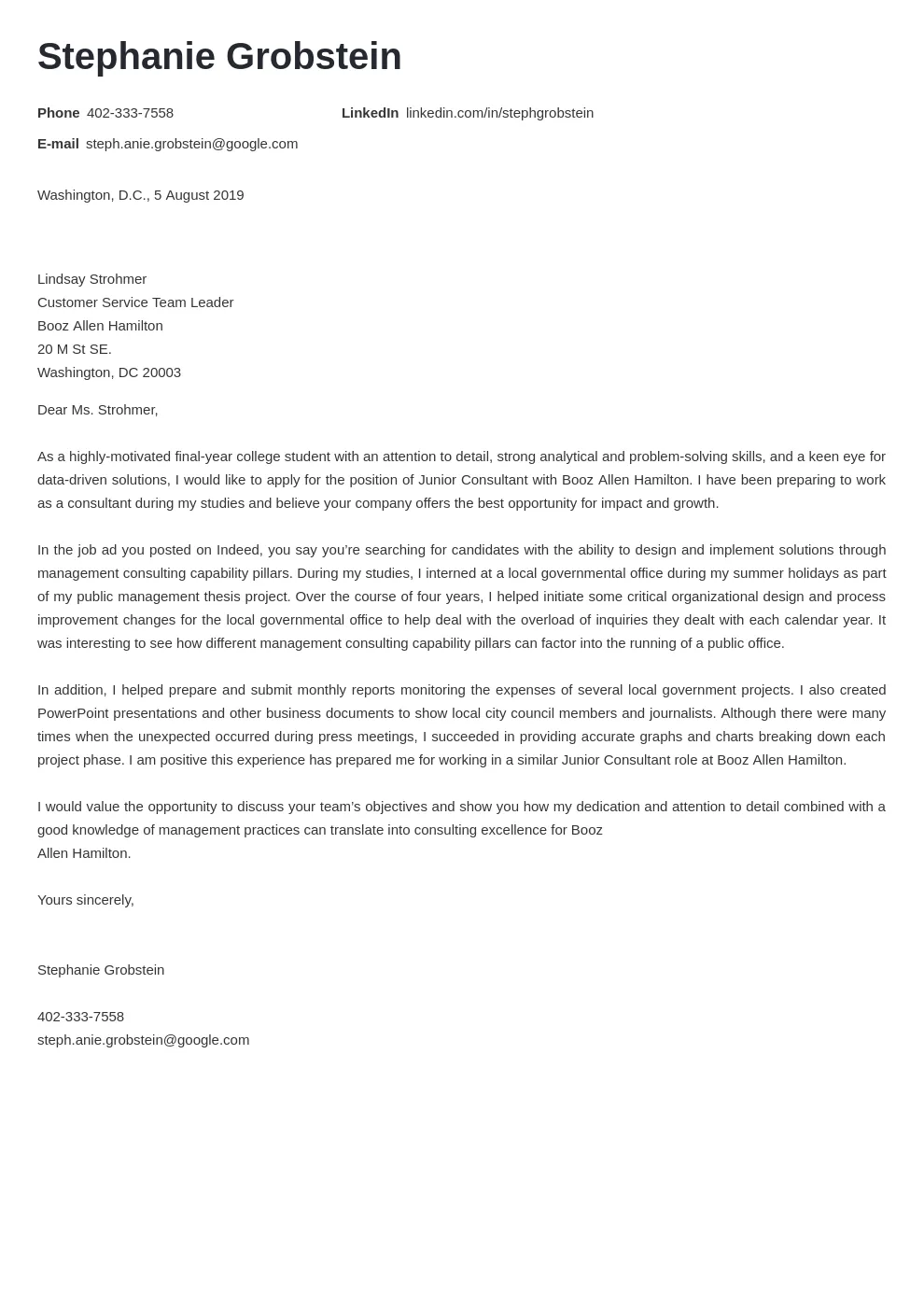
Crafting the Perfect Management Consulting Cover Letter
Landing a coveted position in management consulting requires more than just a stellar resume; a well-crafted cover letter is your secret weapon. This document serves as your personal introduction, providing an opportunity to showcase your skills, experience, and personality in a compelling narrative. A strong cover letter sample for management consulting is not merely a formality; it’s your chance to make a lasting impression and distinguish yourself from the competition. In this guide, we’ll delve into how to create a cover letter that not only gets noticed but also secures you an interview. We will explore each element that goes into crafting the perfect cover letter, from structuring your letter to highlighting key achievements, with insights to help you succeed in your application.
Understanding the Purpose of a Cover Letter
The primary purpose of a cover letter is to introduce you to a potential employer and provide context to your resume. It is where you can connect your experiences to the specific requirements of the management consulting role. Unlike a resume, which is a factual summary, the cover letter is your chance to demonstrate your communication skills, express your enthusiasm for the position, and explain why you’re an ideal fit for the firm and the projects they undertake. A well-written cover letter helps you stand out by showing that you’ve researched the company, understand its values, and are genuinely interested in contributing to its success. Think of it as the first page of a book, setting the stage for the rest of the narrative (your resume).
Highlighting Relevant Skills and Experience

Management consulting firms seek candidates with a diverse set of skills. Your cover letter should highlight skills relevant to the job description. Focus on problem-solving, analytical thinking, communication, leadership, and project management. Instead of simply listing skills, provide concrete examples of how you’ve applied them. For instance, if the job description mentions data analysis, describe a project where you analyzed large datasets, the methodologies used, and the insights you gleaned. If teamwork is important, give an example of a team project and your specific role in achieving a positive outcome. Tailor your examples to align with the specific requirements listed by the firm, making it clear how your previous experiences make you the right fit for the job.
Researching the Consulting Firm
Before you start writing, thoroughly research the management consulting firm. Understand their mission, values, recent projects, and the industries they serve. This research allows you to tailor your cover letter to the firm’s specific needs and demonstrate your genuine interest. Visit the firm’s website, read industry publications, and check their social media presence. Look for information on their clients, the challenges they’re addressing, and the firm’s approach to consulting. When you incorporate this knowledge into your cover letter, you show the hiring manager that you’re not just sending a generic application; you’re targeting their specific firm and showing that you understand their business. This attention to detail can significantly increase your chances of getting an interview.
Structuring Your Management Consulting Cover Letter
A well-structured cover letter is easy to read and highlights the most important information quickly. The structure should flow logically, from a professional introduction to a strong closing. You need to structure your cover letter so that it presents you as the perfect candidate from start to finish. The format below is a recommended approach for most applicants, though it can be modified to fit the tone of your own voice.
Header and Contact Information

Begin your cover letter with a professional header that includes your full name, contact information (phone number and email address), and the date. You should also include the name and address of the company you’re applying to. This information is essential for the recruiter to easily contact you and ensures your application looks polished and professional. Use a consistent font and formatting style that matches your resume. The goal is to make it easy for the reader to access your contact information and know immediately who the letter is from. Accuracy is key, so double-check all details for any typos before submitting.
The Salutation
Address your cover letter to a specific person whenever possible. Research the hiring manager’s name on LinkedIn or the company website. A personalized salutation, such as ‘Dear Mr. or Ms. [Last Name],’ shows you’ve done your research and pays attention to detail. If you can’t find a specific name, use a professional greeting like ‘Dear Hiring Manager’ or ‘Dear Recruiting Team’. Avoid generic greetings like ‘To Whom It May Concern,’ as they suggest a lack of effort and may be off-putting to the recruiter. Always remember to use a formal, respectful tone.
The Opening Paragraph
The opening paragraph is your first chance to grab the reader’s attention. State the position you are applying for and briefly explain how you learned about the opportunity. Then, immediately highlight a key skill or achievement that makes you a strong candidate. For example, you might start with a sentence like ‘I am writing to express my strong interest in the Management Consultant position at [Company Name], as advertised on [Platform].’ This shows that you understand the job requirements and have the necessary skills to address them. This sets the tone for the rest of your letter and entices the reader to continue. Keep this paragraph concise and focused, aiming to create an initial, positive impression.
Body Paragraphs

The body paragraphs are where you provide details about your skills, experiences, and accomplishments. Use this section to show, not just tell, why you are the perfect fit for the management consulting role. Each paragraph should focus on a specific aspect of your qualifications. Link your experience to the job description’s requirements. For example, if the job requires project management experience, describe a project you led, the challenges you overcame, and the results you achieved. Use the STAR method (Situation, Task, Action, Result) to structure your examples, giving clear context, detailing your responsibilities, explaining your actions, and quantifying your outcomes whenever possible. This detailed approach allows you to illustrate your capabilities and make a compelling case for your candidacy.
Closing Paragraph
In the closing paragraph, summarize your interest in the position and reiterate your key qualifications. Express your enthusiasm for the opportunity and your desire to discuss how you can contribute to the firm’s success. Thank the hiring manager for their time and consideration. Provide a clear call to action, such as ‘I am eager to discuss my qualifications further and can be reached at [phone number] or [email address].’ or ‘I look forward to hearing from you soon’. End with a professional closing like ‘Sincerely’ or ‘Best regards,’ followed by your typed name. Make sure your closing is polite, confident, and encourages the recruiter to contact you.
Essential Elements to Include
Certain elements are crucial for a successful management consulting cover letter. These elements help you convey your unique value proposition to the hiring manager and significantly increase your chances of being selected for an interview. Make sure to include these in your cover letter, as they can make a world of difference. You must be careful to tailor these elements to the specific requirements of the job and company you are applying to. This will show the recruiter that you care about the company and are serious about getting the job.
Quantifiable Achievements

Quantifying your achievements is a powerful way to demonstrate your impact. Instead of saying ‘Improved project efficiency,’ state ‘Increased project efficiency by 15% within six months by implementing [specific strategy].’ Use numbers, percentages, and specific data to illustrate your successes. For example, mention the amount of revenue you generated, the number of projects you completed, or the cost savings you achieved. Always back up your claims with concrete evidence, allowing the hiring manager to see the value you bring. This kind of measurable evidence makes a persuasive argument for your abilities and experience, providing the reader with a clear sense of your contribution.
Specific Examples
Avoid vague statements. Instead, provide specific examples that showcase your skills and experience. For instance, if you claim to be a strong problem-solver, describe a challenging problem you solved, the steps you took, and the positive outcome. Use the STAR method to structure your responses. Always provide context, explain your role, the actions you took, and the results you achieved. This will help the reader understand your capabilities and how you approach challenges. Specific examples give your statements more credibility and provide concrete evidence of your qualifications. The more specific the examples, the better you can prove your worth as a candidate for the job.
Tailoring Your Cover Letter
A generic cover letter is a sure way to end up in the rejection pile. You must tailor your cover letter to each specific job application and company. This demonstrates that you’ve taken the time to understand the firm’s needs and are genuinely interested in the position. Customization shows that you are meticulous, and that you care. This extra effort can make all the difference in how your application is perceived. Tailoring involves more than just changing the company name; it requires researching the company, understanding the specific requirements of the role, and highlighting relevant skills and experiences that match those requirements. The more personalized your letter, the more likely you are to make a positive impression.
Keywords and Industry Jargon

Incorporate relevant keywords and industry-specific jargon from the job description into your cover letter. This ensures your application gets noticed by applicant tracking systems (ATS) and demonstrates that you understand the industry. However, don’t overuse jargon or stuff keywords unnaturally. Your cover letter should read naturally while using language that shows you understand management consulting. Integrate keywords in a way that reflects your familiarity with industry practices and terminology. By showing you understand the language, you will show the recruiter that you understand the inner workings of a consultancy and the types of work it does.
Showcasing Your Personality
While maintaining a professional tone is essential, don’t be afraid to let your personality shine through. Your cover letter is a chance to give a glimpse into who you are and why you’re a good fit for the company culture. Show your enthusiasm for the opportunity and the consulting industry. You can highlight how your values align with the firm’s values, or the unique skills and perspectives you bring to the table. Writing in your own voice makes your application more memorable. This will showcase your personality and help the hiring manager connect with you on a personal level. It allows them to see beyond your qualifications, making you more than just a list of skills on paper, and instead a real person that they can get to know.
Proofreading and Editing
Before submitting your cover letter, carefully proofread and edit it. Typos, grammatical errors, and formatting mistakes can undermine your credibility and suggest a lack of attention to detail – a crucial trait in consulting. Use a grammar checker, and have someone else review your letter for errors. Ensure your letter is well-formatted, easy to read, and consistent in style. Make sure your contact information is accurate. A polished cover letter demonstrates professionalism and shows that you care about making a good impression. Proofreading isn’t just about catching mistakes; it’s about presenting yourself as someone who pays attention to detail and values quality, which is exactly what management consulting firms are looking for.
Conclusion
Crafting a compelling cover letter for a management consulting position is a strategic investment in your career. By understanding the purpose of the cover letter, highlighting your relevant skills and experience, researching the consulting firm, structuring your letter effectively, and incorporating essential elements, you can create a document that captures the attention of hiring managers. Tailor your cover letter to each job, incorporating relevant keywords, industry jargon, and your unique personality. Remember to proofread and edit your cover letter carefully. Following these guidelines will increase your chances of impressing prospective employers and securing an interview, marking the first step toward a successful career in management consulting. Good luck with your applications.