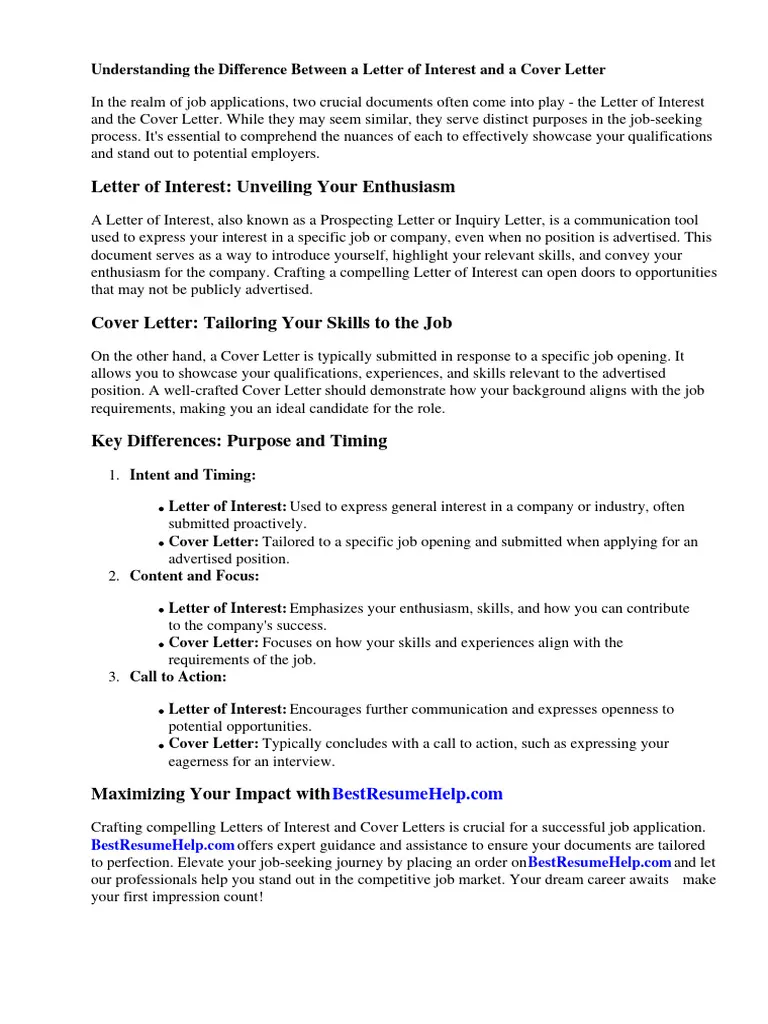
What is a Letter of Interest
A letter of interest is a proactive document, often sent to a potential employer to express your keenness to work for the company. It is a powerful tool to introduce yourself and showcase your skills, even if there are no current job openings advertised. Think of it as a strategic move to get your foot in the door and make a strong first impression. This document is a great way to initiate a conversation about your potential fit within the company culture. It’s your opportunity to show initiative and enthusiasm. It is particularly valuable when targeting companies known for their innovative culture or in fields where advertised job roles are scarce. Unlike a cover letter, which is tailored to a specific job, a letter of interest is more general, aiming to create an opportunity.
The Purpose of a Letter of Interest
The core purpose of a letter of interest is to communicate your interest in working for a company, especially when no open positions are available. This proactive approach immediately sets you apart, demonstrating initiative. It’s a strategic way to put your name and qualifications on their radar, potentially leading to future opportunities. Furthermore, a letter of interest allows you to spotlight your skills, emphasizing how they align with the company’s potential needs and goals. It also provides an excellent platform to demonstrate your knowledge of the company. Your ultimate goal is to spark a dialogue, which can lead to an interview and potentially, a job offer. It is also about creating a positive impression. It’s about crafting a connection.
Key Differences Between a Letter of Interest and a Cover Letter

While the letter of interest and the cover letter are both essential components of a job application, they serve distinctly different purposes. A cover letter is tailored to a specific job opening, directly addressing the requirements outlined in the job description and emphasizing how your skills and experiences match those needs. It’s a direct response to a job posting. A letter of interest, in contrast, is sent when no specific job is advertised. It focuses on expressing your general interest in the company and highlighting your potential fit within the organization. A cover letter is reactive, whereas a letter of interest is proactive. Because it’s tailored to a specific opening, a cover letter includes specifics. A letter of interest is broader and aims to spark the interest of the company. Knowing the differences will allow you to submit the correct document.
Structuring Your Letter of Interest
Structuring your letter of interest is crucial for a professional presentation. The goal is to create a document that is easy to read, informative, and engaging. The layout should flow logically, beginning with an introduction and ending with a conclusion, highlighting the key qualifications. Start with a clear, concise header, including your contact information. Write an opening paragraph that immediately captures the reader’s attention, clearly stating your purpose for writing and how you learned about the company. In the body paragraphs, detail your skills and experience. Make sure the body paragraphs show that you are a good fit. In the closing paragraph, restate your interest and call to action. Properly structured, your letter will convey professionalism and be easy to understand.
Header and Contact Information
The header establishes your professional identity. Your full name, address, phone number, and a professional email address should be included in the header. Your email should be professional. The date follows your contact information. If you know the recipient’s name and title, include their details below the date. This might include their name, title, and the company’s address. These details make your letter easy to understand. It shows your attention to detail. The inclusion of this information allows the recipient to contact you easily, which is very important.
Opening Paragraph Grab Attention

The opening paragraph sets the tone for your entire letter, so it must be engaging and impactful. Start with a brief but compelling statement. State your intent: to express your interest in opportunities at the company. If applicable, mention how you discovered the company. Showcase your understanding of their industry and the value you can contribute. The opening must create an initial interest. Use strong, clear language. Make the reader want to keep reading to find out more. Your opening will pique the reader’s interest.
Body Paragraphs Highlighting Your Value
The body paragraphs are the core of your letter. This is where you highlight your skills and experiences. Focus on your accomplishments and show how they align with the company’s needs. Use concrete examples to illustrate your abilities. Quantify your achievements whenever possible. Showcase relevant skills, both hard and soft, and explain how they contribute to your professional success. Tailor your examples to reflect the company’s industry, showing why you are interested in contributing to their work. Make sure each paragraph flows logically. The goal is to show why you are a valuable candidate. This is your chance to market yourself.
Skills and Experience
The body paragraphs should describe your skills and experience. Highlight both hard skills like technical proficiencies and soft skills, such as communication and teamwork. Present examples of how you applied these skills. Instead of just listing skills, illustrate your value by describing situations where you’ve achieved positive results. For example, instead of just stating you are an effective communicator, explain a project where you successfully presented a proposal, leading to a successful outcome. This demonstrates your abilities and gives proof of your capabilities. It is important to customize your examples to match the company’s needs and the industry you are targeting. This shows your potential to contribute to their success.
Demonstrating Passion and Enthusiasm

Demonstrate your passion for the company. Show a genuine interest in their work. Research the company and mention specific things that resonate with you. Explain why you want to work for them, and what excites you about their industry. Expressing enthusiasm is an excellent way to show you are driven and will enhance your letter. Mention their achievements, or initiatives that align with your interests. This personalized approach shows that you understand the company, and genuinely want to contribute. This will also make your letter more compelling.
Closing Paragraph Call to Action
The closing paragraph is your chance to make a lasting impression and encourage action. Restate your interest. Show you are a good candidate, and willing to discuss your potential contributions. Include a clear call to action. Ask for the chance to provide a resume, or set up a meeting. Thank the recipient for their time and consideration. Close with a professional salutation, such as “Sincerely”, followed by your full name. Ensure your contact information is available. A strong closing paragraph is an important step.
Tips for Writing a Stellar Letter of Interest
To create a strong letter of interest, follow key strategies. Begin by researching the company. Understand their mission, values, and recent achievements to tailor your letter. Personalize your letter by addressing it to a specific person, when possible. Show that you’ve taken the time to learn about the organization and its needs. Proofread carefully for any grammatical errors. Keep your letter concise and focused, highlighting your most relevant skills and experiences. Use a professional tone and formatting, making it easy for the reader to understand your message. A well-crafted letter of interest will increase your chances of making a positive impression.
Research the Company

Thorough research is key to writing a good letter. Before you begin, explore the company’s website, social media, and any press releases. Understand their mission, values, and recent achievements. Identify current projects, products, and services. Find out who the hiring manager is. Mention something specific about the company or its goals. This shows you have done your homework and that you are interested. This research is essential.
Personalize Your Letter
Personalization is key to making your letter of interest stand out. Avoid using generic templates and tailor each letter to the specific company and, ideally, the recipient. If possible, address the letter to a specific person, such as the hiring manager or someone in a relevant department. Personalize the opening paragraph. Instead of a generic greeting, acknowledge the company’s work. Mention something you admire about the company. Highlight how your skills and experiences match their goals. The approach demonstrates that you’ve invested time and effort, making a strong impression.
Proofread Carefully
Proofreading is essential for professional communication. Errors in grammar, spelling, or punctuation can undermine your credibility. After writing your letter, take the time to carefully review it for any mistakes. Read the letter aloud. Get a second pair of eyes to review it. Correct any errors and present a professional document. A well-proofread letter shows you value quality, increasing your chances of making a positive first impression. A polished letter reflects professionalism.
Letter of Interest Examples

Reviewing examples provides insight into structuring and writing effective letters of interest. The approach differs depending on circumstances. Here are a few common examples to guide you. Adapt these templates to your unique situation. Tailor your letter to specific situations. Use these examples to help you.
Example 1 Unsolicited Application
An unsolicited application means you send a letter to a company without knowing about any open positions. Begin with a strong opening paragraph to express your interest in the company. Describe your skills, and how they align with the company’s potential needs. Provide concise examples of your achievements. Express your willingness to contribute. Include a call to action. Thank the recipient. This example demonstrates a proactive approach. Show initiative and skills, even without a posted position. The key is to highlight transferable skills.
Example 2 Following Up After a Networking Event
Following up after an event allows you to strengthen the connection and show your interest. Reference the event and the conversations you had. Reiterate your interest in the company. Briefly mention the skills discussed during the event. Offer your resume, and state your willingness to talk. Thank the person for their time. This approach reinforces your interest. Personalize your letter, which shows you value the relationship.
Example 3 Expressing Interest in a Specific Role

When you want to express interest in a specific role, tailor your letter to the requirements of that position. Begin by stating your interest in the role. Highlight the key requirements from the job description, and describe how your skills match them. Provide specific examples of your achievements. State that you can meet the company’s needs. Show your passion. Refer to the job description, highlighting the areas where your skills and experience align. This shows you understand the role and are a strong candidate.