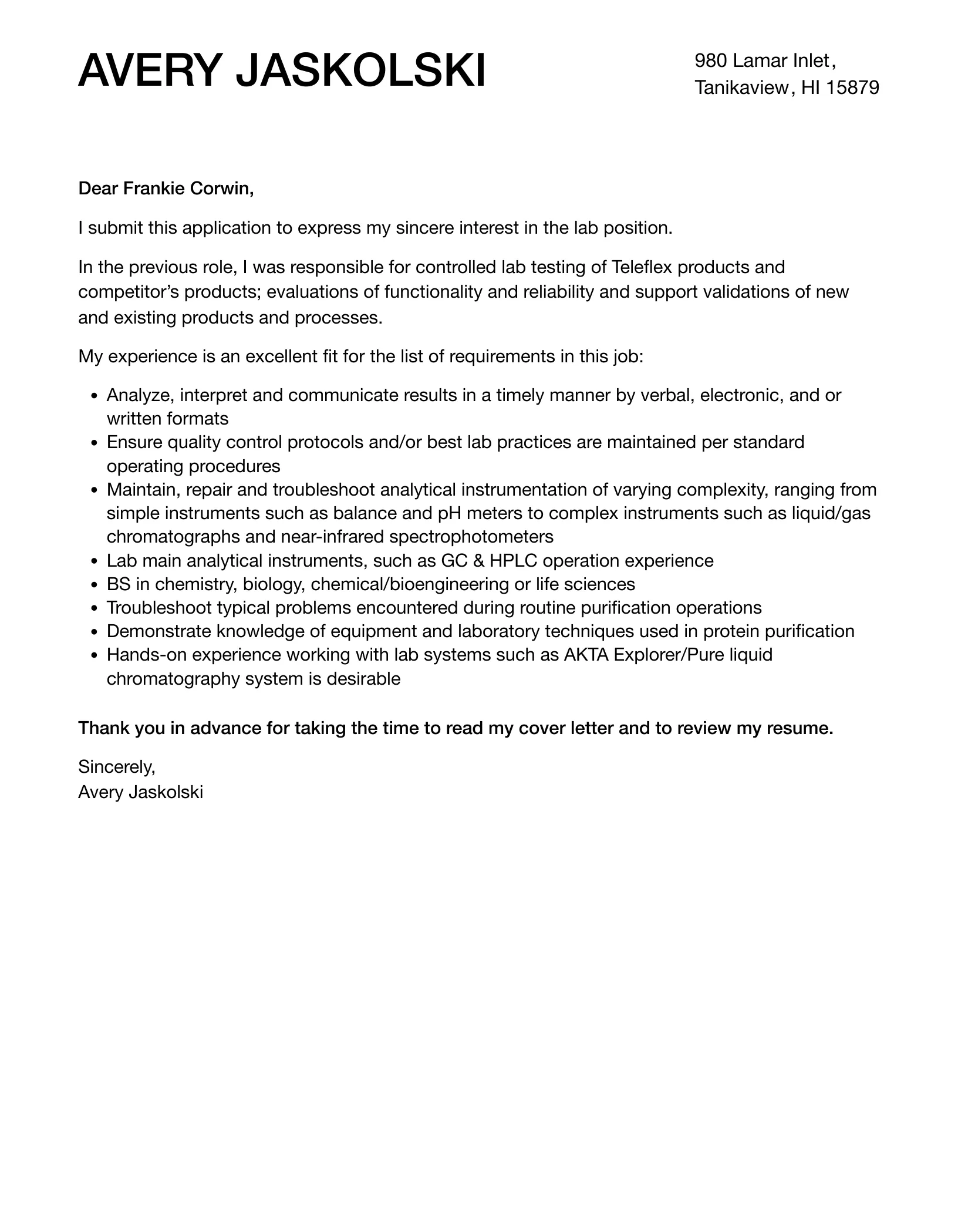
What Is a Lab Cover Letter
A lab cover letter is a crucial document you submit alongside your resume when applying for a position in a laboratory setting. It serves as your introduction, allowing you to showcase your skills, experience, and enthusiasm for the specific role and the lab’s work. Unlike a generic cover letter, a lab cover letter should be tailored to the specific requirements of the job and the values of the lab. It provides an opportunity to elaborate on your qualifications and demonstrate how you can contribute to the lab’s goals. A well-crafted lab cover letter is often the deciding factor in whether you get an interview, as it gives you the chance to present your best self and make a strong first impression.
Why Is a Lab Cover Letter Important?
The importance of a lab cover letter cannot be overstated. It’s your chance to stand out from other applicants, especially in competitive fields where many candidates have similar qualifications. A lab cover letter allows you to provide context to your resume, explaining how your skills and experiences align with the job’s specific requirements. It shows you’ve researched the lab, understand their work, and are genuinely interested in joining their team. Moreover, a well-written letter reflects your communication skills, attention to detail, and professionalism, all essential qualities for any lab environment. Ultimately, a strong lab cover letter significantly increases your chances of getting an interview and ultimately landing the job.
Key Components of a Lab Cover Letter

A compelling lab cover letter has several key components. Each section plays a vital role in conveying your qualifications and demonstrating your interest in the position. Carefully constructing these components ensures your letter is clear, concise, and impactful. Pay attention to each aspect from the header to the closing, to create a cohesive narrative that highlights your suitability for the role.
Header and Contact Information
The header of your lab cover letter is the first thing the hiring manager will see, so it’s essential to get it right. A professional header immediately establishes your credibility. Ensure all information is accurate and easy to read. This section sets the tone for the rest of your letter.
Your Name and Contact Details
Start with your full name, followed by your professional contact information. Include your phone number and email address. Ensure your email address is professional; avoid using nicknames or casual language. You might also include a link to your LinkedIn profile if it’s up-to-date and relevant to the position. This information allows the hiring manager to quickly reach you if they want to offer you an interview.
Date and Recipient Information

Include the current date, followed by the recipient’s name, title, and the lab or organization’s name. If possible, address the letter to the hiring manager or the principal investigator (PI) of the lab. Researching this information beforehand shows initiative. Knowing the recipient’s name adds a personal touch, making your letter more engaging. If the name isn’t available, use a professional title like “Hiring Manager”.
Greeting
The greeting should be formal and professional. Use “Dear Dr. [Last Name]” if you know the PI’s name, or “Dear Hiring Manager” if you don’t. Avoid overly casual greetings. The greeting sets the right tone for the entire letter. Make sure that you are addressing the correct person to show that you’ve done your research, which can make your letter stand out and demonstrates your professionalism.
Body Paragraph 1 Introduction and Purpose
The first paragraph should state the position you’re applying for and where you saw the job posting. Briefly mention why you’re interested in the role and the lab. This should be concise and clear, setting the stage for the rest of your letter. It should also mention a brief overview of your interest and the position. This immediately informs the reader about your intentions.
Body Paragraph 2 Highlighting Skills and Experience

This is where you showcase your relevant skills and experience. Focus on how your qualifications align with the job description’s requirements. Provide specific examples of your accomplishments and quantify your achievements whenever possible. Mention any relevant lab techniques, equipment, or software you’re proficient in. Tailor this section to match the needs of the lab, emphasizing your most relevant experiences. Demonstrate how your previous experiences are an asset to the role you are applying for.
Body Paragraph 3 Demonstrating Enthusiasm
In this paragraph, express your enthusiasm for the specific lab and its research. Show that you’ve researched the lab’s work, citing specific projects or publications that interest you. Explain why you’re a good fit for their team and why you’re passionate about the lab’s research areas. Show that you understand the lab’s values and demonstrate how your goals align with the lab’s mission. Demonstrating genuine interest will make a lasting impression.
Closing
End your letter with a professional closing. Use phrases like “Sincerely,” “Respectfully,” or “Best regards.” Always be polite and leave a positive final impression.
Call to Action

Include a call to action, such as expressing your availability for an interview and thanking the reader for their time and consideration. Provide your contact information again if desired. This shows that you are proactive and ready to take the next step.
Common Mistakes to Avoid
Avoiding common mistakes can significantly improve your lab cover letter’s effectiveness. Being aware of these pitfalls will help you create a polished and professional document that increases your chances of success. These are errors that many candidates make that can be detrimental to their application.
Proofreading and Editing
Always proofread your lab cover letter thoroughly for grammatical errors, spelling mistakes, and typos. Have someone else review your letter to catch any errors you might have missed. Errors undermine your credibility and can make your letter appear unprofessional. Pay close attention to detail to ensure that the message you are trying to communicate is not lost due to careless mistakes.
Formatting Errors

Ensure your lab cover letter is well-formatted. Use a standard font size, consistent margins, and clear paragraph breaks. Make sure the document is easy to read and visually appealing. Poor formatting can make your letter look messy and unprofessional. Proper formatting makes your letter readable and enhances its overall impression.
Lack of Personalization
Avoid sending generic lab cover letters. Tailor each letter to the specific lab and position you’re applying for. Highlight the lab’s research and explain why you’re interested in their work. Generic letters show a lack of genuine interest and can be easily dismissed. Personalize each letter to the specific lab and position to show your genuine interest and understanding of their work.
Additional Tips for a Standout Lab Cover Letter
To make your lab cover letter truly stand out, consider these additional tips. These suggestions can elevate your application and demonstrate your enthusiasm and qualifications. Implement these to increase your chances of getting an interview.
Showcase your unique skills and experiences. Highlight any specific lab techniques or software you’re proficient in. Mention any relevant projects or publications. Mention your experience with specific equipment and how it relates to the lab’s work. Customize your letter to match the requirements of the lab and the specific position.
Research the lab thoroughly. Demonstrate that you understand the lab’s research goals and mention specific projects or publications that interest you. Show that you’ve done your homework, and you understand what the lab does. Indicate that you know how you can contribute to their goals.
Quantify your achievements whenever possible. Use numbers to illustrate the impact of your work. For example, if you improved efficiency in a lab process, provide statistics to demonstrate the increase. Quantifiable achievements will make your contributions more impactful.
Keep it concise. Aim for one page. Highlight the most important points, and avoid unnecessary details. Conciseness makes your letter easy to read and highlights your most relevant skills and experience. If you are using more than one page, reconsider and decide if you should cut out unnecessary information.
Be enthusiastic and professional. Express your genuine interest in the position and the lab’s work. Maintain a professional tone throughout the letter. Enthusiasm and professionalism are essential qualities in a lab environment. Being both enthusiastic and professional will reflect positively on your application.