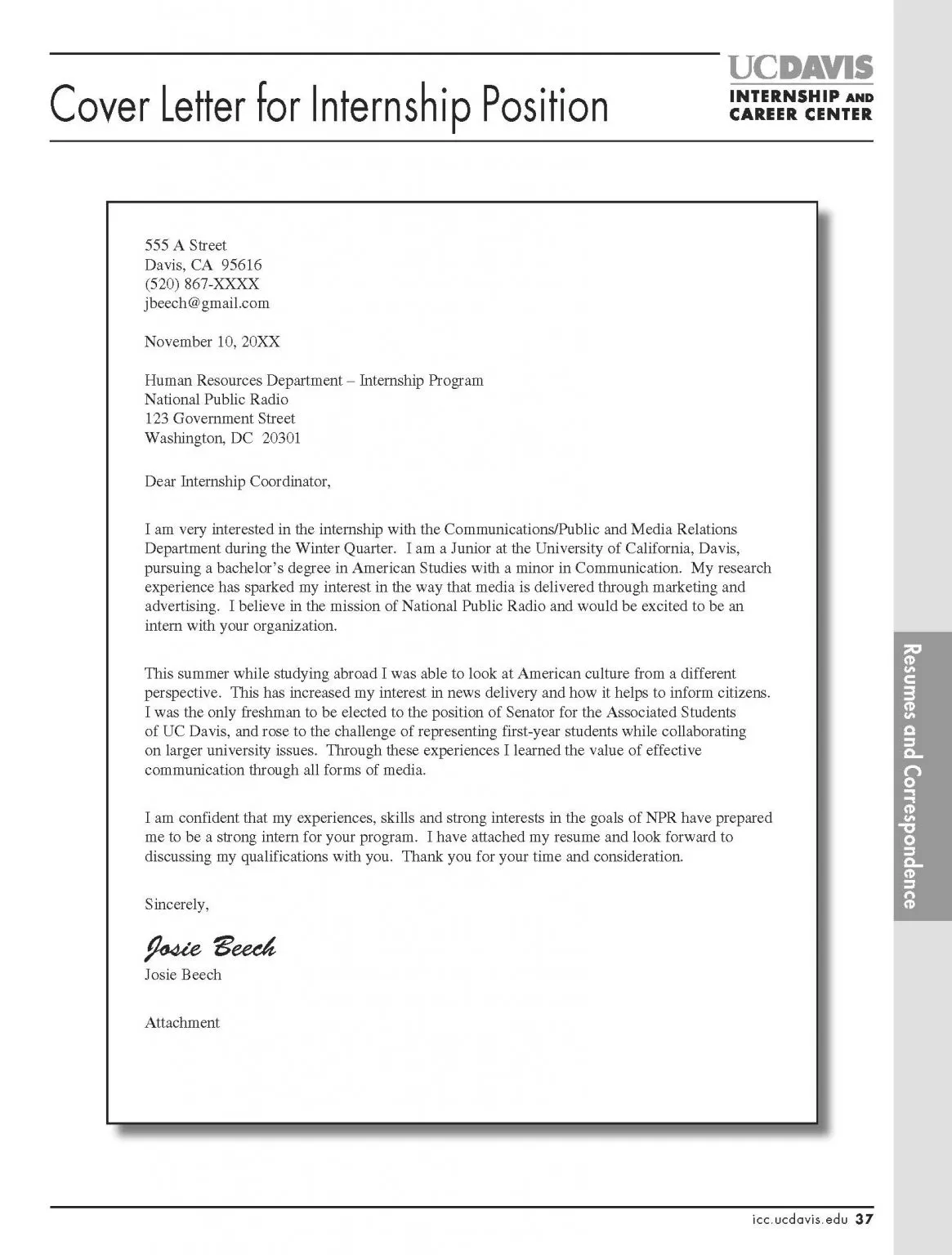
Cover Letter for Internship What is it?
An internship cover letter is a crucial document that accompanies your resume when applying for an internship. It serves as your introduction to the employer and provides you with the opportunity to elaborate on your qualifications, skills, and enthusiasm for the specific internship position. Unlike a resume, which presents a factual summary of your experience, the cover letter allows you to express your personality, highlight your unique selling points, and demonstrate your understanding of the company and the role. It’s your chance to make a strong first impression and convince the hiring manager that you’re the ideal candidate for the internship.
Key Components of a Cover Letter
A well-structured cover letter is essential for making a positive impact. It should be organized logically and include all the necessary elements to present you effectively. The key components of a cover letter include a header, salutation, body paragraphs, and closing. Each part plays a vital role in conveying your message clearly and professionally. Let’s break down each component to understand its significance and how to craft it effectively.
Header

The header of your cover letter is the first thing the hiring manager will see, so it’s crucial to get it right. It should include your contact information, such as your name, address, phone number, and email address. Using a professional email address is essential; avoid using nicknames or unprofessional phrasing. Ensure the header is neat, well-organized, and easy to read. The header sets the tone for your letter, projecting a sense of professionalism and attention to detail. See image [cover-letter-internship-header.webp].
Your Contact Information
In the header, place your name at the top, followed by your complete mailing address, and then your phone number and email address. Make sure your contact information is up-to-date and accurate. Proofread it carefully to avoid any errors that could hinder the employer’s ability to reach you. The contact information is vital; it allows the employer to contact you for an interview or further inquiries. See image [cover-letter-internship-contact.webp].
Date
The date is a simple, yet essential, component of your cover letter. Place the current date, when you are submitting the letter, directly below your contact information or the recipient’s contact information. Ensure that the date is formatted correctly. This helps the employer know when the letter was written and shows that you are up-to-date in your application.
Recipient’s Contact Information

Below the date, include the recipient’s contact information. If possible, address your letter to a specific person, such as the hiring manager or the internship coordinator. This shows that you have taken the time to research the company and personalize your application. Include the person’s name, title, company name, and address. If you are unable to find a specific person, you can use a general salutation.
Salutation
The salutation sets the tone for your cover letter. Use a professional and respectful salutation. If you know the hiring manager’s name, use “Dear Mr./Ms./Mx. [Last Name].” If you don’t know the name, you can use “Dear Hiring Manager” or “Dear [Company Name] Internship Team.” Avoid generic salutations like “To Whom It May Concern” as they can make your letter feel impersonal. A well-chosen salutation shows respect and attention to detail.
Body of the Cover Letter
The body of your cover letter is where you make your case for why you are the ideal candidate. It should be concise, engaging, and tailored to the specific internship position. The body consists of several paragraphs, each serving a specific purpose in conveying your message. It should demonstrate your enthusiasm, skills, and understanding of the company. Effective body paragraphs are well-structured, using clear language to highlight relevant experiences and skills.
Opening Paragraph Grabbing Attention

The opening paragraph is your chance to grab the hiring manager’s attention. Start with a compelling statement that highlights your interest in the internship and the company. Briefly mention where you saw the job posting and why you are excited about the opportunity. You can also include a brief summary of your relevant skills or experiences. Your opening paragraph should make the reader want to continue reading. Avoid generic openings and show your genuine interest and excitement. See image [cover-letter-internship-body.webp].
Middle Paragraph Highlighting Skills and Experience
The middle paragraph(s) is where you showcase your skills and experiences that align with the internship requirements. Highlight the relevant skills and experiences, providing specific examples of how you have demonstrated these skills in the past. Use action verbs to describe your accomplishments and quantify your achievements whenever possible. Tailor this section to match the job description, ensuring you address the key requirements and demonstrate how you can contribute to the company. See image [cover-letter-internship-skills.webp].
Tailoring your Letter to the Internship
Customizing your cover letter for each internship is crucial. This means carefully reviewing the job description and highlighting the skills and experiences that are most relevant to the specific role. Research the company and understand its mission, values, and recent projects. Demonstrate your knowledge of the company and explain why you want to intern there specifically. By tailoring your letter, you show that you’re genuinely interested in the opportunity and have taken the time to understand the company’s needs. This will make you stand out from other applicants.
Closing Paragraph Call to Action

In the closing paragraph, reiterate your interest in the internship and express your enthusiasm for the opportunity. Thank the hiring manager for their time and consideration. Include a call to action by stating your availability for an interview and how you can be reached. This could be a phone number or email. Make sure to sound confident and eager, leaving a positive final impression. A strong closing paragraph can increase your chances of getting an interview.
Complimentary Close
Choose a professional complimentary close, such as “Sincerely,” “Best regards,” or “Thank you.” Follow your closing with a space and then type your full name. If you are submitting a digital cover letter, you can include your digital signature. If you are mailing a hard copy, sign your name above your typed name. The complimentary close adds a touch of formality and professionalism to your letter.
Proofreading and Formatting
Before submitting your cover letter, proofreading and formatting are essential steps to ensure your document is polished and professional. Proofreading ensures that your letter is free of errors, and formatting makes the document easy to read. A well-formatted and error-free cover letter demonstrates your attention to detail and professionalism. These steps increase your chances of making a positive impression on the hiring manager.
Proofread for Errors

Carefully proofread your cover letter for any grammatical errors, spelling mistakes, or punctuation errors. Errors can damage your credibility and make you appear careless. Read your letter multiple times, preferably with fresh eyes, or ask a friend or family member to proofread it for you. Using a grammar checker tool can also be helpful, but don’t rely on it entirely. Thorough proofreading shows that you care about the details and can communicate effectively. See image [cover-letter-internship-proofread.webp].
Formatting Tips
Formatting is crucial to making your cover letter easy to read and visually appealing. Use a standard font, such as Times New Roman, Arial, or Calibri, and keep the font size between 10 and 12 points. Use single spacing within paragraphs and double spacing between paragraphs. Left-align your text, and avoid using excessive bolding, italics, or underlining. Keep your letter concise and easy to scan by breaking up large blocks of text with shorter paragraphs. A well-formatted cover letter demonstrates professionalism and helps the hiring manager quickly find the information they need.
Length and Tone
Keep your cover letter to one page. Hiring managers often have many applications to review, and a concise letter is more likely to be read in its entirety. Use a professional and enthusiastic tone throughout your letter. Your tone should reflect your personality and enthusiasm for the internship, but it should remain respectful and professional. Avoid using overly casual language or slang. Your tone and length should be consistent with the company’s culture.
Dos and Don’ts of Internship Cover Letters

Adhering to a set of dos and don’ts will help you craft an effective cover letter and increase your chances of success. Paying attention to these guidelines will help you make a positive impression and show that you are a serious candidate. Understanding these dos and don’ts can make a significant difference in the impact of your cover letter.
DO Research the Company
Researching the company is a must before writing your cover letter. Visit the company’s website, read their mission statement, and learn about their recent projects and achievements. This research will help you tailor your cover letter to the specific internship and demonstrate your interest in the company. Addressing the company’s values or recent activities in your letter shows that you are genuinely interested and have taken the time to prepare. See image [cover-letter-internship-research.webp].
DO Customize Each Letter
Avoid using a generic cover letter for every internship application. Customize your letter for each specific position by highlighting the skills and experiences that match the job requirements. Tailoring your letter shows the hiring manager that you are genuinely interested in their specific role and that you have the skills to succeed. A personalized letter will make you stand out from the many generic applications that employers receive.
DO Highlight Relevant Skills

Focus on highlighting the skills and experiences that are most relevant to the internship requirements. Identify the key skills and experiences mentioned in the job description and provide specific examples of how you have demonstrated those skills in the past. This will help the hiring manager quickly assess whether your skills and experiences align with their needs. Use action verbs to describe your accomplishments and quantify your achievements whenever possible. See image [cover-letter-internship-skills.webp].
DON’T Use Generic Templates
Avoid using generic cover letter templates that can make your application feel impersonal. While templates can provide a starting point, they should not be used verbatim. Customize your letter by adding your personality, highlighting relevant experiences, and tailoring it to the specific internship. Using a generic template can make you seem uninterested, and can make you appear as though you are applying to multiple positions at once.
DON’T Exceed One Page
Keep your cover letter concise and to one page in length. Hiring managers often have many applications to review, and a lengthy letter may not be read in its entirety. Focus on the most relevant information and keep your paragraphs brief and engaging. A well-written and concise cover letter is more likely to make a positive impact.
Additional Tips for Success
Beyond the fundamental components and the dos and don’ts, there are additional tips that can enhance your cover letter and increase your chances of success. These additional suggestions will give you an edge over other applicants. Incorporating these tips will help you make a memorable impression on the hiring manager.
Showcase Your Enthusiasm
Expressing your enthusiasm for the internship and the company is essential. Let your passion shine through by highlighting why you are excited about the opportunity and what you hope to achieve during your internship. Referencing specific projects or aspects of the company that interest you can help convey your genuine interest. Enthusiasm can make you stand out and show that you’re truly invested in the opportunity. See image [cover-letter-internship-enthusiasm.webp].
Address any Gaps in Your Resume
If there are any gaps in your resume or aspects that might raise questions, use the cover letter to address them. Explain any career transitions, periods of inactivity, or other circumstances that you feel need clarification. This shows that you are proactive and transparent, and it gives you the chance to provide context and demonstrate your commitment. Addressing potential concerns upfront can help you avoid misunderstandings and make a positive impression. See image [cover-letter-internship-success.webp].