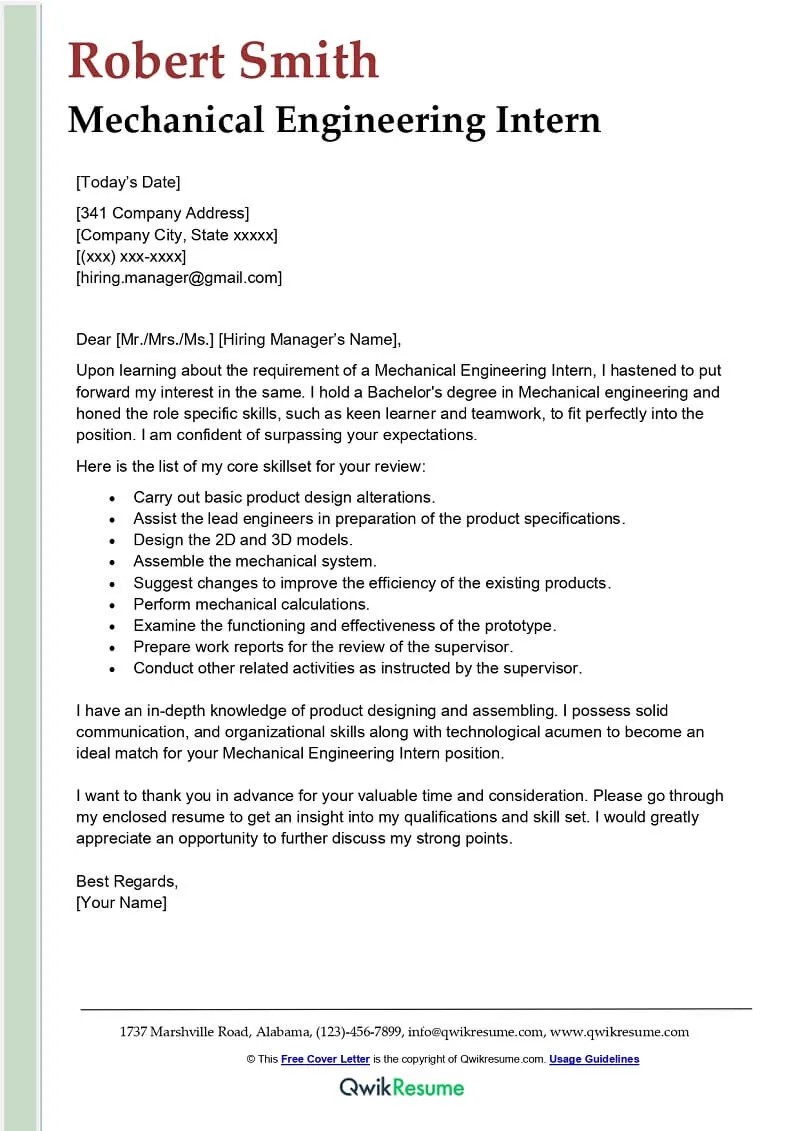
The Importance of an Engineering Internship Cover Letter
Securing an engineering internship is a crucial step in any aspiring engineer’s career. It provides invaluable practical experience, industry exposure, and networking opportunities. While a strong resume is essential, a well-crafted engineering internship cover letter is equally vital. It serves as your first introduction to potential employers, allowing you to showcase your personality, passion, and suitability for the role. A compelling cover letter can significantly increase your chances of getting noticed and landing an interview, ultimately leading to your desired internship. It’s your opportunity to go beyond the facts presented in your resume and demonstrate why you are the ideal candidate.
Why a Cover Letter Matters
In a competitive job market, a cover letter is your chance to distinguish yourself from other applicants. It provides context to your resume, explaining your career goals and how your skills align with the specific internship requirements. A cover letter allows you to articulate your enthusiasm for the company and the role, demonstrating your genuine interest. It also showcases your communication skills, an essential attribute for any engineer. By highlighting your accomplishments and tailoring your letter to the specific company and position, you can leave a lasting positive impression on the hiring manager and increase your chances of securing an interview. A well-written cover letter shows you’ve put in the effort, which speaks volumes about your work ethic.
Key Components of a Strong Cover Letter

A strong cover letter is structured to present your qualifications effectively. It includes a clear introduction, a body that highlights your relevant skills and experiences, and a compelling conclusion. The introduction should grab the reader’s attention and state your purpose. The body should elaborate on your skills, providing specific examples of your achievements. The conclusion should reiterate your interest and include a call to action. Each section should be concise, well-written, and tailored to the specific internship and company. Remember to keep your language professional yet engaging, demonstrating your understanding of the engineering field and your enthusiasm for the opportunity.
Essential Elements for an Engineering Internship Cover Letter
Contact Information and Salutation
Start with your contact information at the top, including your name, address, phone number, and email. Always address the hiring manager by name if possible; research the company website or LinkedIn to find out who is in charge. If you can’t find a specific name, use a professional greeting such as “Dear Hiring Manager.” Ensure all information is accurate and up-to-date. Using a personalized salutation shows you’ve taken the initiative to research the company and understand the hiring process, which sets you apart from candidates using generic letters.
Opening Paragraph and Hook

Your opening paragraph is your first chance to make a strong impression. Briefly state the position you’re applying for and how you learned about it. Then, immediately capture the reader’s attention by highlighting your key qualification or a relevant achievement that aligns with the internship’s requirements. This ‘hook’ should make the reader want to continue reading. Consider mentioning a specific project you admire from the company or a particular skill you possess that the job description highlights. Aim to create an immediate connection, showing that you understand the company’s needs and are a good fit for their culture.
Highlighting Your Skills and Experience
The body of your cover letter should showcase your skills and experience. Use the STAR method (Situation, Task, Action, Result) to describe your accomplishments. Provide concrete examples to demonstrate how you’ve applied your skills in previous projects or academic settings. Quantify your achievements whenever possible; for example, ‘Improved project efficiency by 15%.’ Tailor your descriptions to match the job description, focusing on the skills and experiences the company is looking for. Demonstrate how your skills meet their needs, emphasizing your ability to contribute to the company’s goals.
Technical Skills
List the relevant technical skills you possess, such as proficiency in specific software (e.g., AutoCAD, SolidWorks, MATLAB), programming languages (e.g., Python, C++), or knowledge of engineering principles. Provide examples of how you’ve used these skills in your projects. Highlight any certifications or coursework that demonstrate your expertise. Mention any hands-on experience with specific equipment or tools. When listing technical skills, focus on those most relevant to the internship’s requirements, ensuring you back up your claims with tangible examples of your accomplishments.
Soft Skills

Don’t overlook the importance of soft skills. Engineering requires teamwork, communication, problem-solving, and critical thinking. Provide examples of situations where you’ve demonstrated these skills. For example, describe a time you collaborated on a team project, resolved a technical challenge, or effectively communicated complex information. Illustrate your leadership capabilities, time management skills, and ability to work under pressure. Employers value well-rounded individuals with both technical expertise and interpersonal skills. Soft skills often become the deciding factor between candidates with similar technical abilities.
Project Experience
Detail your project experiences, including academic projects, personal projects, or any relevant work experience. Describe your role in each project, the challenges you faced, and the solutions you implemented. Highlight any innovative aspects of your projects or any positive results you achieved. If you have a portfolio, mention it and provide a link. Include any relevant data, such as the scope of the project, the technologies used, and the project’s outcome. Focus on the most impressive and relevant experiences to capture the recruiter’s attention, showcasing your ability to apply engineering principles in practical situations.
Demonstrating Your Passion and Enthusiasm
Show your genuine interest in the company and the specific role. Mention what excites you about the company’s work, projects, or culture. Explain why you are particularly interested in this engineering internship. Show that you’ve researched the company and understand its mission and values. Be specific about how you see yourself contributing to the team. This enthusiasm will not only make you more memorable but also reflect your dedication and willingness to learn and grow within the company.
Tailoring Your Letter to the Company

Personalize your cover letter to match the company’s values and the internship’s requirements. Do your research on the company’s mission, recent projects, and industry standing. Customize your letter to align with the company culture. Avoid using a generic template; instead, demonstrate your knowledge and understanding of the specific company and position. Show them that you understand what they do and how you can contribute. This level of personalization will impress the hiring manager and significantly increase your chances of being selected.
Company Research
Thorough research is essential for crafting a compelling cover letter. Visit the company’s website, read their news articles, and review their social media presence. Identify their key projects, values, and recent achievements. Understand the company’s industry and its position in the market. Use this information to tailor your letter, demonstrating your understanding of their business and showing how your skills and experiences align with their needs and objectives. This shows you care enough to go the extra mile.
Addressing the Job Description
Carefully review the job description and identify the key skills, experiences, and qualifications the company is seeking. Use these keywords and phrases in your cover letter to demonstrate how you meet their requirements. Provide specific examples from your experience that align with the job description. Tailor your descriptions to address each requirement, showing how your skills and experiences will help you excel in the internship. Ensure that you emphasize those qualifications most important to the role.
Call to Action and Closing

End your cover letter with a clear call to action. Express your interest in an interview and indicate your availability. Thank the hiring manager for their time and consideration. Reiterate your enthusiasm for the internship and your belief in your ability to contribute to the company’s success. Proofread the entire letter one last time to ensure professionalism and accuracy. Close with a professional sign-off, such as “Sincerely” or “Respectfully.” Make it easy for the hiring manager to contact you for the next step.
Cover Letter Formatting and Presentation
Font Choice and Readability
Choose a professional and easy-to-read font, such as Times New Roman, Arial, or Calibri. Keep the font size between 10 and 12 points. Ensure the font is consistent throughout the letter. Proper formatting enhances readability and makes your cover letter look professional. Avoid using overly decorative or unconventional fonts, as they can distract the reader. Your primary aim is to make the letter easy to read and visually appealing to the hiring manager. Proper formatting shows attention to detail, a valuable attribute in engineering.
Length and Structure

Keep your cover letter concise, ideally one page. Use clear and concise language, avoiding jargon and overly complicated sentences. Structure your letter logically, with a clear introduction, body, and conclusion. Use paragraphs to separate different sections of your letter. Maintain a professional tone throughout. Ensure adequate spacing between paragraphs and sections to improve readability. Remember that recruiters often have limited time to review applications; therefore, a well-structured, brief cover letter will have a greater impact.
Proofreading and Editing
Thoroughly proofread your cover letter for any typos, grammatical errors, or inconsistencies. Mistakes can make you appear careless and unprofessional. Use spell-check and grammar-check tools, but also read the letter carefully yourself. Ask a friend, family member, or career advisor to review your letter. Ensuring the cover letter is flawless demonstrates your attention to detail. Make sure the formatting is clean and easy to read, which helps the hiring manager focus on your qualifications and enthusiasm.
Common Mistakes to Avoid in Your Cover Letter
Generic Language

Avoid using generic phrases that could apply to any job or company. Instead, personalize your letter to the specific internship and company. Show that you’ve done your research and understand their needs and goals. Use specific examples from your experience to demonstrate how you will bring value to the role. Generic language shows a lack of effort and reduces your chances of making a strong impression. A customized cover letter showcases your interest and proves you are serious about the opportunity.
Typos and Grammatical Errors
Typos and grammatical errors can damage your credibility and suggest a lack of attention to detail. Proofread your cover letter carefully and use spell-check and grammar-check tools. Consider asking a friend or career advisor to review your letter for errors. Ensure that your letter is free of mistakes before submitting it. Errors can create a negative impression and might lead a recruiter to overlook your qualifications. Proper proofreading demonstrates your professionalism and your commitment to excellence.
Lack of Company-Specific Information
A cover letter that lacks company-specific information is a missed opportunity. Tailor your letter to the specific company and internship. Highlight your relevant skills and experiences, and explain how you can contribute to their goals. Show that you understand their mission, values, and culture. Demonstrate that you’ve researched the company and are genuinely interested in the opportunity. Generic cover letters fail to stand out, making it less likely that you will be selected for an interview. Take the time to personalize your letter, showing the hiring manager that you are serious about the position.