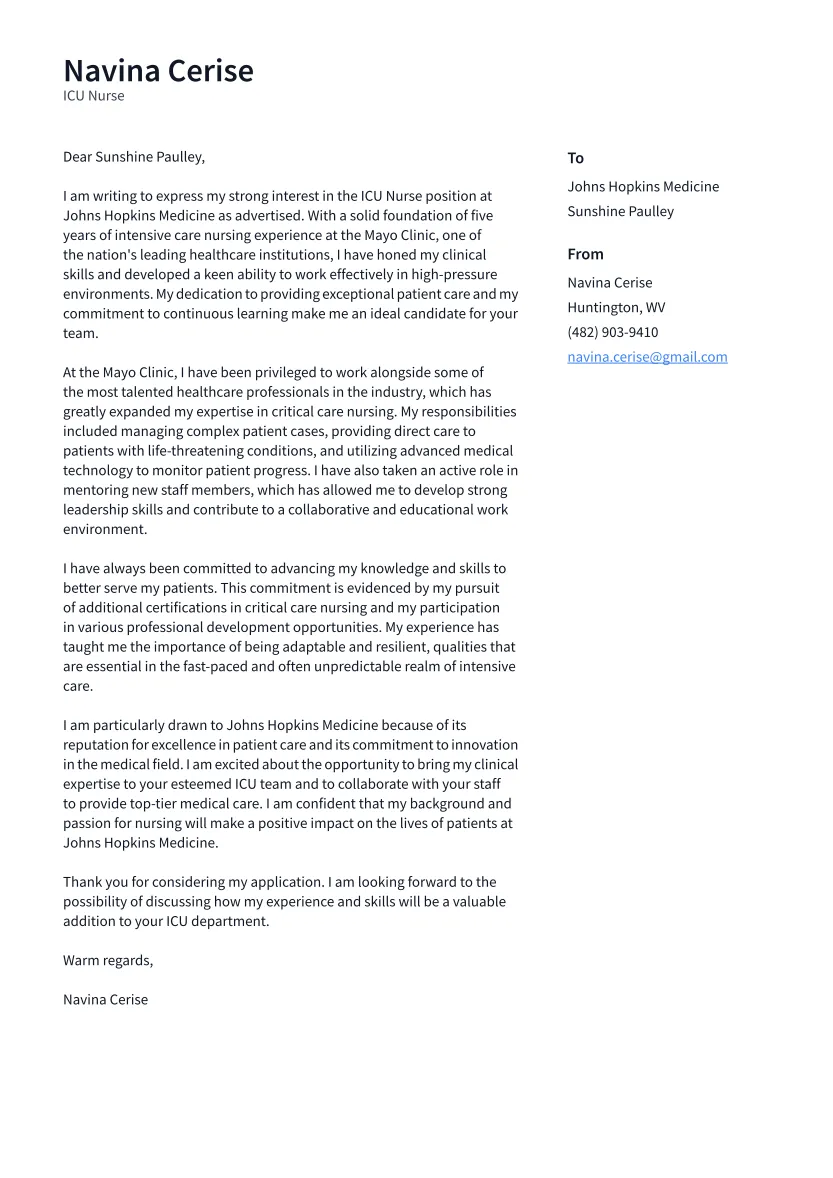
Essential Elements of an ICU Nurse Cover Letter
Crafting a compelling cover letter is crucial for ICU nurses seeking to advance their careers. A well-written cover letter serves as your introduction, allowing you to highlight your qualifications and passion for critical care. It goes beyond your resume, giving you the opportunity to express your personality, articulate your career goals, and demonstrate your understanding of the specific role and the healthcare institution you are applying to. This guide will provide a comprehensive overview of how to create an impactful cover letter that gets you noticed by potential employers. Following these guidelines will help you showcase your skills, experience, and enthusiasm for ICU nursing. The cover letter allows you to tell your story and make a strong first impression.
Contact Information and Formatting
Proper formatting and presentation are essential for a professional cover letter. Ensuring your contact information is accurate and easy to find is the first step. A well-formatted letter demonstrates attention to detail and professionalism, setting the tone for the rest of your application. Simple formatting can make a big difference, so make sure you follow it for a better application outcome.
Your Name, Address, Phone, and Email
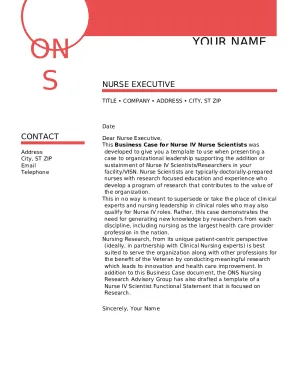
Begin your cover letter by including your full name, address, phone number, and email address. Place this information at the top of the letter, either left-aligned or centered. Make sure the email address is professional and that your phone number is accurate so that the employer can contact you. This makes it easy for the hiring manager to contact you if they want to move forward with your application.
Date and Recipient Information
Below your contact information, include the date. Then, provide the recipient’s information: the hiring manager’s name (if known), their title, the hospital or clinic’s name, and the address. Addressing the letter to a specific person shows that you have taken the time to research the organization and that you are serious about the application. If you’re unsure of the hiring manager’s name, research on the company website or LinkedIn. If you can’t find it, use a general title like ‘Hiring Manager’.
Crafting a Strong Opening for ICU Nurse Applications
The opening paragraph is your opportunity to capture the reader’s attention and make a positive first impression. It should immediately demonstrate your interest in the position and convey your enthusiasm for ICU nursing. A strong opening sets the stage for the rest of the letter, encouraging the hiring manager to continue reading and learn more about your qualifications. A compelling opening paragraph can greatly increase your chances of getting an interview. It shows you’re eager, well-prepared, and ready to contribute.
Capturing Attention in the First Paragraph

Start your cover letter with a strong statement that grabs the reader’s attention. Briefly mention the position you’re applying for and where you saw the job posting. Then, express your enthusiasm for the role and the organization. You can include a brief statement about what interests you the most about the position or what motivates you as an ICU nurse. For example, ‘I am writing to express my keen interest in the ICU Nurse position at [Hospital Name], as advertised on [Platform].’ Follow this up with a brief highlight of a key skill or accomplishment that makes you stand out. If you have a specific experience, it is a great choice to start with.
Highlighting Your ICU Nursing Skills and Experience
The body of your cover letter should highlight your relevant skills and experience. This is where you provide specific examples of how you meet the requirements of the job. Focus on both your technical skills and your soft skills, emphasizing how you have contributed to patient care and positive outcomes in the past. Use the job description as a guide to determine which skills and experiences are most important to highlight. Quantify your accomplishments whenever possible to demonstrate your impact. Use the STAR method (Situation, Task, Action, Result) to provide clear examples of your abilities and how you have handled challenging situations.
Showcasing Technical ICU Skills
List your technical skills that are relevant to ICU nursing. This may include experience with ventilators, cardiac monitoring, arterial lines, central lines, medication administration, and other specialized equipment. Mention specific certifications and competencies, such as ACLS, CCRN, or other relevant credentials. Show your experience with specific patient populations. For example, highlight experience with post-operative care, trauma, or any specialized experience, such as experience with specific technology or systems. Highlight all that is important to the company and that aligns with the job description.
Emphasizing Soft Skills

In addition to technical skills, emphasize your soft skills, such as communication, teamwork, critical thinking, and problem-solving. Provide examples of how you have used these skills in the ICU to provide excellent patient care. Mention your ability to remain calm and focused under pressure, manage multiple priorities, and communicate effectively with patients, families, and other members of the healthcare team. Demonstrate the way you can work with others and deal with stressful environments. ICU nursing is often hard, so being able to handle it is very important.
Quantifying Your Accomplishments in ICU
Whenever possible, quantify your accomplishments to demonstrate your impact. Use numbers and statistics to illustrate your achievements. For example, you might mention the number of patients you have cared for, the reduction in patient complications you achieved, or any other measurable results. The more concrete information you give about your results, the better. This will help the hiring manager know how good you are and whether you will be a good addition to the company.
Demonstrating Your Impact on Patient Care
Provide specific examples of how you have improved patient outcomes. Highlight instances where you have successfully managed critical situations, provided compassionate care, and contributed to positive patient experiences. Include any specific patient populations or conditions you have experience with, such as post-operative care, trauma, or specific diseases. Mention any awards or recognition you have received for your patient care efforts. The best way to get the job is to show how you have improved patients’ lives through the years.
Tailoring Your Cover Letter to the ICU Position

Your cover letter should be tailored to the specific ICU position you are applying for. This shows that you have taken the time to understand the requirements of the job and that you are genuinely interested in the opportunity. Generic cover letters do not make a good impression. Tailoring your cover letter shows your interest in the company and the job. Be specific and show your interest to the hiring manager.
Researching the Hospital or Clinic
Before writing your cover letter, research the hospital or clinic where you are applying. Understand their mission, values, and any specific initiatives they are involved in. Look for any information about their ICU, such as the types of patients they care for, the equipment they use, and any special programs they offer. This information will help you tailor your cover letter and demonstrate your knowledge of the organization. Showing that you understand the organization can also give you an advantage during the application process.
Addressing the Specific Job Requirements
Carefully review the job description and identify the key requirements and qualifications. Highlight your skills and experience that align with these requirements. Provide specific examples to demonstrate how you meet each of the listed criteria. When mentioning your experience, it’s important to use the language from the job description. This will make your application easier to read and show that you are a good match for the position. Customizing your cover letter to show that you know the job is crucial for landing the job.
Writing a Powerful Closing for Your Letter

The closing paragraph should leave a lasting positive impression on the reader. It should reiterate your interest in the position and provide a clear call to action. The closing paragraph can significantly influence the hiring manager’s decision, making a strong ending a must. It’s the final opportunity to encourage the reader to take the next step.
Expressing Enthusiasm and Interest
Reiterate your enthusiasm for the ICU Nurse position and the organization. Express your genuine interest in the opportunity and mention why you believe you would be a good fit for the team. Be specific about what excites you about the role or the organization. Make sure the employer knows you are interested and excited about working for them. This can improve your chances greatly.
Including a Call to Action
End your cover letter with a clear call to action. Request an interview and express your willingness to discuss your qualifications further. Provide your contact information again and thank the hiring manager for their time and consideration. A specific call to action makes it easy for the hiring manager to know what you want to happen next. Include your contact information so the hiring manager can reach out to you easily.
Cover Letter Formatting Best Practices for ICU Nurses

Proper formatting enhances readability and professionalism. Adhering to formatting best practices ensures your cover letter is easy to read and makes a positive impression. Clean, well-organized formatting makes it easier for the hiring manager to focus on your qualifications and experience. This showcases your professionalism and attention to detail.
Font Selection and Font Size
Choose a professional and easy-to-read font, such as Times New Roman, Arial, or Calibri. Use a font size of 11 or 12 points. Ensure the font is consistent throughout the letter, and avoid using overly decorative fonts that may be distracting. Choosing a readable font ensures your message is clear and easy to understand. A professional font shows attention to detail.
Ensuring Proper Spacing and Length
Use single-spacing within paragraphs and double-spacing between paragraphs. Maintain consistent margins (typically 1 inch on all sides). Keep your cover letter concise, ideally no more than one page. A well-spaced document is easier to read and more visually appealing. A well-formatted document is more visually appealing. A concise cover letter demonstrates respect for the hiring manager’s time and helps keep their attention.
Proofreading and Editing Your Cover Letter
Proofread your cover letter carefully for any grammatical errors, spelling mistakes, or typos. Have a friend or colleague review it as well. Ensure your letter is free of errors and that the language is clear and concise. A polished, error-free cover letter enhances your credibility and demonstrates your attention to detail. Always proofread before submitting your application.
Key Mistakes to Avoid in Your ICU Nurse Cover Letter
Avoiding common mistakes can significantly improve your cover letter’s effectiveness. Being aware of these pitfalls allows you to present yourself in the best possible light. A well-crafted cover letter is your chance to stand out. Avoiding mistakes ensures you don’t give the hiring manager any reason to reject your application.
Using Generic Language
Avoid using generic, vague statements that could apply to any job. Instead, provide specific examples and tailor your cover letter to the specific ICU position and the organization. Demonstrate your understanding of the role and why you are the best candidate. Generic language makes your cover letter sound impersonal. Using specific examples showcases your abilities and makes you more memorable.
Focusing on What You Want
While it is important to express your career goals, avoid making your cover letter all about yourself. Focus on how you can contribute to the organization and meet its needs. Demonstrate how your skills and experience align with the job requirements and how you can add value to the team. Too much focus on yourself can make you seem self-centered. Focus on the employer’s needs and what you can offer.
Sample ICU Nurse Cover Letter Template
Using a cover letter template can provide a solid foundation for your application. It allows you to follow a standard structure and ensure all essential elements are included. A well-designed template will guide you through the process, making it easier to showcase your skills and experience. The template is a good starting point for creating your own cover letter. Remember to customize the template to fit your experience and the job you are applying for.
Modifying the Template
Customize the template to highlight your specific skills, experience, and accomplishments. Replace the placeholder text with your own information and tailor the content to the specific job requirements. Always adapt your cover letter to the job you are applying for. This will ensure you present your best self. Customizing your cover letter increases your chances of getting the job.
FAQ about ICU Nurse Cover Letters
Frequently asked questions can offer valuable insights and guidance. Addressing common questions helps you anticipate potential concerns and prepare a more effective application. Knowing the answers to these common questions helps you improve your chances of being hired. Familiarizing yourself with the FAQs can give you an edge.