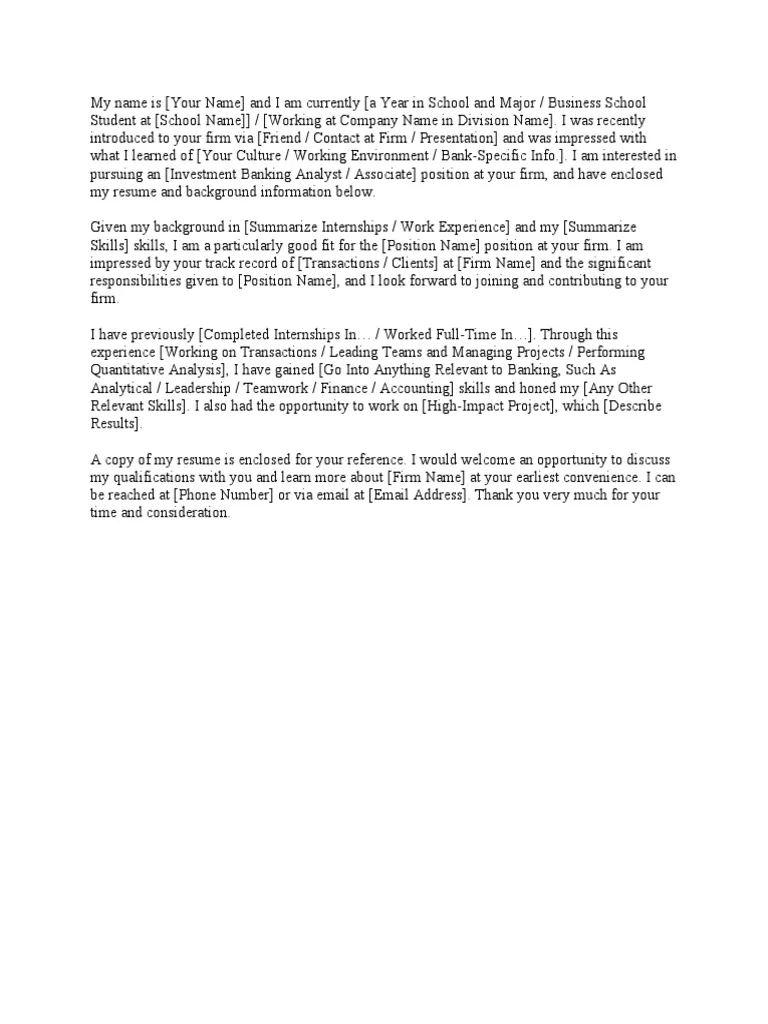
Understanding the IB Cover Letter
An IB cover letter is more than just a formality; it’s your chance to make a strong first impression and stand out from the crowd. Unlike a resume, which provides a factual overview of your skills and experience, a cover letter allows you to showcase your personality, enthusiasm, and specific interest in the role and the company. It is a critical document because it serves as your personal introduction to a potential employer. This document gives you the opportunity to demonstrate how your unique blend of skills, experiences, and achievements aligns with the requirements of the job and the values of the organization. Essentially, it’s a tool to convince the hiring manager that you are not just qualified, but that you are the best candidate.
Key Components of a Strong IB Cover Letter
A strong IB cover letter needs to be meticulously crafted, paying attention to all the key elements. Begin with a professional header, clearly stating your contact information, the date, and the recipient’s details. The opening paragraph is crucial; it needs to grab the reader’s attention and immediately express your enthusiasm for the position and the company. The body paragraphs should effectively highlight your relevant skills, experience, and achievements, using specific examples to illustrate your capabilities. The closing paragraph should summarize your key qualifications, reiterate your interest in the role, and include a clear call to action. By carefully incorporating these components, you create a compelling and memorable cover letter that increases your chances of securing an interview.
Personalizing Your IB Cover Letter

Personalization is a key aspect of a successful IB cover letter. Generic cover letters, which lack any specific details about the job or the company, are often quickly discarded. Research the company thoroughly, understand its mission, values, and recent initiatives. Demonstrate your knowledge by referencing specific projects, challenges, or accomplishments. Mention how your skills and experiences align with their goals. Address the hiring manager by name (if possible), and tailor your letter to the specific job description to show your genuine interest and attention to detail. This personal touch will demonstrate your effort and make your application more memorable.
Highlighting Relevant Skills and Experience
Focus on highlighting the skills and experiences that directly relate to the job description. Begin by carefully reviewing the job posting to identify the key skills and requirements that the employer is seeking. Then, in your cover letter, provide concrete examples of how you’ve demonstrated those skills in previous roles or projects. For instance, if the job requires strong communication skills, give examples of successful presentations, written reports, or collaborative projects where you’ve effectively communicated with others. Quantify your achievements whenever possible using numbers and data to illustrate the impact of your contributions. For example, if you improved efficiency, mention the percentage increase achieved. This approach provides tangible evidence of your abilities and showcases your capacity to deliver results.
Showcasing Your IB Achievements
Your IB cover letter should spotlight your achievements, making your accomplishments shine. Instead of just listing your responsibilities, highlight your successes, such as completed projects, awards received, or significant contributions to your previous organizations. The STAR method (Situation, Task, Action, Result) is a great framework. First, describe the situation, then explain the task you faced, the actions you took, and the results you achieved. This creates a clear and compelling narrative that effectively illustrates your skills and impact. Prioritize achievements that align with the job requirements, such as leadership roles, problem-solving abilities, or instances where you exceeded expectations. This will give the hiring manager solid evidence of your potential to excel in the new role.
Structuring Your IB Cover Letter

The structure of your IB cover letter is critical to ensure clarity, readability, and impact. Start with a professional header, including your contact information, the date, and the employer’s details. Use a standard business letter format, with clear margins and spacing between paragraphs. Aim to keep your letter concise, ideally within one page. Choose a professional font such as Times New Roman, Arial, or Calibri. Use bolding and underlining sparingly to highlight important information. Make sure you proofread for any errors in grammar, spelling, and punctuation. A well-structured cover letter demonstrates your attention to detail and professionalism, which can significantly increase your chances of getting noticed.
Crafting a Compelling Opening
The opening paragraph of your IB cover letter is where you make your first impression, and it needs to be strong. Avoid generic opening phrases like “I am writing to apply…” Start with a hook that immediately grabs the reader’s attention. You might express your enthusiasm for the company or the specific position or highlight a key skill or achievement that makes you stand out. Demonstrate that you have researched the company and understand its goals. Briefly state how your skills and experience align with their needs. The opening should be concise, compelling, and relevant to the job. By making a strong first impression, you increase the likelihood of the hiring manager continuing to read your letter and consider your application carefully.
Developing Body Paragraphs That Impress
The body paragraphs of your IB cover letter provide the opportunity to delve deeper into your qualifications and demonstrate why you are the perfect candidate. Each paragraph should focus on a specific skill, experience, or achievement that is relevant to the job requirements. Use the STAR method to offer concrete examples, explaining the situation, your tasks, the actions you took, and the results you achieved. Quantify your achievements whenever possible by using numbers and data to show the impact of your contributions. Structure each paragraph logically, with a clear topic sentence that introduces the main idea, followed by supporting details and examples. Tailor your language and tone to match the company’s culture and maintain a professional and enthusiastic tone. By crafting well-developed body paragraphs, you create a compelling narrative that showcases your strengths and leaves a lasting impression.
Writing a Strong Closing

The closing paragraph of your IB cover letter is your last chance to leave a positive impression. Summarize your key qualifications and reiterate your interest in the position, emphasizing why you are a strong fit for the role. Express your enthusiasm for the opportunity and the company. Include a clear call to action, such as expressing your availability for an interview and providing your contact information. Maintain a professional tone and avoid generic phrases such as “Thank you for your time.” Instead, personalize your closing by referencing something specific about the job or the company that resonates with you. A well-written closing reinforces your interest, provides a clear next step, and leaves the hiring manager with a positive impression of your application. Proofread the closing carefully for any errors and ensure it aligns with the rest of your cover letter.
Formatting Your IB Cover Letter
Proper formatting is essential for creating an IB cover letter that is easy to read and visually appealing. Begin with a professional header including your contact information, the date, and the employer’s details. Use a standard business letter format, with clear margins and spacing between paragraphs. Aim for conciseness, ideally keeping the letter within one page, and use a font size between 10 and 12 points. Choose a professional font such as Times New Roman, Arial, or Calibri, ensuring it is readable on screen. Use bolding and underlining sparingly to highlight important information. Always proofread carefully for any errors in grammar, spelling, and punctuation. A well-formatted cover letter showcases your attention to detail and professionalism, greatly increasing your chances of making a positive impression.
Choosing the Right Font and Style
The font and style you select for your IB cover letter have a significant impact on its readability and overall appearance. Choose a professional and easy-to-read font, like Times New Roman, Arial, or Calibri. These fonts are widely accepted and easy on the eyes, whether read on screen or in print. Maintain a font size between 10 and 12 points for optimal legibility. Avoid overly decorative or unusual fonts, as they can distract the reader and make your letter appear less professional. Ensure a clear and consistent style throughout. Use consistent margins and spacing, and apply bolding and underlining sparingly to highlight important elements like your name, headings, and key skills. If available, adhere to the company’s style guidelines. By choosing the right font and style, you ensure your cover letter is both visually appealing and easy to read.
Proofreading and Editing for Perfection

Proofreading and editing are essential steps in the creation of your IB cover letter, helping to ensure it is free of errors and presents you in the best possible light. Before submitting your letter, meticulously proofread it for any errors in grammar, spelling, and punctuation. Make use of a grammar checker and spell checker to catch potential issues, but do not rely on them entirely. Read your letter aloud to identify any awkward phrasing or sentence structures. Seek feedback from a friend, family member, or career advisor to review your cover letter and provide suggestions. Ensure the letter is well-organized, clear, and concise, effectively highlighting your skills and experience. A polished cover letter demonstrates attention to detail and professionalism, significantly increasing your chances of being noticed. Taking the time to proofread and edit is one of the most important steps in the application process.
Common Mistakes to Avoid in Your IB Cover Letter
Avoid common mistakes to prevent your IB cover letter from negatively affecting your chances of being considered. One of the biggest errors is sending a generic cover letter that isn’t tailored to the specific job or company. Another common mistake is including irrelevant information or exaggerating your skills and experience. Avoid jargon or overly complex language that may confuse the reader, and proofread carefully to eliminate grammatical errors and typos. Refrain from negativity or complaining about previous employers or jobs. Do not include your salary expectations unless specifically requested and never use informal language or slang. By avoiding these common pitfalls, you can create a professional and effective cover letter that increases your prospects of getting noticed by potential employers.
The Importance of Tailoring Your Cover Letter
Tailoring your IB cover letter to each job application is crucial for demonstrating your genuine interest and suitability for the role. Carefully review the job description and identify the key skills, experiences, and qualifications that the employer is seeking. Customize your cover letter to highlight your relevant achievements and explain how your abilities align with the job requirements. Reference specific projects, initiatives, or experiences that showcase your understanding of the company’s needs and your ability to contribute to its success. Avoid sending generic cover letters that could be used for any job. The more tailored your cover letter is, the more likely it is that the hiring manager will recognize that you have taken the time to understand the position and the company. Personalization is critical in making a strong impression and getting noticed.
Ignoring the Job Description

Ignoring the job description is a significant mistake that can hurt your IB cover letter. The job description provides essential information about the required skills, experiences, and qualifications that the employer is seeking. It is your guide for creating a targeted and relevant cover letter. If you ignore the job description, you risk missing key requirements, highlighting irrelevant experiences, and failing to show that you understand the role. Review the job description carefully and identify the essential criteria. Then, customize your cover letter to demonstrate how your skills and experiences align with those criteria. Use the same keywords and phrases from the job description to make your letter more relevant and easier for the hiring manager to understand your suitability. By tailoring your letter to the job description, you show that you have taken the time to understand the role and the company’s needs.
Not Proofreading Your Letter
Failing to proofread your IB cover letter is a critical error that can significantly detract from your application. Typos, grammatical errors, and incorrect punctuation can make your letter seem unprofessional and may undermine your credibility. Even minor mistakes can give the impression that you lack attention to detail, which is an important skill in many roles. Before submitting your cover letter, carefully proofread it for any errors. Read it aloud to catch any awkward phrasing or unclear sentences. Use a grammar checker and spell checker, but don’t rely solely on these tools. Ask a friend, family member, or career advisor to review your letter for feedback and suggestions. Proofreading demonstrates your professionalism and commitment to excellence. Taking the time to ensure your cover letter is error-free can make a positive impression and increase your chances of getting noticed.
Examples of Outstanding IB Cover Letters
Reviewing examples of outstanding IB cover letters can provide invaluable insights and guidance for crafting your own. Look for cover letters that are well-structured, concise, and tailored to the specific job and company. Pay attention to how the applicants highlight their skills, experience, and achievements, and how they use the STAR method to provide concrete examples. Analyze how they open their letters with a strong hook, and how they close with a clear call to action. Identify the formatting and language used, and how they demonstrate their enthusiasm and understanding of the role and the company. There are many online resources offering examples of cover letters for various positions. Use these examples as inspiration and adapt them to your own situation, tailoring your letter to demonstrate your unique value and make a lasting impression.