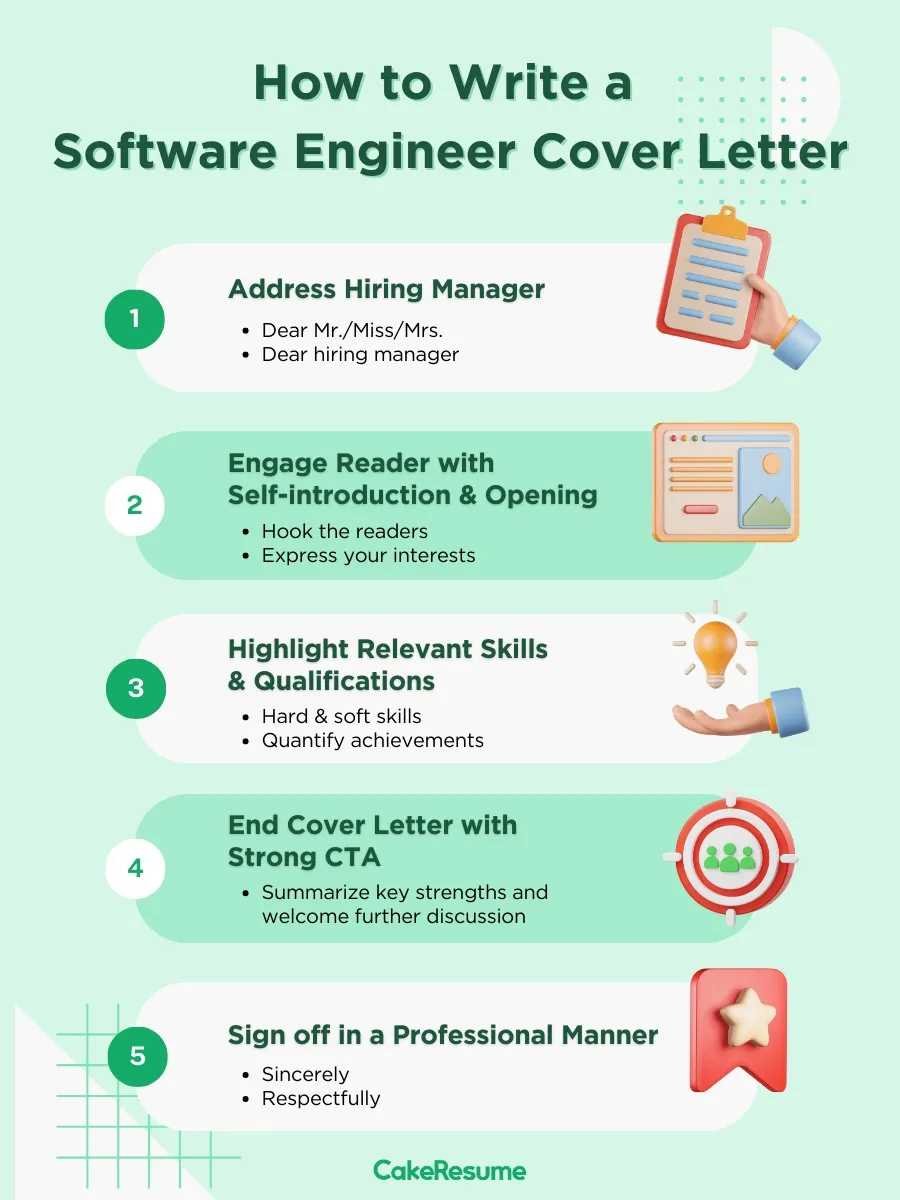
Cover Letter Engineer [Top 5 Tips]
A well-crafted cover letter is your key to unlock job opportunities as a software engineer. It’s a chance to showcase your skills, experience, and personality, setting you apart from other applicants. This guide will equip you with the essential tips and insights to create a compelling cover letter that grabs the attention of hiring managers and increases your chances of landing your dream job. We’ll cover everything from understanding the purpose of a cover letter to avoiding common pitfalls, ensuring you make a lasting impression. By following these five key strategies, you’ll be well on your way to crafting a cover letter that not only highlights your technical expertise but also demonstrates your genuine enthusiasm for the role and the company.
Understand the Purpose of a Cover Letter
Before diving into the writing process, it’s crucial to understand the fundamental purpose of a cover letter. It’s not merely a repetition of your resume. Instead, a cover letter provides you with an opportunity to elaborate on your qualifications and connect your skills with the specific requirements of the job. Think of it as a narrative that complements your resume, offering context and demonstrating your personality. It allows you to explain why you’re the ideal candidate for the position, highlighting your motivations, and expressing your interest in the company. A well-written cover letter demonstrates your communication skills, attention to detail, and genuine interest in the opportunity.
Highlight Your Skills and Experience

Your cover letter is your chance to shine a spotlight on the skills and experiences that make you a standout software engineer. Don’t just list your qualifications; provide specific examples that illustrate your abilities and achievements. Quantify your accomplishments whenever possible. Instead of saying “Managed software projects”, describe it like this “Managed and delivered 3 complex software projects on time and under budget, resulting in a 15% increase in team efficiency.” Connect your skills to the job description, emphasizing how your expertise aligns with the employer’s needs. Use action verbs to describe your responsibilities and accomplishments, such as ‘developed,’ ‘implemented,’ ‘managed,’ and ’led.’ This approach not only demonstrates your competence but also showcases your potential value to the company.
Tailor Your Cover Letter to the Job
Generic cover letters are easily spotted by hiring managers and often end up in the rejection pile. Each cover letter should be customized to the specific job and company you’re applying to. Carefully review the job description and identify the key skills, experiences, and qualifications that the employer is seeking. Then, tailor your cover letter to address these requirements directly. Research the company’s mission, values, and recent projects to demonstrate your genuine interest. Mention specific projects or initiatives that resonate with you, and explain how your skills and experience align with their goals. This level of personalization shows that you’ve done your homework and are genuinely interested in the opportunity, significantly increasing your chances of success. Refer to the image showing a software engineer applying for a job to reinforce the importance of personalization.
Use a Professional Format
The format of your cover letter is as crucial as its content. A professional and well-organized format demonstrates your attention to detail and respect for the hiring manager’s time. Start with a clear and concise header that includes your contact information and the date. Address the letter to the hiring manager or the specific person listed in the job description; avoid generic salutations like “To Whom It May Concern.” Use a professional font, such as Times New Roman, Arial, or Calibri, and maintain a consistent font size (11 or 12 points) throughout the document. Divide your letter into clear paragraphs, using concise and easy-to-read language. Proofread carefully for any grammatical errors or typos, as these can undermine your credibility. A well-formatted cover letter showcases your professionalism and attention to detail, making a positive first impression.
Proofread and Edit Your Cover Letter

Before submitting your cover letter, take the time to proofread and edit it meticulously. Errors in grammar, spelling, or punctuation can damage your credibility and make you appear careless. Read your cover letter aloud to catch any awkward phrasing or unclear sentences. Ask a friend, mentor, or career advisor to review your letter and provide feedback. They can offer a fresh perspective and help you identify areas for improvement. Ensure that your letter is concise, well-organized, and free of any jargon or clichés. By carefully proofreading and editing your cover letter, you can ensure that it presents you in the best possible light and increases your chances of securing an interview. The image of a person proofreading a document reinforces the importance of this step.
Examples of Effective Cover Letter Components
Understanding the essential components of an effective cover letter can help you structure your letter in a compelling way. While the content will vary depending on your experience and the specific job, the core elements remain consistent. This section breaks down each component, providing examples to guide your writing. This structure ensures your cover letter is clear, concise, and effectively conveys your qualifications to potential employers, increasing your chances of getting noticed. Focus on the most important points of your achievements and your skills related to the specific job.
The Header Section
Your header should include your full name, contact information (phone number, email address, and LinkedIn profile URL), and the date. It is very important for easy reach to your professional information. This information should be formatted consistently and professionally. Consider including a link to your online portfolio or professional website if you have one. This helps the hiring manager quickly access your information and connect with you. Remember that the contact information must be updated and correct, so the hiring manager can reach you to schedule an interview or give you further information about the job position.
The Opening Paragraph

The opening paragraph is your chance to make a strong first impression. Start by stating the position you’re applying for and where you saw the job posting. Then, quickly highlight your most relevant qualifications and express your enthusiasm for the role and the company. Aim to grab the reader’s attention from the beginning. This paragraph should be concise and engaging, setting the tone for the rest of your letter. For example, ‘I am writing to express my strong interest in the Software Engineer position at [Company Name], as advertised on [Platform]. With my five years of experience in software development and my passion for innovative solutions, I am confident I can significantly contribute to your team.’ The opening paragraph is the hook, so make it count.
The Body Paragraphs
The body paragraphs are where you showcase your skills, experience, and accomplishments. Provide specific examples that demonstrate your ability to meet the job requirements. Quantify your achievements whenever possible. Use the STAR method (Situation, Task, Action, Result) to structure your examples, providing context, describing the challenge, detailing your actions, and highlighting the results. Focus on your most relevant experiences and tailor them to the job description. For instance, you might describe a project where you successfully implemented a new software feature, detailing the challenges you faced, the solutions you developed, and the positive outcomes achieved. The body paragraphs should clearly illustrate your skills and contributions.
The Closing Paragraph
The closing paragraph should reiterate your interest in the position and express your enthusiasm for the opportunity. Thank the hiring manager for their time and consideration. Clearly state your availability for an interview and how they can reach you. Avoid generic phrases and instead, convey your genuine interest in the role. For example, ‘I am eager to learn more about this opportunity and discuss how my skills and experience can benefit your team. Thank you for your time and consideration. I am available for an interview at your earliest convenience and can be reached at [Phone Number] or [Email Address].’ A strong closing leaves a positive final impression.
Common Mistakes to Avoid

Avoiding common mistakes can significantly improve your chances of success. Be aware of the most frequent pitfalls and actively work to avoid them. Taking care of these issues could be the difference between getting hired and getting discarded. By taking care of these aspects, your cover letter is more likely to make the right impression. In the highly competitive world of software engineering, the ability to present yourself effectively is as important as your technical skills. Avoiding the common mistakes is critical to crafting an effective cover letter. These common errors can undermine your application and damage your chances.
Generic Cover Letters
Submitting a generic cover letter is one of the biggest mistakes you can make. Hiring managers can easily spot generic letters, and they often end up in the rejection pile. The cover letter should be tailored to the specific job and company. Tailor it to the specific role you’re applying for. Research the company, mention specific projects or initiatives that you find interesting, and explain why you’re the right fit for the role and the company culture. Generic letters show a lack of effort and a lack of genuine interest. Customize each letter to reflect the unique requirements of the job. This personalization shows that you’ve done your homework and are genuinely interested in the opportunity.
Typos and Grammatical Errors
Typos and grammatical errors are instant deal-breakers. They demonstrate a lack of attention to detail and a lack of professionalism. Proofread your cover letter carefully before submitting it. Use spell-check and grammar-check tools, but don’t rely on them completely. Read your letter aloud to catch any awkward phrasing or unclear sentences. Ask a friend, mentor, or career advisor to review your letter and provide feedback. The image of a person proofreading a document reinforces the importance of this step. A polished cover letter is essential to making a positive first impression.
Lack of Specificity

Avoid vague language and provide specific examples to demonstrate your skills and achievements. Don’t just say you have experience with a certain programming language; provide details about projects you worked on, the challenges you overcame, and the results you achieved. The same for achievements, it should not be simply mentioned. Use the STAR method to structure your examples and quantify your accomplishments whenever possible. For instance, instead of saying ‘Managed software projects’, describe your role in ‘managed and delivered 3 complex software projects on time and under budget, resulting in a 15% increase in team efficiency.’ This will provide you with the right impression on the interviewer, thus making you more probable to succeed.
Unprofessional Tone
Maintain a professional and respectful tone throughout your cover letter. Avoid slang, informal language, and overly casual expressions. Use clear and concise language, and focus on your qualifications and your interest in the opportunity. Show enthusiasm without being overly effusive. Keep a formal tone, and use professional language that reflects your expertise and professionalism. Make sure that the tone aligns with the company culture and the specific role you are applying for. Your writing style should always reflect the role and the company values. The image of a professional looking cover letter emphasizes this point.