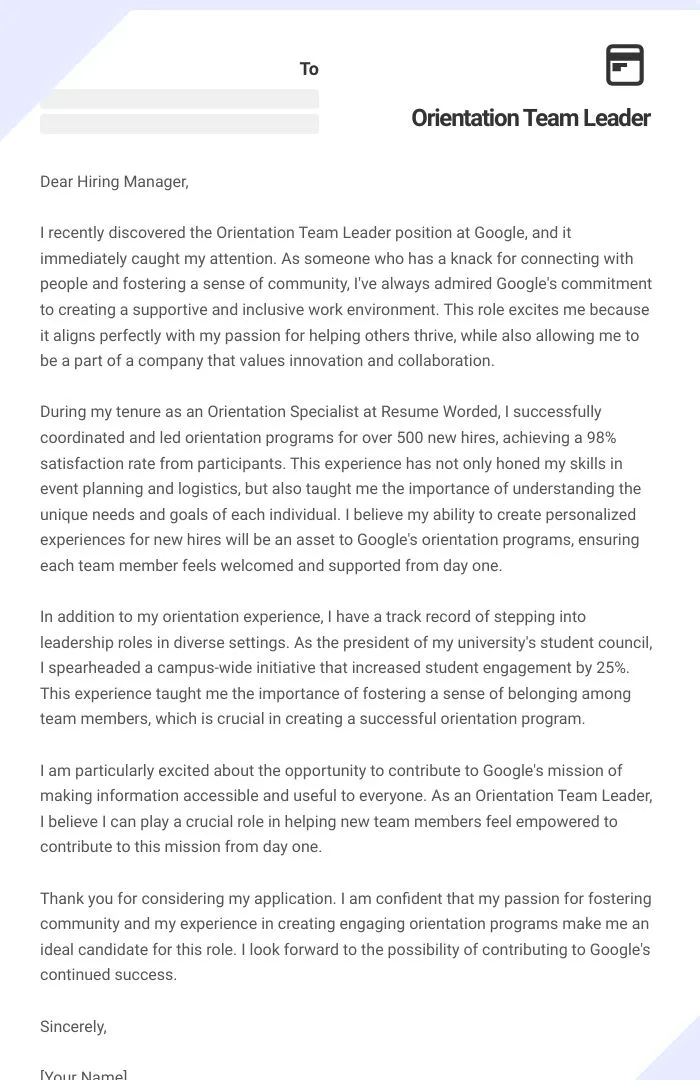
Why You Need an Orientation Leader Cover Letter
A well-crafted orientation leader cover letter is your first opportunity to make a positive impression on the hiring committee. It’s a crucial document that complements your resume, allowing you to showcase your personality, skills, and enthusiasm for the role. Unlike a resume, which presents a factual summary of your experiences, a cover letter provides a space for you to connect with the reader on a more personal level, demonstrating why you are the perfect fit for the position and the institution. It allows you to elaborate on your key strengths and provide specific examples that highlight your qualifications and commitment to helping incoming students adjust to campus life. Without a strong cover letter, your application might not receive the attention it deserves.
Key Components of a Compelling Cover Letter
A compelling orientation leader cover letter consists of several key components, each playing a vital role in conveying your suitability for the position. These elements work together to paint a comprehensive picture of your skills, experiences, and personality. A well-structured cover letter should include your contact information, a professional greeting, a strong opening paragraph, detailed body paragraphs that highlight relevant skills and experiences, and a compelling closing paragraph. Ensuring your cover letter is tailored to the specific institution and role is essential, demonstrating your genuine interest and understanding of the institution’s values and needs. The overall tone of your letter should be enthusiastic and professional, reflecting your eagerness to contribute to the orientation program.
Your Header Contact Information

Begin your cover letter with your contact information in the header. This should include your full name, address, phone number, and email address. Ensure your email address is professional and appropriate for job applications. Placing this information at the top makes it easy for the hiring committee to reach you. Accuracy is paramount; double-check all details to avoid any errors that could hinder communication. The header sets the foundation for a professional presentation and ensures that your application is easily accessible.
The Greeting
Address your cover letter to a specific person whenever possible. Research the name of the hiring manager or the person responsible for overseeing the orientation program. Addressing your letter to a specific individual shows that you have taken the time to learn about the organization and shows a degree of personalization that can make your application stand out. If you cannot find a specific name, use a general salutation like “Dear Hiring Committee” or “Dear Orientation Program Coordinator”. Avoid generic greetings like “To Whom It May Concern”, which lack personalization and can be perceived as impersonal. A well-chosen greeting sets a respectful and professional tone for your letter.
Highlighting Your Relevant Skills
Focus on the skills that align with the responsibilities of an orientation leader. This includes leadership, communication, interpersonal skills, and the ability to work effectively in a team. Provide specific examples to demonstrate how you have used these skills in past experiences. Highlight situations where you have successfully led a group, resolved conflicts, or communicated effectively with diverse audiences. Use action verbs to describe your accomplishments and quantify your achievements whenever possible. This section is where you demonstrate your suitability for the role, showcasing your ability to guide and support new students.
Leadership and Communication Skills

Emphasize your leadership and communication skills in this section. Describe situations where you took initiative, motivated others, or mediated disagreements. Provide examples of how you’ve successfully communicated complex information clearly and concisely, both verbally and in writing. Highlight any experience you have in public speaking or presenting to large groups. Orientation leaders need to be able to inspire confidence, facilitate discussions, and convey vital information effectively, making these skills crucial for the role. Illustrate your abilities through specific examples, demonstrating your effectiveness in these areas.
Enthusiasm and Commitment
Express your genuine enthusiasm for the orientation program and your commitment to helping incoming students. Explain why you are passionate about the role and what motivates you to contribute. Show that you have researched the institution’s values and goals, and that you are eager to promote them. Convey your excitement about being part of a supportive and welcoming environment for new students. Demonstrate your commitment to making a positive impact and your willingness to go the extra mile to support the success of the orientation program.
Showcasing Your Experience
Detail any relevant experiences you have. This could include previous leadership roles, volunteer work, or any activities that demonstrate your ability to work with others and guide a group. Highlight experiences where you were responsible for mentoring or assisting others, as this showcases your ability to support and guide new students. Describe the responsibilities you held and the outcomes of your efforts. Quantify your achievements by providing specific details, such as the number of people you assisted or the impact of your work. This section allows you to provide concrete evidence of your suitability for the role.
Academic Achievements and Involvement

Include any academic achievements, such as scholarships, honors, or relevant coursework. Mention your involvement in extracurricular activities, clubs, or organizations. These details help illustrate your well-roundedness and commitment to the university community. Show that you are not only academically successful but also actively engaged in campus life. Highlight any leadership roles you held within these organizations. Demonstrate that you are a dedicated and involved student who is committed to the success of your peers.
Tailoring Your Letter to the Role and Institution
Customize your cover letter to the specific institution and role. This shows that you have researched the organization and are genuinely interested in the opportunity. Use the job description to identify the key skills and qualifications they are seeking and emphasize how your experiences align with these requirements. Demonstrate that you understand the institution’s values and goals, and that you are eager to contribute to its mission. Tailoring your cover letter shows that you are not just sending a generic application but are truly invested in the position.
Researching the Institution
Research the institution’s mission, values, and culture. Visit their website, read about their orientation program, and familiarize yourself with their goals and initiatives. Demonstrating your knowledge of the institution shows your interest and your ability to align your skills with their specific needs. Tailor your cover letter to reflect what you have learned about the institution and the specific role of an orientation leader. This shows that you are genuinely interested and have taken the time to understand what the institution values.
Matching Skills to Job Requirements

Carefully review the job description and identify the key skills and qualifications they are seeking. Highlight your relevant skills and experiences, demonstrating how you meet the specific requirements of the role. Use the same keywords and phrases from the job description to show that you understand what the employer is looking for. Provide specific examples of how you have used these skills in the past, quantifying your achievements whenever possible. This ensures that your application clearly demonstrates your alignment with the requirements of the role.
Structuring Your Cover Letter
Structure your cover letter logically, using clear and concise language. Each paragraph should have a specific purpose and contribute to the overall message. Use headings and subheadings to break up the text and make it easy to read. The layout of your cover letter is just as important as the content; it should be easy to scan and navigate. Proper formatting and structure enhance readability and increase the likelihood of the hiring committee understanding your message. A well-structured cover letter makes a positive impression by demonstrating your organizational skills and attention to detail.
The Opening Paragraph
The opening paragraph should immediately grab the reader’s attention and state your purpose for writing. Clearly state the position you are applying for and how you learned about the opportunity. Briefly mention why you are interested in the role and what makes you a strong candidate. Use a confident and enthusiastic tone to create a positive first impression. The opening paragraph sets the tone for the rest of your letter, so make sure it is engaging and relevant to the position.
Body Paragraphs

The body paragraphs should provide specific examples of your skills and experiences. Use the STAR method (Situation, Task, Action, Result) to structure your responses, providing context and details. Elaborate on your qualifications and accomplishments, emphasizing how they align with the requirements of the role. Each paragraph should focus on a different aspect of your qualifications, such as leadership, communication, or problem-solving. Use action verbs to describe your accomplishments and quantify your achievements whenever possible. Show how your skills and experiences make you the ideal candidate for the position.
The Closing Paragraph
In the closing paragraph, summarize your key qualifications and reiterate your interest in the position. Express your enthusiasm for the opportunity and thank the hiring manager for their time and consideration. Include a call to action, such as inviting them to contact you for an interview. Maintain a professional and confident tone throughout the closing paragraph, leaving a lasting positive impression. Express your eagerness to contribute to the orientation program and your willingness to discuss your qualifications further. A well-crafted closing paragraph reinforces your suitability for the role.
Proofreading and Editing Your Cover Letter
Proofread your cover letter meticulously for any grammatical errors, typos, or spelling mistakes. These errors can undermine your credibility and professionalism. Ensure the language is clear, concise, and easy to understand. Read your cover letter aloud to catch any awkward phrasing or unclear sentences. Ask a friend, professor, or career advisor to review your cover letter for feedback. Paying attention to detail in this step is essential, as it reflects your level of professionalism and attention to detail.
Common Mistakes to Avoid

Avoid common mistakes that can detract from your cover letter. These include using generic language, making typos and grammatical errors, and failing to tailor your letter to the specific role or institution. Generic cover letters lack personalization and can be perceived as impersonal. Typos and grammatical errors can reflect poorly on your attention to detail. Failing to tailor your letter shows a lack of interest and can lead to rejection. Addressing these common pitfalls will significantly increase your chances of success.
Generic Language
Avoid using generic language that could apply to any job. Use specific examples and details that showcase your unique qualifications. Show that you have researched the institution and the role. Tailor your cover letter to align with the specific requirements of the position. Personalize your letter to demonstrate your genuine interest and distinguish yourself from other applicants. Replacing vague statements with concrete examples and personalized language will help make your application memorable and compelling.
Typos and Grammatical Errors
Typos and grammatical errors can create a negative impression and make your application appear unprofessional. Proofread your cover letter carefully and use spell-check tools. Read your cover letter aloud to catch any awkward phrasing or unclear sentences. Have someone else review your cover letter for any errors you might have missed. Errors can significantly impact your credibility and reduce your chances of getting an interview. Ensuring your cover letter is error-free demonstrates your attention to detail and professionalism, which is important for the role.
Submitting Your Cover Letter
Follow the application instructions carefully when submitting your cover letter. Adhering to the instructions demonstrates your attention to detail and respect for the hiring process. Pay close attention to the required file format and naming conventions. Ensure your cover letter is attached correctly and submitted by the deadline. Following the application instructions increases your chances of your application being reviewed and considered. Improper submission can result in immediate rejection.
File Format and Naming
Use the required file format, typically PDF or Word document, as specified in the application instructions. Name your file appropriately, usually including your name and the position you are applying for. For example, “JohnDoe_OrientationLeaderCoverLetter.pdf”. This ensures that the hiring manager can easily identify your application and maintain organization. Using the correct file format and naming conventions shows attention to detail and professionalism.
Following Application Instructions
Carefully review all application instructions and adhere to them precisely. Pay attention to the required attachments, submission methods, and deadlines. Failing to follow instructions can result in your application being rejected, regardless of your qualifications. Proofread the instructions to ensure you have not missed any details. Attention to detail is a crucial skill for an orientation leader, so demonstrating your ability to follow instructions from the outset can strengthen your application. Following all instructions is paramount to ensure your application is properly considered.