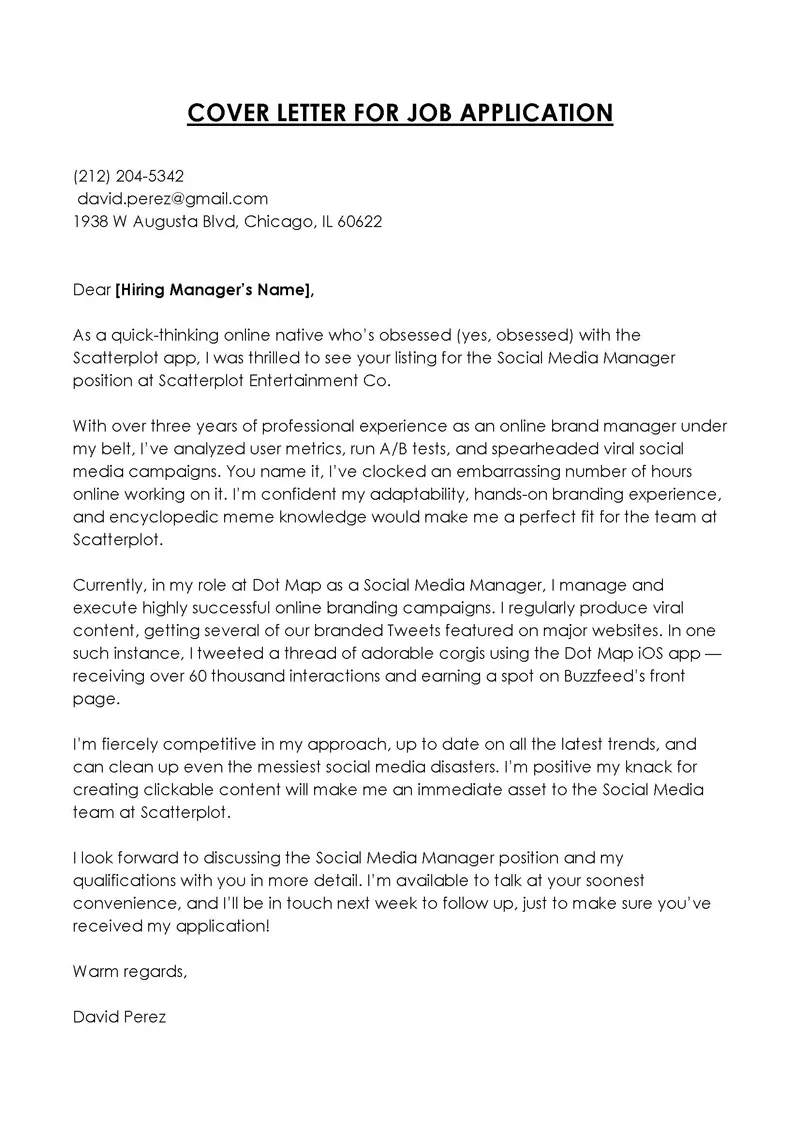
Cover Letter Basics
A cover letter is a crucial document that accompanies your resume when applying for a job. It serves as your first introduction to a potential employer, providing an opportunity to showcase your personality, skills, and enthusiasm for the position. Unlike your resume, which provides a factual overview of your experience, a cover letter allows you to tell a story, explaining why you are the perfect fit for the role and the company. A well-crafted cover letter can significantly increase your chances of landing an interview, making it a vital component of any successful job application. It is your chance to make a strong first impression and differentiate yourself from other candidates.
Understanding the Purpose of a Cover Letter
The primary purpose of a cover letter is to introduce you to the hiring manager and express your interest in a specific job. It’s a chance to elaborate on your resume, highlighting the skills and experiences that make you a strong candidate. A cover letter should demonstrate your understanding of the role and the company, showing that you’ve taken the time to research and tailor your application. Additionally, it allows you to showcase your communication skills, which are essential in almost every professional setting. It is a great opportunity to explain any gaps in your resume, career changes, or other relevant information that you may need to provide context for the hiring manager.
Key Components of a Cover Letter

A well-structured cover letter typically includes several key components that work together to create a compelling introduction. These components include your contact information, the hiring manager’s contact information (if available), a professional greeting, a captivating introduction, a body that highlights your relevant skills and experience, a strong closing with a call to action, and a professional closing. Each part of the cover letter plays an important role in conveying your qualifications and interest in the position. Carefully consider the structure and content of each of these elements to create a persuasive and effective application.
Formatting Your Cover Letter
Proper formatting is essential for a professional cover letter. Choose a clean, readable font such as Arial, Times New Roman, or Calibri, with a font size between 10 and 12 points. Use single spacing within paragraphs and double spacing between paragraphs to enhance readability. Maintain consistent margins (typically 1 inch) throughout the document. Ensure that your cover letter is free of grammatical errors and typos. The overall appearance should be neat and easy to read. Using a professional template can help you achieve a polished look, but customize it to reflect your unique style and the specific job you are applying for.
Cover Letter Content
Header and Contact Information

Start your cover letter with your contact information, including your name, address, phone number, and email address. Align this information to the left or right. Following this, include the date and the hiring manager’s name and title (if known), along with the company address. This sets a professional tone and allows the employer to easily contact you. If you are unable to find the hiring manager’s name, you can use a general salutation such as “Dear Hiring Manager” or “Dear [Department Name] Team.” Always double-check all contact information for accuracy to ensure that the hiring manager can reach you.
Greeting the Hiring Manager
Address the hiring manager by name whenever possible. Personalizing the greeting shows that you have taken the time to research the company and the role. If you are unable to find the name, use a general salutation that aligns with the company’s culture. For example, “Dear Hiring Manager” is a safe and common choice, while “Dear [Department Name] Team” might be appropriate for certain industries. Avoid generic greetings like “To Whom It May Concern,” as they can make your cover letter feel impersonal. Always maintain a professional tone, regardless of your greeting choice.
Writing a Compelling Introduction
Your introduction is your chance to immediately capture the reader’s attention. Start with a strong opening statement that states your interest in the position and briefly explains why you are a good fit. You can mention how you found the job or the company, and highlight a key skill or accomplishment that aligns with the job description. Avoid generic phrases like “I am writing to express my interest.” Instead, focus on what makes you stand out, what you can offer the company, and express enthusiasm for the opportunity. Make sure your introduction is concise, enthusiastic, and tailored to the specific role.
Highlighting Relevant Skills and Experience
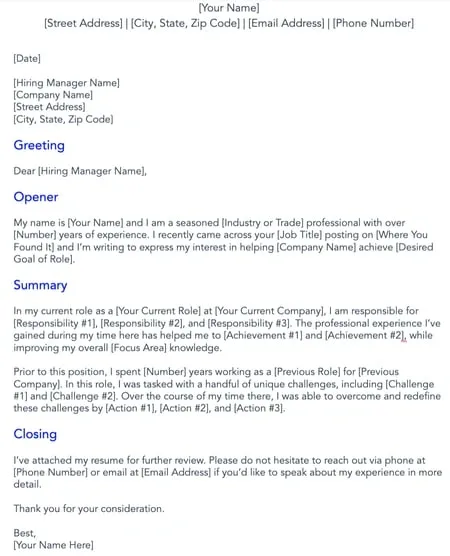
The body of your cover letter should showcase how your skills and experiences align with the job requirements. Carefully review the job description and identify the key qualifications and skills that the employer is seeking. Provide specific examples of how you have demonstrated these skills in previous roles or projects. Use the STAR method (Situation, Task, Action, Result) to structure your examples, demonstrating how you handled a specific situation, what you were tasked to do, the actions you took, and the positive results you achieved. This will provide clear evidence of your capabilities and the value you can bring to the company.
Matching Skills to Job Requirements
Carefully analyze the job description and identify the essential skills and qualifications the employer is looking for. Your cover letter should explicitly address how your skills align with these requirements. Use keywords from the job description, but be genuine and avoid keyword stuffing. Provide specific examples of how you have used these skills in your previous roles. This helps the hiring manager quickly understand how you meet the requirements of the role. It proves that you understand the role and are capable of performing the necessary tasks.
Quantifying Achievements
Whenever possible, quantify your achievements with specific numbers and data. This provides concrete evidence of your accomplishments and the impact you made in previous roles. For example, instead of saying, “Improved customer satisfaction,” say “Increased customer satisfaction by 15% through implementation of a new feedback system.” Quantifiable results demonstrate your value and provide a clear picture of what you can bring to the company. Use metrics such as percentages, dollar amounts, or timeframes to illustrate your successes and achievements in previous roles.
Expressing Enthusiasm and Interest

Express your genuine enthusiasm for the role and the company. Explain why you are excited about the opportunity and what attracts you to the organization. Show that you have done your research, understand the company’s mission and values, and how your goals align with their objectives. Share what interests you about the company’s products, services, or culture. Avoid generic phrases like “I am very interested.” Instead, make your interest personal and specific, highlighting what resonates with you about the opportunity and why you believe you would be a good fit.
Ending with a Call to Action
Conclude your cover letter with a clear call to action. State your desire for an interview and express your availability. Include a polite closing and thank the hiring manager for their time and consideration. For example, “Thank you for your time and consideration. I am eager to discuss my qualifications further and am available for an interview at your earliest convenience.” End with a professional closing such as “Sincerely,” “Best regards,” or “Thank you.” Always proofread your closing to ensure it is professional and free of errors.
Proofreading and Editing
Before submitting your cover letter, carefully proofread and edit it for any errors. Check for grammatical errors, typos, and awkward phrasing. Ensure that your letter is clear, concise, and easy to read. Consider asking a friend, family member, or career advisor to review your cover letter for feedback. Fresh eyes can often catch mistakes that you may have missed. A polished cover letter demonstrates your attention to detail and professionalism, which is crucial for making a positive impression.
Tailoring Your Cover Letter

Researching the Company
Before writing your cover letter, research the company thoroughly. Visit the company’s website, read their mission statement, and learn about their products, services, and values. Understand their culture and the industry in which they operate. This information will help you tailor your cover letter to the specific company and demonstrate your genuine interest in the role. Mentioning something specific that appeals to you about the company will make your application stand out from others. Being informed shows that you care and have a genuine interest in joining their team.
Customizing for Each Job Application
Never use the same cover letter for multiple job applications. Always tailor your cover letter to each specific job and company. Customize your letter by addressing the specific requirements outlined in the job description. Highlight the skills and experiences that are most relevant to the role. Modify your introduction to reflect your understanding of the company. The more you customize your cover letter, the more likely you are to capture the attention of the hiring manager. This demonstrates that you’ve taken the time to understand the role and company and are truly interested in the opportunity. Show that you care and that you are not just sending a generic application.
Cover Letter Don’ts

Common Mistakes to Avoid
Several common mistakes can undermine the effectiveness of your cover letter. These include sending generic letters, using excessive jargon, and failing to proofread. Avoid writing a cover letter that simply repeats information from your resume; use your cover letter to provide context and tell a story. Be clear and concise, and focus on your accomplishments. Ensure that your writing is free of errors, as mistakes can create a negative impression. Take the time to review and revise before submitting your application.
Using Generic Language
Avoid using generic phrases or clichés that lack originality or specific information. Instead of saying, “I am a team player,” provide a specific example of how you have collaborated effectively in a team setting. Avoid clichés such as “hard worker,” “results-oriented,” or “detail-oriented.” Your cover letter should be a unique representation of you, which is what makes it stand out. Generic language can make your letter sound uninspired, making you blend in with other applicants. Your writing should be personal and authentic.
Ignoring the Job Description
Failing to address the specific requirements and keywords outlined in the job description is a critical mistake. Thoroughly analyze the job description and highlight the skills and experiences the employer is looking for. Use the keywords from the job description within the body of your letter. Demonstrate how your qualifications match the required skills, and provide concrete examples of your achievements. Ignoring the job description makes it seem like you haven’t taken the time to understand the role, which can be a major deterrent to a hiring manager. Make sure to tailor your application for each specific job opportunity.
Cover Letter Examples
Example Cover Letter for a Marketing Position
Here is a basic example. Feel free to customize this to meet your own needs and skills, or to find more examples.
[Your Name] [Your Address] [Your Phone Number] [Your Email]
[Date]
[Hiring Manager Name] [Hiring Manager Title] [Company Name] [Company Address]
Dear [Hiring Manager Name],
I am writing to express my strong interest in the Marketing Manager position at [Company Name], as advertised on [Platform]. With [Number] years of experience in marketing and a proven track record of driving successful campaigns, I am confident I can significantly contribute to your team’s objectives.
In my previous role at [Previous Company], I led the development and execution of [Specific Campaign], which resulted in a [Quantifiable Result, e.g., 20%] increase in [Key Metric, e.g., leads]. I am skilled in market research, content creation, social media management, and SEO, and I have a deep understanding of the latest marketing trends and technologies.
I am particularly drawn to [Company Name]’s commitment to [Company Value or Mission]. I am enthusiastic about the opportunity to contribute to your brand’s growth and success. I have attached my resume for your review and welcome the chance to discuss my qualifications in an interview.
Thank you for your time and consideration.
Sincerely, [Your Name]
Example Cover Letter for an Engineering Role
Example cover letter for engineering roles
[Your Name] [Your Address] [Your Phone Number] [Your Email]
[Date]
[Hiring Manager Name] [Hiring Manager Title] [Company Name] [Company Address]
Dear [Hiring Manager Name],
I am writing to apply for the Software Engineer position at [Company Name], as advertised on [Platform]. With a background in software development and a solid understanding of engineering principles, I am certain I can add great value to your team.
In my previous role at [Previous Company], I designed and implemented [Specific Project], that resulted in [Quantifiable Result]. I am proficient in the following languages such as [list languages], with a deep understanding of software development, debugging, and testing practices.
I am particularly intrigued by [Company Name]’s work on [Specific Project or Product]. I would like to the chance to learn more about the role and how my skills align with the company’s objectives. Thank you for your consideration, and I look forward to the opportunity to discuss my qualifications further in an interview.
Sincerely, [Your Name]
Example Cover Letter for an Entry-Level Job
Example cover letter for entry level jobs
[Your Name] [Your Address] [Your Phone Number] [Your Email]
[Date]
[Hiring Manager Name] [Hiring Manager Title] [Company Name] [Company Address]
Dear [Hiring Manager Name],
I am writing to express my interest in the entry-level position at [Company Name], as advertised on [Platform]. As a recent graduate with a [Degree] in [Major] from [University Name], I am eager to begin my career and contribute to a dynamic team.
During my academic career, I developed skills in [List Skills]. Through this experience, I gained expertise in [Specific skill 1], [Specific skill 2], and [Specific skill 3]. I am eager to learn new skills and to apply what I have learned to the workplace.
I am particularly drawn to [Company Name]’s work in [Area of Interest]. I look forward to the chance to contribute to your team and expand my skills. I have attached my resume for your review, and am available for an interview at your earliest convenience.
Thank you for your time and consideration.
Sincerely, [Your Name]