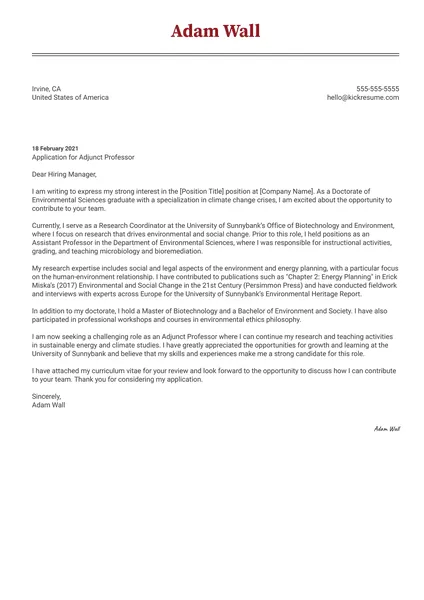
Understanding the Importance of a Professor Cover Letter
A cover letter is far more than just a formality when applying for a professor position; it is your first, and often only, chance to make a strong impression on the search committee. It serves as your introduction, allowing you to showcase your personality, research, teaching experience, and overall fit for the role. In a field where competition is fierce, a well-crafted cover letter can set you apart from other candidates and significantly increase your chances of landing an interview. It’s your opportunity to tell a compelling story about your qualifications and aspirations, demonstrating how you align with the university’s needs and values. A poorly written cover letter, on the other hand, can quickly lead to your application being discarded, regardless of your impressive CV.
What Makes a Cover Letter Stellar
A stellar cover letter is not just a summary of your CV, but rather a persuasive narrative that highlights your key accomplishments and demonstrates your suitability for the specific position. It needs to be clear, concise, and tailored to the particular university and department. It should showcase your enthusiasm for the opportunity and provide a glimpse into your potential contributions to the institution. Furthermore, the best cover letters are meticulously proofread, free of grammatical errors, and demonstrate a professional tone that aligns with academic standards. The letter should be engaging and capture the reader’s attention from the start, providing a clear and concise overview of your skills and how they are relevant.
Tailoring Your Cover Letter to the Specific Position

Generic cover letters are easily spotted and often dismissed. The most effective cover letters are carefully tailored to each specific position. This means thoroughly researching the university, the department, and the specific requirements outlined in the job posting. The goal is to demonstrate a genuine interest in the role and an understanding of the department’s needs, values, and research focus. By personalizing your letter, you show that you’ve taken the time to understand the institution’s priorities and that you’re genuinely interested in contributing to their community.
Researching the University and Department
Before you start writing, delve into the university’s website, the department’s faculty profiles, and any available information about their current initiatives and strategic goals. Look for details about their research focus, teaching methodologies, and departmental culture. This information will allow you to frame your skills and experience in a way that directly aligns with their needs and interests. Understanding the university’s mission and values is essential. Consider the specific courses they teach, the research areas of current faculty, and any recent achievements of the department. Demonstrate this knowledge in your cover letter.
Highlighting Relevant Skills and Experience
Once you understand the position and the department, you can highlight the skills and experiences that are most relevant to the role. Review the job description carefully and identify the key requirements. Then, select specific examples from your background – publications, teaching experience, research grants, etc. – that directly address those requirements. Quantify your achievements whenever possible (e.g., “secured over $500,000 in grant funding”). This will help to clearly demonstrate your abilities and qualifications, showing the search committee that you are a strong fit for the role and department.
Key Sections of a Professor Cover Letter

The Opening Paragraph
The opening paragraph sets the tone for your entire cover letter, so make it count. It needs to capture the reader’s attention and immediately state the position you are applying for. Avoid generic openings like “I am writing to express my interest…” Instead, demonstrate enthusiasm and highlight something specific that attracted you to the role or the institution. Your opening paragraph should include a concise summary of your most compelling qualifications and a statement of your overall career goals. Consider mentioning a specific faculty member or research area that aligns with your interests, demonstrating that you have done your homework.
Crafting a Compelling Introduction
Start with a strong hook that immediately grabs the reader’s interest. You can mention a specific achievement, a shared interest, or a unique skill. For example, “I am writing to express my enthusiastic interest in the Assistant Professor of X position at Y University, driven by my passion for Z research and the opportunity to contribute to your department’s innovative approach to teaching and research.” This opening is specific, highlights key aspects of your profile, and shows your knowledge of the department. Tailor your introduction for each position, making it unique to the specific role and institution.
Stating Your Interest and Qualifications

Clearly state the position you are applying for and briefly mention how your qualifications align with the requirements. This is a crucial step in setting a positive tone and guiding the reader through your letter. Outline your academic background, relevant skills, and major accomplishments in a way that showcases your abilities and demonstrates your expertise. Mention any notable achievements, such as publications, awards, or grants, that make you stand out from other candidates. This section is designed to summarize your core credentials and make a compelling initial case for your suitability for the position.
Highlighting Your Research Experience
Research is a critical component of a professor’s role, and your cover letter needs to showcase your research accomplishments effectively. Provide a brief overview of your research focus, methodologies, and key findings. Emphasize the impact of your research, such as its contribution to the field, any awards or recognition you’ve received, and any collaborations or partnerships you’ve developed. Be sure to explain the significance of your research, making it understandable to a broad audience within the department. Mention your publications in high-impact journals and any ongoing projects or future research plans. Show the reader why your research matters and why it will benefit the university.
Detailing Your Publications and Presentations
Provide a succinct overview of your publications, specifying their titles, journals, and the key findings or contributions. Focus on publications that are most relevant to the position and the department’s research interests. If you have a long publication list, you can highlight the most significant or recent publications. Also, briefly mention your presentations at conferences and seminars, indicating your ability to communicate your research to a wider audience. Always ensure you follow the style guidelines for your field when citing your publications.
Mentioning Grants and Awards

Include details of grants and awards you have received, providing the grant name, funding source, and the amount of funding. Grants and awards are excellent indicators of research productivity and recognition in your field. Mention any fellowships, prizes, or honors that you have received, highlighting their significance and prestige. This section of your cover letter shows your ability to secure funding and build a successful research program. Quantify the impact of your grants, mentioning how the funding has supported your research or enabled specific achievements.
Showcasing Your Teaching Philosophy and Experience
Teaching experience is another key aspect of a professor’s profile. Your cover letter should demonstrate your ability to effectively teach and mentor students. Describe your teaching philosophy, including your approach to curriculum development, classroom management, and student assessment. Explain how you create an engaging and inclusive learning environment, highlighting your teaching experience and methodologies. Providing clear examples of how you implement your teaching philosophy will greatly benefit your cover letter, along with demonstrating your genuine interest in student success. Be prepared to show that you have experience relevant to the courses the department offers.
Demonstrating Teaching Skills and Experience
Detail your teaching experience, including the courses you have taught, the level of students (undergraduate or graduate), and any unique teaching methods or technologies you’ve utilized. Discuss your experience in curriculum development, syllabus design, and assessment strategies. If you have experience in online teaching or other innovative teaching methods, be sure to highlight those skills, particularly if the university emphasizes online learning or hybrid teaching models. Mention any specific feedback you’ve received from students, along with any notable achievements in the classroom.
Mentioning Teaching Awards or Recognitions

Include any teaching awards, commendations, or positive student evaluations you have received. These accolades provide concrete evidence of your teaching effectiveness and commitment to student success. Mention any special teaching certifications or training programs you’ve completed. This information shows that you’re dedicated to improving your teaching skills and providing the best possible learning experience for your students. It serves as a strong indicator of your ability to create an effective and engaging learning environment.
Addressing Your Fit with the Department
This section is about connecting your skills, research, and teaching interests with the specific needs and values of the department. It is essential to demonstrate that you understand the department’s mission, goals, and existing faculty, and that you would be a valuable addition to the team. Explain how your skills and experience align with the department’s areas of expertise and research focus. Show how you can contribute to the department’s research, teaching, and service missions, and highlight any potential collaborations with existing faculty members. Demonstrating a strong fit is crucial for a successful application.
Explaining Your Understanding of the Department’s Needs
Show that you’ve researched the department’s current initiatives, strategic goals, and any challenges it might be facing. Mention any recent publications, grants, or other achievements of the department and how your skills and experience can help build on these successes. Discuss how you can support the department’s research and teaching missions, while also highlighting your awareness of the departmental culture. Demonstrate your understanding of what the department is seeking in a new faculty member, and emphasize your capacity to meet these needs.
Connecting Your Research and Teaching Interests

Explain how your research interests align with the department’s research areas and any potential for collaboration with existing faculty. Mention any opportunities to contribute to interdisciplinary research projects or centers. Discuss how your teaching interests and approach align with the courses offered by the department and how you can contribute to the curriculum. Providing specific examples of how you can contribute to both research and teaching demonstrates that you’re a well-rounded candidate who can make a meaningful impact.
Writing the Closing Paragraph
The closing paragraph is your final opportunity to leave a lasting impression. Keep it concise and enthusiastic, reiterating your interest in the position and the university. Thank the search committee for their time and consideration, and express your eagerness to discuss your qualifications further. Ensure the tone is professional, confident, and reflects your genuine interest in the opportunity. Avoid generic closings and opt for a strong, memorable statement that reinforces your key selling points.
Reiterating Your Interest and Enthusiasm
Reiterate your interest in the position, emphasizing your enthusiasm for the opportunity and the university. Show your understanding of the role, department, and institution. Summarize why you are a strong fit for the position. Your goal is to end the letter on a high note, reminding the reader of your key qualifications and enthusiasm. Briefly restate your career goals and what you hope to achieve in this role, leaving a positive impression.
Providing Contact Information and Call to Action
Provide your contact information, including your email address and phone number, so the search committee can easily reach you. Include a clear call to action, such as stating your availability for an interview or your willingness to provide any additional information. Thank the search committee for their time and consideration. This concluding section should be professional, easy to read, and leave the search committee with a clear understanding of how to contact you and move forward.
Formatting and Proofreading Your Cover Letter
Your cover letter’s formatting and proofreading are just as important as its content. A well-formatted and error-free cover letter demonstrates professionalism and attention to detail, which are crucial qualities for a professor. Poor formatting and grammatical errors can make even the most qualified candidates appear unprofessional and may lead to their application being quickly rejected. Taking the time to present your cover letter in a clean, easy-to-read format and carefully proofreading it will significantly increase your chances of success.
Formatting Guidelines
Use a professional font, such as Times New Roman, Arial, or Calibri, with a font size between 10 and 12 points. Maintain consistent formatting throughout the letter, including margins, spacing, and headings. Use single-spaced lines within paragraphs and double-spaced lines between paragraphs. Left-align your text and avoid justification. Include your contact information at the top of the letter, as well as the date and the recipient’s information (if available). Ensure that your letter is well-organized, easy to read, and visually appealing. Make sure the formatting is consistent with professional academic standards.
Proofreading for Errors
Carefully proofread your cover letter for any spelling, grammatical, or punctuation errors. Even minor errors can undermine your credibility. Use a grammar and spell-checking tool to catch obvious mistakes, but don’t rely on these tools alone. Read your cover letter multiple times and consider having a trusted colleague, mentor, or friend review it. They can often catch errors you might miss. Pay close attention to the accuracy of all names, titles, and other details. Proofreading is essential for making a positive impression.
Seeking Feedback
Ask trusted colleagues, mentors, or career advisors to review your cover letter and provide feedback. They can offer valuable insights and suggestions for improvement. Ask for feedback on the clarity, conciseness, and overall effectiveness of your letter. Get feedback on whether the letter clearly conveys your qualifications and demonstrates your fit for the position. Ask for feedback on the letter’s formatting, tone, and overall professionalism. Review all of their feedback and revise your cover letter accordingly. Getting outside perspectives can greatly improve your chances of success.