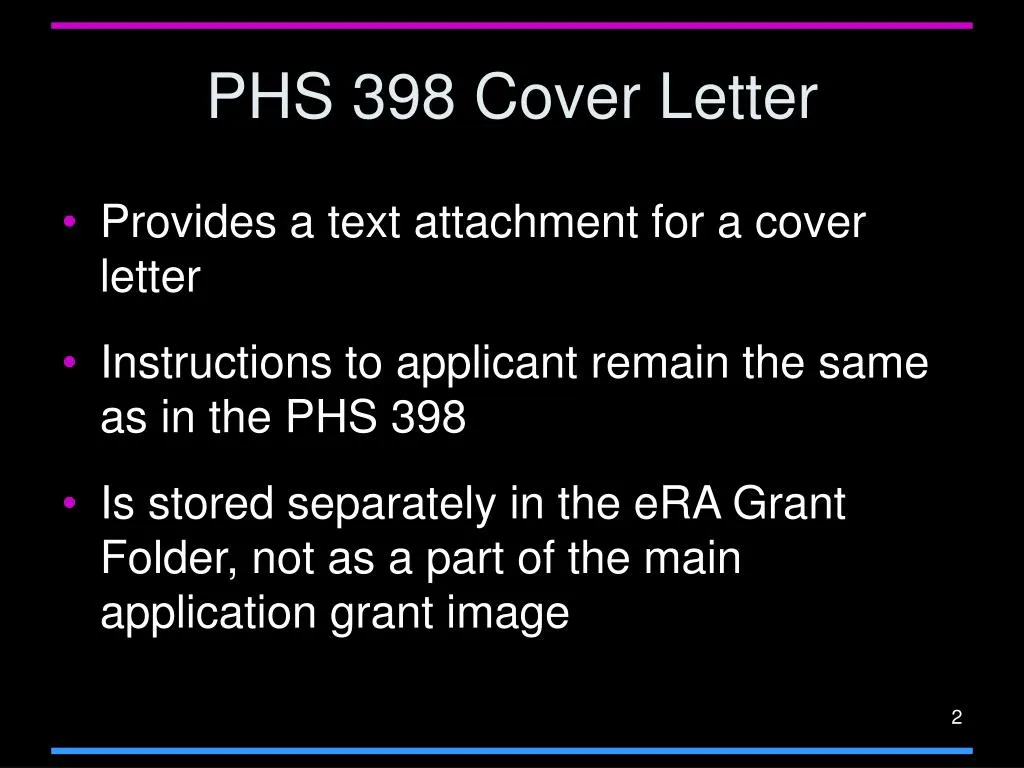
Understanding the PHs 398 Cover Letter
The PHs 398 cover letter is a critical component of your grant application to the National Institutes of Health (NIH). Often overlooked, it serves as the first impression you make on the reviewers. It provides context for your application and allows you to summarize your project, highlight your qualifications, and express your enthusiasm for the proposed research. A well-crafted cover letter can significantly influence the reviewers’ initial perception of your application, setting the stage for a positive evaluation. Therefore, understanding its purpose and structure is crucial for a successful grant submission. This letter is your opportunity to succinctly communicate the essence of your research proposal and persuade the reviewers of its significance.
The Purpose of a Cover Letter
The primary purpose of the PHs 398 cover letter is to introduce your application and provide a concise overview of your research proposal. It allows you to frame your project within the context of the funding opportunity and to articulate its potential impact. The cover letter helps reviewers understand the scope and significance of your work before they delve into the detailed proposal. It also offers an opportunity to address any specific requirements or instructions outlined in the funding announcement. In addition, a well-written cover letter can help you build a strong rapport with the reviewers, demonstrating your professionalism and attention to detail. The cover letter is not just a formality; it’s a strategic tool to enhance your application’s prospects.
Key Components of the PHs 398 Cover Letter

A strong PHs 398 cover letter includes several essential components that collectively convey the key aspects of your application. These components should be presented clearly and concisely, allowing the reviewers to quickly grasp the essence of your proposal. These sections should be organized logically, ensuring a smooth flow of information. The key sections include applicant information, project title and summary, statement of significance and impact, and any specific requirements or instructions from the funding opportunity announcement. Each component contributes to the overall effectiveness of the cover letter and, consequently, your grant application.
Applicant Information
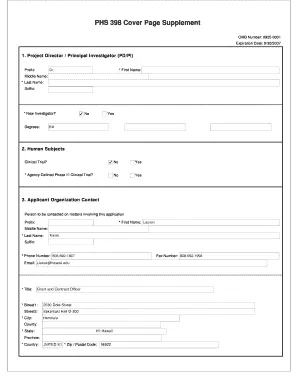
Begin your cover letter by clearly stating your name, academic degrees, institutional affiliation, and contact information. If you are the principal investigator (PI), make sure to specify that in the letter. If there are co-investigators or collaborators, include their names and affiliations as well. This section should be concise and professional, ensuring the reviewers can easily identify the key personnel involved in the project. Providing accurate and up-to-date information here is crucial for communication and verification purposes. This also helps the reviewers understand the team behind the project.
Project Title and Summary
Clearly state the full project title, as it appears in your application. Follow this with a brief, compelling summary of your research project. This summary should be no more than a few sentences and should encapsulate the main goals, methods, and expected outcomes of your research. The summary should be written in a way that is easy for a broad audience to understand, even if they are not specialists in your field. The goal is to give the reviewers a quick overview of your project. Make sure this aligns with the abstract of your research proposal, as this will allow the reviewers to be able to quickly understand the context of your study.
Significance and Impact
A crucial part of your cover letter is a brief statement that highlights the significance and potential impact of your research. Explain why your project is important, what problem it addresses, and how it could advance knowledge or improve health outcomes. This section should be concise, compelling, and designed to capture the reviewers’ attention. Briefly outline the innovation of your research and why it should be funded. This is your chance to convince the reviewers of the value of your work. Explain what specific scientific advances or societal benefits might come from your research and what potential impact it could bring.
Why the Cover Letter Matters
The cover letter is more than just a formality; it sets the tone for your entire application. It provides the reviewers with their first impression of your project and your capabilities. A well-written cover letter demonstrates your professionalism, attention to detail, and commitment to your research. It allows you to frame your project within the context of the funding opportunity and to address any specific requirements or instructions. It’s an opportunity to highlight the significance of your work and to express your enthusiasm. Failing to craft a compelling cover letter can undermine an otherwise strong application, while a well-crafted one can significantly enhance its prospects. The cover letter helps to humanize your application.
Creating a Compelling Opening
Your opening paragraph is crucial. It should immediately grab the reviewers’ attention and clearly state the purpose of the letter. Start by referencing the specific funding opportunity and providing a brief overview of your project. Express your enthusiasm for the opportunity and your confidence in the project’s potential. Avoid generic phrases. Instead, use a strong, confident tone. Tailor the opening to the specific funding announcement and highlight what makes your project unique. Your opening should be concise, yet persuasive, encouraging the reviewers to read the entire application. The introduction is your first chance to create a positive impression.
Highlighting Your Qualifications
In the cover letter, briefly mention your key qualifications and relevant experience. Focus on the expertise and skills that make you well-suited to lead this research. Highlight any previous successes or achievements relevant to the project. Mention specific publications, grants, or other accomplishments that demonstrate your capacity to carry out the proposed work. You don’t need to list everything, but rather emphasize the qualifications that are most relevant to the specific aims of the project and to the requirements of the funding opportunity. This section helps to build credibility and assures the reviewers that you and your team are capable of successful project completion. Ensure your skills align with your proposed project.
Matching Skills to the Project
Carefully match your skills and experience to the specific requirements of the proposed project. Identify key skills needed for the project and show how your expertise aligns with those requirements. Refer to the specific aims of your research proposal and highlight how your skills and experience will enable you to achieve those aims. Don’t just list skills; provide concrete examples of how you have successfully applied those skills in the past. By clearly demonstrating the alignment between your qualifications and the project’s needs, you reassure the reviewers that you are well-prepared to undertake and succeed in the research. This targeted approach shows you understand the project needs.
Addressing the Review Criteria
The PHs 398 cover letter offers a strategic opportunity to explicitly address the review criteria outlined in the funding opportunity announcement. Though you won’t be able to address every point in detail, you should make sure you touch on the key criteria in the application. Briefly highlight how your project aligns with the funding agency’s priorities, mission, and strategic goals. Mention the significance, innovation, and approach. You can include a brief statement acknowledging your awareness of the evaluation criteria and how your research addresses them. This demonstrates to the reviewers that you have carefully considered the expectations and have tailored your proposal to meet them. This is your chance to explicitly align with what the reviewers are looking for.
Following NIH Guidelines
Always adhere to the specific guidelines provided by the National Institutes of Health (NIH) for the PHs 398 application. NIH has specific requirements for the format, content, and submission of grant applications. These guidelines are available on the NIH website and should be thoroughly reviewed before writing your cover letter. Pay close attention to the required elements, formatting instructions, and page limits. Following these guidelines demonstrates your professionalism and your respect for the review process. Failure to adhere to these instructions can lead to your application being rejected without review. The NIH guidelines are key.
Formatting Your Cover Letter
Pay close attention to the formatting of your PHs 398 cover letter. Use a professional, easy-to-read font such as Times New Roman or Arial, with a font size between 11 and 12 points. Ensure consistent spacing, typically single-spaced for the body of the letter. Use clear headings and subheadings to organize your content, making it easy for reviewers to scan and understand the key information. Use proper margins and ensure that your letter is well-structured and visually appealing. Correct formatting makes your letter more reader-friendly and easier to understand. Remember that a well-formatted letter shows your attention to detail.
Font and Spacing
Select a professional font, such as Times New Roman, Arial, or Calibri, and maintain a font size between 11 and 12 points. This is important to make the letter accessible to read for the reviewers. Use single-spacing for the body of the letter, with a blank line between paragraphs. Proper spacing and font selection enhance readability and make your letter more professional-looking. The goal is to create a clean, uncluttered appearance. Avoid using unusual or overly decorative fonts, as they can distract the reader. Clarity and legibility are key in scientific writing. The choice of font and spacing significantly impacts the letter’s first impression.
Page Limits
Adhere strictly to the page limits specified in the funding opportunity announcement. Cover letters are usually limited to one page. Use concise language and avoid unnecessary jargon. Your cover letter should be a summary; ensure you do not include unnecessary details. Make every word count. If the application allows for a longer cover letter, use the space wisely to highlight the most critical information. Exceeding the page limit is a common mistake that may result in your application being rejected without review. Respect the word limit; it is there for a reason.
Avoiding Common Mistakes
Several common mistakes can undermine the effectiveness of your PHs 398 cover letter. These mistakes can range from simple errors in grammar to more significant issues, such as a lack of specificity. To improve your application, it is essential to understand and avoid these common pitfalls. Being aware of these frequent errors can help you create a more impactful cover letter. Avoiding these mistakes can significantly improve your application’s chances of success. Ensure that your cover letter is as polished and effective as possible.
Typos and Grammatical Errors
Typos and grammatical errors can damage your credibility and make your cover letter appear unprofessional. Thoroughly proofread your cover letter before submission. Pay close attention to grammar, spelling, punctuation, and syntax. Ask colleagues or mentors to review your letter for errors. Even minor errors can give the impression of carelessness. Make sure your writing is clear and concise. Errors can make your letter hard to read. Proofreading can improve clarity and your professional image. Ensure your cover letter is free of these errors.
Lack of Specificity

Avoid generalities. Tailor your cover letter to the specific funding opportunity and to your research project. Use specific examples and evidence to support your claims. Show, don’t just tell. Generic cover letters that could apply to any grant application won’t make a strong impression. Avoid vague language and show reviewers that you’ve put in the work to tailor your application to their specific requirements. Specificity is the key to creating a compelling cover letter. The more specific your information, the better. The more information, the more the reviewers can understand the value of your research proposal.
Overlooking Instructions
Failing to follow the instructions in the funding opportunity announcement is a critical mistake. Pay close attention to all requirements, including formatting, content, and submission procedures. Make sure to review all details, requirements, and guidelines provided. Many applications are rejected because they fail to follow instructions. Following instructions demonstrates your professionalism and attention to detail. Make sure you understand and adhere to all of the guidelines before submitting your application. A successful application is one that adheres to the provided instructions.
Final Review and Submission
Before submitting your PHs 398 cover letter, conduct a final review to ensure its quality and accuracy. This final step can greatly improve your application. The final review process includes proofreading, editing, and making sure you follow the correct submission process. This process reduces errors and improves your chances of acceptance. This review is important to make sure your cover letter is the best it can be.
Proofreading and Editing
Proofread your cover letter multiple times. Check for typos, grammatical errors, and inconsistencies. Edit your writing to ensure clarity, conciseness, and coherence. Ask colleagues or mentors to review your letter and provide feedback. They can provide a fresh perspective and catch errors you may have missed. Having another set of eyes can help improve the quality of your letter significantly. It’s important to get feedback on the letter. Multiple reviews are beneficial before submission.
Submission Process
Carefully follow the submission instructions outlined in the funding opportunity announcement. Ensure that you submit your cover letter and other application materials by the deadline. Double-check all submission requirements, including file formats and attachments. Make sure you’ve filled out all necessary forms. Submitting on time and following the correct process is vital to your application. Missing the deadline, or failing to follow instructions, can lead to rejection. Carefully review and follow all submission guidelines.