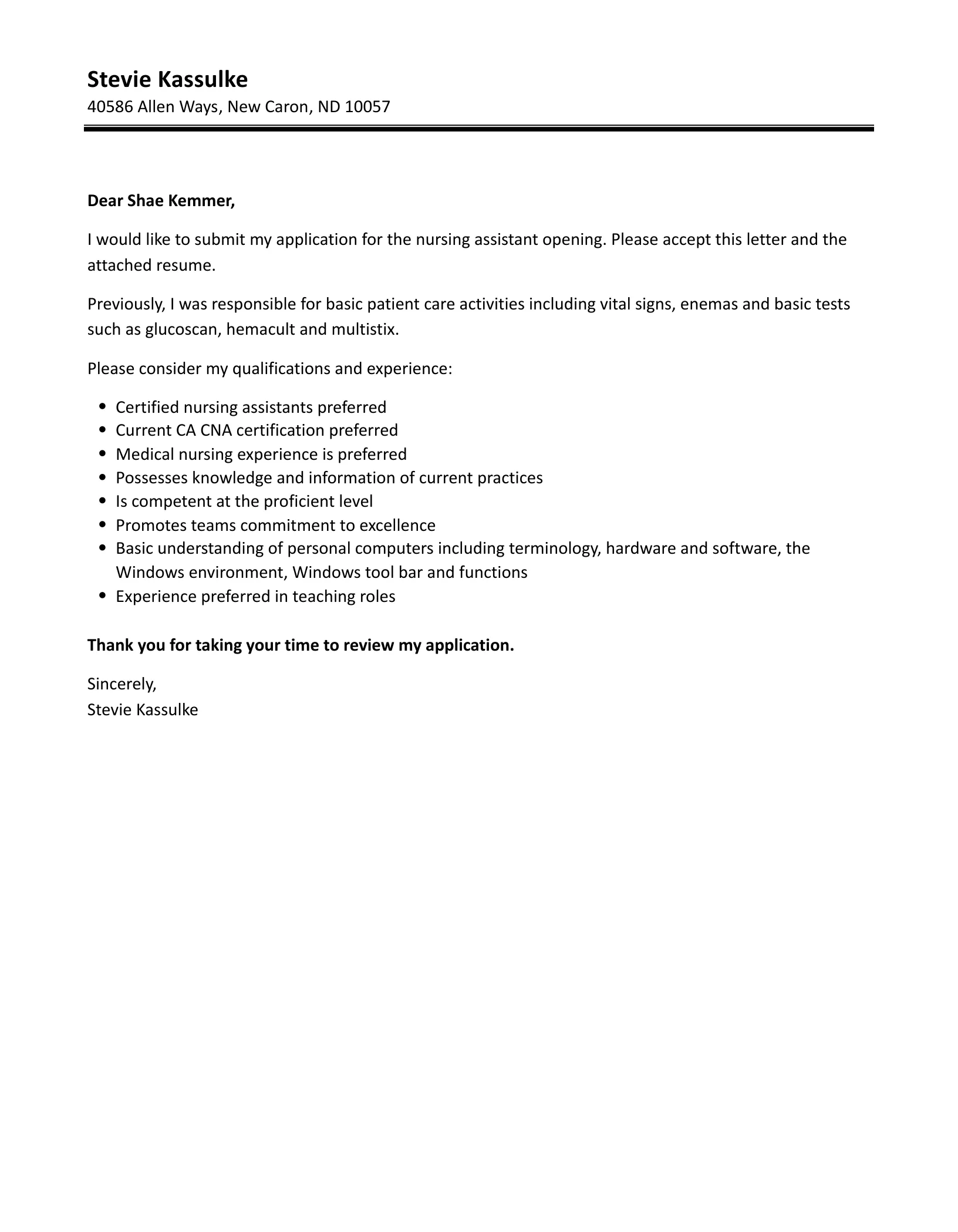
Understanding the Nursing Aide Role
A Nursing Aide, also known as a Certified Nursing Assistant (CNA), plays a crucial role in providing direct patient care under the supervision of nurses. This is a demanding but rewarding profession, often serving as the first point of contact for patients, offering physical and emotional support. For those seeking to enter the healthcare field, the role provides valuable experience and the chance to make a real difference in people’s lives. Understanding the core responsibilities and necessary skills is the initial step in a successful job application, especially when you are writing a cover letter without prior experience.
Key Responsibilities of a Nursing Aide
Nursing aides perform a variety of tasks to assist patients with their daily living activities. These responsibilities include helping patients with bathing, dressing, and eating. They also monitor vital signs, such as blood pressure and temperature, and report any changes to the nursing staff. Furthermore, CNAs provide emotional support to patients and their families, creating a comforting and supportive environment. Other responsibilities might involve assisting with mobility, transferring patients, and maintaining a clean and safe environment. The scope of work varies depending on the healthcare setting, but the core duties remain consistent.
Skills Needed to Excel as a Nursing Aide

To be a successful nursing aide, several key skills are essential. Strong communication skills are vital for interacting with patients, families, and other healthcare professionals. Empathy and compassion are crucial for providing emotional support and building trusting relationships. Physical stamina is necessary, as the job involves standing for long periods and assisting patients with movement. Attention to detail is essential for accurately monitoring vital signs and documenting patient information. Time management and organizational skills are also important for managing multiple tasks and prioritizing patient needs. Furthermore, the ability to work as part of a team is crucial for providing comprehensive patient care.
Crafting Your Cover Letter
A well-written cover letter is your opportunity to make a strong first impression and highlight your suitability for the nursing aide position. Even without direct experience, you can emphasize your relevant skills, enthusiasm, and willingness to learn. The cover letter should demonstrate your understanding of the role and your genuine interest in providing compassionate care. It should be tailored to each specific job application, showcasing how your qualifications align with the employer’s requirements. Carefully follow the guidelines to ensure your cover letter stands out and secures you an interview.
Header and Contact Information
The header of your cover letter should include your full name, address, phone number, and email address. This information should be clearly displayed at the top of the document. Below your contact information, include the date and the hiring manager’s name (if known), title, and the healthcare facility’s address. Use a professional font and formatting to ensure readability. Accuracy is crucial; double-check all details to prevent any errors that could hinder the application process. A well-formatted header shows attention to detail and professionalism.
Greeting the Hiring Manager

Start your cover letter with a professional greeting, such as “Dear Mr./Ms./Mx. [Last Name],” if you know the hiring manager’s name. If the name is unavailable, use a general greeting like “Dear Hiring Manager.” Avoid generic greetings such as “To Whom It May Concern.” Addressing the letter to a specific person demonstrates that you have taken the time to research the position and shows a personal touch. This can significantly increase your chances of grabbing the hiring manager’s attention.
Opening Paragraph
The opening paragraph should immediately capture the reader’s attention. State the position you are applying for and how you found the job posting. Express your enthusiasm for the role and the healthcare facility. Briefly mention your key qualifications or relevant skills that align with the job requirements. This section sets the tone for the rest of your letter and encourages the hiring manager to continue reading. For example: “I am writing to express my keen interest in the Nursing Aide position at [Healthcare Facility Name], as advertised on [Platform]. I am a highly motivated individual eager to contribute to a supportive and compassionate care environment.”
Highlighting Transferable Skills
Even without direct experience, you possess transferable skills that are valuable in a nursing aide role. These include communication, empathy, patience, problem-solving, and time management. Provide specific examples of how you’ve demonstrated these skills in previous roles, volunteer work, or personal experiences. For example, if you have volunteered at a senior center, describe how you assisted residents and communicated effectively. Focus on skills that align with the job requirements mentioned in the job description.
Addressing Lack of Experience

It’s essential to address your lack of direct experience honestly but positively. Frame it as an opportunity to learn and grow. Mention any relevant coursework, certifications, or training you have completed. Emphasize your eagerness to learn the skills needed and your commitment to providing excellent patient care. Express your understanding of the role and your desire to become a valuable member of the healthcare team. Your dedication and enthusiasm can often outweigh the need for experience.
Showcasing Relevant Qualities
Highlight personal qualities that are beneficial for a nursing aide. These qualities include empathy, compassion, patience, and a strong work ethic. Provide examples that demonstrate these traits. For instance, describe a time when you provided support to someone in need or went above and beyond to help someone. These examples showcase your character and dedication to helping others. Showing these qualities makes a strong impression and highlights your potential.
Expressing Enthusiasm and Motivation
Throughout your cover letter, convey your genuine enthusiasm for the nursing aide role and your interest in working at the specific healthcare facility. Explain why you are drawn to this profession and what motivates you to provide care to others. Research the facility to understand its mission and values and mention how they align with your own. Show that you’re not just looking for a job but are committed to making a positive difference in the lives of patients. Your enthusiasm will show through, making you a more attractive candidate.
Call to Action and Closing

In your closing paragraph, reiterate your interest in the position and thank the hiring manager for their time and consideration. Include a call to action by expressing your availability for an interview. Provide your contact information again and express your eagerness to discuss your qualifications further. End with a professional closing, such as “Sincerely” or “Respectfully,” followed by your full name. This final paragraph reinforces your professionalism and desire for the position.
Formatting and Proofreading
Proper formatting and proofreading are crucial for creating a polished and professional cover letter. These steps ensure your letter is easy to read and free of errors. Taking the time to format your document and carefully check for any mistakes showcases your attention to detail and professionalism. This can significantly influence the hiring manager’s impression.
Formatting Guidelines
Use a professional font, such as Times New Roman, Arial, or Calibri, in a size between 10 and 12 points. Maintain consistent formatting throughout the document, including consistent spacing and margins. Use clear headings and subheadings to organize the content. Ensure that your paragraphs are well-structured and easy to read. Use bullet points to highlight your skills or accomplishments. Proofread all of these elements carefully. Properly formatted cover letters are easier to read and more likely to leave a positive impression.
Proofreading Tips

Before submitting your cover letter, carefully proofread it for any grammatical errors, spelling mistakes, or punctuation errors. Read the letter aloud to catch any awkward phrasing. Use spell-check and grammar-check tools, but also manually review the document, as these tools may not catch all errors. Ask a friend or family member to review your cover letter for any mistakes. A well-proofread cover letter demonstrates your attention to detail and professionalism, increasing your chances of getting the job.
Cover Letter Examples and Templates
Reviewing cover letter examples and templates can provide you with a starting point and help you understand how to structure your letter. These resources offer different formats and phrases that you can adapt to fit your unique situation. There are many examples available online tailored specifically for nursing aide positions and candidates with limited experience. Using a template can ensure that you include all necessary information and present yourself in the best possible light.
Where to Find Cover Letter Templates
Many websites offer free cover letter templates that you can customize. These sites often provide templates that are specifically designed for various professions, including healthcare roles. Explore career websites, job boards, and online writing resources for examples and templates. Modify the template to include your own personal information and highlight the skills and experiences you want to share. Some websites provide suggestions for language to use. Using these tools can assist in quickly creating a professional cover letter.