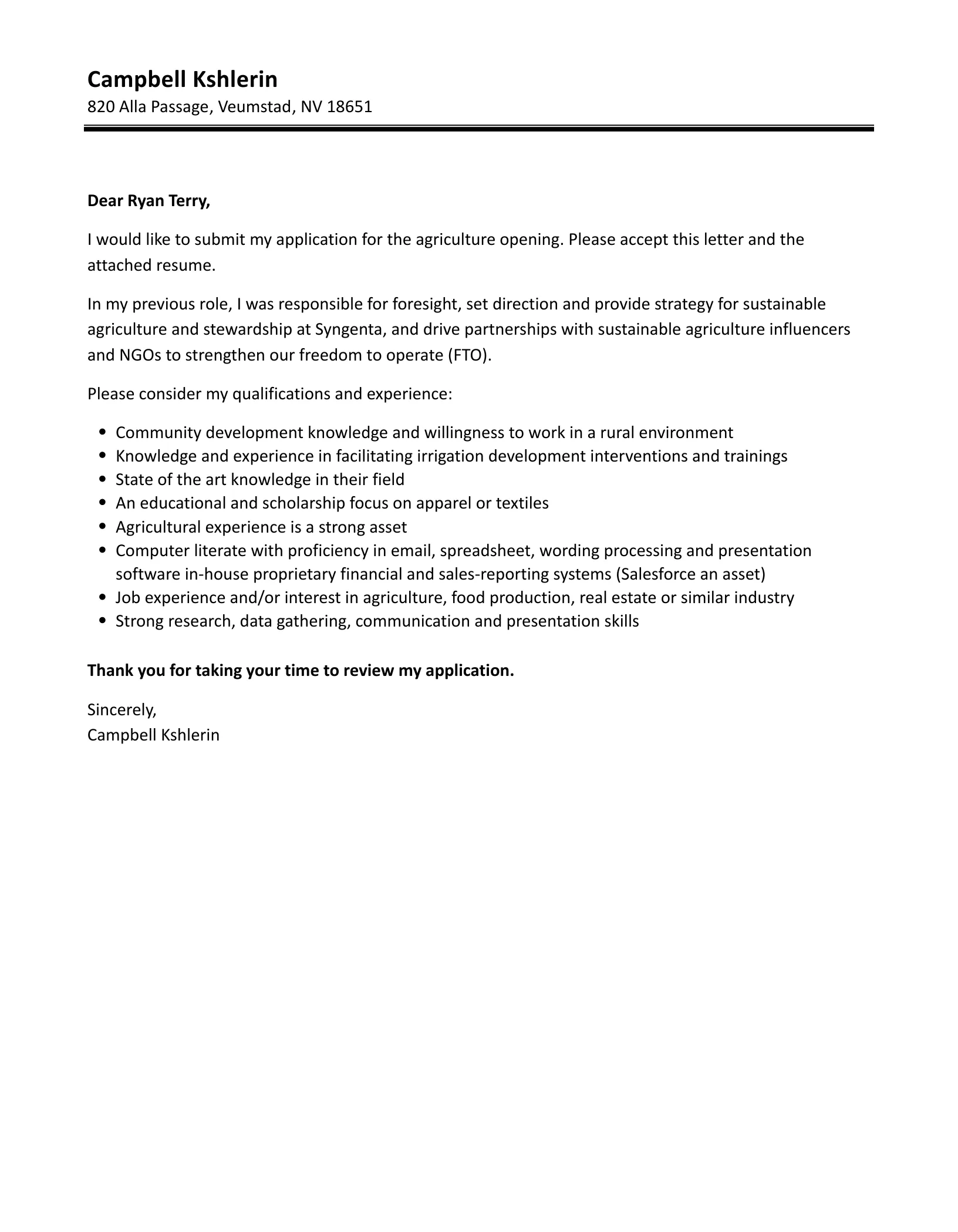
Understanding the Importance of a Farming Cover Letter
A farming cover letter is more than just a formality; it’s your first chance to make a strong impression on a potential employer in the agricultural sector. Unlike a resume, which simply lists your qualifications, a cover letter allows you to tell your story, express your passion for farming, and highlight why you’re the perfect fit for the role. It provides context to your experience and skills, allowing you to showcase your personality and enthusiasm. A well-crafted cover letter can significantly increase your chances of landing an interview and ultimately securing your dream job in the farming industry. In today’s competitive job market, a compelling cover letter is essential for standing out from other applicants.
What to Include in Your Farming Cover Letter
A successful farming cover letter includes specific information to convince the hiring manager. It should be tailored to each application and clearly state your interest in the position and the farm. Ensure that you address the specific requirements outlined in the job description and provide examples that demonstrate your skills and experience. This section explores the critical components of a standout farming cover letter, ensuring you make a positive impression and effectively communicate your value to the employer. Remember to maintain a professional tone while still allowing your personality and passion for farming to shine through.
Contact Information and Salutation
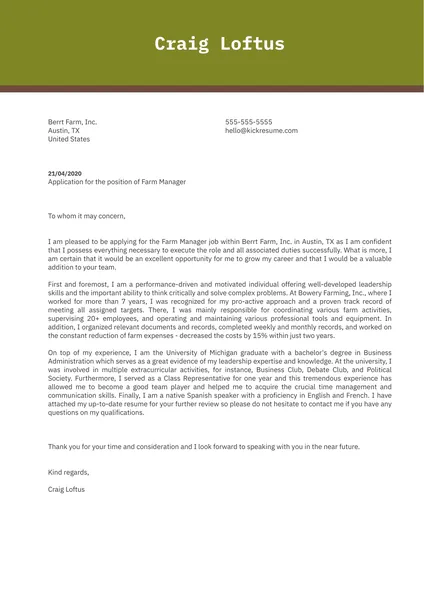
Begin with your contact information at the top: your full name, address, phone number, and professional email address. This ensures the employer can easily reach you. Follow this with the date and the hiring manager’s name, if available. If the name is unknown, use a professional salutation like “Dear Hiring Manager” or “Dear [Farm Name] Team.” This shows you’ve taken the time to address your letter correctly, demonstrating attention to detail. Always double-check the spelling of the recipient’s name and the farm’s name to avoid any errors. A professional and well-formatted opening sets a positive tone from the start.
Highlighting Your Farming Experience
This is the core of your cover letter, where you highlight your farming experience. Focus on the most relevant roles and responsibilities, and always tailor the description to match the job description. Include details about the type of farming you have experience in, such as crop farming, livestock management, or a specific agricultural practice. Provide specific examples of tasks you’ve performed, such as planting, harvesting, operating farm machinery, or caring for livestock. Emphasize any unique skills or experiences that set you apart from other candidates. The goal is to demonstrate that your background aligns with the employer’s needs and expectations.
Quantify Your Accomplishments
Instead of simply listing your duties, quantify your accomplishments. Use numbers and data to showcase your achievements. For example, instead of saying “Managed crop irrigation,” state “Improved crop yield by 15% through effective irrigation management.” Or, instead of “Supervised a team,” say “Supervised a team of five farmhands, ensuring efficient and timely completion of all tasks.” Quantifiable achievements provide concrete evidence of your skills and abilities, making your application more compelling. Highlight any instances where you saved costs, increased productivity, or improved efficiency. Numbers speak volumes, making your achievements more impactful and memorable.
Showcasing Relevant Skills

Beyond experience, demonstrate your skills. Break down your skills into technical and soft skills to provide a comprehensive view of your abilities. Highlight skills that match the job requirements, which often include machinery operation, crop management, livestock care, and familiarity with agricultural technology. Showcase a combination of hard and soft skills. This ensures the hiring manager understands not only your technical capabilities but also your ability to work as part of a team and handle diverse challenges. Providing evidence of your skills is the key to demonstrating your value and fit for the role.
Technical Skills
Technical skills are specific to farming and include hands-on abilities and knowledge. List your proficiency in operating and maintaining farm machinery, such as tractors, combines, and sprayers. Detail your knowledge of crop management techniques, including planting, fertilizing, and pest control. Include experience with livestock care, such as feeding, breeding, and healthcare. Mention any experience with agricultural technology, such as GPS systems, precision agriculture tools, or farm management software. Tailor your technical skills to the specific requirements of the job, emphasizing those most relevant to the position. Technical skills demonstrate your capacity to perform the practical duties of the farming job.
Soft Skills
Soft skills are crucial in any work environment, especially in farming, where teamwork and problem-solving are constant. Highlight your ability to work as part of a team, communicate effectively, and adapt to changing conditions. Mention your problem-solving skills, such as the ability to troubleshoot equipment malfunctions or address unexpected challenges. Show that you are reliable, detail-oriented, and possess good time-management skills. Emphasize your ability to work independently and take initiative. Soft skills complement your technical abilities and help you demonstrate your value as a well-rounded and adaptable candidate, making you a more attractive applicant.
Expressing Your Passion for Farming

Showcasing your passion for farming can differentiate your cover letter. Clearly state your interest in the agricultural sector and explain why you are drawn to this profession. Include details about your love for the land, the satisfaction of working outdoors, and your commitment to sustainable practices. Discuss any personal projects or experiences that reflect your passion. Express your enthusiasm for the specific farm and role you are applying for. Demonstrating a genuine passion for farming makes you more relatable and helps the employer understand your motivation. Show your passion; it makes your application more genuine and convincing.
Tailoring Your Cover Letter to the Specific Job
Tailoring your cover letter to each job application is critical. Generic cover letters are often overlooked. Customization shows that you’ve taken the time to understand the role and the farm. Tailoring includes researching the farm, using the job description as a guide, and highlighting the skills and experiences most relevant to the specific position. This level of personalization shows that you are genuinely interested and that you have the knowledge and abilities that the farm is looking for. Addressing specific aspects of the job description shows you understand and are ready to meet the requirements of the position.
Researching the Farm and the Role
Before you write your cover letter, research the farm and the role you are applying for. Visit the farm’s website and social media pages to learn about their operations, values, and any special initiatives they have. Understand their farming practices, the crops or livestock they manage, and their goals. Review the job description carefully, noting the required skills and experiences. Identify specific areas where your experience and skills align with the employer’s needs. This research allows you to tailor your cover letter to the farm’s specific requirements and expectations. Understanding the farm is critical for demonstrating your interest and ability to fit in.
Customizing Your Letter

Customize your cover letter based on your research. Refer to specific details about the farm, and explain why you are interested in working there. Highlight how your skills and experience directly meet the needs outlined in the job description. Use keywords from the job posting, but avoid sounding robotic. Customize each letter by addressing the specific farm’s values, mission, and objectives. Emphasize your enthusiasm to work on the particular farm. By customizing your letter, you showcase your knowledge and genuine interest in working for that organization. This personal approach increases your chances of making a positive impression and securing an interview.
Formatting and Proofreading Your Farming Cover Letter
The format and presentation of your farming cover letter significantly impact its effectiveness. Formatting creates a clear and professional appearance. Proofreading ensures that your letter is free of errors, which are critical for making a good first impression. This section explores best practices for formatting and proofreading your cover letter, highlighting the importance of attention to detail. An easy-to-read, error-free cover letter showcases your professionalism and seriousness about the job.
Formatting Best Practices
Choose a clean, easy-to-read font, such as Times New Roman, Arial, or Calibri, and use a font size between 10 and 12 points. Use single-spacing within paragraphs and double-spacing between paragraphs. Left-align your text and use a standard margin of one inch on all sides. Keep your cover letter concise, ideally within one page. Use headings and bullet points to organize information and make it easy to scan. Make sure that all the formatting is consistent throughout the document, ensuring a professional appearance. A well-formatted cover letter looks tidy and shows your attention to detail, which leaves a good impression.
Proofreading for Errors

Proofread your cover letter carefully for grammatical errors, spelling mistakes, and typos. Use a spell checker and grammar checker, but don’t rely solely on these tools. Read the letter aloud to catch any awkward phrasing or mistakes. Ask a friend or family member to review your letter. Ensure all names, titles, and farm information are correct. Errors can undermine your credibility and make you appear careless. A polished, error-free cover letter shows your attention to detail and commitment to producing high-quality work. Take your time to thoroughly review the letter, and make sure it presents you in the best possible light.
Closing Your Cover Letter
Close your cover letter with a professional and enthusiastic closing. Thank the employer for their time and consideration. Reiterate your interest in the position and express your eagerness to learn more about the opportunity. Include a call to action, such as “I look forward to hearing from you” or “I am available for an interview at your earliest convenience.” Provide your contact information again, including your phone number and email address. End with a professional closing, such as “Sincerely” or “Best regards,” followed by your full name. A strong closing leaves a lasting positive impression and encourages the employer to contact you.