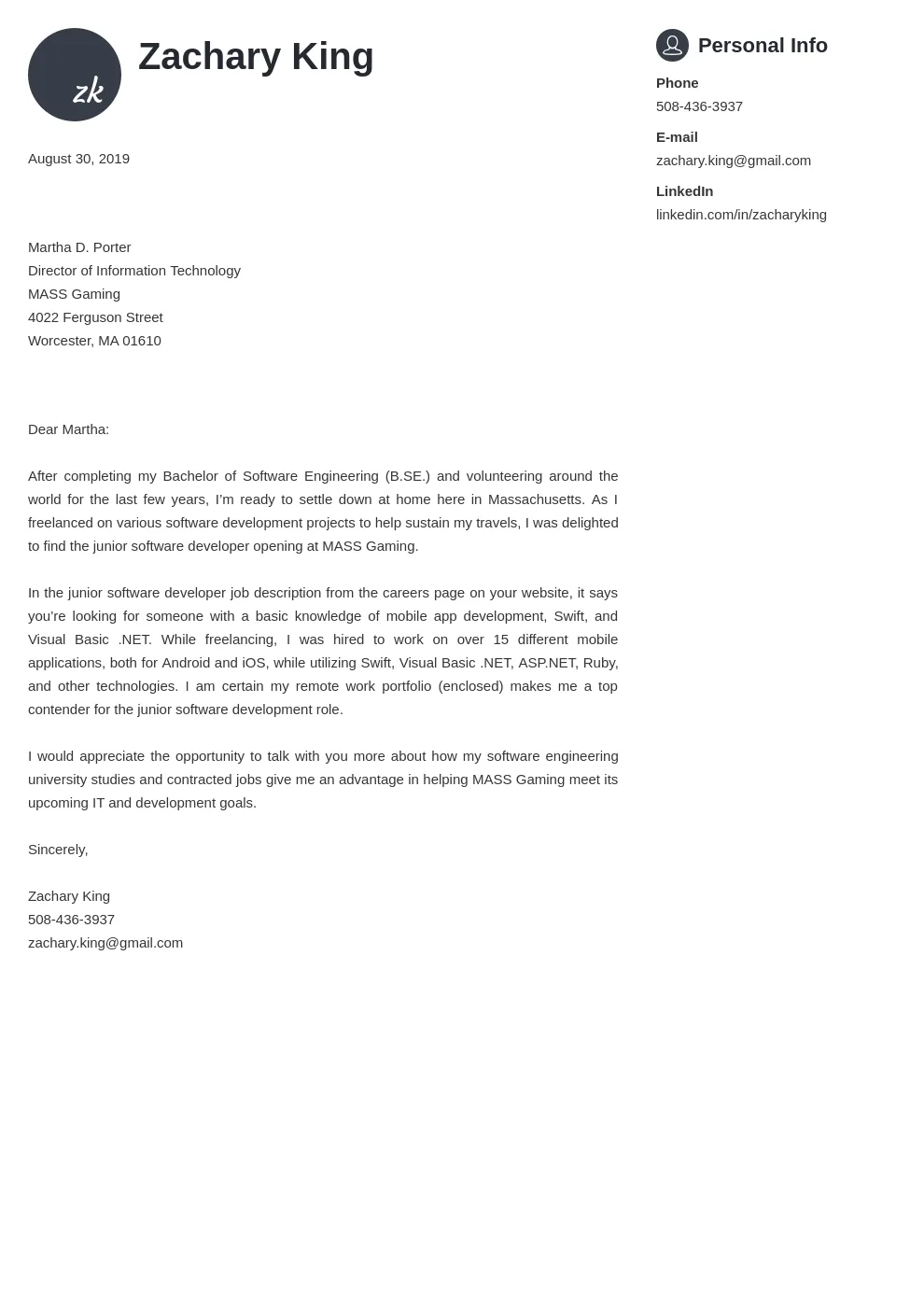
Cover Letter Engineer Overview
Crafting a compelling cover letter is a crucial step in the job application process for software engineers. While your resume provides a detailed overview of your skills and experience, the cover letter offers an opportunity to showcase your personality, enthusiasm, and suitability for a specific role. This guide provides actionable tips and tricks to help you create a standout cover letter that captures the attention of hiring managers and increases your chances of landing an interview. A well-written cover letter demonstrates your communication skills, attention to detail, and genuine interest in the position, setting you apart from other applicants. Remember, a cover letter is more than just a formality; it’s your first impression, and it can make or break your application.
Why Cover Letters Matter for Software Engineers
In the competitive field of software engineering, where hundreds of applications are received for each open position, a cover letter serves as your personalized introduction. It allows you to elaborate on your resume, providing context to your experience and explaining how your skills align with the specific requirements of the role and the company’s culture. A cover letter shows you have taken the time to understand the job description and are truly interested in the opportunity. It offers a platform to demonstrate your passion for technology, your problem-solving abilities, and your understanding of the company’s mission. Moreover, a well-structured cover letter can highlight soft skills like communication, teamwork, and leadership, which are essential for success in any software engineering role. A cover letter gives you a chance to tell a story that brings your resume to life.
Key Components of a Software Engineer Cover Letter

A successful software engineer cover letter is composed of several essential components that work together to create a strong impression. These components include a clear and professional header with your contact information, a personalized greeting addressing the hiring manager by name if possible, and an engaging opening paragraph that immediately grabs their attention. The body paragraphs should highlight your relevant skills, experience, and achievements, while also tailoring your letter to the specific job requirements. The closing should express your enthusiasm for the opportunity and include a clear call to action. Pay meticulous attention to formatting, ensuring readability and a professional appearance. A well-structured cover letter, demonstrating attention to detail, will increase your chances of getting an interview.
Header and Contact Information
Your header is the first element the hiring manager will see, so it’s crucial to make a professional impression. Include your full name, phone number, email address, and LinkedIn profile URL. Make sure your contact information is up-to-date and easily accessible. Consider using a clean, simple font and a consistent format that matches your resume. This ensures that the header is both visually appealing and provides all the necessary information for the hiring manager to contact you. Accuracy in this section is paramount, as any errors could lead to missed opportunities. Double-check your information and keep this section concise and professional. Proper formatting creates a positive impression.
Greeting
Personalizing your greeting can set your cover letter apart. Whenever possible, address the hiring manager by name. Research the company’s website or LinkedIn to find the name of the hiring manager or the person responsible for reviewing applications. If you can’t find a specific name, use a professional greeting like “Dear Hiring Manager.” Avoid generic greetings such as “To Whom It May Concern” as they can make your application seem less personalized. Addressing the hiring manager by name shows that you have taken the time to research the company and are genuinely interested in the role. If you are using a template, make sure you are not using the default greeting.
Opening Paragraph

The opening paragraph is your chance to grab the hiring manager’s attention. Start with a strong statement that reflects your enthusiasm for the role and the company. Briefly state the position you are applying for and where you saw the job posting. Consider mentioning a specific aspect of the role or the company that excites you. Clearly express your interest and quickly showcase your relevant skills or experiences. Avoid generic opening lines. Be specific and tailored to the job. The opening paragraph should provide a concise overview of your qualifications and set the tone for the rest of your cover letter. Your opening will make a critical first impression.
Body Paragraphs
The body paragraphs are where you expand on your skills and experience, demonstrating why you are a good fit for the role. This section should be structured logically, typically with two or three paragraphs. Highlight the skills and experience most relevant to the job description. Provide specific examples of your accomplishments and how they align with the company’s needs. This is where you can bring your resume to life. Tailor each paragraph to the specific requirements of the job. Avoid generic descriptions of your past roles. Instead, provide quantifiable results and detailed examples of your achievements. Each paragraph should have a clear focus, making it easy for the hiring manager to follow your thought process and understand your value. Remember to provide evidence to support your claims.
Highlighting Relevant Skills and Experience
Carefully review the job description and identify the key skills and experiences the employer is seeking. Then, in your cover letter, highlight the skills and experiences that match these requirements. Use keywords from the job description throughout your cover letter, but make sure you use them naturally. Provide specific examples of how you have used these skills in past projects or roles. Rather than simply listing your skills, describe how you applied them to solve problems, achieve goals, or contribute to team success. For example, if the job requires proficiency in Python, provide an example of a project where you used Python to develop a software solution, quantify your results whenever possible. By focusing on relevant skills and demonstrating their practical application, you demonstrate your value to the company.
Quantifying Achievements with Data

Whenever possible, quantify your achievements with data. Instead of simply saying that you improved a process, provide metrics to show the extent of the improvement. For example, you could state that you “increased website traffic by 30% within six months” or “reduced code errors by 20% through rigorous testing.” Use numbers and percentages to illustrate your impact and make your achievements more concrete and believable. This adds credibility to your claims and demonstrates your ability to achieve results. Providing concrete data reinforces your skills and proves you can deliver tangible results. Even small achievements can look impressive when quantified. For instance, if you improved the efficiency of a team, state the percentage of time savings.
Tailoring to the Specific Job
One of the most crucial steps is to tailor your cover letter to each specific job application. Avoid using a generic template; instead, customize your letter to reflect the specific requirements of the role and the company. Research the company’s mission, values, and culture. Refer to specific projects, technologies, or initiatives that align with the company’s work. Show the hiring manager that you have taken the time to understand their needs and are genuinely interested in the opportunity. Review the job description carefully and highlight the skills and experiences that the employer is seeking. By tailoring your cover letter, you demonstrate your genuine interest and increase your chances of making a positive impression.
Closing the Cover Letter
Your closing paragraph should reiterate your enthusiasm and include a call to action. Thank the hiring manager for their time and consideration. Reiterate your interest in the role, and express your confidence that you would be a valuable asset to the team. Clearly state your availability for an interview and provide your contact information again. Make it easy for the hiring manager to take the next step. Ensure the closing is positive and professional. Avoid generic phrases such as “Sincerely.” Instead, use a more engaging closing like “I am excited about the opportunity to discuss my qualifications further.” Your closing paragraph leaves a lasting impression.
Expressing Enthusiasm and Call to Action

Expressing your enthusiasm for the opportunity is critical in your closing. Let the hiring manager know why you are excited about the role and the company. Briefly restate what attracts you most to the position. Then, include a clear call to action. This could be something like, “I am available for an interview at your earliest convenience” or “I look forward to discussing my qualifications further.” Providing a specific call to action guides the hiring manager on how to proceed. Restate your contact information, to make it easy for them to reach you. Ensure your closing reflects your genuine interest in the role and that you are ready for the next step.
Formatting and Proofreading
Formatting and proofreading are critical steps in crafting a professional cover letter. Choose a clean, readable font such as Arial, Calibri, or Times New Roman. Use consistent formatting throughout the document, including margins, line spacing, and paragraph spacing. Proofread your cover letter carefully for any spelling, grammar, and punctuation errors. It helps to have a friend or mentor review your letter as well. Errors, even minor ones, can undermine your credibility and create a negative impression. Make sure your letter is well-organized and easy to read. Correct formatting, spelling, and grammar will make a good impression, demonstrating that you pay attention to detail. A polished cover letter is a powerful tool in your job search.