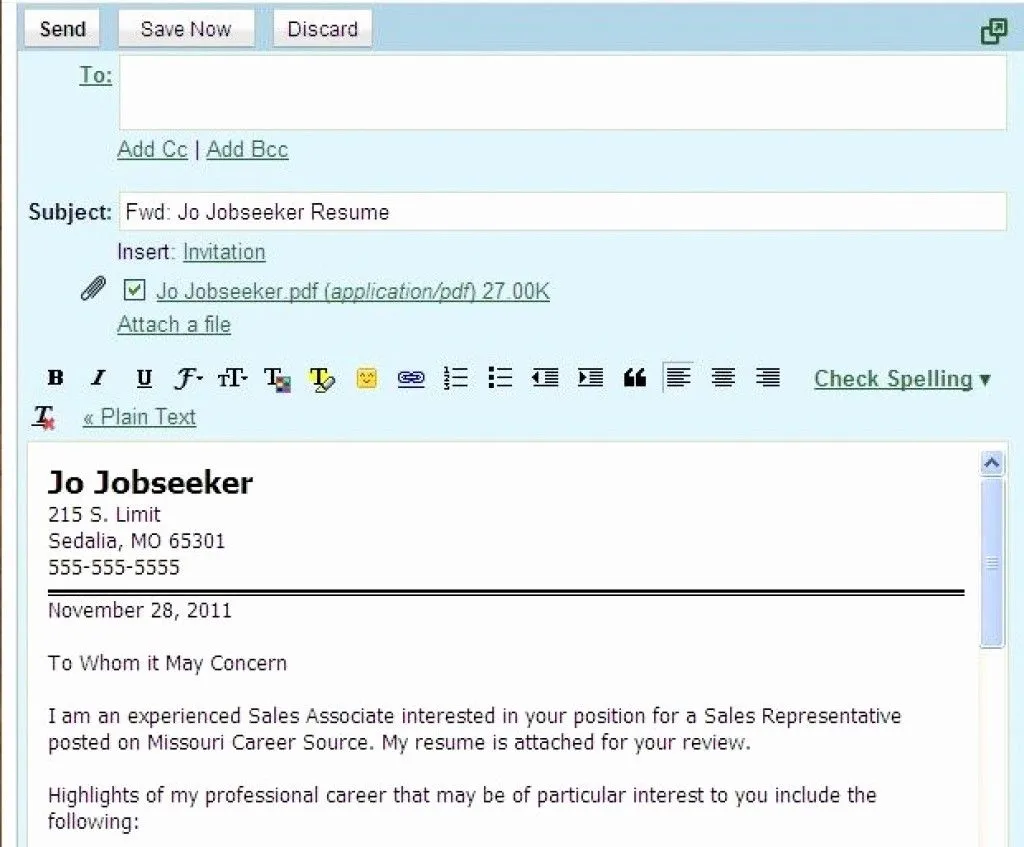
Why Mail a Cover Letter & Resume?
In an increasingly digital world, the practice of mailing a cover letter and resume might seem antiquated. However, in specific professional contexts and when a more personal touch is desired, the act of physically sending your application materials can still hold significant value. Mailing your documents demonstrates a level of attention to detail, a willingness to go the extra mile, and a commitment to the application process that can set you apart from other candidates. It can also be a way to showcase your professionalism and make a lasting impression. For certain industries or job postings that specifically request physical submission, mailing is not just a choice but a requirement. Understanding when and how to mail your cover letter and resume effectively is crucial for making a strong positive first impression.
The Cover Letter and Resume Essentials
Before you even consider the mailing process, ensure your cover letter and resume are in top-notch condition. The cover letter should be a well-crafted, personalized document that highlights your skills, experiences, and enthusiasm for the specific job. Tailor it to the specific requirements outlined in the job description, demonstrating how your qualifications align. Your resume needs to be equally polished, with clear formatting, concise language, and accurate information. Proofread both documents meticulously for any grammatical errors or typos. Use a professional font like Times New Roman, Arial, or Calibri, and maintain consistent formatting throughout. Make sure your contact information is up-to-date and easy to find. Remember, these documents are your first impression; make sure they reflect your best professional self.
Formatting Your Cover Letter

Your cover letter should be formatted to be both visually appealing and easy to read. Use standard business letter format: your contact information at the top, followed by the date, the recipient’s information (name, title, company, address), and the salutation (e.g., ‘Dear Mr./Ms. [Last Name]’). Keep the tone professional, using clear and concise language. The body of your letter should be divided into well-structured paragraphs. Start with a strong opening that grabs the reader’s attention. Then, elaborate on your relevant skills and experiences, and explain why you are a good fit for the role. Conclude with a call to action, expressing your interest in an interview and thanking the reader for their time. Keep the letter to one page if possible, and avoid excessive jargon.
Formatting Your Resume
Your resume needs to be formatted for easy readability and to quickly highlight your key skills and experiences. Use clear headings such as ‘Contact Information,’ ‘Summary/Objective,’ ‘Skills,’ ‘Experience,’ and ‘Education.’ Under each section, use bullet points to present your achievements and responsibilities in a concise manner. Tailor your resume to the specific job by emphasizing the skills and experiences most relevant to the position. Quantify your accomplishments whenever possible, using numbers and data to demonstrate your impact. Keep your resume to one or two pages, depending on your level of experience. Proofread multiple times to ensure there are no errors.
Choosing the Right Envelope for Mailing
The choice of envelope can communicate professionalism and attention to detail. Opt for a high-quality, sturdy envelope in a standard business size (usually #10 or A7). Avoid flimsy envelopes that could easily tear during transit. White or cream-colored envelopes are standard and considered professional. Avoid colorful or overly decorative envelopes, as they might be perceived as unprofessional. Consider using a slightly thicker paper stock for your envelope to protect the enclosed documents and give a more substantial feel. Ensure that the envelope is clean and free of any smudges or imperfections before mailing. This small detail can make a significant impact on your overall presentation.
Addressing the Envelope Correctly

Accurate addressing is essential for ensuring your application reaches its destination. Type or neatly print the recipient’s name, title, and company name on the envelope. If possible, address the envelope to a specific person (e.g., the hiring manager) rather than a general title (e.g., ‘Hiring Committee’). Below the recipient’s information, include the company’s full mailing address. Place your return address (your name and address) in the upper left-hand corner of the envelope. Use a clear and legible font for both the recipient and return addresses. Double-check the address for accuracy to avoid any delays in delivery.
Preparing Your Documents for Mailing
Before inserting your cover letter and resume into the envelope, ensure they are neatly presented. Print your documents on high-quality paper using a laser printer for a professional finish. Avoid using paper that is too thin or translucent. Make sure the ink is dry before handling the documents to prevent smudging. Remove any staples or paper clips from your documents before folding. If you are including any other supporting documents, such as references or writing samples, include them in the same envelope. Make sure everything lies flat and is neatly arranged for a polished presentation.
Folding Techniques for Cover Letters and Resumes
The way you fold your cover letter and resume can affect their presentation and how easily they are read. For standard business envelopes (#10), fold your cover letter in thirds, with the top third folded down and the bottom third folded up. Make sure the text faces outward. Your resume can be folded similarly, or it can be folded in half if it’s a single page. Place the folded documents into the envelope so that they are easy to remove and read. Ensure the fold lines are clean and straight for a professional appearance. Avoid folding the documents in a way that will obscure any important information.
Adding a Note or Card (Optional)

In some cases, including a brief note or card can add a personal touch to your application. A handwritten note on a small, elegant card can express your enthusiasm and further personalize your application. Keep the note short and sincere, reiterating your interest in the position and expressing your appreciation for the recipient’s time. However, be mindful of the company culture and whether such a personal touch is appropriate. If you choose to include a note, make sure it is written neatly and is free of any errors. If you are unsure, it is best to err on the side of caution and exclude the note.
Mailing Options and Services
Consider the different mailing options and services available to you. The United States Postal Service (USPS) offers several options, including First-Class Mail, which is the most common and economical choice. For a faster delivery, consider Priority Mail. If you want to track your application’s progress, use a service that provides tracking information, such as Certified Mail with Return Receipt. This ensures that you have proof of delivery and a signature confirmation. Choose the service that best suits your needs and budget. Always check the current postage rates to ensure you have affixed the correct amount of postage to your envelope.
Following Up After Mailing
After mailing your cover letter and resume, it’s a good idea to follow up. The timing of your follow-up should align with the guidelines provided in the job posting. If no specific instructions are provided, it’s generally acceptable to follow up a week or two after mailing. Send a brief email reiterating your interest in the position and referencing your mailed application. If the company’s website or job posting has a contact for applications, you can reach out to them, always remain polite, and express your gratitude. This shows your continued interest and provides an opportunity to reaffirm your qualifications. However, avoid being overly persistent, which could be perceived negatively.
Conclusion

Mailing a cover letter and resume may seem old-fashioned in a world dominated by online applications, but in many situations, it remains a powerful way to showcase professionalism, attention to detail, and a genuine interest in a job opportunity. By meticulously formatting your documents, choosing the right envelope, correctly addressing it, and selecting the appropriate mailing services, you can ensure that your application makes a strong positive impression. Remember to follow up appropriately and be patient throughout the application process. Taking these steps will increase your chances of landing an interview and ultimately securing your dream job.