Why a Compelling IT Cover Letter Matters
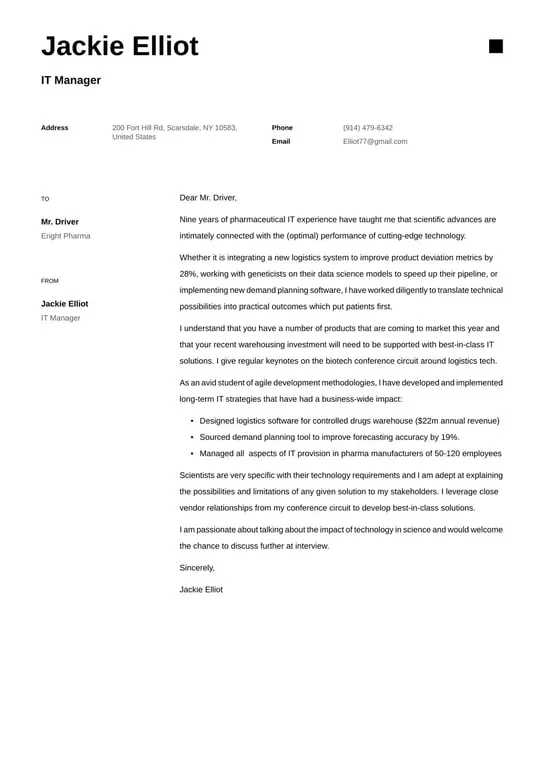
In the competitive world of Information Technology, a well-crafted cover letter can be the key to unlocking your dream job. While your IT resume provides a snapshot of your skills and experience, the cover letter offers a crucial opportunity to showcase your personality, enthusiasm, and the unique value you bring to the table. It’s your chance to make a strong first impression and convince potential employers that you’re not just qualified, but also the perfect fit for their company culture. A compelling cover letter allows you to stand out from the crowd by highlighting your most relevant achievements, demonstrating your passion for the IT field, and explaining how your skills align with the specific requirements of the role. Without a strong cover letter, your resume might get lost in the shuffle, but with one, you dramatically increase your chances of landing an interview and ultimately, securing the job.
What is an IT Cover Letter
An IT cover letter is a formal document that accompanies your resume when you apply for a job in the information technology sector. Its primary purpose is to introduce yourself to the hiring manager, express your interest in the position, and briefly summarize your qualifications. Unlike a resume, which is a factual overview of your work history, a cover letter allows you to tell a story, providing context and demonstrating how your skills and experiences align with the specific job requirements and the company’s values. It should highlight your relevant IT skills, technical expertise, and any accomplishments that showcase your ability to excel in the role. A good cover letter should be concise, focused, and tailored to each job application, making it clear why you are the ideal candidate. By carefully crafting your cover letter, you can significantly increase your chances of capturing the attention of the hiring manager and securing an interview.
Key Components of a Strong IT Cover Letter

A successful IT cover letter comprises several key components that work together to create a compelling narrative. First and foremost, a strong cover letter includes your contact information at the top, along with the date and the hiring manager’s name and title if known. The opening paragraph should grab the reader’s attention, expressing your enthusiasm for the role and the company. The body of the letter should highlight your most relevant IT skills and experience, providing specific examples and quantifiable achievements to demonstrate your capabilities. Make sure to tailor the letter to the specific job description, mentioning relevant projects, technologies, and certifications. It is also essential to demonstrate your passion for IT by explaining why you are excited about the role and the company. Conclude the letter with a strong call to action, expressing your interest in an interview and thanking the reader for their time and consideration. Finally, remember to proofread the letter carefully for any grammatical errors or typos before submitting it.
Contact Information
At the very top of your IT cover letter, include your contact information. This typically includes your full name, phone number, email address, and optionally, your LinkedIn profile URL. Ensure that the email address you provide is professional and easy to read; avoid using nicknames or unprofessional handles. Place the date directly below your contact information, and then include the hiring manager’s name, title, and the company’s address if known. If you don’t know the hiring manager’s name, use a general salutation like “Dear Hiring Manager” or “Dear [Company Name] Team.” Keeping your contact information clear and accessible is essential for the hiring manager to easily reach you if they decide to move forward with your application.
Opening Paragraph: Grab Their Attention
The opening paragraph of your IT cover letter is your first and often only chance to make a strong impression. It should immediately grab the reader’s attention and make them want to continue reading. Start by expressing your enthusiasm for the specific role and the company. If you were referred by someone, mention it here. Briefly state why you’re interested in the position and what excites you about the opportunity. Avoid generic opening lines; instead, tailor your introduction to reflect your understanding of the company and the job description. Consider mentioning a specific project or aspect of the company’s work that resonates with you. The goal is to make the hiring manager recognize that you are genuinely interested and not just sending out generic applications. A compelling opening sets the tone for the rest of the letter and encourages the reader to learn more about your qualifications.
Highlighting Your IT Skills and Experience

The body of your IT cover letter is where you showcase your relevant skills and experience. Start by identifying the key skills and experiences mentioned in the job description and then provide specific examples of how you have utilized these skills in your previous roles. Use action verbs to describe your accomplishments and responsibilities, such as “developed,” “implemented,” “managed,” and “troubleshooted.” Be specific about the technologies you are proficient in, such as programming languages, operating systems, databases, or cloud platforms. If you’ve worked on any projects similar to those the company is involved in, be sure to mention them. When detailing your experience, focus on the impact you made in your previous roles. Provide concrete examples of how you solved problems, improved efficiency, or contributed to project success. Tailoring this section to the job description is critical, ensuring that you demonstrate how your skills align with the company’s needs.
Quantifying Your Achievements
Whenever possible, quantify your achievements in your IT cover letter. This means using numbers and metrics to demonstrate the impact you have had in previous roles. Instead of simply stating that you “improved system performance,” specify by how much. For example, you could say, “Improved system performance by 30% by implementing a new caching mechanism.” If you have experience leading a project, mention how you saved money or time. For instance, “Managed a project that was completed 15% under budget and two weeks ahead of schedule.” Quantifying your achievements provides concrete evidence of your capabilities and makes your accomplishments more compelling. Use data to showcase the value you bring to the table. This not only impresses the hiring manager but also provides tangible proof of your skills and abilities. By using numbers and data, you move beyond general claims and establish credibility, making your cover letter more persuasive.
Tailoring Your Cover Letter to the Job
One of the most important aspects of a successful IT cover letter is tailoring it to the specific job you’re applying for. Generic cover letters are easy to spot and are unlikely to impress hiring managers. Review the job description carefully and identify the key skills, qualifications, and experiences that the company is looking for. Use these keywords and phrases throughout your cover letter to demonstrate that you understand the requirements of the role. Highlight relevant projects, technologies, and certifications. Address the company’s specific needs by explaining how your skills and experience align with their expectations. Show that you’ve done your research by mentioning the company’s values, mission, or recent projects. Customizing your cover letter demonstrates your genuine interest in the role and the company, setting you apart from other applicants. The effort you put into tailoring your letter shows that you’re serious about the opportunity and have the attention to detail that employers value.
Mentioning Relevant Projects and Technologies

In your IT cover letter, dedicate a section to highlight any relevant projects you’ve worked on and the technologies you have experience with. Describe each project briefly, emphasizing your role, the challenges you faced, and the solutions you implemented. Focus on the technologies the company uses or mentions in the job description. Mention your proficiency in programming languages, databases, operating systems, cloud platforms, and any other relevant tools. For each project, provide specifics such as the project’s goals, the methodologies used, and the outcomes. If you worked in a team, highlight your collaboration skills and the impact you made. By showcasing your hands-on experience with relevant technologies, you demonstrate your readiness to contribute to the company’s projects. This section allows you to provide concrete examples of your skills and demonstrate your ability to apply your knowledge in a practical setting.
Demonstrating Your Passion for IT
In your IT cover letter, it’s essential to demonstrate your passion for the field. Express your enthusiasm for the role, the company, and the IT industry as a whole. Explain what motivates you and why you are excited about the opportunity. This could involve mentioning specific technologies you are passionate about, sharing any personal projects or contributions you’ve made to the IT community, or describing your long-term career goals and how they align with the company’s mission. Show that you are up-to-date with the latest trends and advancements in the IT world, perhaps by referencing industry publications, certifications, or events you have attended. By expressing your passion, you show that you are more than just a qualified candidate; you are someone who genuinely enjoys their work and is committed to contributing to the company’s success. Your passion will set you apart from other applicants and highlight your enthusiasm for the role.
Closing the Letter: Call to Action
The closing paragraph of your IT cover letter should include a strong call to action. This is your opportunity to reiterate your interest in the role and express your desire to move forward in the hiring process. Reiterate your enthusiasm for the position and the company, and then clearly state that you would like to be considered for an interview. Make it easy for the hiring manager to take the next step by suggesting the best way to contact you, such as via email or phone. Thank the hiring manager for their time and consideration. You can also mention your availability for an interview, showing your eagerness to discuss your qualifications further. The closing should be concise and professional, leaving a positive final impression. By including a clear call to action, you encourage the hiring manager to take the next step and increase your chances of getting an interview.
Proofreading and Formatting Your Cover Letter

Before submitting your IT cover letter, proofread it meticulously to ensure that it is free of any errors. Typos, grammatical errors, and formatting inconsistencies can create a negative impression and undermine your credibility. Check for spelling mistakes, incorrect punctuation, and awkward phrasing. Pay close attention to sentence structure and ensure that your writing is clear, concise, and easy to read. Proofread the letter multiple times, and consider having a friend or colleague review it as well. Pay attention to the formatting of your cover letter. Use a professional font like Times New Roman, Arial, or Calibri, and maintain a consistent font size. Ensure that your letter is well-spaced, with clear margins and paragraph breaks. Proofreading and formatting demonstrate your attention to detail and professionalism, increasing your chances of making a positive impression on the hiring manager.
Review and Refine your Letter
After proofreading, review your IT cover letter to ensure that it is as strong and effective as possible. Ask yourself whether it highlights your most relevant skills and achievements, and whether it is tailored to the specific job you’re applying for. Assess whether you’ve quantified your accomplishments with data and used action verbs to describe your responsibilities. Review the overall flow and clarity of your letter. Does it tell a cohesive story? Is your passion for IT clearly communicated? Compare your cover letter to the job description and make sure you’ve addressed all the key requirements. If you have a trusted mentor or career counselor, ask them to review your letter and provide feedback. Make any necessary revisions based on your review and feedback. Refining your cover letter is an ongoing process. With each job application, you should strive to improve and tailor it to the specific opportunity.
Common Mistakes to Avoid in an IT Cover Letter
Avoid these common mistakes to maximize your chances of success. Avoid generic cover letters and tailor each one to the specific job. Ensure that your cover letter isn’t too long; keep it concise and focused. Don’t simply restate your resume; use your cover letter to provide context and highlight your achievements. Don’t include any irrelevant information. Refrain from using jargon or overly technical language that the hiring manager might not understand. Proofread carefully and avoid any grammatical errors or typos. Don’t focus solely on what you want from the job; instead, explain what you can bring to the company. Avoid negative language or criticisms of previous employers. Don’t forget to include a call to action and express your interest in an interview. Avoiding these common pitfalls will significantly improve the impact of your IT cover letter.