Crafting Your Medical Assistant Cover Letter
Securing a medical assistant position, especially without prior experience, requires a compelling cover letter. This guide will walk you through creating a cover letter that highlights your strengths, addresses the lack of experience, and grabs the attention of potential employers. A well-crafted cover letter is your first impression and can significantly increase your chances of landing an interview. It’s your opportunity to showcase your personality, enthusiasm, and potential contributions to the healthcare team. Remember that a great cover letter goes beyond simply listing your skills; it tells a story and makes the reader want to know more.
Understanding the Purpose of a Cover Letter
A cover letter serves as a vital introduction to your resume and a chance to express your interest in a specific medical assistant role. It’s more than just a formality; it’s a strategic tool to highlight your qualifications and demonstrate your enthusiasm for the position and the healthcare field. In essence, the cover letter provides context to your resume, allowing you to explain gaps in your experience, emphasize relevant skills, and articulate your career goals. It’s also a chance to show off your writing skills, which are important in many medical assistant roles.
Why a Cover Letter Matters

A cover letter matters because it’s your opportunity to personalize your application. Recruiters and hiring managers can quickly tell if a cover letter is generic or tailored for the job. A well-written cover letter demonstrates your sincere interest in the role and the healthcare facility, setting you apart from other applicants. It allows you to address any concerns or questions the employer might have, such as a lack of experience. By highlighting your relevant skills, even if gained through volunteer work, education, or personal projects, you can demonstrate your readiness for the role.
Highlighting Your Value
Even without direct experience, you bring value to the table. This is where your cover letter shines. Identify your transferable skills—those skills you’ve acquired in other areas of your life, such as communication, organization, problem-solving, and time management—and show how they apply to the medical assistant role. Highlight any relevant coursework, volunteer work, or personal projects that demonstrate your dedication to the healthcare field and your ability to learn quickly. Focus on what you can offer and how you can contribute to the clinic’s success.
Key Components of a Medical Assistant Cover Letter
Contact Information and Date

Start with your contact information (name, address, phone number, and email) at the top. Follow with the date. Then, include the hiring manager’s name (if known), title, and the clinic or practice’s address. Ensuring this information is correct and up-to-date is the first step towards making a professional impression. This section ensures the recipient knows who you are and how to reach you, allowing the hiring manager to easily respond and schedule an interview.
The Salutation
Address the hiring manager by name whenever possible; it adds a personal touch. If you don’t know the name, use a professional greeting like “Dear Hiring Manager.” Avoid generic salutations like “To Whom It May Concern.” Addressing the letter to a specific person shows you have taken the time to research the organization and that you care about the details. Using a name personalizes your application and makes it stand out in a stack of generic cover letters.
Opening Paragraph
The opening paragraph should immediately capture the reader’s attention. State the position you’re applying for and where you found the job posting. Briefly mention why you are interested in the role and the clinic or practice. Highlight your enthusiasm for the medical field and your eagerness to learn. You might also touch upon a specific skill or experience that aligns with the job description, if applicable. The opening paragraph sets the tone for the rest of your letter, so make it engaging and relevant.
Body Paragraphs

The body paragraphs are where you showcase your skills, experiences, and qualifications. Each paragraph should focus on a specific point, such as your communication skills, your ability to work in a team, or your understanding of medical terminology. Use concise language, and provide concrete examples to back up your claims. If you lack direct experience, emphasize transferable skills, relevant coursework, volunteer experience, or any certifications you have obtained. The body paragraphs should demonstrate your potential to excel as a medical assistant.
Showcasing Skills and Qualities
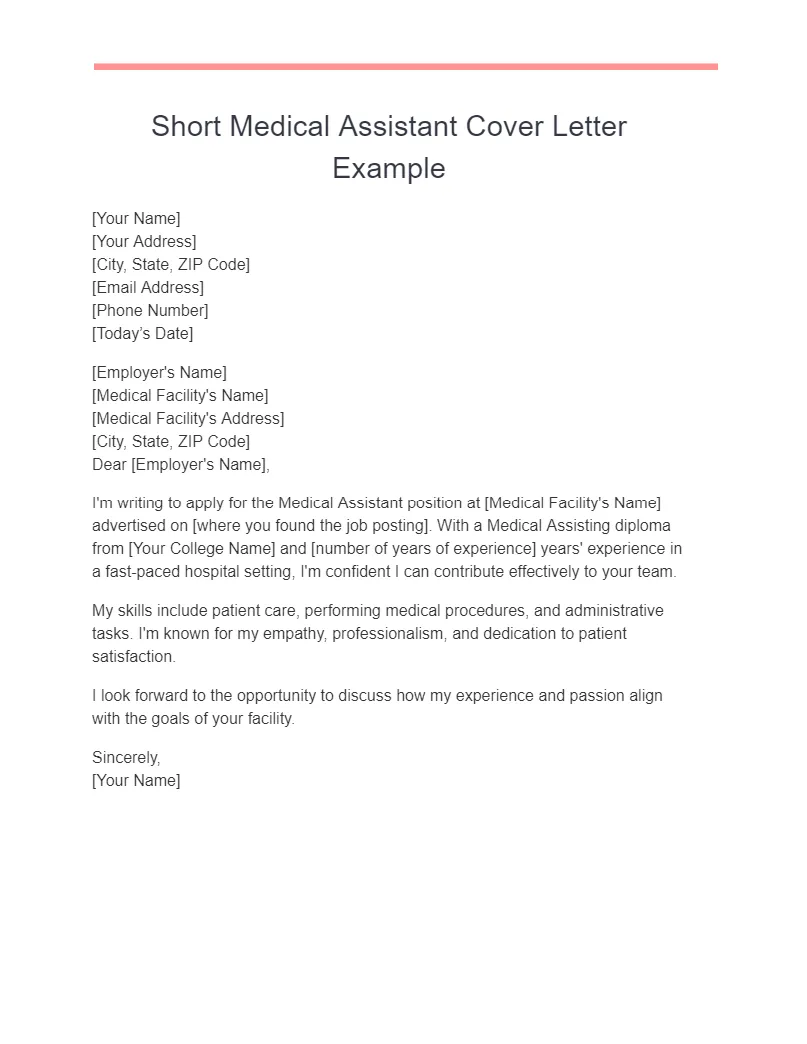
Identify the skills and qualities that are most important for the medical assistant position, such as excellent communication skills, empathy, attention to detail, and the ability to multitask. Provide specific examples of how you have demonstrated these skills in the past. For instance, you could discuss how you successfully managed a difficult customer service situation, how you organized a project, or how you collaborated with a team to achieve a goal. The more concrete your examples are, the more convincing your claims will be. See example below
Addressing Lack of Experience
It’s essential to address the lack of experience head-on. Frame it positively by emphasizing your eagerness to learn and your commitment to the medical field. Highlight any relevant training, coursework, or certifications. If you have completed an externship or volunteered in a medical setting, describe your responsibilities and what you learned. Show that you are proactive, adaptable, and willing to go the extra mile to succeed. Reassure the employer of your ability to quickly learn and perform the required tasks.
Quantifying Your Abilities

Whenever possible, quantify your accomplishments and skills. Instead of saying “I have good communication skills,” you could say “I successfully managed over 50 patient inquiries per day.” Quantifying your abilities provides concrete evidence of your skills and makes your claims more credible. Use numbers and data to showcase your achievements. Focus on your impact, not just your responsibilities. This makes your cover letter more engaging and memorable.
Closing Paragraph
In the closing paragraph, reiterate your interest in the position and the clinic or practice. Express your gratitude for the reader’s time and consideration. Indicate your availability for an interview and mention how you can be reached. Keep the tone professional and enthusiastic. Thank the hiring manager for the opportunity, and let them know you are excited to hear from them soon.
The Call to Action
End your cover letter with a clear call to action. This is your opportunity to tell the hiring manager what you want them to do next. State that you are available for an interview and how they can contact you. You might also mention that your resume provides additional details about your qualifications. A strong call to action shows that you are proactive and eager to move forward in the hiring process.
Formatting and Design Tips

Font and Readability
Choose a professional and easy-to-read font, such as Times New Roman, Arial, or Calibri. Use a font size between 10 and 12 points. Ensure that your letter is well-organized with clear headings and subheadings. Use ample white space to make your letter visually appealing and easy to scan. Well-formatted cover letters are easier to read and make a better impression, which may increase the chances of an interview.
Proofreading and Editing
Always proofread your cover letter and resume carefully for any grammatical errors, spelling mistakes, and typos. Ask a friend or family member to review your letter for a fresh perspective. Errors can undermine your credibility and make you appear unprofessional. A polished, error-free cover letter demonstrates your attention to detail and professionalism.
Tailoring Your Cover Letter

Customization is key. Make sure your cover letter is tailored to the specific medical assistant position you are applying for. Research the clinic or practice and address your letter to the hiring manager by name. Highlight the skills and experiences that are most relevant to the job description. This shows your genuine interest and understanding of the role and the organization. Customize the cover letter to each specific job you apply for, demonstrating your attention to detail.
Researching the Clinic or Practice
Before you start writing, take time to research the clinic or practice. Learn about their mission, values, and services. This will help you tailor your cover letter to demonstrate how your skills and experiences align with their specific needs. Check their website, social media pages, and any other available resources. Knowing the clinic’s focus allows you to better explain how your skills align with their mission and goals.
Matching Skills to Job Requirements
Carefully review the job description and identify the skills and qualifications the employer is seeking. Highlight these skills in your cover letter and provide specific examples of how you have demonstrated them in the past. Use the same keywords and phrases used in the job description to demonstrate your understanding of the role. Make sure you match your skills and experience to the job’s requirements.
Examples of Medical Assistant Skills to Include
Even with limited experience, you likely possess skills that are transferable to the medical assistant role. Consider highlighting skills such as: Patient communication and empathy; Medical terminology knowledge; Ability to maintain patient confidentiality; Proficiency in EMR (Electronic Medical Records) software; Experience with administrative tasks; Ability to work in a fast-paced environment; Strong organizational skills; Ability to multitask; Experience in patient scheduling and appointment management; Proficiency in taking vital signs and preparing patients for examinations. Tailor the skill list to the specific job requirements. Remember, providing specific examples of how you’ve used these skills will make your application more compelling.