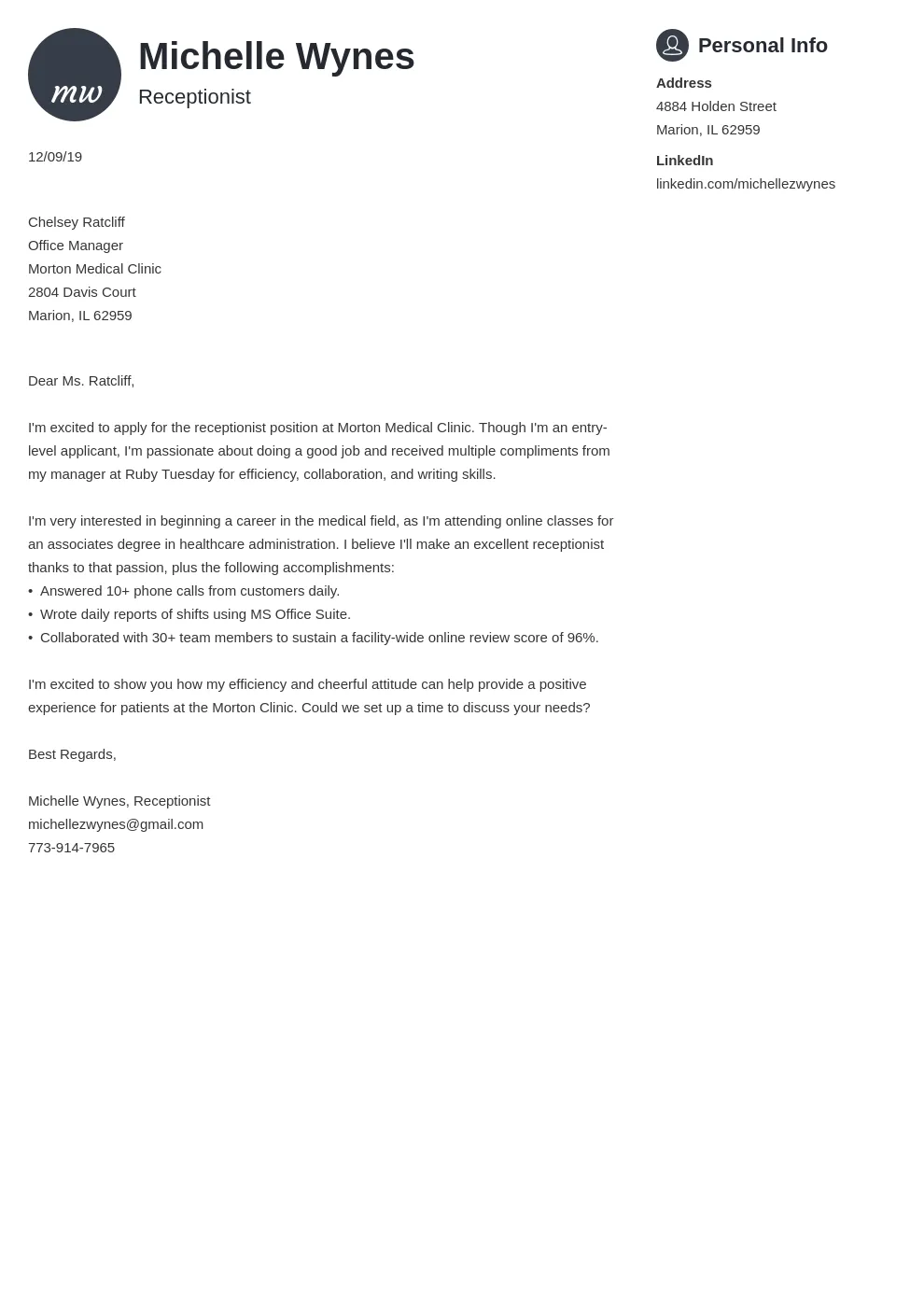
Landing your dream job might seem impossible when you lack professional experience. However, your cover letter is your chance to shine. It’s the perfect opportunity to highlight your potential and convince the hiring manager that you are the right fit for the role, even without a lengthy work history. This guide is designed to help you craft a compelling cover letter that effectively showcases your skills, education, and enthusiasm, helping you stand out from the competition and making a strong impression on potential employers.
Highlighting Transferable Skills
Transferable skills are the cornerstone of your cover letter when you have no job experience. These are skills you’ve gained through various aspects of your life, such as volunteer work, academic projects, extracurricular activities, or personal endeavors. These skills are highly valued by employers, as they demonstrate your capabilities, work ethic and potential. Focus on identifying skills that align with the job description. For instance, if the job requires teamwork, highlight any group projects you participated in, emphasizing your role and contributions to the team’s success. If the job requires communication skills, mention any presentations you’ve given or any roles that involved customer interaction.
Identifying Your Skills
Begin by creating an exhaustive list of your skills. Think broadly, considering both hard skills (technical abilities) and soft skills (interpersonal qualities). Hard skills might include proficiency in specific software, programming languages, or data analysis tools. Soft skills include communication, problem-solving, time management, leadership, and adaptability. Once you have a comprehensive list, prioritize the skills most relevant to the job you are applying for. Review the job description meticulously and identify the key skills that the employer is seeking. This targeted approach will ensure your cover letter effectively addresses the employer’s needs and showcases your suitability for the role.
Researching and Understanding Job Requirements

Before you even begin writing, conduct thorough research on the company and the specific role. Understand the company’s mission, values, and culture, as well as the responsibilities and requirements outlined in the job description. This research will inform your cover letter, enabling you to tailor your content to address the employer’s needs and expectations. Analyze the job description to identify keywords and essential skills. Make a list of the key qualifications and requirements. This will guide you in highlighting the relevant skills and experiences in your cover letter, ensuring it directly addresses the employer’s needs.
Tailoring Your Cover Letter
A generic cover letter will likely end up in the rejection pile. Each cover letter you send should be customized for the specific job and company you are applying to. Personalize your letter by addressing the hiring manager by name, if possible. Research the company’s values and incorporate them into your letter. Highlight the skills and experiences from your background that align with the job requirements. Demonstrate your understanding of the company’s mission and how you can contribute to their success. This level of personalization shows the employer that you’ve invested time and effort in the application and are genuinely interested in the opportunity.
Showcasing Education and Certifications
Your education and any certifications you hold are valuable assets when you lack professional experience. Highlight your academic achievements, relevant coursework, and any special projects or theses. If you have completed any internships or volunteer work related to your field of study, be sure to mention these experiences and what you learned from them. Include any professional certifications or licenses you possess, as these demonstrate your commitment to continuous learning and your expertise in a specific area. Detail any extracurricular activities, projects, or academic achievements that showcase your skills. This can include leadership roles, awards, or participation in relevant clubs or organizations.
Formatting Your Cover Letter

Proper formatting makes your cover letter readable and professional. Ensure your cover letter is well-organized with clear sections and headings. Use a professional font like Arial, Calibri, or Times New Roman, and maintain consistent font sizes throughout the document. Set margins to one inch on all sides and use single or 1.15 line spacing for easy readability. Avoid using excessive formatting or colors. Keep the layout clean and uncluttered, with ample white space to make it visually appealing. The goal is to create a cover letter that is easy for the reader to scan and digest.
Choosing the Right Font and Layout
Selecting an appropriate font and layout is vital for presenting your cover letter in a professional manner. Stick to standard, easy-to-read fonts such as Times New Roman, Arial, or Calibri, with a font size between 10 and 12 points. Ensure your layout is clean and organized, with adequate spacing between paragraphs and sections. Use left-aligned text and avoid justifying the text, as this can create uneven spacing. The layout should guide the reader’s eye smoothly through your cover letter, highlighting key information and making it easy to read.
Writing the Body of Your Cover Letter
The body of your cover letter is where you demonstrate how your skills and experiences align with the job requirements. Structure your letter with a clear introduction, a few body paragraphs, and a compelling conclusion. Each paragraph should focus on a specific aspect of your qualifications, such as your skills, education, or relevant experiences. Use concise, impactful language to describe your abilities and achievements. Quantify your accomplishments whenever possible to make your claims more concrete. For instance, instead of saying “I improved customer service,” say “I improved customer satisfaction scores by 15% through active listening and problem-solving skills.”
Opening Paragraph Techniques

The opening paragraph is your first chance to capture the hiring manager’s attention. Start strong by expressing your enthusiasm for the position and the company. Briefly explain why you are interested in the role and what makes you a good fit, even without professional experience. You can also mention a mutual connection, if you have one, or refer to something specific that attracted you to the company. Keep your opening paragraph concise and to the point, setting the tone for the rest of your letter. Make your opening engaging and memorable.
Highlighting Relevant Experiences
Even with no formal work experience, you can still showcase relevant experiences. Draw from your academic projects, volunteer work, internships, and extracurricular activities. Describe your responsibilities and accomplishments in each role. Quantify your achievements whenever possible. For example, “Managed a team of five volunteers, resulting in a 20% increase in event participation.” Focus on the transferable skills you gained from these experiences, such as communication, teamwork, problem-solving, and time management. These skills are highly valued by employers, regardless of your professional background.
Closing Paragraph Tips
The closing paragraph should reiterate your interest in the position and express your gratitude for the opportunity. Clearly state your intention to follow up, and mention how you will do so. Keep the closing concise and professional. Reiterate your enthusiasm for the role and the company, and express your eagerness to discuss your qualifications further. Use a formal closing, such as “Sincerely” or “Best regards,” followed by your full name. Double-check all the information in your closing paragraph to ensure it is accurate and error-free.
Call to Action

Include a call to action in your closing paragraph. Encourage the hiring manager to contact you for an interview. Make it easy for them to reach out by providing your phone number and email address. Express your availability for an interview and your enthusiasm to discuss how you can contribute to the company’s goals. This is a subtle way to signal your interest and prompt the hiring manager to take the next step.
Proofreading and Editing
Before submitting your cover letter, proofread and edit it meticulously. Errors can undermine your credibility and professionalism. Check for grammatical errors, spelling mistakes, and punctuation errors. Ensure your sentences are clear and concise, and that your writing style is professional. Consider using a grammar checker to catch any errors you might have missed. Read your cover letter aloud to catch any awkward phrasing or flow issues. Ensure the format is consistent and that the layout is visually appealing.
Ensuring Accuracy and Clarity
Pay close attention to the accuracy of the information in your cover letter. Double-check all dates, names, and contact details. Ensure that your information is consistent with your resume. Write in a clear and concise style, avoiding jargon or overly complex language. The goal is to communicate your message effectively and make it easy for the hiring manager to understand your qualifications. Simplify your sentences, and choose the best words to convey your message.
Seeking Feedback

Ask friends, family members, or career counselors to review your cover letter. A fresh pair of eyes can often spot errors you might have missed. Ask for their feedback on the clarity, content, and overall impact of your letter. Take their suggestions into consideration and revise your letter accordingly. Seeking feedback can help you improve the quality of your cover letter and increase your chances of getting an interview. Use the feedback to make the necessary revisions to make it as strong as possible. This collaborative approach ensures that your letter represents you in the best possible light.
Crafting a compelling cover letter with no job experience requires careful planning and a strategic approach. By highlighting your transferable skills, showcasing your education, tailoring your letter to each job, and formatting it professionally, you can increase your chances of getting noticed. Remember to proofread and edit your cover letter meticulously. By following these steps, you can create a cover letter that effectively communicates your value and helps you land your first job.