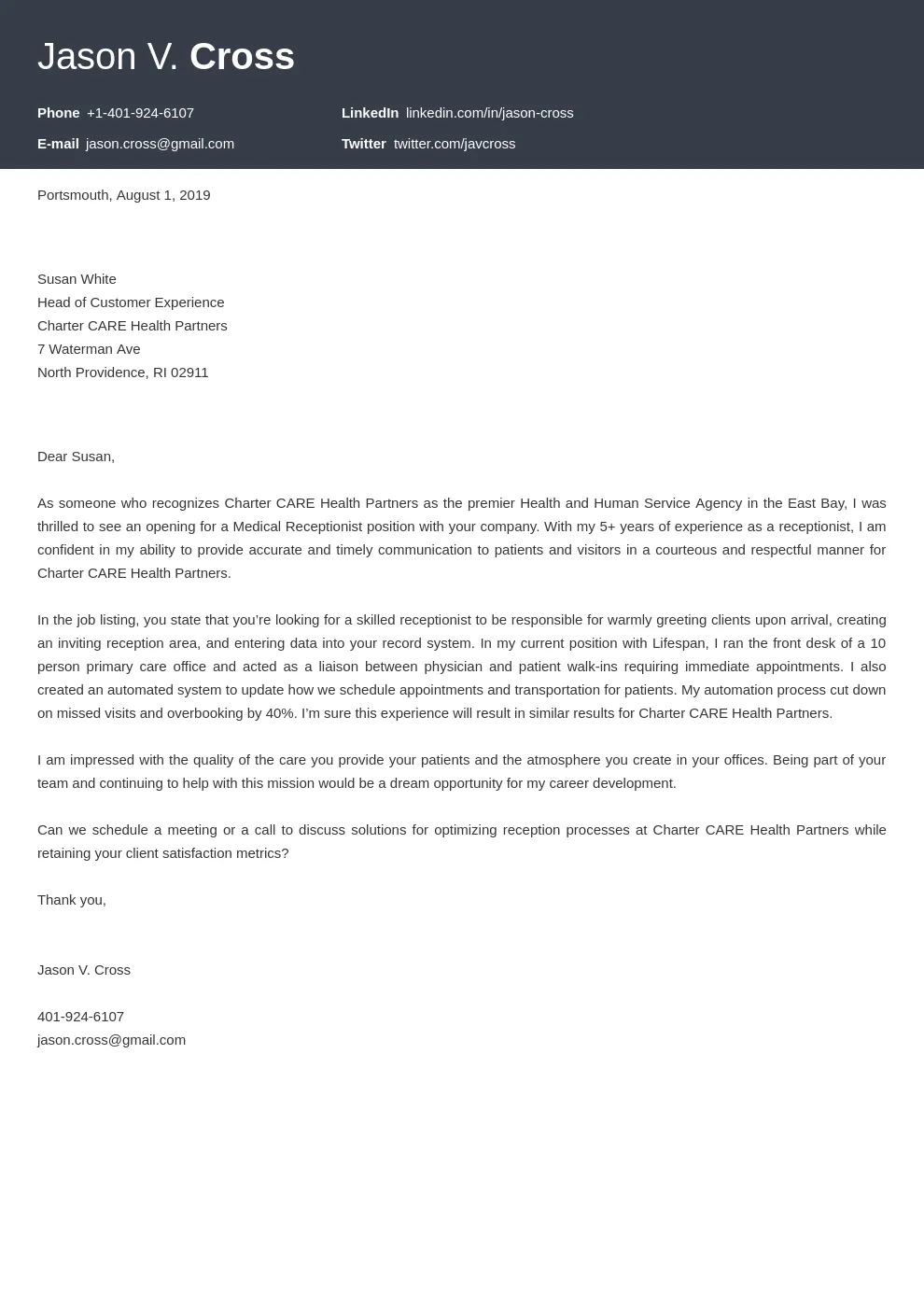
Understanding the Importance of Addressing a Cover Letter Correctly
In the competitive world of job applications, every detail counts. Your cover letter is your first introduction to a potential employer, and how you address it can significantly impact the impression you make. Addressing a cover letter correctly goes beyond mere formality it demonstrates that you’ve taken the time to research the company and personalize your application. This initial effort can set you apart from other candidates and showcase your attention to detail. A well-addressed cover letter shows respect for the recipient and signals your genuine interest in the role. This can also influence the hiring manager’s perception of your professionalism and your potential fit within the company culture. Neglecting this seemingly small detail can send the wrong message, potentially leading to your application being overlooked.
Why Addressing Matters
Addressing your cover letter to a specific person demonstrates initiative and attention to detail. This is a great way to begin with, by doing this, you will be perceived as a candidate who is proactive and thorough. Researching the hiring manager’s name shows that you’re serious about the job and have taken the time to learn about the company and its personnel. Personalization is key in a crowded job market. A generic cover letter addressed to ‘To Whom It May Concern’ can easily get lost in the pile. Conversely, a cover letter addressed to a specific individual is more likely to capture their attention. Furthermore, it allows you to tailor your message to the specific needs and values of the person and the company. It helps build an immediate connection and make your application memorable. This small investment of time can significantly boost your chances of getting an interview.
Impact on First Impression

Your cover letter is often the first point of contact between you and a potential employer, meaning it sets the tone for everything that follows. The way you address your cover letter plays a crucial role in shaping this initial impression. A correctly addressed cover letter shows professionalism, attention to detail, and a genuine interest in the role. All of these qualities are highly valued by employers. It subtly communicates that you are meticulous and that you’re willing to go the extra mile to make a positive impact. Conversely, an improperly addressed cover letter can create a negative first impression. It suggests that you haven’t taken the time to research the company or personalize your application, which can make you appear uninterested or careless. First impressions are lasting, so making a positive one with your cover letter can significantly improve your chances of getting an interview.
Researching the Hiring Manager’s Name
Before you start writing your cover letter, take the time to research the hiring manager’s name. This is the most effective way to personalize your cover letter and show that you’ve put in the effort. Start by looking at the job description; sometimes, the hiring manager’s name is listed there. If it is not there, move on to other available resources. Many companies list the hiring manager’s name and contact information on their ‘About Us’ or ‘Contact’ pages. Additionally, you can try searching the company’s website for a ’team’ or ’leadership’ section, where you might find the names and titles of key personnel. When researching, be sure to double-check the spelling of the name and verify the person’s title. This attention to detail shows professionalism and respect. Failing to do so can be detrimental to your application. The more you know about the person you are addressing, the better you can tailor your cover letter to resonate with them.
Using LinkedIn to Find the Right Person
LinkedIn is an invaluable tool for job seekers, especially when trying to identify the hiring manager. Start by searching for the company and then navigate to the ‘People’ section. You can then filter the results by job title, location, or keywords to narrow your search. If you know the specific department, searching for the team lead or manager can be a good starting point. Also, you can use LinkedIn to find the person in charge of hiring for the specific role you are applying for. Once you have identified the person, review their profile to gather information about their background, experience, and interests. This information can help you personalize your cover letter. When addressing your cover letter, use the person’s full name and title, if applicable. This is a professional way to show respect. Before reaching out, ensure that your LinkedIn profile is up-to-date and professional. This is the first impression you will make, and it should reflect your brand and capabilities.
Checking the Company Website

The company website is a good resource for finding the hiring manager’s name and other relevant details. Start by navigating to the ‘About Us’ or ‘Contact’ section, where you may find information about the leadership team or the human resources department. Many companies have dedicated pages that introduce their team members, including their names, titles, and sometimes even brief biographies. These sections can help you identify the appropriate person to address your cover letter. In some cases, the job posting itself may include the name of the hiring manager or a specific contact person. If the job posting is managed by a recruitment agency, the name of the recruiter is usually provided. Before using the contact information, check to make sure it’s up to date. If you are unsure, you can always contact the company directly and inquire about the hiring manager’s name or the appropriate person to send your application.
When the Hiring Manager’s Name Is Unavailable
There will be instances where you cannot find the name of the hiring manager, but there are still ways to personalize your cover letter. In such cases, using the job title or department is a good alternative. For instance, you could address the cover letter to ‘Dear Hiring Manager’ or ‘Dear [Department] Team.’ This approach shows that you’ve made an effort to personalize your application. In case, you are unable to identify the specific department, you may address your cover letter to the general contact. If the company has a specific contact email for job applications, use it. You can also try contacting the company’s HR department directly. Send a polite email or make a phone call to ask for the appropriate contact person. This not only helps you personalize your cover letter but also demonstrates your initiative and resourcefulness.
Alternatives to ‘To Whom It May Concern’
While the phrase ‘To Whom It May Concern’ is still used in some cases, it’s often viewed as impersonal and outdated. Opting for a more engaging alternative can make your cover letter more memorable. Here are some alternatives: ‘Dear Hiring Manager,’ is a solid option when you can’t find a specific name. It’s professional and shows that you are addressing the person in charge. ‘Dear [Department] Team,’ is a good choice if you know the department but not the individual’s name. It creates a sense of connection and shows that you’ve done some research. ‘Dear [Job Title],’ if you know the specific job title of the person you’re addressing, it can be a good way to personalize your letter. However, be sure to use the correct title. ‘Dear Mr./Ms./Mx. [Last Name],’ if you know the person’s name, always use a formal salutation. Include the person’s title (Mr., Ms., or Mx.) and their last name. When in doubt, it’s best to err on the side of formality. These alternatives show that you’ve put in the effort to make a personalized impression, which is what every hiring manager wants.
Using a Department or Title

If you are unable to find the specific name of the hiring manager, addressing your cover letter to a department or job title is the next best option. This approach is more personalized than using a generic salutation such as ‘To Whom It May Concern.’ For example, you could address your cover letter to ‘Dear Human Resources Department,’ or ‘Dear Marketing Team.’ When using a department, it is best to tailor your cover letter to that department’s specific needs and goals. You can also address your cover letter to a specific job title, such as ‘Dear Marketing Manager,’ or ‘Dear Senior Software Engineer.’ This shows that you understand the organizational structure of the company. Before using a department or job title, research the company’s website or the job description to ensure that you are using the correct terminology. This shows that you have taken the time to familiarize yourself with the company and its organizational structure. This detail can go a long way in getting your application noticed.
Writing a Compelling Cover Letter
Once you’ve figured out how to address your cover letter, the next step is to write one that grabs the reader’s attention. Your cover letter is your opportunity to showcase your skills, experience, and enthusiasm for the role. Start with a strong opening paragraph. This is where you make your first impression. State the position you are applying for and explain why you are interested in the company. Briefly mention your key qualifications and how they align with the job requirements. In the body of your cover letter, provide specific examples of your accomplishments and how they relate to the role. Use action verbs to demonstrate your abilities and skills. Quantify your achievements whenever possible to show your impact. In the closing paragraph, reiterate your interest in the position and thank the hiring manager for their time and consideration. Include a call to action, such as expressing your eagerness to discuss your qualifications further. Before sending your cover letter, proofread it carefully for any errors in grammar, spelling, and punctuation.
Formatting Your Cover Letter
Formatting your cover letter in a clear and professional manner is as important as its content. Use a professional font, such as Times New Roman, Arial, or Calibri, with a font size between 10 and 12 points. Make sure your letter is easy to read. Use standard one-inch margins on all sides. This creates a balanced and visually appealing document. Use single spacing within paragraphs and double spacing between paragraphs to enhance readability. Use a clear and concise layout. Ensure that all the information is well-organized and easy to follow. Include your contact information at the top of your cover letter, including your name, phone number, email address, and LinkedIn profile URL. Be sure to include the date and the recipient’s address. A well-formatted cover letter is easy to read and makes a great impression. Proper formatting demonstrates professionalism and attention to detail, which are essential qualities in any job applicant. A consistent and visually appealing format helps the reader quickly understand your qualifications and skills.
Common Mistakes to Avoid

There are several common mistakes to avoid when addressing a cover letter. Avoiding these errors can help you make a positive first impression. Making these mistakes can hinder your job application. Incorrectly addressing a cover letter is a sign of carelessness or lack of attention to detail. Ensure that you always spell the name correctly, and if you are unsure of the correct spelling, double-check or find an alternative method. Using the wrong salutation, such as ‘To Whom It May Concern,’ shows a lack of effort to personalize your application. Make sure to use the proper title for the person you are addressing, such as Mr., Ms., or Mx. This will go a long way. Sending a cover letter with grammatical or spelling errors can signal a lack of professionalism. Always proofread your letter multiple times and use a spell checker. Neglecting to tailor your cover letter to the specific job or company is another mistake. Make sure to highlight the skills and experiences that are most relevant to the role. Avoid using generic language that could be used in any job application. Personalize your cover letter to show that you are genuinely interested in the company and the position.
Incorrect Spelling of Names
One of the most common and easily avoidable mistakes in a cover letter is misspelling the hiring manager’s name. Misspelling the name of the person you are addressing is a huge turn-off. It is not only unprofessional but also shows a lack of attention to detail and a lack of interest in the position. Before sending your cover letter, always double-check the correct spelling of the hiring manager’s name. Take the time to look at the company website, LinkedIn profile, or job posting to verify the spelling. If you are uncertain, consider contacting the company’s HR department or the recruiter and asking for clarification. This shows that you are committed to making a positive impression. Avoid making assumptions about the correct spelling of the name. This is especially important with less common names or names that can be spelled in different ways. Proofreading your cover letter carefully is the best way to avoid this mistake. A small error in the spelling of a name can ruin your chances of getting an interview.
Using Outdated Salutations
Using outdated salutations in your cover letter can signal that you are not up-to-date with current professional communication practices. Phrases like ‘To Whom It May Concern’ are impersonal and can make your cover letter feel generic. Modern hiring managers are looking for personalized applications that demonstrate that you have put in the effort to research the company and the role. Using outdated salutations can give the impression that you have not taken the time to find the right person and address your cover letter. Instead, try a more personalized greeting, such as ‘Dear Mr./Ms./Mx. [Last Name],’ or ‘Dear [Job Title].’ If you are unable to find the hiring manager’s name, use ‘Dear Hiring Manager’ or ‘Dear [Department] Team’ as an alternative. Before sending your cover letter, ensure that the salutation is appropriate and reflects your level of professionalism. Using modern salutations shows that you are familiar with the current communication standards.
The Benefits of a Personalized Cover Letter

A personalized cover letter is a powerful tool in your job search. Personalizing your cover letter is an important investment of your time. It showcases your initiative, attention to detail, and genuine interest in the role and the company. When you address your cover letter to a specific person, you demonstrate that you’ve taken the time to research the company and understand its values. This is particularly important because it makes a better first impression. Personalizing your cover letter can greatly improve your chances of getting an interview and landing your dream job. This increases the likelihood that your application will be noticed and that you will be remembered. Personalizing your cover letter helps you stand out. Make sure you always personalize your cover letter.
Addressing your cover letter correctly is a fundamental step in the job application process. By taking the time to research the hiring manager’s name, using appropriate salutations, and avoiding common mistakes, you can significantly increase your chances of making a positive impression. Always remember that a personalized cover letter demonstrates your professionalism, attention to detail, and genuine interest in the opportunity. These efforts show that you value this job opportunity. By following these guidelines, you can make a lasting impression and significantly improve your chances of landing an interview. Make your job application memorable by implementing these tips.