Understanding the Healthcare Cover Letter
In the competitive field of healthcare, a well-crafted cover letter is your first opportunity to make a positive impression. More than just a formality, it serves as a crucial tool to introduce yourself to a potential employer, highlight your key skills and qualifications, and express your genuine interest in the position. A compelling cover letter can significantly increase your chances of securing an interview, setting the stage for a successful career in healthcare. By understanding its purpose and significance, you can approach the writing process with a strategic mindset, ensuring your application stands out from the crowd.
Why Is a Cover Letter Important in Healthcare?
A cover letter allows you to provide context to your resume. It’s your chance to explain why you are the ideal candidate. In healthcare, where compassion, attention to detail, and specialized skills are critical, a cover letter allows you to showcase these attributes more effectively than a resume alone. The cover letter allows you to connect your skills to the specific requirements of the job description. It allows you to tell a story about your experiences and demonstrate your enthusiasm for the role and the healthcare facility.
Highlighting Your Skills and Experience

When highlighting your skills and experience, focus on the aspects most relevant to the job description. Healthcare employers seek candidates with a combination of technical expertise, interpersonal skills, and a strong work ethic. Provide concrete examples of how you have demonstrated these qualities in past roles. For example, if the job requires proficiency in electronic health records (EHR) systems, mention your experience with specific platforms, such as Epic or Cerner, and quantify your achievements whenever possible. Showcasing your skills and experience in a clear, concise, and impactful manner is essential to grab the hiring manager’s attention.
Tailoring Your Letter to the Job
Generic cover letters are easily identifiable and often discarded. A tailored cover letter demonstrates that you have taken the time to understand the specific requirements and expectations of the position. Carefully review the job description and identify the key skills, qualifications, and responsibilities. Then, in your cover letter, align your experiences and skills with those requirements. Include the job title in your cover letter. This personalization shows that you are genuinely interested in the opportunity and have the qualifications to excel in the role. Customize your cover letter to reflect your understanding of the facility’s values and mission.
Researching the Healthcare Facility
Before writing your cover letter, conduct thorough research on the healthcare facility to which you are applying. This research demonstrates initiative and a genuine interest in the organization. Visit the facility’s website to learn about their mission, values, and recent achievements. Use this information to personalize your cover letter. Mention specific programs, initiatives, or values that resonate with you. Understanding the facility’s culture and priorities will help you tailor your letter to fit their needs, showcasing your commitment to contributing to their team. Demonstrating this understanding can significantly enhance your application and set you apart from other candidates.
Showcasing Your Passion and Enthusiasm

Healthcare professionals are expected to demonstrate passion and enthusiasm for their field. Your cover letter is an opportunity to convey this passion. Express your genuine interest in the position and the healthcare facility. Discuss what motivates you to work in healthcare and why you are excited about the opportunity to contribute to patient care. Use your cover letter to show the hiring manager your commitment and interest in the organization. This enthusiasm can make a strong impression and demonstrate that you are not just looking for a job but are committed to a career in healthcare.
Structuring Your Healthcare Cover Letter
A well-structured cover letter follows a clear and organized format, guiding the reader through your qualifications and interests. The structure typically includes a header with your contact information, a professional greeting, an introductory paragraph, body paragraphs highlighting your skills and experience, and a closing paragraph. This framework ensures your key information is conveyed effectively and professionally. Organizing your thoughts logically and adhering to the standard structure of a cover letter ensures clarity and professionalism, making it easy for the hiring manager to review your qualifications.
Header and Contact Information
Begin your cover letter with a header that includes your full name, address, phone number, and professional email address. Ensure your contact information is accurate and up-to-date. Consider including a link to your LinkedIn profile. This allows the hiring manager to easily access additional information about your professional background. Make your header neat and easy to read, allowing the hiring manager to quickly find your contact details. This professional presentation sets the tone for your application and ensures the employer can easily reach you.
Greeting the Hiring Manager

Address the hiring manager by name whenever possible. If you do not know the name, use a professional greeting like “Dear Hiring Manager.” Researching the name of the hiring manager shows initiative and attention to detail. Avoid generic greetings like “To Whom It May Concern,” as these can make your application feel impersonal. If you cannot find a specific name, using a professional greeting is a must. Addressing the hiring manager by name shows respect and demonstrates your attention to detail. This personal touch can make your cover letter stand out from other applicants.
Body Paragraphs: Selling Yourself
The body paragraphs are the core of your cover letter, where you sell yourself and your skills to the hiring manager. Focus on the most relevant aspects of your experience and how they align with the job requirements. Provide specific examples of your accomplishments. This could include successful patient outcomes, improved efficiency, or contributions to team projects. Using the STAR method (Situation, Task, Action, Result) can help you structure your stories and showcase your impact. Demonstrate how your skills and experience make you the ideal candidate for the position. Support your claims with concrete evidence and quantify your achievements whenever possible.
Closing Your Letter
Conclude your cover letter with a strong closing paragraph that reiterates your interest in the position and your enthusiasm for the opportunity. Express your gratitude for the hiring manager’s time and consideration. Include a call to action. You might state your availability for an interview. Proofread your entire cover letter and resume. Proofreading is essential. A well-written closing paragraph leaves a positive and lasting impression. Make it clear that you are looking forward to the next step in the hiring process.
Proofreading and Formatting

Before submitting your cover letter, proofread it carefully for any grammatical errors, spelling mistakes, and typos. Errors can undermine your professionalism and credibility. Use spell-check and grammar-check tools, but also manually review your letter for clarity and flow. Ensure your formatting is consistent. A well-formatted cover letter looks professional and is easy to read. Ask a friend, mentor, or career counselor to review your cover letter for feedback. A second pair of eyes can catch mistakes you may have missed. Taking the time to proofread and format your cover letter ensures it reflects your attention to detail and commitment to excellence.
Formatting for Professionalism
Maintain a professional and clean format throughout your cover letter. Use a standard font, such as Times New Roman or Arial, in a size between 11 and 12 points. Ensure your text is left-aligned and single-spaced. Use one-inch margins on all sides of the document. Proper formatting makes your cover letter easy to read and highlights your attention to detail. Avoid excessive use of bolding, underlining, or italics. Consistent formatting demonstrates professionalism and respect for the hiring manager’s time.
Essential Tips for a Standout Cover Letter
To make your cover letter stand out, follow some essential tips. Highlight your unique skills and experiences that set you apart from other candidates. Tailor your cover letter to each specific job and healthcare facility. Keep your letter concise and focused. Hiring managers often have limited time to read cover letters, so brevity is key. Use a professional tone, but let your personality shine through. Show enthusiasm and passion for the position. By following these tips, you can create a cover letter that captures attention and increases your chances of getting an interview.
Use Action Verbs

Use action verbs to start your sentences and make your accomplishments more impactful. Strong verbs create a sense of energy and professionalism, making your letter more engaging for the reader. Examples of effective action verbs include “managed,” “implemented,” “coordinated,” “achieved,” and “developed.” Avoid weak or passive language. Replace generic phrases with action-oriented statements. This will grab the reader’s attention and effectively communicate your skills and experiences. Using action verbs is crucial for creating a cover letter that demonstrates confidence and initiative.
Quantify Your Achievements
Quantify your achievements to demonstrate the impact of your work in healthcare. Include numbers, percentages, and specific data points to support your claims. Instead of saying “improved patient satisfaction,” state “increased patient satisfaction scores by 15% through implementation of a new patient communication program.” Quantifying your achievements provides tangible evidence of your abilities and skills. Measurable results showcase your value to potential employers and show your abilities. By including quantifiable data, you make your accomplishments more compelling and memorable.
Show, Don’t Tell
Demonstrate your skills and experiences rather than simply stating them. Instead of writing “I am a good communicator,” provide an example, such as “effectively communicated complex medical information to patients and their families.” Showcasing your skills and achievements in detail, with examples, gives your cover letter more credibility. Provide the hiring manager with concrete evidence of your abilities. Avoid generic statements and focus on concrete examples. Showing your skills will make your cover letter more persuasive and memorable.
Healthcare Cover Letter Samples

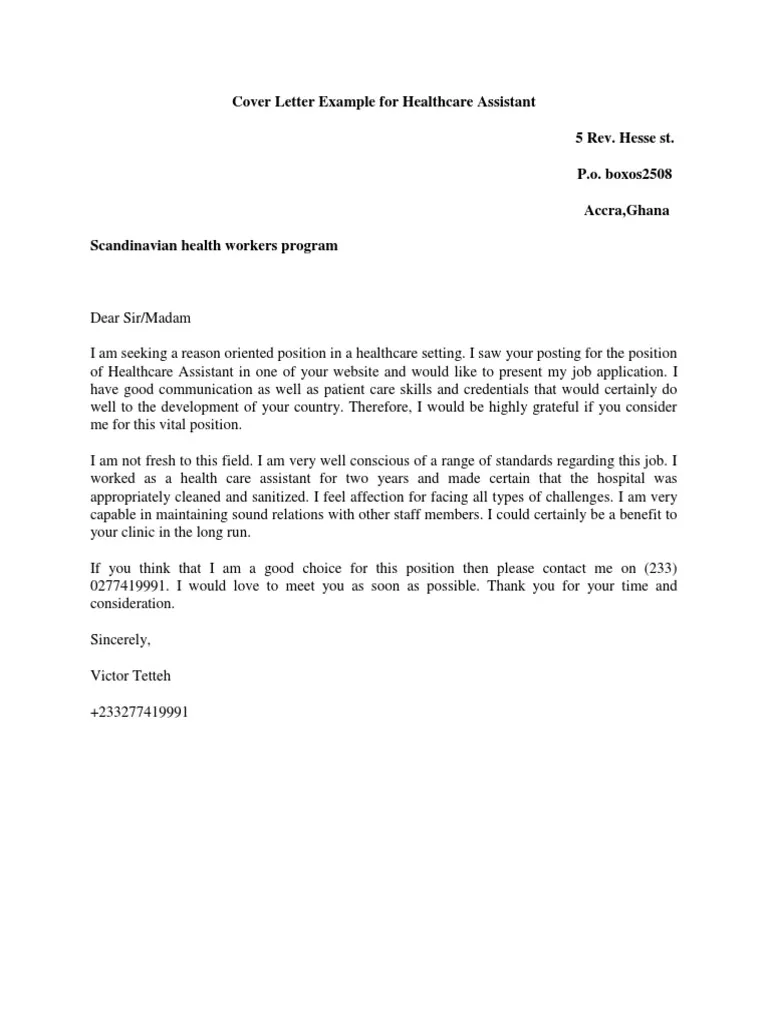
Reviewing cover letter samples for different healthcare roles can give you a good idea of how to structure your own letter. These samples can show you how to highlight your skills and experiences effectively. Use them as inspiration, but be sure to personalize your letter to reflect your unique background and the specific job requirements. Consider adapting these samples to your own experiences and the requirements of the specific job you’re applying for. They can serve as excellent templates for your own writing.
Sample Cover Letter for a Nurse
When writing a cover letter for a nursing position, emphasize your clinical skills, experience, and patient care expertise. Highlight any specialized certifications, such as advanced cardiac life support (ACLS) or critical care registered nurse (CCRN). Provide examples of your ability to manage patient care, collaborate with healthcare teams, and maintain accurate patient records. Tailor the letter to the specific requirements of the nursing position. Show your dedication to delivering high-quality patient care and describe your experience. Your cover letter should demonstrate your nursing skills.
Sample Cover Letter for a Medical Assistant
Medical assistants should highlight their clinical and administrative skills in their cover letters. Include experience with taking patient histories, performing vital signs, and assisting with medical procedures. Mention proficiency in electronic health records (EHR) systems and any administrative duties. Showcase your ability to multitask, communicate effectively with patients, and work as part of a healthcare team. Emphasize your skills and experiences in a clear and concise manner. Tailor the letter to match the specific requirements of the medical assistant position you are applying for.
Sample Cover Letter for a Healthcare Administrator
Healthcare administrators should emphasize their management and leadership abilities. Highlight experience in healthcare operations, budgeting, and strategic planning. Demonstrate your understanding of healthcare regulations and compliance. Provide examples of successful project management, team leadership, and financial management. Show your ability to improve efficiency, reduce costs, and enhance patient care outcomes. Tailor your cover letter to the specific requirements of the healthcare administrator role. Your cover letter should demonstrate your leadership skills.