Understanding the Guest Service Representative Role
A Guest Service Representative (GSR) is the face and voice of an organization, responsible for providing exceptional service to customers or guests. They act as the primary point of contact, addressing inquiries, resolving issues, and ensuring a positive experience. GSRs work in various industries, including hospitality, retail, healthcare, and transportation. Their key objective is to build and maintain strong customer relationships, contributing to customer satisfaction and loyalty. The role demands excellent communication, problem-solving abilities, and a customer-centric approach. This involves answering phones, responding to emails, assisting with reservations, handling complaints, and providing general information about the company’s products or services. It is a dynamic position requiring a blend of interpersonal skills and organizational efficiency. The role of a GSR is vital to creating a welcoming and helpful environment that encourages positive interactions with clients or guests.
Key Responsibilities of a Guest Service Rep
The core responsibilities of a Guest Service Representative are centered around providing outstanding customer support and ensuring guest satisfaction. This includes handling inquiries, resolving complaints, and offering solutions to meet guest needs. GSRs are often the first point of contact, requiring them to project a positive and professional image. They must possess the ability to actively listen to customer concerns, empathize with their situations, and find effective resolutions. Managing reservations, processing transactions, and providing accurate information about services or products are also primary duties. Furthermore, GSRs play a crucial role in maintaining a welcoming and organized environment, contributing to the overall guest experience. This can involve managing front desk operations, coordinating with other departments, and ensuring that guest needs are met promptly and efficiently. Being able to handle various tasks and adapt to different guest situations while maintaining composure and a helpful attitude defines a successful Guest Service Representative.
Essential Skills for Guest Service Excellence

To excel in the role of a Guest Service Representative, certain skills are indispensable. Exceptional communication skills, both verbal and written, are crucial for effectively interacting with guests and conveying information clearly. Active listening is another essential skill; it allows GSRs to understand guest needs and resolve issues accurately. Problem-solving abilities enable them to address guest concerns efficiently and find suitable solutions. Empathy is key, as it allows GSRs to connect with guests on a personal level and provide compassionate support. Strong organizational skills help manage multiple tasks and prioritize guest needs. Proficiency in relevant software and systems, such as reservation software and CRM platforms, is often required. A positive attitude, patience, and the ability to remain calm under pressure are also vital in providing excellent customer service. Furthermore, cultural sensitivity and the ability to interact with diverse groups of people are valuable assets in this role. These skills combined create a well-rounded GSR who can consistently deliver outstanding guest service.
Crafting a Compelling Cover Letter
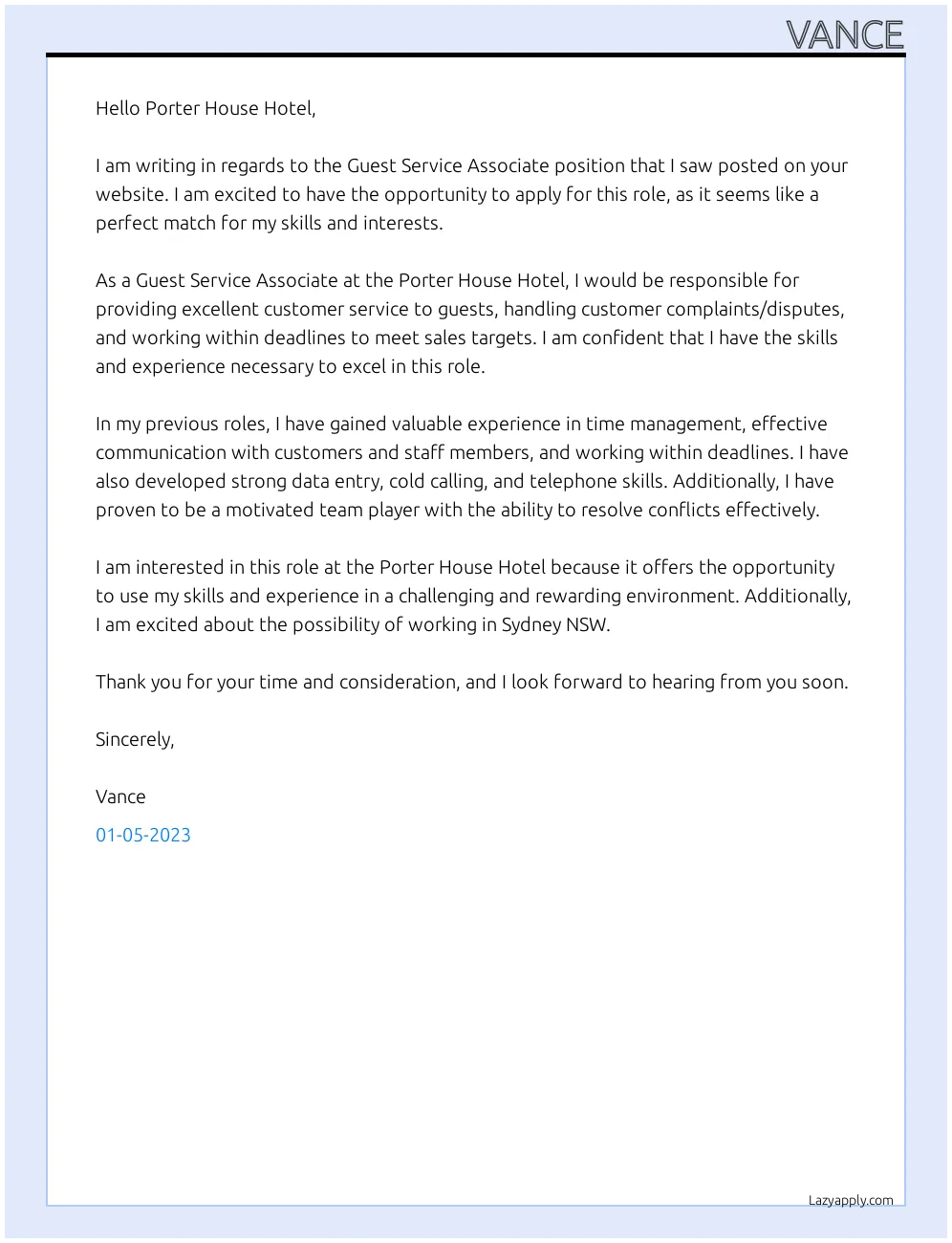
A compelling cover letter is your opportunity to make a strong first impression on potential employers and should highlight the most relevant aspects of your work experience and skills. It serves as a personalized introduction, allowing you to go beyond the bullet points of your resume and share your passion for the Guest Service Representative role. A well-crafted cover letter can significantly increase your chances of securing an interview. It should clearly state the position you are applying for and why you are a suitable candidate. The letter should demonstrate your understanding of the company and the specific requirements of the job. Using the cover letter to convey your enthusiasm for the position and your alignment with the company’s values can set you apart from other applicants. Tailoring your letter to each job application is also a crucial aspect, as it shows that you have taken the time to understand the role and the company’s needs. This attention to detail and personalized approach can be the key to making a positive impression and securing an interview.
Header and Contact Information
The header of your cover letter should include your full name, address, phone number, and email address. Make sure your contact information is accurate and up-to-date. Following this, include the date and the recipient’s contact information, typically the name, title, and address of the hiring manager or the company’s HR department. Using a professional-looking email address is also essential. Avoid using informal or outdated addresses. If you cannot find the hiring manager’s name, you can address the letter to ‘Hiring Manager’ or the HR department. Ensuring the accuracy and professionalism of your header sets a positive tone for the rest of your cover letter and shows your attention to detail. It is the first element that the employer sees, so presenting this information correctly is critical.
Personalized Greeting

When possible, use a personalized greeting, such as ‘Dear Mr./Ms./Mx. [Last Name]’ to show that you have researched the company and the hiring manager. Addressing the cover letter to a specific person is more personal than a generic greeting. If you are unable to find a specific name, a greeting such as ‘Dear Hiring Manager’ or ‘Dear [Company Name] HR Department’ is acceptable. Always spell the recipient’s name correctly to show respect. Using a personalized greeting can make your cover letter more engaging and professional, and demonstrating that you’ve taken the time to personalize your application enhances the likelihood of getting noticed by the hiring manager. It signals that you have put in the extra effort to connect with the potential employer.
Opening Paragraph Grabbing Attention
The opening paragraph is your chance to capture the reader’s attention and make them want to continue reading. Start with a strong statement that shows your enthusiasm for the role and the company. You can mention where you saw the job posting, express your interest in the company’s mission, or briefly highlight a key achievement that aligns with the job requirements. Your opening should clearly state the position you are applying for. Make your opening concise and compelling, while also making a positive first impression. Avoid generic phrases or clichés, and strive to create a unique and engaging opening that reflects your personality and shows you are a suitable candidate. This initial paragraph sets the tone for the rest of your cover letter and encourages the hiring manager to read further.
Highlighting Relevant Experience and Skills
The body of your cover letter should focus on your relevant experience and skills. Use specific examples to demonstrate how your abilities match the job requirements. Focus on accomplishments rather than just listing your duties. Describe situations where you have successfully provided guest service, resolved conflicts, or exceeded expectations. Quantify your achievements whenever possible. Explain the skills you used and the results you achieved. Highlight skills such as communication, problem-solving, and empathy, using examples to show how you have applied them in past roles. Tailor the skills and experience you highlight to match the requirements of the specific job. Use keywords from the job description to ensure that your cover letter is well-aligned with the employer’s needs and shows you are a great fit. Provide specific examples to make your qualifications more concrete.
Quantifiable Achievements in Guest Service

Quantifying your achievements provides concrete evidence of your capabilities. Instead of saying ‘I improved customer satisfaction,’ state ‘I increased customer satisfaction scores by 15%.’ Use numbers and data to demonstrate the impact of your work. Include metrics like the number of guests served, the percentage of issues resolved, or the amount of money saved by implementing certain procedures. Quantifiable results are more compelling than generic statements. They show that you are results-oriented and can make a measurable difference. Providing concrete evidence will increase your credibility and set you apart from other applicants. It also helps the hiring manager easily see the value you can bring to their team. Focus on relevant metrics that align with the job’s requirements to maximize impact.
Demonstrating Soft Skills
Demonstrating soft skills is crucial in a guest service role, as these skills are essential for providing excellent customer service. Mention your ability to communicate effectively, listen actively, and show empathy. Provide specific examples of how you have used your soft skills to resolve customer issues, de-escalate conflicts, or build positive relationships. Showcase skills like patience, adaptability, and the ability to work well under pressure. Include examples of how you collaborated with colleagues or handled difficult situations with grace. Showing your soft skills is vital because it reveals how you interact with others and perform in the real world. Soft skills are frequently sought in guest service roles, so emphasizing them appropriately makes you a stronger candidate.
Showcasing Enthusiasm and Company Alignment
Expressing enthusiasm for the position and showing how your values align with the company’s mission is essential. Your cover letter should demonstrate that you have a genuine interest in the company and its culture. Research the company’s values, mission, and goals. Mention how these align with your own personal and professional values. Explain why you are excited about the opportunity and how you see yourself contributing to the company’s success. Share your knowledge about the company and include how you can contribute positively to the team. This demonstrates that you are not just looking for a job but also that you are interested in being part of a successful company.
Tailoring the Cover Letter to the Job

Customizing your cover letter for each job application is vital for highlighting the most relevant information. Carefully review the job description and identify the key skills, experiences, and qualifications that the employer is seeking. Modify your cover letter to emphasize how your qualifications match the specific requirements. Use keywords from the job description, but do not simply copy and paste; incorporate them naturally into your sentences. Tailoring your cover letter shows that you understand the job and the company’s needs. It shows that you have taken the time to carefully consider how your skills and experience align with the position. This customized approach helps you stand out and increases your chances of getting an interview.
Researching the Company
Before writing your cover letter, conduct thorough research about the company. Visit the company’s website, read news articles, and review their social media profiles. Understanding the company’s mission, values, culture, and recent projects is key. Knowing the company helps you tailor your cover letter to demonstrate that you are genuinely interested in working there. You can mention specific aspects of the company that appeal to you, such as their products, services, or workplace culture. Show the hiring manager that you have taken the time to learn about the company, which shows your level of interest in the role. Mentioning details you have learned about the company can make your cover letter more appealing and make it stand out.
Matching Skills to Job Requirements
Carefully compare your skills and experience with the job requirements listed in the job description. Identify the key skills and qualifications that the employer is looking for and make sure to highlight them in your cover letter. Use the job description as a guide to ensure that you are addressing the specific requirements of the role. Tailor your examples and anecdotes to showcase the skills and experience most relevant to the job. By matching your skills to the requirements, you demonstrate that you possess the capabilities necessary to be successful. This is a crucial step in getting your cover letter noticed and making a positive impression. Customize your cover letter so that your capabilities match the needs of the potential employer.
Writing a Strong Closing Paragraph

The closing paragraph is your last chance to leave a lasting impression. Reiterate your interest in the position and briefly summarize why you are a good fit. Use this opportunity to express your enthusiasm and reiterate your relevant skills and experiences. Avoid simply repeating what you have already written. The closing should be memorable and leave the hiring manager with a positive feeling. Tailor your closing to the job and the company, showing that you have thoroughly considered the opportunity. A strong closing paragraph is important because it is what the hiring manager will remember. It is your final opportunity to make a positive impression.
Expressing Gratitude and Call to Action
Always express gratitude for the reader’s time and consideration. Thank the hiring manager for reviewing your application. Include a call to action, such as inviting them to contact you for an interview or suggesting a follow-up. Make it easy for them to reach you. Include your phone number and email address again, even if it is already included in the header. Keep your call to action clear and concise. A well-crafted call to action encourages the hiring manager to take the next step and can significantly improve your chances of getting an interview. Ending with a clear call to action demonstrates that you are eager to move forward in the hiring process.
Formatting and Proofreading Your Cover Letter
Formatting and proofreading are crucial steps in creating a professional and effective cover letter. Ensuring your cover letter is well-formatted and free of errors shows your attention to detail. A poorly formatted cover letter can make a bad impression, while errors undermine your credibility and professionalism. Proofreading is your final chance to catch any mistakes before you send the letter. Taking the time to carefully format and proofread your cover letter increases your chances of getting noticed and making a positive impact on the hiring manager.
Formatting for Readability
Use a professional and easy-to-read font, such as Times New Roman, Arial, or Calibri, and keep the font size between 10 and 12 points. Use standard margins (1 inch on all sides) to provide enough white space, making the letter easier on the eyes. Keep paragraphs concise, with short sentences. Use bullet points or numbered lists to organize information. Use bolding to highlight important information. Ensure your text is justified for a clean and consistent appearance. Maintain a consistent layout throughout the entire cover letter. A well-formatted letter will make it easier for the hiring manager to read and understand your information. The visual presentation is just as important as the content.
Proofreading for Errors
Proofread your cover letter multiple times to catch any errors in grammar, spelling, and punctuation. Read the letter aloud to check for awkward phrasing or run-on sentences. Use a spell checker and grammar checker, but do not rely on them entirely. Ask a friend, family member, or career counselor to review your cover letter. A fresh pair of eyes can often spot mistakes that you might miss. Proofreading is crucial because errors can make a negative impression on the hiring manager and undermine your credibility. Take the time to carefully check your work before submitting it.
Cover Letter Examples and Templates
Using cover letter examples and templates can provide valuable guidance in creating your own cover letter. Search online for cover letter examples specific to the Guest Service Representative role to understand what works and how to format your letter. Adapt the examples to your situation, customizing the content to reflect your experience and skills. Avoid using templates blindly. Always modify the content to make it unique and relevant to your background and the job requirements. Templates can serve as a good starting point. Customizing these examples helps you present a tailored and compelling cover letter that stands out.
Adapting Examples to Your Situation
When using a cover letter example or template, adapt the content to reflect your specific experience, skills, and the job you are applying for. Replace the example’s information with your own details and tailor the language to match your personality and the tone of the company. Modify the examples to highlight the specific skills and achievements that are most relevant to the job requirements. Customize the examples so they are unique to you and your professional history. Adapting examples to your situation demonstrates that you have taken the time to personalize your application. It enhances your chances of making a strong impression on the hiring manager, by showing that you are a well-suited candidate.