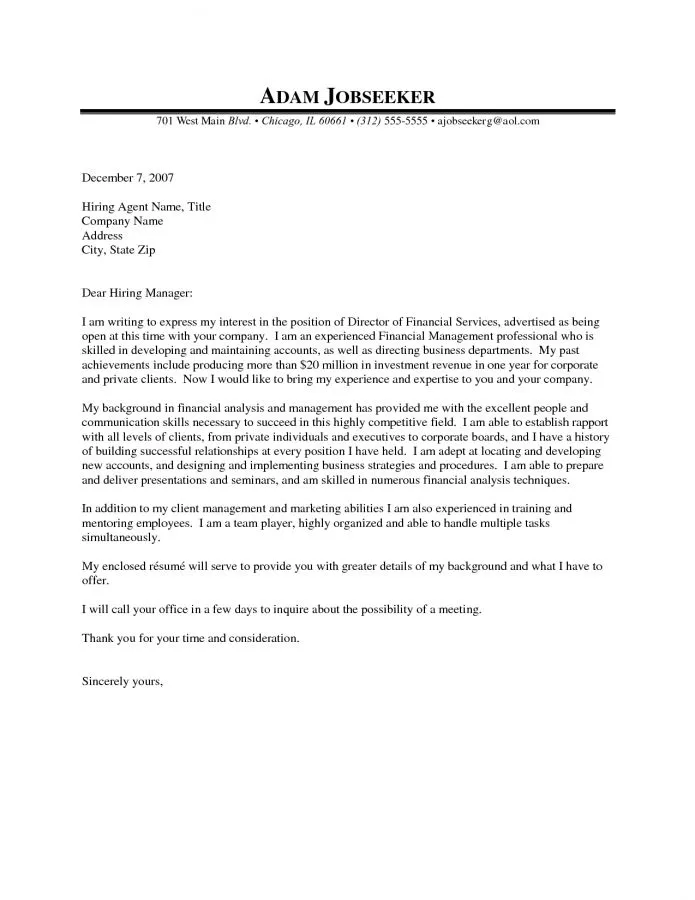
Crafting a Financial Manager Cover Letter
A well-crafted cover letter is your first opportunity to impress a potential employer and secure an interview. For a financial manager position, this letter is particularly crucial, as it showcases your understanding of financial principles, your ability to communicate complex information, and your overall suitability for the role. This guide provides a comprehensive overview of how to create a cover letter that highlights your qualifications and sets you apart from other candidates. It is essential to remember that a cover letter should not simply reiterate your resume. Instead, it should provide context, elaborate on your experiences, and illustrate how your skills align with the specific requirements of the job. A strong cover letter for a financial manager demonstrates a keen understanding of financial management principles and an ability to communicate these ideas effectively. This guide breaks down each step, ensuring your cover letter captures the attention of hiring managers.
Understanding the Financial Manager Role
Before you start writing your cover letter, it’s important to understand the responsibilities and skills typically associated with a financial manager. This understanding will help you tailor your letter to the specific job requirements and demonstrate your knowledge of the field. Research the company and the job description carefully, as requirements can vary based on industry, company size, and specific role expectations. Knowing what the company is looking for will help you showcase the most relevant parts of your experience and skills.
Key Responsibilities of a Financial Manager

Financial managers are responsible for overseeing the financial activities of an organization. This includes financial planning, budgeting, investment management, risk management, and financial reporting. They analyze financial data, monitor financial performance, and make recommendations to improve financial health. Financial managers play a crucial role in decision-making, ensuring that financial resources are allocated effectively and that the organization meets its financial goals. They must be adept at using financial software, analyzing market trends, and communicating financial information to both financial and non-financial stakeholders.
- Financial planning and analysis
- Budgeting and forecasting
- Investment management
- Risk management
- Financial reporting and analysis
- Compliance with financial regulations
Essential Skills for Financial Managers
Beyond specific responsibilities, financial managers require a diverse set of skills. These include strong analytical abilities, proficiency in financial modeling, excellent communication skills, and a deep understanding of accounting principles. The best cover letters highlight these skills, providing specific examples of how you have utilized them in previous roles. Technical skills are important, but soft skills such as leadership, problem-solving, and decision-making are also crucial. Demonstrating that you possess both is the key to writing a compelling cover letter that catches the attention of recruiters.
- Financial analysis and modeling
- Budgeting and forecasting proficiency
- Risk management expertise
- Strong accounting knowledge
- Excellent communication skills
- Leadership and management skills
- Problem-solving abilities
- Decision-making capabilities
Structuring Your Financial Manager Cover Letter
A well-structured cover letter follows a clear and logical format, making it easy for the hiring manager to quickly understand your qualifications. The structure includes a header, a personalized greeting, an opening paragraph, a body that highlights your relevant experience and skills, a closing paragraph, and a formal closing. Each section should serve a specific purpose, guiding the reader through your professional journey and demonstrating your suitability for the financial manager role. Pay close attention to each section and how it contributes to the overall message, ensuring your cover letter provides a narrative that supports your application.
Header Section

The header should include your contact information: your name, address, phone number, and email address. It’s also common to include the date and the hiring manager’s name and title, if known, along with the company’s address. The header sets the tone for the rest of your letter, presenting you professionally and ensuring that the hiring manager can easily contact you. Make sure all details are current and accurate.
Personalized Greeting
Address the hiring manager by name. Research their name and title. If you are unable to find the hiring manager’s name, use a professional greeting, such as “Dear Hiring Manager.” Avoid generic greetings like “To Whom It May Concern.” A personalized greeting demonstrates that you have taken the time to research the company and the specific role. This shows that you are genuinely interested in the opportunity and are not just sending out a generic application.
Opening Paragraph
The opening paragraph should immediately capture the reader’s attention. State the position you are applying for and where you saw the job posting. Briefly mention why you are interested in the role and the company. Keep it concise and impactful, creating a strong first impression. The opening paragraph is your opportunity to make a strong first impression. State the specific financial manager role you are applying for and where you found the job posting. Briefly explain what attracted you to the role and company, showing your genuine interest. Avoid generic statements and aim for a concise, impactful introduction.
Highlighting Relevant Experience

This is the core of your cover letter. Provide a brief overview of your relevant experience. Select 2-3 of your most significant achievements and tailor them to the job requirements. Explain how your skills and experience align with the company’s needs. Use the job description as a guide. Focus on your key accomplishments and how they relate to the specific requirements of the financial manager role. Quantify your achievements whenever possible to demonstrate the value you brought to your previous roles. Show how your skills have directly contributed to positive outcomes.
Quantifying Achievements
Instead of making generic statements, use numbers and metrics to quantify your achievements. For example, instead of saying “Improved financial reporting,” say “Improved financial reporting accuracy by 15% within one year.” This approach adds credibility and demonstrates your ability to deliver results. Numbers give tangible evidence of your skills. Including quantifiable achievements makes your cover letter more compelling and demonstrates your tangible impact. Use metrics to back up your claims and show your concrete contributions to previous employers. Provide specific examples of your accomplishments.
Demonstrating Skills
Match your skills to the job description. Mention the relevant skills you possess and provide specific examples of how you have used those skills in past roles. For instance, if the job requires budgeting expertise, describe a situation where you successfully created and managed a budget. Tailor your letter to the specific requirements outlined in the job posting. Demonstrate your ability to perform the tasks and responsibilities listed. Provide specific examples of your abilities and accomplishments to make your case.
Showcasing Enthusiasm and Fit

In the body of your cover letter, convey your enthusiasm for the position and the company. Explain what interests you most about the role and why you are a good fit. Demonstrate that you have researched the company and understand its mission and values. Show a genuine interest in the company and role. Show how your values align with the company’s culture. Mention specific aspects of the company that appeal to you and explain how your values align with the company’s mission.
Closing the Cover Letter
Summarize your interest in the position and reiterate your key qualifications in the closing paragraph. Express your eagerness for an interview and thank the hiring manager for their time and consideration. Include a call to action, such as stating that you look forward to discussing your qualifications further. End the letter with a professional closing, such as “Sincerely” or “Best regards,” followed by your name. Clearly and concisely summarize your key qualifications and reiterate your strong interest in the position. Thank the hiring manager for their time and consideration. Include a call to action, expressing your eagerness for an interview. Use a professional closing.
Formatting and Proofreading
Formatting and proofreading are crucial steps to ensure your cover letter is polished and professional. A well-formatted letter is easy to read, and error-free content demonstrates attention to detail. Correcting any errors shows that you take pride in your work and respect the hiring manager’s time. Proper formatting makes your cover letter easier to read. Proofreading helps catch errors, showing your attention to detail. Errors and poor formatting can quickly disqualify you.
Formatting Best Practices

Use a professional font such as Times New Roman, Arial, or Calibri, with a font size between 10 and 12 points. Use single spacing within paragraphs and double spacing between paragraphs. Keep your letter concise, ideally one page in length. Use clear headings and bullet points to break up the text and make it easier to read. Ensure the formatting is consistent throughout the document. Employ a clean and professional layout, making it easy for the reader to follow. Keep the letter concise, ideally one page. Use headings and bullets to break up text and improve readability. Maintain consistent formatting.
Proofreading and Editing
Proofread your cover letter carefully for any grammatical errors, spelling mistakes, and typos. Use a spell checker, but don’t rely on it entirely. Have a friend or colleague review your letter to catch any errors you may have missed. Ensure that your letter is clear, concise, and easy to understand. Proofreading is essential to catch errors. Always have a friend review your letter. Ensure clarity and conciseness in your writing to maximize impact.
Cover Letter Examples
Reviewing cover letter examples can provide you with inspiration and guidance as you write your own. Examples can help you understand the structure, tone, and content of a successful cover letter. You can adapt these examples to fit your personal situation and the specific job requirements. Look for examples related to financial management to better understand industry standards. Adapt the examples to your needs.
Financial Manager Cover Letter Example 1
This example should provide a strong opening paragraph highlighting the specific position, mention of the company, and a brief statement of interest. The body of the letter will feature specific achievements, quantifying them with metrics such as percentages or dollar amounts. It would also include a section demonstrating key skills tailored to the financial manager role and a closing paragraph expressing enthusiasm. This example will offer a clear structure, demonstrating how to balance qualifications, demonstrating a good fit for the role.
Financial Manager Cover Letter Example 2
The second example provides a different approach, perhaps highlighting a career transition or emphasizing a particular area of financial expertise. The structure follows the same principles: a strong opening, a detailed skills demonstration, and a focus on quantifiable results. The aim is to show different strategies that job seekers can use to highlight their qualifications based on their previous experience. This example will demonstrate different ways of presenting information effectively, adapting to different scenarios. Adapt this to your specific background.
Additional Tips for a Strong Cover Letter
Beyond the basics, there are additional strategies that can help you create a more compelling cover letter. These tips include tailoring your letter to each specific job, following up after submission, and avoiding common mistakes. These are the subtle details that can set you apart from other candidates. Focusing on these details can greatly improve your chances of success.
Tailoring Your Letter to the Job
Customize your cover letter for each job application. Review the job description carefully and identify the key requirements. Highlight your skills and experiences that align with those requirements. Avoid using a generic cover letter. Instead, make sure your cover letter reflects the specific needs of each position you are applying for. Tailoring makes a big difference in getting noticed. Tailor your letter to each job, highlighting your relevant skills. Avoid using a generic cover letter.
Following Up After Submission
If you haven’t heard back within a reasonable timeframe, follow up with the hiring manager. Send a brief email expressing your continued interest in the position and asking about the status of your application. A follow-up email demonstrates your enthusiasm and professionalism. Follow up within a reasonable timeframe. Reiterate your interest in the position. Demonstrate your enthusiasm and professionalism.