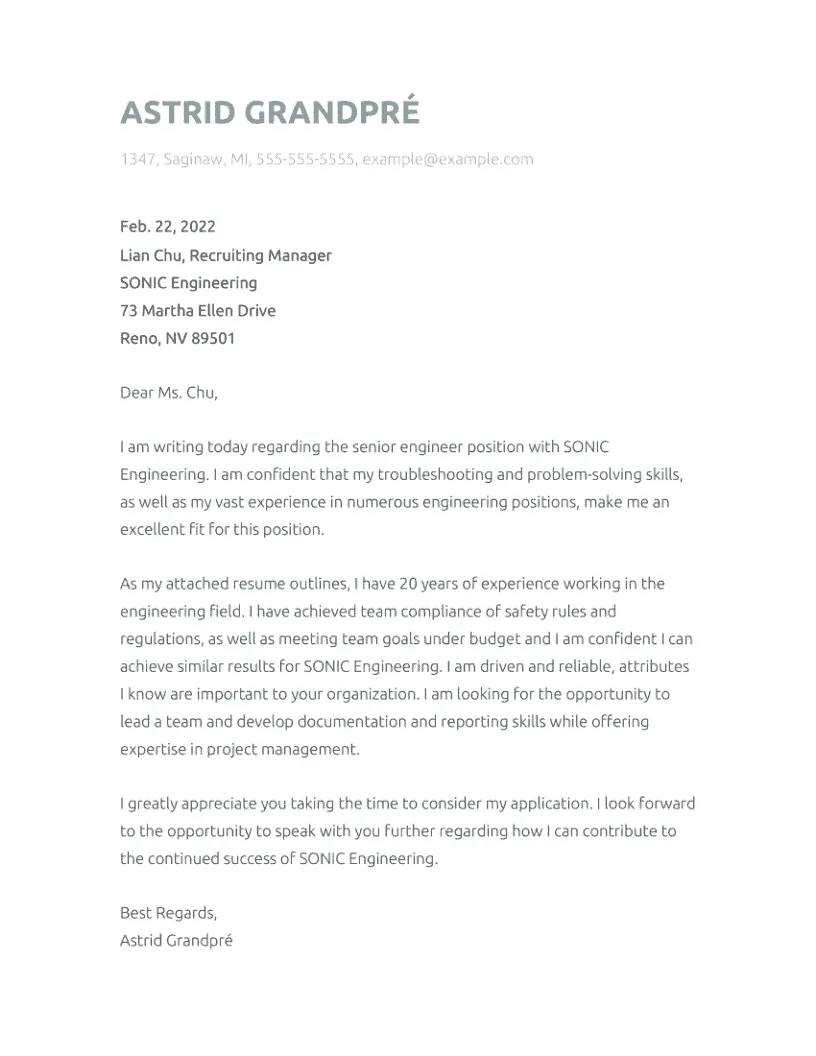
Why Use Engineering Cover Letter Templates
In the competitive field of engineering, a well-crafted cover letter can be the key to unlocking your dream job. Engineering cover letter templates provide a structured, efficient approach to presenting your qualifications, streamlining the application process. They ensure you effectively highlight relevant skills and experiences, saving time and effort. These templates offer a professional framework, guiding you to include all essential information, thereby avoiding omissions that could weaken your application. By using a template, you can focus on tailoring the content to each specific job application, increasing your chances of standing out from other candidates and securing an interview. Furthermore, templates provide a consistent format, allowing you to showcase your skills, experience, and accomplishments in a clear and professional manner. Using a template saves valuable time, allowing you to concentrate on customizing the letter to the specific job requirements and company culture.
Key Elements of an Effective Engineering Cover Letter
An effective engineering cover letter is more than just a list of qualifications; it tells a compelling story about your value to the employer. Start by clearly stating the specific position you are applying for and where you found the job posting. Highlight your most relevant skills and experiences, aligning them directly with the requirements outlined in the job description. Quantify your achievements whenever possible, using numbers and data to demonstrate your impact. For example, instead of stating you “improved efficiency,” specify you “improved project efficiency by 15% through process optimization.” Emphasize your problem-solving abilities, detailing how you have successfully tackled engineering challenges in the past. Finally, tailor your letter to each company and position, demonstrating your genuine interest and understanding of their needs. Remember to keep the language concise, professional, and engaging to capture the hiring manager’s attention.
Contact Information & Salutation

Begin your cover letter with your contact information: name, phone number, email address, and LinkedIn profile URL. This makes it easy for recruiters to quickly reach you. Address the letter correctly; use the hiring manager’s name if known, or a professional greeting like “Dear Hiring Manager” or “Dear [Department Name] Team.” This sets a tone of respect and attention to detail. Ensure your email address is professional and reflects your name.
Highlighting Your Skills and Experience
The core of your cover letter should highlight relevant skills and experience. Carefully review the job description to identify the key skills the employer seeks. Provide specific examples demonstrating these skills, using the STAR method (Situation, Task, Action, Result). For example, describe a situation, the task you were assigned, the action you took, and the result achieved. Showcase your technical expertise, project management skills, and software/tools proficiency. Mention certifications or licenses relevant to the position. Focus on aligning your skills with the company’s needs, demonstrating your ability to contribute to their goals.
Quantifying Achievements
To make your cover letter more compelling, quantify your achievements. Instead of stating you “managed projects,” state that you “managed projects with budgets up to $X, resulting in Y% on-time delivery.” Use numbers, percentages, and data to illustrate your impact. If you improved a process, mention the percentage increase in efficiency or the reduction in costs. If you led a team, state the team size and the results achieved. Quantifying your achievements provides concrete evidence of your abilities, demonstrating the value you can bring to the company.
Tailoring Your Letter to the Job Description

A generic cover letter will rarely impress. Tailor each letter to the specific job and company. Research the company’s mission, values, and recent projects. Show that you understand their business and the challenges they face. Customize your letter using keywords from the job description. Mention projects or achievements that align with the company’s needs. Explain why you are interested in the role and how you can contribute. Customization proves you’ve invested time to understand the role and the company.
The Power of a Strong Closing
Your closing paragraph offers a final opportunity to make a lasting impression. Summarize key qualifications, reiterate your interest, and express enthusiasm for the opportunity and the company. Clearly state your availability for an interview and provide contact information once more. Thank the hiring manager for their time and consideration. Use a professional closing like “Sincerely” or “Best regards,” followed by your name and contact details. This ensures the hiring manager remembers you and knows how to contact you.
Top 5 Engineering Cover Letter Templates
Choosing the right template is crucial for presenting yourself effectively. Various engineering cover letter templates are available, each designed to highlight different aspects of your skills and experience. The best template for you will depend on your specific background, the job you’re applying for, and what you want to emphasize. Here are five of the top engineering cover letter templates designed to help your application stand out. Remember to customize any template with your unique skills and experiences. Always proofread the final product for any errors. Consider the company’s culture and the tone of the job posting when choosing the template.
Template 1 Focus on skills

This template emphasizes your specific engineering skills and expertise. It starts by stating the position and summarizing your core competencies. The main body then highlights these skills, providing examples of how you have applied them in past projects. For example, if you’re proficient in specific software or a certain engineering discipline, list your proficiency level and give an example. Include sections for technical skills, project management skills, and any relevant certifications. Make sure to align these with the requirements in the job description. Use action verbs and quantifiable results to demonstrate your impact. This template is ideal if you’re changing careers or if the job emphasizes particular technical skills.
Template 2 Highlight Specific Projects
If you want to showcase your experience by highlighting specific projects, this template is excellent. Begin with an overview of your engineering background, then dedicate sections to describe your involvement in key projects. For each project, include its objectives, your role, the challenges faced, actions taken, and the results. Quantify your contributions whenever possible, like cost savings, efficiency improvements, or team size. This template allows you to provide detailed examples of your problem-solving abilities and your ability to deliver successful outcomes. Tailor your project descriptions to match the requirements of the job, emphasizing the most relevant skills and experiences.
Template 3 Emphasize Technical Expertise
This template is designed to highlight your technical expertise, showcasing your knowledge of engineering principles, software proficiency, and specific technologies. Start by briefly outlining your engineering background and then delve into your technical skills. Mention any specialized areas of expertise, like structural engineering, mechanical engineering, or electrical engineering. Include details about your experience with relevant software, tools, and equipment. Back up your technical expertise with specific project examples. Use this template if the job emphasizes technical proficiency and requires someone with specialized engineering knowledge, ensuring that you align your expertise with the specific needs of the role and company.
Template 4 Showcase Problem-Solving Abilities

This template focuses on demonstrating your problem-solving skills, making it perfect for roles that require critical thinking and analytical abilities. Begin by introducing your engineering background, then dedicate sections to describing challenging situations. For each situation, explain the problem, the steps you took to solve it, and the positive outcomes achieved. Use the STAR method to structure your responses, providing clear, concise examples that demonstrate your thought process. Show how you used your engineering knowledge to identify the root cause of the problem, develop solutions, and implement them effectively. Quantify the results whenever possible, such as cost savings, improved efficiency, or reduced errors. This template proves you are a resourceful engineer who can overcome complex challenges.
Template 5 Demonstrate Leadership Experience
This template is perfect for engineers looking to highlight their leadership experience. Start by summarizing your engineering background and then highlight your leadership roles. Provide examples of projects led, teams managed, and initiatives you spearheaded. Describe your leadership style, emphasizing your ability to motivate and guide teams. Quantify your achievements, such as the number of team members, projects delivered, and team performance improvements. Demonstrate skills in communication, delegation, and conflict resolution. Use this template if you’re applying for a management or leadership position, aligning your experience with the specific job requirements.
Formatting and Design Best Practices
Formatting and design are crucial elements of a professional cover letter. Use a clean and readable font like Arial, Calibri, or Times New Roman, with a font size between 10 and 12 points. Maintain consistent formatting: margins, spacing, and headings. Use bullet points and white space to break up text, improving readability. Ensure your letter is well-organized with clear headings and subheadings. Use a professional letterhead if the company provides one. Avoid excessive colors or graphics. The goal is a polished, professional document easy to read and understand. Proofread carefully to eliminate errors.
Proofreading and Editing for Perfection

Proofreading and editing are critical steps in creating a successful cover letter. Before submitting, carefully review for grammar, spelling, punctuation, and sentence structure errors. Use spell-check and grammar-check tools, but also read the letter aloud to catch awkward phrasing or inconsistencies. Ask a friend, colleague, or career counselor to review your letter. Look for typos, missing words, or unclear sentences. Ensure your letter is concise, well-organized, and free of jargon. Check that contact information is accurate. Correct all errors before submitting. A polished, error-free cover letter demonstrates attention to detail, increasing your chances of getting an interview and securing your desired engineering position. Take the time to make sure your cover letter reflects your best self.