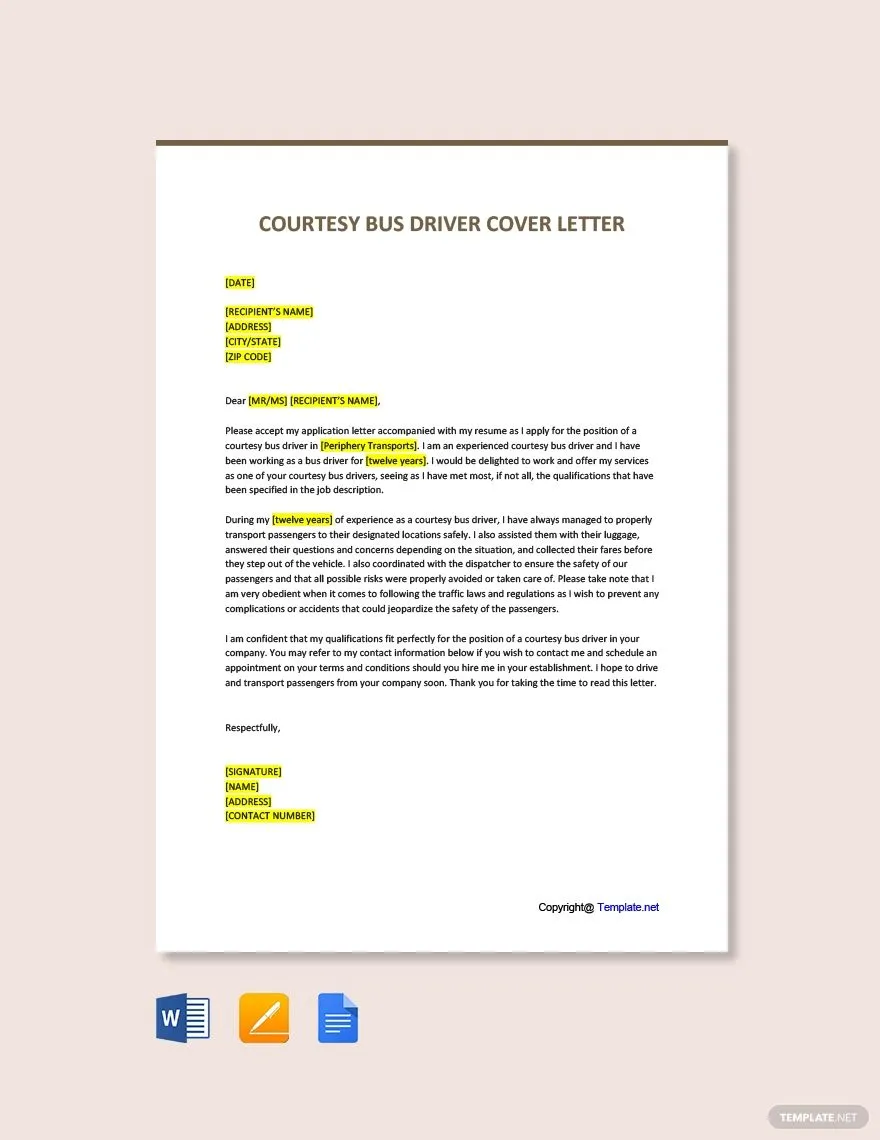
Crafting Your Driver Cover Letter
A well-crafted driver cover letter is your first impression with a potential employer, and it can significantly impact your chances of landing an interview. It’s not just a formality; it’s an opportunity to showcase your skills, experience, and personality, setting you apart from other applicants. In the competitive field of driving, a strong cover letter can make all the difference, demonstrating your professionalism, attention to detail, and commitment to safety – qualities that employers highly value. Remember that your cover letter should be customized for each job application, highlighting the specific requirements and showcasing how your qualifications align with the position.
Understanding the Purpose of a Cover Letter
The primary purpose of a driver cover letter is to introduce yourself and to persuade the hiring manager to review your resume. It serves as a narrative, allowing you to expand on the information presented in your resume and demonstrate your suitability for the role. Unlike your resume, which is a concise summary of your qualifications, a cover letter provides a platform to express your enthusiasm for the job, highlight your relevant skills, and explain why you’re the ideal candidate. A cover letter also gives you the opportunity to address any potential gaps in your experience or any specific requirements mentioned in the job description, showing initiative and proactivity in your application.
Highlighting Your Driving Experience

Your driving experience is the cornerstone of your cover letter. Begin by clearly stating the number of years you’ve been driving professionally, specifying the types of vehicles you’re licensed to operate, such as commercial trucks, buses, or specialized vehicles. Include details about the types of routes you’ve driven, whether local, regional, or long-haul, and any experience with specific cargo types, such as hazardous materials, refrigerated goods, or oversized loads. Quantify your experience whenever possible; for instance, mention the number of miles driven safely, any awards received for safe driving, or any significant achievements during your driving career, showcasing your reliability and dedication to the profession. Remember, the more detail you provide, the better employers can gauge your ability to handle the job.
Details of Your Driving Experience
Dive deeper into your driving history, providing specific examples that highlight your skills and achievements. Describe the types of vehicles you’ve operated, including the make and model if applicable. Detail the routes and regions you’re familiar with, emphasizing any experience with different terrains, weather conditions, and traffic patterns. If you’ve handled any specialized cargo, provide specifics regarding the handling, loading, and unloading procedures, and any safety protocols followed. This level of detail demonstrates your ability to adapt to different situations and your commitment to following safety procedures. Mention any experience with electronic logging devices (ELDs), and other technology used in modern vehicles as well, showcasing your technological proficiency.
Certifications and Licenses
Your certifications and licenses are crucial in the driver cover letter. Make sure to list all relevant licenses, such as a Commercial Driver’s License (CDL), endorsements (e.g., Hazmat, Tanker), and any other specialized certifications. Include the issuing state for each license and the expiration dates to assure the employer that your credentials are current and valid. Beyond licenses, list any professional certifications or training programs you’ve completed, such as defensive driving courses, safety certifications, or specialized training in handling specific types of cargo. Highlighting these credentials in your cover letter demonstrates your commitment to safety, professionalism, and continuous learning, which are all highly valued by employers.
Ensuring Your Cover Letter is Professional

A professional cover letter is essential for making a positive impression. Start by using a professional font such as Times New Roman, Arial, or Calibri, and maintain a consistent font size (typically 11 or 12 points). Address the hiring manager by name whenever possible; research the company and identify the correct contact person. Keep your letter concise, aiming for one page, and use clear and concise language, avoiding jargon and slang. Proofread your letter multiple times for any grammatical errors, spelling mistakes, or punctuation issues. Make sure to tailor your letter to the specific job and company. Use a professional email address and sign off with a formal closing, like “Sincerely” or “Best regards.”
Formatting Your Cover Letter for Success
Proper formatting enhances readability and makes your cover letter stand out. Use clear headings and subheadings to organize the content, making it easy for the reader to navigate your letter. Use bullet points to highlight key skills, experiences, or accomplishments. Maintain consistent spacing between paragraphs and sections. Ensure your contact information (name, address, phone number, and email) is clearly displayed at the top of the letter. Use business letter format, including the date, the recipient’s name and title, and the company’s name and address. Consider using a template to ensure a polished and professional appearance.
Proofreading and Editing
Proofreading and editing are the final crucial steps in writing a driver cover letter. Errors can undermine your credibility, so make sure to review your cover letter multiple times for any typos, grammatical errors, or punctuation mistakes. Read your letter aloud to catch any awkward phrasing or unclear sentences. Use grammar and spell-checking tools, but don’t rely on them entirely; they may miss subtle errors. It’s always beneficial to have someone else review your letter. Ask a friend, family member, or career counselor to proofread your cover letter and provide feedback. A fresh pair of eyes can catch errors you might have missed, ensuring your cover letter is polished, professional, and error-free.
In conclusion, a well-written driver cover letter is a powerful tool in your job search. By highlighting your experience, licenses, and skills, and by presenting yourself professionally, you can increase your chances of landing an interview and securing your dream driving job. Remember to tailor your cover letter to each application, proofread carefully, and always put your best foot forward. Good luck with your job search!